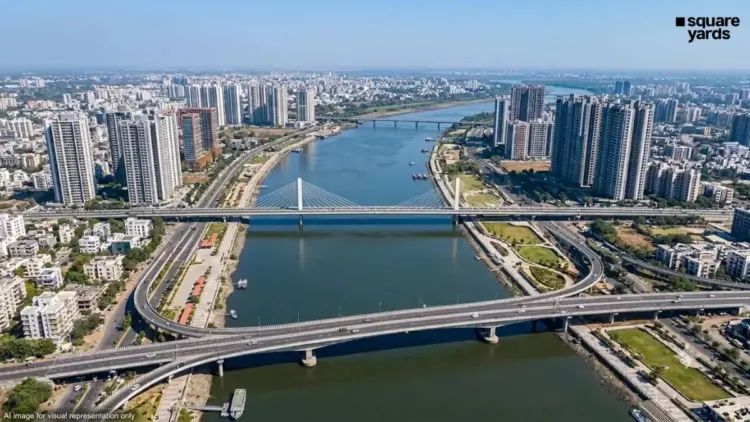
Surat, Gujarat: In a move that solidifies its position as one of India’s fastest-growing metropolitan hubs, the Surat Municipal Corporation (SMC) has secured a massive financial injection from the central government. Under the "Special Assistance for Capital Investment Part-I" scheme for the 2026-27 fiscal year, Surat has been granted approval for Rs 566 crore to fund seven high-impact infrastructure projects. This allocation is not merely a budgetary figure; it represents the highest share among Gujarat’s eight municipal corporations, underscoring Surat’s strategic importance in the national urban development roadmap.
With Rs 373.56 crore already released as the first installment, the city is poised for a significant physical and economic facelift. From futuristic administrative hubs and river barrages to healthcare expansions and peripheral water connectivity, the projects are designed to bridge the gap between Surat’s bustling core and its rapidly expanding outskirts.
The Infrastructure Blueprint: Breaking Down the Rs 566-Crore Allocation
The sanctioned funds are meticulously distributed across sectors that dictate "Ease of Living" and "Ease of Business." The SMC’s strategy appears twofold: modernizing central administrative functions while ensuring that peripheral growth is supported by robust civic utilities.
1. The Iconic Administrative Hub (Rs 350 Crore)
The centerpiece of this allocation is the Rs 350-crore multi-storey administrative office building. Located in the Majura-Khatodara area (Final Plots 234 and 235 of Town Planning Scheme No. 6), this structure is intended to be more than just an office. It is envisioned as a centralized "command center" for the city’s governance. By consolidating various departments under one roof, the SMC aims to streamline bureaucratic processes, enhance digital governance, and provide a landmark architectural addition to the city’s skyline.
2. Water Security and Connectivity: The Tapi Barrage (Rs 100 Crore)
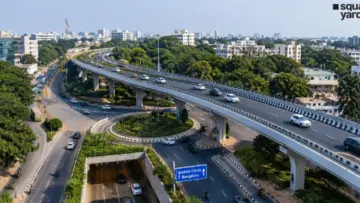
Water management remains a priority for Surat. A significant Rs 100 crore has been earmarked for a conventional barrage near Rundh-Bhada on the Tapi River. This project serves a dual purpose: it will act as a critical freshwater reservoir to meet the city’s growing demand and prevent salinity ingress from the sea. Complementing this is a new flyover on the river’s left bank, designed to alleviate the traffic bottlenecks that have historically plagued the southwestern corridors of the city.
3. Healthcare Excellence: Expanding SMIMER (Rs 50 Crore)
The Surat Municipal Institute of Medical Education and Research (SMIMER) is set for a major upgrade. With a Rs 50-crore investment, the facility will see the construction of a new hospital building with a capacity exceeding 600 beds. This expansion is critical as Surat’s population continues to swell, putting pressure on existing tertiary care facilities. The funding also covers additional academic infrastructure, ensuring that the next generation of medical professionals is trained in a world-class environment.
4. Last-Mile Connectivity and Utilities (Rs 66 Crore)
The remaining funds are distributed among four vital "micro-infrastructure" projects:
- Flyover Construction (Rs 16 Crore): Targeting the Ratnamala and Gajera junctions, these flyovers are essential for "de-cluttering" some of the city’s most congested transit points.
- Peripheral Water Supply (Rs 35 Crore): Recognizing the growth of the outskirts, Rs 20 crore is dedicated to a water distribution line in Sachin-Kanakpur, while Rs 15 crore will ensure 24/7 water supply in Bhada and Laskana.
- Creek Remodelling (Rs 15 Crore): A vital environmental and flood-prevention measure to ensure the city’s natural drainage systems can handle the monsoon intensities.
Chronology of Development: A Fiscal Timeline
The journey toward this massive allocation began in the previous fiscal cycles, as the SMC aligned its urban planning with the Central Government’s focus on capital expenditure (CAPEX).
- FY 2024-25: SMC begins drafting the "Vision 2030" document, identifying Majura-Khatodara and Rundh-Bhada as high-growth zones requiring institutional and utility support.
- December 2025: Initial proposals for the Special Assistance for Capital Investment scheme are submitted. Real estate data shows the average asking price at Rs 4,350 psf, signaling a market ready for a catalyst.
- April 2026 (Q1 FY 2026-27): The central government reviews 77 projects across Gujarat. Surat emerges as the frontrunner due to its high project execution rate in previous years.
- September 2026: Official approval of Rs 566 crore is announced. The first installment of Rs 373.56 crore hits the SMC accounts, allowing for the immediate commencement of tendering processes for the administrative building and the Tapi barrage.
- Looking Ahead (2027 and Beyond): The projects are slated for phased completion between 2027 and 2029, coinciding with the projected surge in the city’s population and industrial output.
Supporting Data: The Real Estate Ripple Effect
Infrastructure and real estate are inextricably linked. As the SMC announces these projects, the property market in Surat is already reflecting the anticipated value appreciation. According to market data from Square Yards, the city’s residential and commercial sectors are witnessing a steady upward trajectory.
Residential Market Growth
The average asking price for residential properties in Surat has shown a consistent climb throughout 2026:
- December 2025: Rs 4,350 psf
- March 2026: Rs 4,400 psf
- June 2026: Rs 4,550 psf
- September 2026: Rs 4,650 psf
This represents a 6.9% growth in just nine months. The market is pricing in the "infrastructure premium" even before the projects are completed.
Zonal Disparity and Opportunities
The data reveals a diverse pricing landscape across Surat’s zones:
- Surat South (Rs 4,900 psf): The most expensive residential zone, driven by proximity to industrial hubs and modern amenities.
- Surat North (Rs 4,850 psf): Close behind, benefiting from established trade networks.
- Surat West (Rs 4,200 psf): A mid-range zone seeing high interest due to the upcoming Tapi barrage and Rundh-Bhada developments.
- Surat East (Rs 2,750 psf): Remains the most affordable, offering significant "entry-level" investment opportunities as connectivity improves.
The Commercial Boom
Perhaps more striking is the performance of the commercial segment. Over the same period, commercial shop prices have surged by 30.3%, reaching an average of Rs 16,700 psf. Office spaces have also grown by 15.8%, averaging Rs 8,100 psf. The proposed Rs 350-crore administrative building is expected to further drive demand for office spaces in the Majura-Khatodara belt as ancillary businesses seek proximity to the city’s governance hub.
Official Responses and Strategic Vision
While the SMC has remained focused on the technical execution of these projects, the sentiment from the municipal leadership reflects a broader strategic vision. Sources within the corporation suggest that the focus on "Capital Investment" is part of a mandate to transform Surat from a traditional industrial city into a "Global Smart City."
"The allocation of Rs 566 crore is a testament to Surat’s fiscal discipline and its ability to execute large-scale projects," a senior urban planning official noted. "By investing in the periphery—places like Sachin and Laskana—we are preventing the ‘slumification’ of our borders and ensuring that every citizen, regardless of their location, has access to 24/7 water and high-quality healthcare."
Economists view this as a classic "multiplier effect" strategy. By spending on infrastructure (CAPEX), the government stimulates the construction industry, creates local jobs, and eventually increases the tax base through rising property values and increased business activity.
Implications for Stakeholders: Homebuyers, Investors, and Residents
The infusion of Rs 566 crore into Surat’s infrastructure has profound implications for various segments of society.
For Homebuyers: The Search for Liveability
For the average homebuyer, the improvements in water supply and healthcare are the most tangible benefits. Areas like Bhada and Laskana, which were previously seen as "distant" or "under-served," are now becoming viable residential options. The 24/7 water supply initiative significantly boosts the "liveability index" of these peripheral markets.
For Real Estate Investors: The "Infrastructure Hedge"
Investors are increasingly looking at the Majura-Khatodara and Rundh-Bhada corridors. The data suggests that properties near major institutional landmarks (like the new admin building) or major connectivity projects (like the Tapi barrage flyover) tend to appreciate at a rate 15-20% higher than the city average. The current average of Rs 5,900 psf in Rundh Magdalla is expected to see further upward pressure as the barrage project nears completion.
For the Business Community: Reduced Friction
The flyovers at Ratnamala and Gajera junctions are critical for the textile and diamond industries. Reduced transit times mean lower logistics costs and higher efficiency for the thousands of workers and traders who navigate these routes daily. Furthermore, the expansion of SMIMER ensures that the workforce has access to affordable, high-quality healthcare, which is a cornerstone of a productive urban economy.
Conclusion: A City on the Move
Surat is no longer just a city of diamonds and textiles; it is becoming a blueprint for balanced urban growth in India. The Rs 566-crore central grant acts as a powerful propellant, ensuring that the city’s infrastructure does not just react to growth but anticipates it.
As residential prices continue their 6.9% upward trend and commercial demand sky-rockets, the message is clear: Surat is a city in transition. For residents, it promises a more comfortable, connected life. For investors, it offers a robust market backed by tangible government spending. As the first bricks are laid for the new administrative building and the first stones are set for the Tapi barrage, Surat moves one step closer to its goal of becoming a premier global metropolis.