

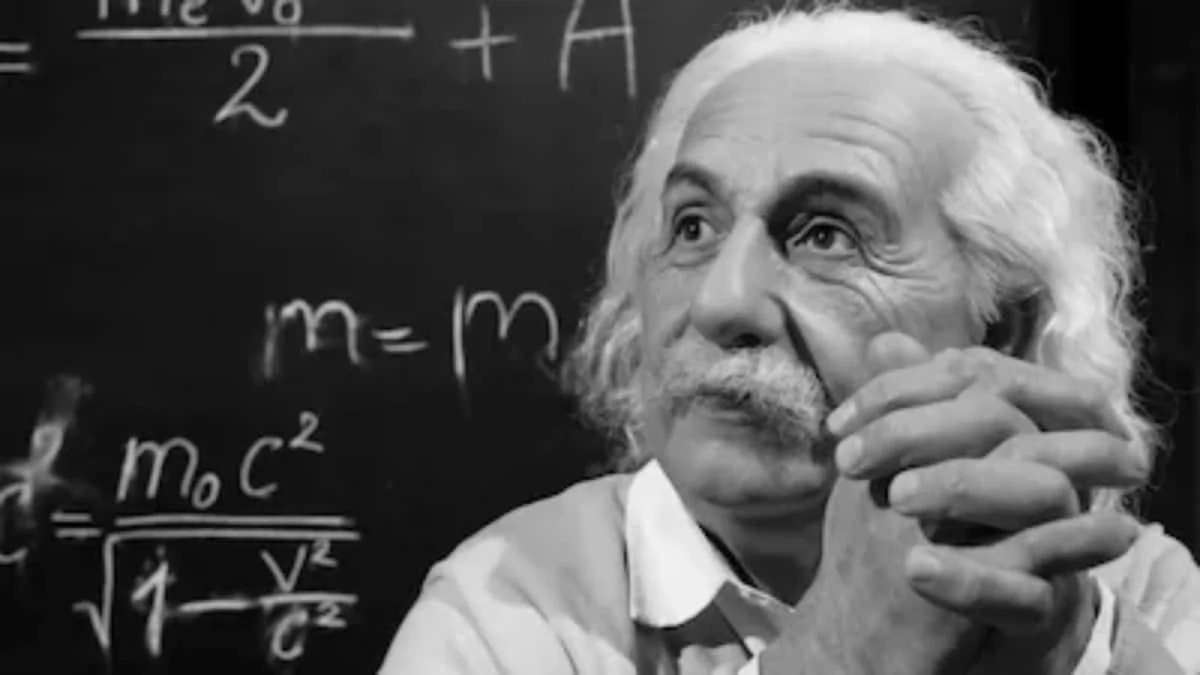
New Delhi, India – May 19, 2026 – In a world increasingly defined by rapid technological advancement and the relentless pursuit of knowledge, a profound observation from one of history’s greatest minds continues to resonate with unsettling relevance. Albert Einstein, the revolutionary physicist who reshaped our understanding of the cosmos, once quipped, "Two things are infinite: the universe and human stupidity, and I’m not sure about the universe." This seemingly lighthearted remark, delivered with his characteristic wit, serves as a potent and enduring caution, highlighting the persistent challenges posed by ignorance and flawed judgment in the face of humanity’s intellectual endeavors.
While the universe, with its unfathomable expanse and enigmatic phenomena, continues to captivate and confound scientists, Einstein’s assertion points to a different, more readily observable, infinity: the seemingly boundless capacity for human irrationality and poor decision-making. This dichotomy, between the grand mysteries of the cosmos and the often-mundane limitations of human cognition, forms the crux of Einstein’s enduring wisdom.
The Cosmic Canvas vs. The Human Mind: A Stark Contrast
Einstein’s profound understanding of the universe, encapsulated in his groundbreaking theories of relativity, fundamentally altered humanity’s perception of space, time, gravity, and the very fabric of reality. He dedicated his life to unraveling the intricate laws that govern celestial bodies, pushing the boundaries of scientific inquiry with unparalleled genius. Yet, despite his profound engagement with the infinite complexities of the cosmos, he recognized a parallel, and perhaps more formidable, infinity within the human experience.
His quote is not merely a humorous observation; it is a deeply philosophical reflection on the human condition. By juxtaposing the vast, unknown universe with the pervasive nature of human folly, Einstein underscores a critical paradox. While scientific progress strives to expand our knowledge and overcome limitations, the persistence of ignorance, prejudice, and flawed judgment acts as a constant, often self-imposed, impediment.
The humor in Einstein’s statement lies in its self-deprecation and its universal applicability. It acknowledges that even the most brilliant minds are not immune to the foibles of human nature. However, the underlying message is a serious one: the pursuit of progress, whether scientific, social, or personal, is perpetually challenged by the human tendency to err, to resist reason, and to act in ways that undermine collective advancement.
A Chronology of Enduring Wisdom
While the exact date and context of Einstein’s original utterance remain subject to historical inquiry, the sentiment has been attributed to him for decades. The quote has circulated widely, appearing in numerous publications, lectures, and informal discussions. Its enduring popularity speaks to its timeless truth and its ability to capture a fundamental aspect of human behavior.
Mid-20th Century: The quote begins to gain traction in popular discourse, often cited in discussions about human nature, the limitations of intellect, and the challenges of societal progress.
Late 20th Century: As the world grappled with complex global issues, from political conflicts to environmental challenges, Einstein’s words offered a pithy explanation for why solutions often remained elusive. The quote became a staple in analyses of human decision-making and the recurring patterns of societal failure.
Early 21st Century: In an era of unprecedented information flow, characterized by both remarkable advancements and the proliferation of misinformation, Einstein’s observation has taken on new layers of meaning. The ease with which erroneous ideas can spread, and the difficulty in correcting them, further amplifies the relevance of his warning.
May 19, 2026: The present day. The quote continues to be a touchstone for understanding the persistent obstacles to progress, reminding us that the greatest frontiers may not lie in the stars, but within the human mind itself.
Supporting Data: The Pervasive Nature of Human Folly
The "data" supporting Einstein’s assertion is not found in scientific equations but in the annals of human history and the daily observations of societal behavior. Consider the following recurring patterns:
- The Persistence of Misinformation and Disinformation: Despite widespread access to reliable information, the spread of false narratives, conspiracy theories, and propaganda continues to be a significant challenge. This phenomenon, amplified by social media, demonstrates a human susceptibility to believing what is emotionally appealing or aligns with pre-existing biases, rather than what is factually accurate.
- The Repetition of Historical Mistakes: Throughout history, humanity has repeatedly fallen prey to the same destructive patterns – wars, economic collapses, social injustices, and environmental degradation. This cyclical nature of error suggests a failure to learn from past experiences, a core component of what Einstein termed "human stupidity."
- The Resistance to Evidence-Based Decision-Making: In various spheres, from public health to climate policy, there is often a significant disconnect between scientific consensus and public or political action. This resistance, driven by vested interests, ideological rigidity, or a simple lack of understanding, highlights the struggle to prioritize reason and evidence over entrenched beliefs or convenient narratives.
- The Perpetuation of Prejudice and Discrimination: Despite centuries of progress in promoting equality, prejudice based on race, religion, gender, sexual orientation, and other characteristics continues to plague societies worldwide. This ingrained bias, often fueled by ignorance and fear, demonstrates a fundamental failure of empathy and rational understanding.
- The Dangers of Unchecked Ambition and Greed: Throughout history, individual and collective actions driven by insatiable ambition and greed have led to widespread suffering, exploitation, and conflict. This inherent human drive, when unchecked by ethical considerations and a sense of collective responsibility, serves as a potent engine of folly.
Official Responses and Acknowledgment
While Einstein’s quote is not a policy directive, its profound implications have been implicitly acknowledged by leaders, educators, and thinkers across various disciplines. The emphasis on critical thinking, media literacy, scientific education, and ethical reasoning in contemporary discourse can be seen as a direct response to the challenges highlighted by his observation.
- Educational Institutions: Universities and schools worldwide increasingly emphasize critical thinking skills, fostering an environment where students are encouraged to question, analyze, and evaluate information rigorously. This is a direct effort to combat the "human stupidity" that can lead to flawed judgment.
- Public Health Initiatives: Campaigns promoting vaccination, healthy lifestyles, and disease prevention often face challenges stemming from misinformation and public skepticism. The efforts to disseminate accurate information and build trust reflect an understanding of the need to overcome irrational resistance.
- International Diplomacy and Governance: The ongoing efforts to foster cooperation, resolve conflicts, and address global challenges like climate change are, in essence, attempts to navigate and mitigate the consequences of human folly on a grand scale. The recognition of shared threats necessitates a move towards rational, collective action.
- Technological Development: While technology can exacerbate the spread of misinformation, it also offers tools for fact-checking, data verification, and educational dissemination. The development of AI-powered tools for identifying fake news, for instance, can be seen as a technological attempt to counter human irrationality.
Implications: The Ongoing Struggle for Enlightenment
Einstein’s quote carries profound implications for the future of humanity. It serves as a constant reminder that progress is not an inevitable march forward but a continuous struggle against inherent human limitations.
- The Importance of Humility and Self-Awareness: The quote implores us to cultivate humility and acknowledge our own fallibility. True progress requires recognizing our biases, questioning our assumptions, and being open to correction.
- The Necessity of Education and Critical Thinking: To counter the pervasive nature of ignorance, robust educational systems that foster critical thinking, scientific literacy, and a healthy skepticism are paramount. We must equip individuals with the tools to discern truth from falsehood.
- The Ethical Imperative: Einstein’s words underscore the ethical responsibility that accompanies knowledge and power. The potential for human folly to cause immense harm necessitates a strong ethical framework to guide our actions and decisions.
- The Enduring Quest for Wisdom: While the universe may hold infinite wonders, the pursuit of wisdom – the ability to apply knowledge and experience with good judgment – is perhaps the most crucial and challenging endeavor for humanity. It is a continuous process of learning, adaptation, and self-improvement.
In conclusion, Albert Einstein’s pithy observation on the infinity of the universe and human stupidity remains a cornerstone of wisdom in the 21st century. It is a humorous yet sobering reminder that while the cosmos may be vast and mysterious, the greatest obstacles to our progress often lie within ourselves. The ongoing battle against ignorance, irrationality, and poor judgment is as infinite as the universe itself, demanding our constant vigilance, commitment to education, and an unwavering pursuit of wisdom.
