

India’s automotive landscape is currently undergoing a seismic shift, perhaps the most significant since the liberalization of the economy in the early 1990s. As the third-largest carbon emitter globally, India faces a daunting "twin challenge": the urgent need to decarbonize its transport sector while simultaneously decoupling its economic growth from a heavy reliance on expensive, imported crude oil.
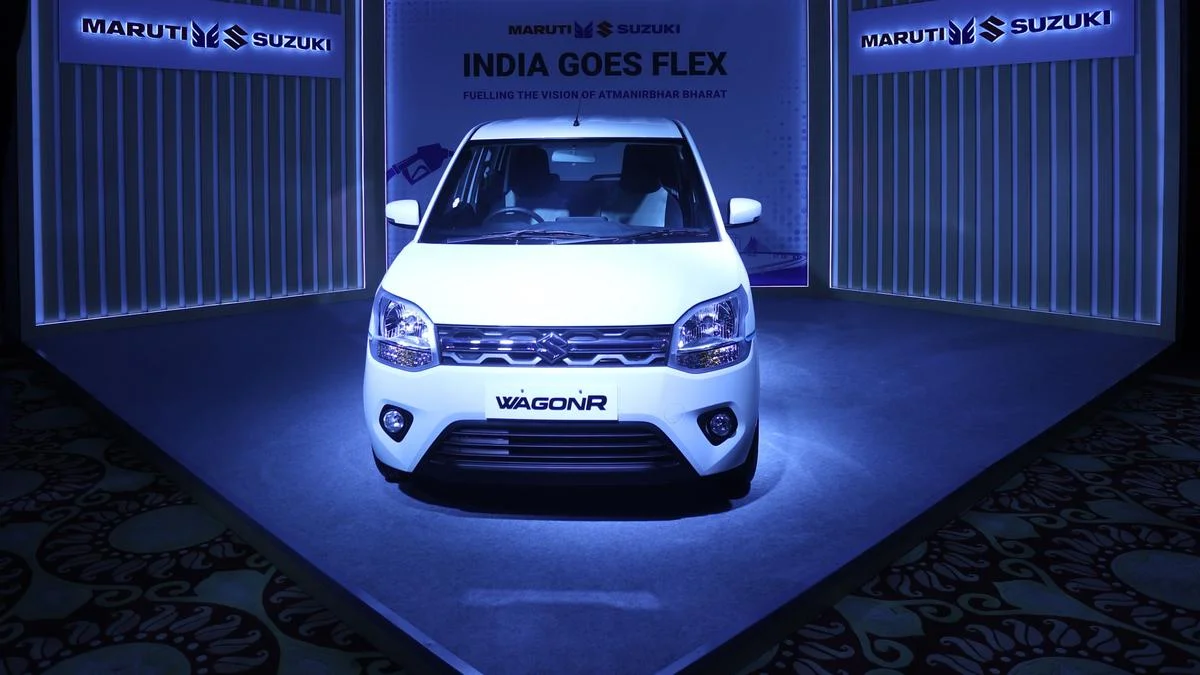
While the global narrative has largely centered on Battery Electric Vehicles (BEVs) as the singular panacea for environmental woes, India is carving out a more nuanced, "all-of-the-above" approach. The recent showcase of the Maruti Suzuki Wagon R Flex Fuel prototype serves as a pivotal moment in this journey. By integrating high-blend ethanol technology into one of the country’s most iconic and high-volume nameplates, Maruti Suzuki is signaling that the internal combustion engine (ICE) still has a vital, albeit greener, role to play in India’s long-term mobility strategy.
The Technological Vanguard: Unpacking the Wagon R Flex Fuel
At a cursory glance, the Maruti Suzuki Wagon R Flex Fuel appears identical to the millions of hatchbacks that zip through Indian city streets. However, beneath its familiar tall-boy silhouette lies a sophisticated suite of engineering advancements designed to tackle the chemical complexities of ethanol.
Engineering for Ethanol Compatibility
Ethanol is inherently different from petrol; it is hygroscopic (absorbs water) and has a lower energy density. To manage these traits, Maruti Suzuki’s engineers have overhauled the vehicle’s fuel system. The Wagon R Flex Fuel is designed to operate on any ethanol-petrol blend ranging from E20 (20% ethanol) to E100 (100% ethanol).
This range is made possible by an advanced Engine Control Unit (ECU). The ECU acts as the vehicle’s "brain," utilizing specialized sensors to detect the exact ratio of ethanol in the fuel tank in real-time. It then instantaneously adjusts ignition timing and fuel injection parameters to optimize performance and efficiency. Furthermore, because ethanol is corrosive to certain materials, the vehicle features reinforced fuel pumps, injectors, and specialized coatings on engine valves and seats to ensure long-term durability.
Performance and Accessibility
By choosing the Wagon R—a car synonymous with the Indian middle class—Maruti Suzuki is making a statement about democratization. High-end technology is often reserved for luxury segments, but the Flex Fuel Wagon R is positioned for the mass market. With an expected price range of INR 7.50 to 8.00 lakh, it targets the heart of the Indian automotive buyer, offering a sustainable alternative without the "range anxiety" or high upfront costs typically associated with electric vehicles.
A Chronological Evolution: India’s Roadmap to Ethanol Adoption
The emergence of the Flex Fuel Wagon R is not an isolated event but the culmination of a decade-long policy push. Understanding the timeline of India’s ethanol journey provides context for why this vehicle is arriving now.

- 2003: The Ethanol Blended Petrol (EBP) Programme was launched, initially targeting a modest 5% blend. However, inconsistent supply and pricing hurdles saw slow progress.
- 2018: The Government of India released the National Policy on Biofuels, which aimed for a 20% ethanol blend (E20) by 2030.
- 2021: In a bold move to accelerate decarbonization, the government moved the E20 deadline forward by five years, setting a new target of 2025.
- 2023: India achieved the 10% blending milestone nationwide and began the pilot rollout of E20 fuel in select cities.
- 2024 and Beyond: The focus has shifted toward "Flex Fuel" vehicles that can handle blends beyond E20. Maruti Suzuki’s showcase of the E100-capable Wagon R marks the next chapter: preparing the market for a future where petrol is a secondary component of the fuel mix.
Supporting Data: The Economic and Environmental Imperative
The push for flex-fuel technology is driven by hard data regarding India’s energy security and environmental commitments.
Reducing the Import Bill
India currently imports approximately 85% of its crude oil requirements. In the 2022-23 fiscal year alone, the country’s oil import bill surged to over $150 billion. According to government estimates, achieving the E20 target alone can save the country roughly INR 30,000 crore ($3.6 billion) in foreign exchange annually. Transitioning to higher blends like E85 or E100 would exponentially increase these savings.
The Agricultural Synergy
Unlike crude oil, which is a finite geological resource, ethanol is an agricultural byproduct. India is the world’s second-largest producer of sugar. By diverting excess sugarcane and damaged food grains (like broken rice and maize) toward ethanol production, the government provides a "safety valve" for farmers. This creates a circular economy where the money spent at the fuel pump stays within the domestic agricultural sector rather than flowing to oil-exporting nations.
Emissions Reductions
From an environmental standpoint, ethanol is a "cleaner" burning fuel. It contains oxygen, which allows for more complete combustion of the fuel in the engine. Studies suggest that E100 can reduce carbon monoxide emissions by up to 30-40% and significantly lower particulate matter compared to neat petrol. While not "zero-emission" like a BEV, it offers an immediate and scalable reduction in the carbon footprint of the existing ICE fleet.
Industry Perspectives and Official Responses: The Strategic Shift
The automotive industry’s response to the flex-fuel mandate has evolved from cautious skepticism to active participation.
The Maruti Suzuki Philosophy
Maruti Suzuki, which holds nearly 40% of the Indian passenger vehicle market, has been vocal about its "Multi-Path" strategy. Hisashi Takeuchi, Managing Director & CEO of Maruti Suzuki India, has frequently emphasized that "one size does not fit all" in a country as diverse as India. While the company is preparing to launch its first high-profile electric SUV (the eVX), it maintains that CNG, Hybrids, and Flex-Fuels are essential to cover the vast geography where EV charging infrastructure remains sparse.
Government Backing
The Ministry of Road Transport and Highways (MoRTH), led by Minister Nitin Gadkari, has been the primary cheerleader for flex-fuel technology. The government’s official stance is that flex-fuel engines provide the quickest route to reducing the carbon footprint of the millions of vehicles already on the road. By incentivizing manufacturers to produce flex-fuel-compliant engines, the government aims to make India a global hub for biofuel technology, drawing parallels to Brazil’s successful ethanol program.

Navigating the Hurdles: Consumer Confidence and Infrastructure
Despite the technical readiness of vehicles like the Wagon R Flex Fuel, several "roadblocks" remain that could impede mainstream adoption.
The Awareness Gap
There is a significant lack of public understanding regarding ethanol. Many car owners express concern that ethanol—which is an alcohol—might "dry out" engine seals or cause rust. While modern flex-fuel vehicles are specifically engineered to prevent these issues, the memory of older vehicles struggling with lower-quality fuel blends persists. A massive public education campaign is required to build trust.
The Price Parity Problem
For the average Indian consumer, the "green" argument is often secondary to the "wallet" argument. Currently, ethanol is cheaper to produce than petrol, but this price benefit is not always passed down to the consumer at the pump. Furthermore, because ethanol has a lower energy density than petrol, a car running on E100 will typically see a 20-30% drop in fuel efficiency (mileage). Unless ethanol is priced significantly lower than petrol to offset the lower mileage, consumers will have little incentive to make the switch.
Distribution Logistics
While ethanol can leverage the existing petrol pump network, it requires dedicated underground storage tanks and dispensing units at the higher blend levels (E85/E100). Ensuring that E100 is as available as "Normal" petrol across the vast Indian hinterland is a logistical challenge that requires massive investment from state-owned oil marketing companies (OMCs).
Strategic Implications: The Multi-Pathway Future of Indian Mobility
The Maruti Suzuki Wagon R Flex Fuel is more than just a car; it is a symbol of a pragmatic transition. It represents a recognition that the "Electric vs. ICE" debate is a false binary.
Parallel Technologies
The future of Indian mobility will likely be a mosaic. In dense urban centers with robust charging grids, EVs will dominate. For long-distance travel and heavy-duty transport, Green Hydrogen and Advanced Biofuels will play a role. For the millions of middle-class families in Tier 2 and Tier 3 cities, flex-fuel vehicles like the Wagon R offer a way to participate in the green revolution without requiring a radical change in lifestyle or a massive leap in purchase price.
Global Leadership
By mastering flex-fuel technology for small, affordable cars, India positions itself as a leader for other emerging markets in Southeast Asia and Africa. These regions face similar challenges: high fuel import costs, large agricultural sectors, and limited power grids. The "Indian Model" of flex-fuel adoption could become a blueprint for the Global South.

Conclusion: The Road Ahead
The Wagon R Flex Fuel prototype is a testament to what is possible when engineering prowess meets clear-headed policy. Maruti Suzuki has proven that the technology is ready for the masses. The ball is now in the court of the broader ecosystem.
For flex-fuel to succeed, the government must ensure price parity at the pump, OMCs must accelerate the rollout of high-blend dispensing stations, and manufacturers must continue to demystify the technology for the end-user. If these elements align, the humble Wagon R might just be the vehicle that drives India toward a more self-reliant and sustainable energy future.
As the expected launch approaches, the industry will be watching closely. At an estimated price of INR 7.50 – 8.00 lakh, the Wagon R Flex Fuel isn’t just an experiment—it’s a declaration that the future of Indian motoring is diverse, inclusive, and increasingly "homegrown."
Motorscribes, in association with The Hindu, brings you the latest in cars and bikes. Follow them on Instagram @motorscribes
