

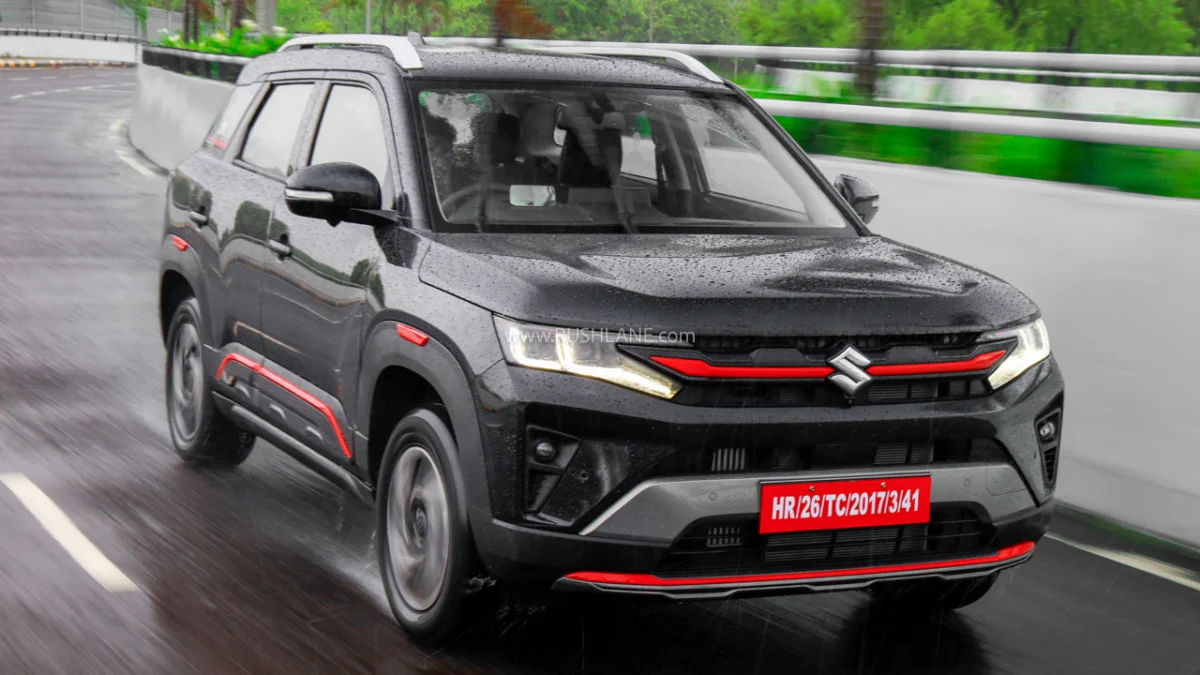
The Indian automotive landscape is currently dominated by the sub-4-meter SUV segment, a category that balances urban maneuverability with the rugged appeal of an off-roader. As the market matures, manufacturers are no longer just competing on price; they are locked in a sophisticated arms race involving turbocharged engines, Level-2 ADAS, and premium cabin appointments. The recent introduction of the Maruti Brezza facelift, now equipped with the much-anticipated 1.0L BoosterJet turbo-petrol engine, has recalibrated the segment’s dynamics.
This analysis explores how the new Brezza fares against a formidable lineup of rivals: the Tata Nexon, Hyundai Venue, Kia Sonet, Kia Syros, Mahindra XUV3XO, and the Skoda Kylaq. By dissecting dimensions, powertrain configurations, and feature sets, we provide a comprehensive look at the current state of India’s most popular vehicle category.
Main Facts: The New Brezza’s Strategic Positioning
The facelifted Maruti Brezza represents a pivotal shift for Maruti Suzuki. For years, the Brezza relied on its 1.5L naturally aspirated (NA) K-series engine—a reliable but sedate performer. The introduction of the 1.0L BoosterJet engine, shared with the Fronx, signals Maruti’s intent to capture the "enthusiast" demographic that previously gravitated toward the Tata Nexon or Kia Sonet.
Pricing and Value Proposition
Maruti has hit what industry experts call a "sweet spot" in pricing. Starting at an aggressive ₹7.4 lakh (ex-showroom), the Brezza aligns perfectly with the entry-level pricing of the Tata Nexon and Kia Sonet. This entry price is crucial for attracting first-time SUV buyers. However, at the higher end of the spectrum, the Brezza tops out at ₹13.71 lakh. While competitive, this pricing puts it in direct conflict with the Skoda Kylaq and Kia Syros, both of which offer arguably more sophisticated interior packaging and advanced tech suites.
The Power Paradigm
The core of this update is the powertrain. While the 1.5L NA petrol and CNG options remain for the value-conscious buyer, the 1.0L Turbo Petrol is the new flagship. Despite this, on-paper figures suggest the Brezza’s turbo unit provides the lowest output among its turbocharged peers. Rivals like the XUV3XO and Nexon offer higher torque figures, which are often more palpable in real-world highway overtaking maneuvers.

Chronology: The Evolution of the Brezza
To understand the significance of the current facelift, one must look at the Brezza’s decade-long journey:
- 2016 – The Inception: Launched as the Vitara Brezza, it was initially a diesel-only offering. It quickly became the segment leader due to its robust build and Maruti’s service network.
- 2020 – The Petrol Shift: Following the implementation of BS6 norms, Maruti discontinued the 1.3L DDiS diesel engine, replacing it with the 1.5L K15B petrol engine. Many feared the loss of diesel would hurt sales, but the Brezza remained a top seller.
- 2022 – The Major Overhaul: Maruti dropped the "Vitara" prefix and introduced a completely new design, a sunroof (a first for Maruti), and a 6-speed automatic transmission.
- 2024-2025 – The "Turbo" Era: Recognizing the shift toward performance, Maruti integrated the BoosterJet engine and enhanced the safety suite to include features like blind-spot monitoring and ventilated seats to keep pace with the rapidly evolving competition from Mahindra and Kia.
Supporting Data: A Dimensional and Technical Comparison
In the sub-4m segment, every millimeter counts. While all these vehicles are constrained by the 3,995 mm length limit to qualify for small-car tax benefits, their width, height, and wheelbases vary significantly, impacting cabin comfort and road presence.
Dimensions and Space
- The Cabin King: The Mahindra XUV3XO remains the undisputed champion of interior space. With a width of 1,821 mm and a segment-leading wheelbase of 2,600 mm, it offers the most shoulder room and legroom for rear passengers.
- The Tall Boy: The Maruti Brezza is the tallest in the segment at 1,685 mm. This provides excellent headroom and a "commanding" driving position that many SUV buyers crave.
- Cargo Capacity: While Maruti has been conservative in disclosing the Brezza’s exact boot volume for the facelift, the Kia Syros appears to lead the pack in practical cargo management. Its configurable rear seats allow for a versatility that rivals the larger mid-size SUV segment.
- Ground Clearance: The Tata Nexon continues to offer the highest ground clearance, making it the preferred choice for buyers in regions with poor infrastructure.
Powertrain and Mechanicals
The segment is now split between those offering diesel and those focusing on petrol/CNG.
| Feature | Maruti Brezza | Tata Nexon | Kia Sonet/Syros | Mahindra XUV3XO |
|---|---|---|---|---|
| Petrol Engines | 1.0L Turbo / 1.5L NA | 1.2L Turbo | 1.2L NA / 1.0L Turbo | 1.2L Turbo (TCMPFI/TGDI) |
| Diesel Option | No | Yes | Yes | Yes |
| CNG Option | Yes (S-CNG) | Yes (iCNG) | No | No |
| Rear Brakes | Drum | Drum | Drum | Disc (Standard) |
A notable mechanical advantage goes to the Mahindra XUV3XO, which is the only vehicle in this comparison to offer rear disc brakes as standard across all variants, significantly improving stopping power.
Safety and Technology: The New Frontier
The conversation around Indian cars has shifted dramatically toward safety ratings and Advanced Driver Assistance Systems (ADAS).

Safety Ratings
The Brezza carries a 5-star rating from BNCAP (Bharat NCAP). However, market sentiment still leans heavily toward GNCAP (Global NCAP) history. The Tata Nexon and the Mahindra XUV3XO (via its predecessor, the XUV300) have long-standing reputations for 5-star GNCAP safety, which remains a primary USP for these brands.
ADAS and Driver Aids
The tech gap is widening. The Nexon, Syros, Venue, and XUV3XO all offer Level-2 ADAS, which includes autonomous emergency braking, lane-keep assist, and adaptive cruise control. The Kia Sonet offers Level-1 ADAS. In contrast, the Maruti Brezza and Skoda Kylaq skip ADAS entirely.
However, Maruti has included a unique feature set to compensate:
- Heads-Up Display (HUD): The Brezza is the only one to offer a retractable HUD, allowing drivers to keep their eyes on the road.
- Blindspot Warning: Uniquely, the Brezza provides a blindspot alert on the ORVMs, a feature typically found in premium luxury cars.
Features and Creature Comforts: Where the Battle is Won
The modern Indian buyer demands a "mini-luxury" experience. The facelifted Brezza finally catches up in some areas but lags in others.
The "Cooling" Factor
Maruti has finally introduced ventilated front seats in the Brezza, a necessary feature for the Indian climate. While most rivals offer this, the Kia Syros ups the ante by offering ventilated seats for the rear passengers as well—a segment-first.

Sunroofs and Climate Control
The "panoramic sunroof" trend has hit the sub-4m segment hard. The Kia Syros, Tata Nexon, and Mahindra XUV3XO all offer panoramic units, whereas the Brezza sticks to a standard single-pane electric sunroof. Furthermore, the XUV3XO remains the only vehicle to offer dual-zone climate control, allowing the driver and passenger to set different temperatures.
Infotainment and Connectivity
This is perhaps the Brezza’s weakest point. Its 9-inch SmartPlay Pro+ touchscreen is the smallest among its modern rivals. Users have noted that running split-screen apps (like Google Maps alongside Spotify) feels cramped compared to the 10.25-inch wide-screen displays found in the Sonet, Syros, and Nexon. Additionally, while rivals have moved to fully digital instrument clusters, Maruti retains analogue dials with a small MID. While many traditionalists prefer analogue, the lack of map integration in the cluster is a missed opportunity.
Official Context and Market Implications
Maruti Suzuki’s Philosophy
Maruti Suzuki’s official stance has always been "safety through stability" and "total cost of ownership." By introducing the 1.0L BoosterJet, the company is addressing the criticism of being "underpowered" while maintaining its industry-leading fuel efficiency through mild-hybrid technology. Maruti officials emphasize that while they may not lead in every tech category (like ADAS), their focus remains on features that have high daily utility, such as the 360-degree camera and HUD.
Market Implications
The introduction of the Brezza facelift with a turbo engine will likely consolidate Maruti’s market share. However, the competition is no longer just about the "Maruti badge."
- The Tata Nexon remains the choice for those prioritizing safety and a robust diesel engine.
- The Kia Syros and Sonet cater to the tech-savvy buyer who wants the "wow" factor of big screens and premium audio.
- The Mahindra XUV3XO is the performance and space leader.
For the Brezza, the "sweet spot" pricing is its greatest weapon. It offers a reliable, well-rounded package that is easy to maintain and holds its resale value better than any other car in the segment.

Conclusion: The Verdict
The new Maruti Brezza facelift is a calculated move. It doesn’t aim to be the fastest, the most tech-laden, or the most spacious. Instead, it aims to be the most "sensible" choice that now finally has enough "pulp" under the hood to satisfy the modern driver.
While the XUV3XO wins on space, the Nexon on safety credentials, and the Syros on futuristic features, the Brezza wins on the balance of reliability, updated features (HUD, 360-cam), and a price point that is hard to ignore. For the Indian middle class, the Brezza remains the "Goldilocks" of SUVs—it’s just right for most people, most of the time. However, for those seeking a true premium experience or high-speed performance, the rivals currently hold a slight edge in hardware and sophistication.
