

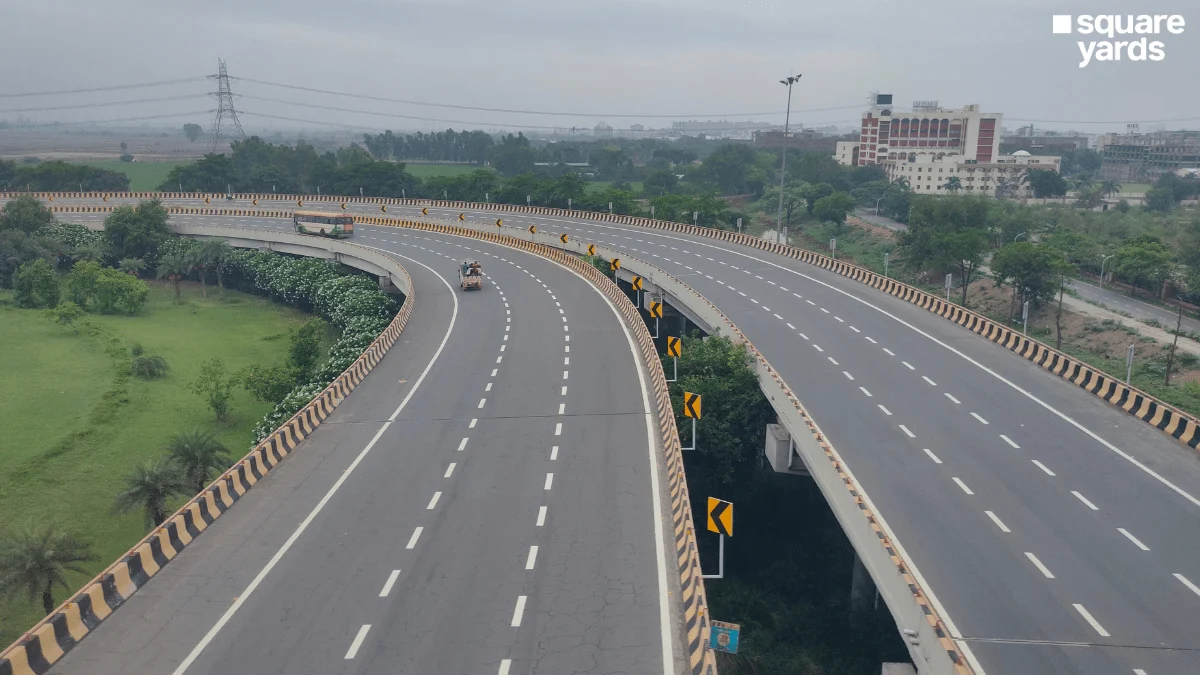
The landscape of Northern India’s real estate and industrial sector is undergoing a tectonic shift. At the heart of this transformation is the Yamuna Expressway Industrial Development Authority (YEIDA) Master Plan 2041. This ambitious blueprint is not merely a zoning document; it is a strategic roadmap designed to convert a 165-kilometer stretch of highway into a global economic powerhouse. As the region transitions from a nascent corridor to a structured "Aerotropolis," the Master Plan 2041 serves as the definitive guide for investors, developers, and future residents.
1. Main Facts: The Scope and Scale of Master Plan 2041
The YEIDA Master Plan 2041 is a vision document that outlines the development of the notified area along the Yamuna Expressway, stretching from Greater Noida to Agra. The plan focuses on creating a self-sustaining ecosystem where residential, industrial, and commercial interests coexist within a high-tech infrastructure framework.
The Geographic and Demographic Reach
The Master Plan covers a staggering area, targeting the development of approximately 600,000 hectares across six districts: Gautam Buddh Nagar, Bulandshahr, Aligarh, Hathras, Mathura, and Agra. The primary focus of the 2041 plan is the "Phase 1" area, which is expected to house a population of over 4 million people by the end of the next two decades.
Strategic Zoning and Land Use
Unlike previous iterations, the 2041 plan emphasizes a "Mixed Land Use" (MLU) approach. Key allocations include:
- Industrial Hubs: Dedicated zones for MSMEs, data centers, and specialized parks (Toy Park, Apparel Park, and Medical Device Park).
- Residential Sectors: High-density and low-density housing zones designed to accommodate the workforce of the upcoming Noida International Airport.
- Green Belts: A commitment to maintaining at least 20-25% of the area as green cover to ensure environmental sustainability.
- Commercial and Logistics: Large-scale logistics parks and integrated commercial districts to support the supply chain requirements of North India.
2. Chronology: The Evolution of the Yamuna Expressway
To understand the significance of the 2041 Master Plan, one must look at the timeline of the region’s development, which has moved from a barren agricultural stretch to a multi-billion dollar investment destination.
- 2001: The Taj Expressway Industrial Development Authority (later renamed YEIDA) was established to spearhead development between Delhi and Agra.
- 2012: The 165-km Yamuna Expressway was inaugurated, drastically reducing travel time and opening the gates for initial real estate speculation.
- 2014–2017: The region faced a period of stagnation due to land acquisition hurdles and a slowdown in the national real estate market.
- 2018: The formal announcement of the Noida International Airport at Jewar acted as a catalyst, reviving interest from global investors.
- 2021: The draft of the Master Plan 2041 was prepared, incorporating modern urban planning principles such as Transit-Oriented Development (TOD).
- 2023–2024: Final approvals and the start of large-scale infrastructure projects, including the Film City and the MRO (Maintenance, Repair, and Overhaul) hub for aircraft.
- July 2026 (Projected Update): The plan reaches a critical milestone as the first phase of the Noida International Airport nears operational status, aligning market prices with the 2041 vision.
3. Supporting Data: Analyzing the Real Estate Market Dynamics
The real estate market along the Yamuna Expressway is no longer driven by pure speculation. Hard data suggests a maturing market that is responding to tangible infrastructure milestones.
Pricing and Rental Trends
As of mid-2024, the average asking price for property in the YEIDA region stands at Rs 9,700 per square foot (psf). This represents a steady year-on-year growth of 5.13%. While this appreciation is healthy, it is the long-term trajectory that attracts investors. For comparison, prices a decade ago were less than a third of current values.
In the rental market, the current average stands at Rs 18 psf, with a rental yield of 2.23%. While the yield is currently modest compared to established hubs like Gurgaon or Central Noida, analysts expect a sharp uptick once the industrial units and the airport become fully operational, creating a massive demand for executive housing.
Supply vs. Demand Mismatch
The current inventory on the Yamuna Expressway reveals an interesting dichotomy:
- Supply: The market is dominated by plots (65%), followed by independent houses (9%). High-rise apartments currently make up a smaller fraction of the available inventory.
- Demand: Interestingly, buyer preference is leaning toward independent houses (40%), with plots coming in second at 31%.
This gap suggests a significant opportunity for developers to pivot toward "built-up" independent floors and villas. The demand is most concentrated in the Rs 50 lakh to Rs 2 crore price bracket, signaling a shift toward middle-to-upper-middle-class buyers looking for long-term primary residences rather than just "land banking."
4. Official Responses and Governance Strategy
The Yamuna Expressway Industrial Development Authority has been proactive in addressing the challenges of rapid urbanization. Officials have emphasized that the Master Plan 2041 is a "living document" that adapts to technological and economic shifts.
Focus on Connectivity
According to senior YEIDA officials, the priority is "multimodal connectivity." The authority is working in tandem with the state and central governments to integrate:
- The Pod Taxi Project: India’s first personal rapid transit system connecting the Airport to Film City.
- Rapid Rail (RRTS): Plans to extend the rapid rail network to link the Yamuna Expressway with Delhi and the rest of the NCR.
- Metro Extension: The expansion of the Aqua Line to provide seamless transit for the workforce.
Ease of Doing Business
To attract global players like Google, Microsoft, and various semiconductor manufacturers, YEIDA has implemented a single-window clearance system. Official statements highlight that land allotment for industries is now linked to strict timelines for construction, ensuring that the region does not suffer from "frozen" land parcels held by speculators.
5. The "Aerotropolis" Concept: Beyond the Airport
A cornerstone of the 2041 plan is the development of an "Aerotropolis"—a metropolitan subregion where the layout, infrastructure, and economy are centered around an airport.
The Noida International Airport (NIA)
The NIA is designed to be India’s largest airport upon completion. However, the Master Plan 2041 treats the airport as an anchor for other high-value projects:
- The Film City: Spread over 1,000 acres, this project aims to be the "Hollywood of India," providing a massive boost to the hospitality and service sectors.
- Logistics and Warehousing: Given its proximity to the Eastern Peripheral Expressway and the Western Dedicated Freight Corridor, the region is set to become the logistics capital of North India.
- Medical Device Park: A 350-acre dedicated zone that has already seen interest from dozens of manufacturers, aligning with the "Make in India" initiative.
6. Implications: What This Means for Stakeholders
The rollout of the Master Plan 2041 has far-reaching implications for various sectors of society.
For Homebuyers
The plan offers a rare opportunity to enter a planned city at an early stage. With the emphasis on wide roads, underground cabling, and integrated smart-city features, the Yamuna Expressway is being positioned as a more organized alternative to the congested hubs of Delhi and Gurgaon. However, buyers must be prepared for a "waiting period" as social infrastructure—schools, hospitals, and shopping malls—is still in the developmental phase.
For Investors
The 5.13% price growth is likely the floor, not the ceiling. As the airport nears its first flight, capital appreciation is expected to accelerate. The high demand for independent houses suggests that investors who develop their plots into "ready-to-move" homes may see higher returns than those holding raw land.
For the Regional Economy
The Master Plan is expected to generate hundreds of thousands of direct and indirect jobs. This migration of talent will drive the demand for co-living spaces, retail outlets, and private educational institutions, creating a secondary economy that will support the primary industrial growth.
7. Conclusion: A Vision of Maturity
The YEIDA Master Plan 2041 is a testament to long-term urban thinking. By integrating the Noida International Airport with industrial parks, high-speed connectivity, and sustainable residential zones, the plan sets the stage for the Yamuna Expressway to become a global benchmark for urban development.
While the market currently shows signs of being in an "evolutionary" phase—characterized by modest rental yields and a plot-heavy supply—the underlying fundamentals are robust. As the vision of 2041 begins to manifest in concrete and steel, the Yamuna Expressway is poised to transition from a high-speed transit corridor into a vibrant, self-sustaining mega-city. For those looking at the horizon of 2041, the message is clear: the region is no longer just about the journey; it has become the destination.
