

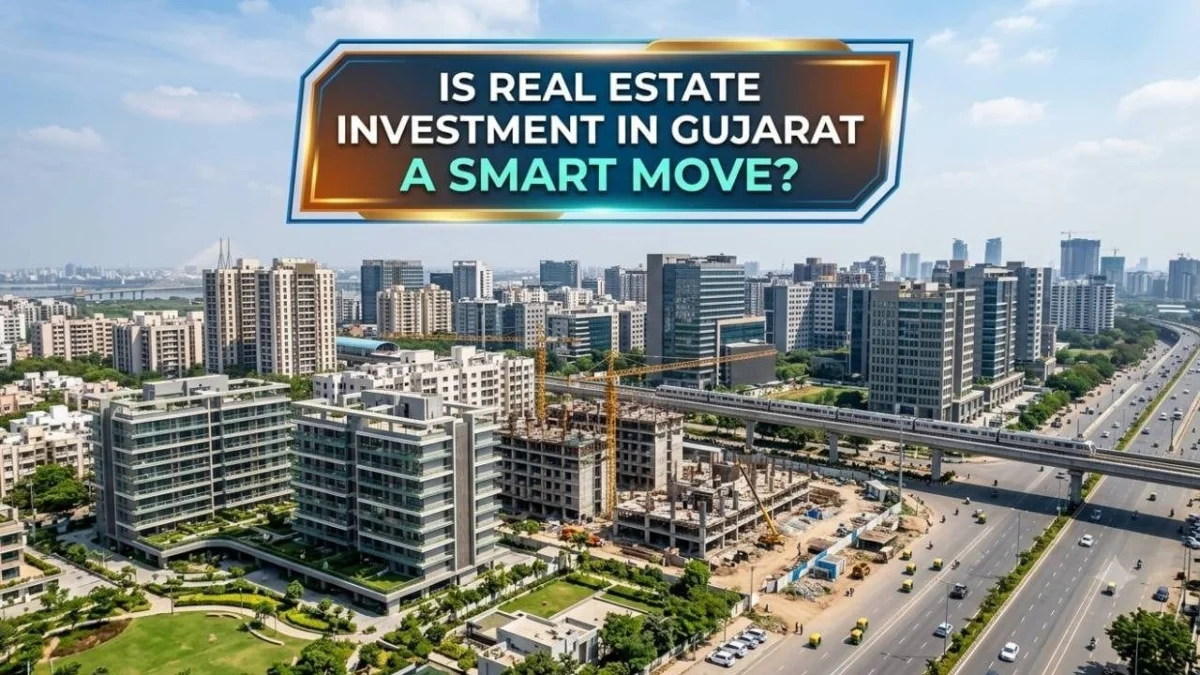
Main Facts: The Ascendance of India’s Industrial Powerhouse
Gujarat has transitioned from being India’s traditional industrial backbone to a sophisticated, multi-sectoral real estate magnet. In the current fiscal climate, the state represents a unique intersection of aggressive infrastructure development, policy-driven transparency, and a burgeoning middle-class demand. While the broader Indian real estate market has faced headwinds due to global inflationary pressures, Gujarat’s property sector remains resilient, bolstered by a state government that prioritizes "Ease of Doing Business" and high-speed connectivity.
The core appeal of Gujarat lies in its diversity. Unlike the saturated markets of Mumbai or the often-volatile Delhi-NCR, Gujarat offers a tiered investment landscape. From the ultra-luxury commercial stretches of Ahmedabad’s Sindhu Bhavan Road to the futuristic, tech-driven horizons of GIFT City in Gandhinagar, the state provides entry points for various capital scales. Key drivers such as the Gujarat International Finance Tec-City (GIFT City), the Dholera Special Investment Region (SIR), and the Mumbai-Ahmedabad High-Speed Rail (MAHSR) project are not merely infrastructure milestones; they are economic multipliers that are fundamentally recalibrating land values across the state.
Chronology: From Industrial Roots to a Global Financial Hub
To understand the current real estate boom, one must trace the chronological evolution of Gujarat’s urban development over the last two decades.
- 2003–2015: The Industrial Foundation: The "Vibrant Gujarat" summits initiated a period of intense industrialization. During this phase, real estate growth was primarily concentrated around industrial clusters in Sanand, Vapi, and Ankleshwar. Residential demand was largely driven by the workforce serving these manufacturing sectors.
- 2016–2019: Regulatory Reform and Tech Aspirations: The implementation of the Real Estate (Regulation and Development) Act (RERA) in 2016 was a watershed moment. The Gujarat Real Estate Regulatory Authority (GUJRERA) became one of the most active and transparent bodies in the country, instilling investor confidence. Simultaneously, the conceptualization of GIFT City began to shift the focus from "blue-collar" industrial housing to "white-collar" financial and tech residential hubs.
- 2020–2022: The Pandemic Pivot and Infrastructure Acceleration: Post-COVID, there was a significant shift toward "spacious living." The demand for gated communities and plotted developments surged. During this period, the state accelerated the Ahmedabad Metro Rail project and the Vadodara-Mumbai Expressway, linking major urban centers more tightly than ever before.
- 2023–Present: The Era of Mega-Projects: Today, the market is defined by "The Big Three": GIFT City’s expansion, the Dholera Smart City’s initial operational phases, and the rapid construction of the Bullet Train corridor. These projects have moved from the "planning" phase to the "execution" phase, leading to a tangible spike in property inquiries from Non-Resident Indians (NRIs) and institutional investors.
Supporting Data: Quantifying the Growth Trajectory
The bullish sentiment in Gujarat’s real estate market is backed by robust economic indicators and market performance data.
Appreciation and Rental Yields
In high-growth corridors such as Western Ahmedabad and the GIFT City periphery, annual property appreciation has consistently clocked between 8% and 12%. This outperforms traditional savings instruments and competes favorably with the equity markets. Rental yields in commercial hubs have also seen a steady climb, with premium office spaces in Ahmedabad and Surat offering yields in the range of 6% to 9%, significantly higher than the residential average of 2-3%.
Infrastructure Metrics
- The Bullet Train Corridor: The Mumbai-Ahmedabad High-Speed Rail is expected to reduce travel time to under 3 hours. Historical data from international markets (like Japan’s Shinkansen) suggests that secondary cities along high-speed rail corridors experience a 20-30% surge in property values within five years of operations.
- GIFT City’s Influx: With over 500 companies already operational, including international giants like Google and Oracle, the demand for residential units within a 10km radius of GIFT City has seen a 15% year-on-year increase in transaction volume.
- Affordability Index: Despite the rise in prices, Gujarat’s major cities remain significantly more affordable than other Tier-1 Indian cities. A luxury 3BHK in a prime Ahmedabad locality like Shilaj costs approximately 40-50% less than a similar unit in Gurgaon or South Mumbai, providing a much higher "Value for Money" quotient.
Top Cities Driving the Investment Engine
The real estate narrative in Gujarat is not monolithic; it is distributed across four primary economic engines, each with its own distinct investment "vibe."
1. Ahmedabad: The Commercial & Luxury Favorite
Ahmedabad remains the undisputed heavyweight. The city has successfully pivoted from its "Manchester of the East" textile identity to a modern metropolis.
- Micro-markets: Sindhu Bhavan Road (SBR) has emerged as the "Billionaire’s Row," featuring high-end retail, luxury penthouses, and Grade-A office spaces.
- Growth Areas: Shilaj, Science City, and Gota are the primary beneficiaries of the Ahmedabad Metro expansion, making them ideal for long-term residential capital gains.
2. Gandhinagar: The Tech & Finance Capital
No longer just a quiet administrative town, Gandhinagar is now the epicenter of India’s fintech ambitions.
- The GIFT City Effect: The relaxation of certain liquor laws within the GIFT City area and the push for "walk-to-work" culture have made it a magnet for young professionals and expats.
- Sustainability: Gandhinagar’s focus on green cover and wide boulevards makes it the preferred choice for retirees and those seeking a higher quality of life.
3. Surat: The Industrial Powerhouse 2.0
Surat, world-renowned for its diamond and textile industries, is undergoing a massive facelift.
- Diamond Bourse: The inauguration of the Surat Diamond Bourse—the world’s largest office building—has created a massive demand for executive housing.
- Modernization: Areas like Vesu and Dumas Road are seeing a shift from traditional bungalows to high-rise gated communities with international-standard amenities.
4. Vadodara: The Hub of Culture and Manufacturing
Vadodara offers a "steady and slow" investment profile, ideal for risk-averse investors.
- Educational & Industrial Blend: Home to the Maharaja Sayajirao University and massive PSUs, the city offers a stable rental market.
- Value Play: Locations like Gotri and Vasna Road provide spacious residential options at price points that are attractive for middle-income families.
Official Responses and the Regulatory Framework
State officials and regulatory bodies have played a proactive role in shaping this landscape. The Gujarat government’s "Town Planning Scheme" (TP Scheme) model is often cited nationally as a benchmark for organized urban expansion. By pooling land and returning developed plots to owners while retaining land for public infrastructure, the state has avoided the chaotic "urban sprawl" seen in other parts of India.
The GUJRERA Stance:
Official data from the Gujarat Real Estate Regulatory Authority indicates a high rate of project completion and a low rate of litigation compared to neighboring states. GUJRERA’s strict adherence to timelines and the mandatory escrow account system (where 70% of buyer funds must be kept for construction) has effectively weeded out fly-by-night operators.
Government Incentives:
Recent policy updates, including incentives for IT/ITeS companies and subsidies for green building certifications, have encouraged developers to shift toward sustainable and tech-enabled projects. This official push ensures that the real estate market isn’t just growing in quantity, but also in quality.
Understanding the Risks: A Balanced Perspective
A professional journalistic assessment would be incomplete without addressing the localized risks and structural challenges.
- Oversupply in the Periphery: In areas like the outer rings of Gota or the northern fringes of Gandhinagar, the speed of construction has occasionally outpaced the current occupancy rate. This can lead to "stagnant" periods where rental growth remains flat for 2-3 years until the local infrastructure catches up.
- The "Dholera" Gestation Period: While Dholera Smart City is a project of monumental scale, it is a "greenfield" development. Investors looking for immediate liquidity or rental income may find themselves disappointed. Dholera is a 10-to-20-year wealth creation play, not a short-term flip.
- Infrastructure Lag: While the major expressways are world-class, "last-mile" connectivity in newly developing sub-localities can still be an issue. Investors must verify the status of local sewage, water, and electricity connections before committing to pre-launch offers.
Implications: Is Gujarat the Right Fit for Your Portfolio?
The implications of Gujarat’s real estate trajectory are clear: the state is no longer a "speculative" market but a "strategic" one.
- For the Long-term Wealth Creator: Putting capital into the GIFT City corridor or along the Bullet Train stations (like Sabarmati or Anand) offers the potential for significant capital appreciation as these nodes become operational.
- For the Income-Focused Investor: Commercial units in established Ahmedabad hubs or 2BHK apartments in Surat’s Vesu area provide reliable, inflation-hedged monthly returns.
- For the NRI Community: The transparency provided by RERA and the familiarity of the "business-first" culture make Gujarat one of the safest destinations for repatriating funds into tangible assets.
The Bottom Line:
Gujarat’s real estate market is currently in a "Sweet Spot." It has moved past the initial uncertainty of major reforms and is now reaping the rewards of disciplined urban planning and massive infrastructure spending. While localized due diligence remains mandatory, the broader economic indicators suggest that Gujarat will continue to lead India’s property market for the foreseeable future. The key to success in this market is not just where you buy, but why you buy—matching your investment horizon with the specific growth cycle of the chosen city.
