

By [Your Name/Journal Staff]
The air in northern Rajasthan carries a scent of parched earth and ancient lime plaster. To enter a traditional haveli here is to perform an act of involuntary reverence; the low-slung wooden doors, heavy with brass studs and centuries of history, require a visitor to bow their head to gain entry. Inside, the reward is an explosion of color that defies the arid landscape outside.
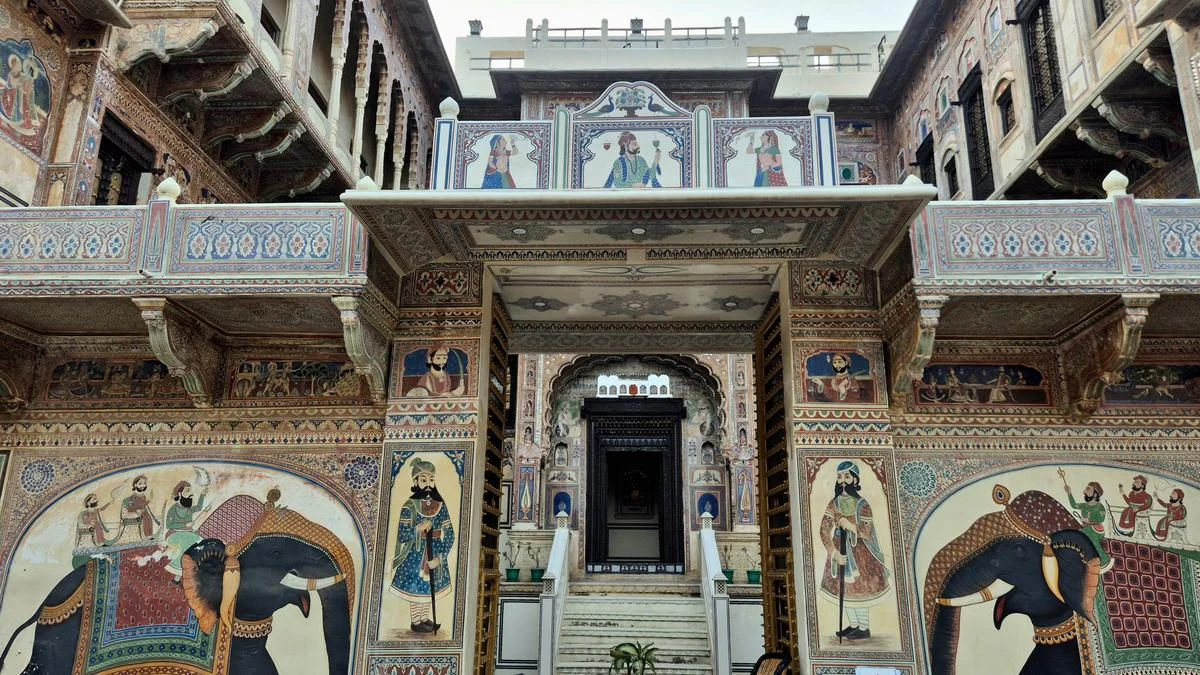
Often described as the world’s largest open-air art gallery, the Shekhawati region is a dense concentration of 18th to 20th-century merchant mansions. These structures, known as havelis, are adorned with intricate frescoes that serve as a visual encyclopedia of a bygone era. Today, this region—comprising the districts of Churu, Jhunjhunu, and Sikar—stands at a crossroads between terminal decay and a sophisticated revival driven by heritage tourism and adaptive reuse.
Main Facts: The Open-Air Gallery of the Thar
Shekhawati’s architectural significance lies not just in the scale of its buildings, but in the narrative depth of its walls. Unlike the royal palaces of Jaipur or Udaipur, these havelis were commissioned by the Marwari and Jain merchant classes—the "mercenaries of commerce" who funded the British Raj and built empires in cotton, silk, and opium.
Architectural Synthesis
The region’s architecture is a unique hybrid. At Malji Ka Kamra in Churu, for instance, the structure blends Italianate details with traditional Rajput design. Visitors encounter Corinthian columns and arched balconies alongside stained glass and traditional lime-plaster frescoes. These murals cover every available surface, from the vaulted ceilings of the zenana (women’s quarters) to the external facades visible to passersby.
The Fresco Narrative
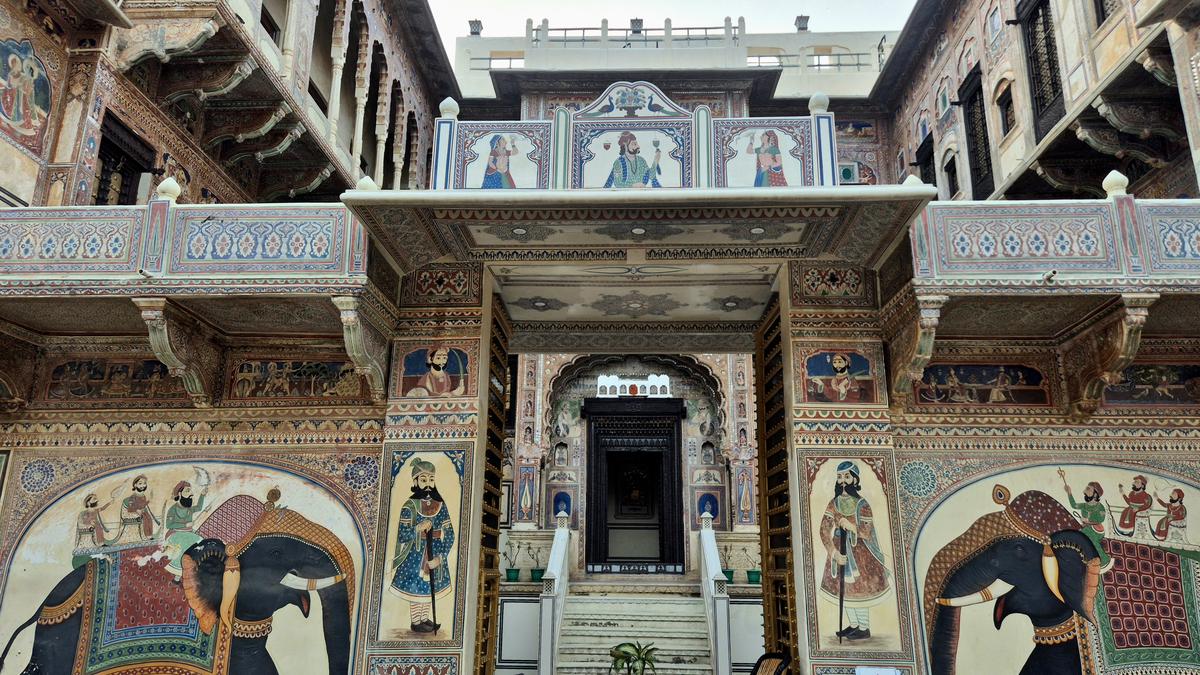
The frescoes of Shekhawati are more than mere decoration; they are historical records. Early works focus on religious mythology and floral motifs. However, as the 19th century progressed, the murals began to reflect the traders’ exposure to the Western world. It is common to see depictions of steam engines, gramophones, and even early bicycles alongside traditional scenes of Radha and Krishna. These "modern" additions were often painted by artists who had never seen the objects themselves, resulting in whimsical, slightly surreal interpretations of colonial technology.
Chronology: From Caravan Routes to Conservation
The evolution of Shekhawati follows the rise and fall of India’s overland trade routes.
- The 15th Century: The region’s identity begins with Rao Shekha, a Rajput chieftain who established independent control over this semi-arid territory. Its strategic location between the power centers of Delhi/Agra and the ports of Gujarat made it a vital corridor for caravans.
- The 18th and 19th Centuries: This was the "Golden Age" of Shekhawati. As the British East India Company consolidated power, the Marwari traders moved their headquarters to port cities like Calcutta and Bombay. However, they sent their vast wealth back to their ancestral villages, competing to build the most ornate havelis as symbols of status.
- The Early 20th Century: The decline began as trade routes shifted toward railways and sea ports, bypassing the desert interior. Many merchant families permanently relocated, leaving their ancestral homes in the care of munims (caretakers).
- The 1899 Famine: A pivotal moment in the region’s social history, the severe famine led to the construction of "famine relief" projects, such as the Sethani Ka Johara stepwell in Churu, designed to provide employment and water security.
- The 21st Century: A revival is underway. Starting in the late 1990s, conservationists began identifying Shekhawati as a critical heritage zone. Today, festivals like the Vedaaranya Heritage and Healing Festival (VHAH) aim to re-integrate these spaces into the modern cultural consciousness.
Supporting Data: A Grid of Heritage
The Shekhawati region is defined by its key towns, each offering a distinct flavor of this mercantile history.
Mandawa: The Cinematic Hub
Mandawa is the most recognizable face of Shekhawati, frequently serving as a backdrop for Bollywood productions such as Bajrangi Bhaijaan and PK. The town is anchored by Mandawa Castle, a medieval Rajputana fortress. The surrounding grid contains some of the region’s finest examples of mural art:
- The Goenka Double Haveli: Notable for its monumental scale and facade.
- The Murmuria Haveli: Famous for its paintings of cars and trains, reflecting the 1930s obsession with modernity.
Nawalgarh: The Museum Town
Nawalgarh is often considered the most "lived-in" of the heritage towns. It houses the Dr. Ramnath Podar Haveli Museum, one of India’s largest private museums. The town’s focus has shifted toward "adaptive reuse," where buildings are not merely preserved as static exhibits but are converted into functioning hotels and cultural centers. The Vivaana Museum Hotel, a 150-year-old Jaipuria haveli, serves as a primary case study for this model.
Churu: The Gateway to the Desert
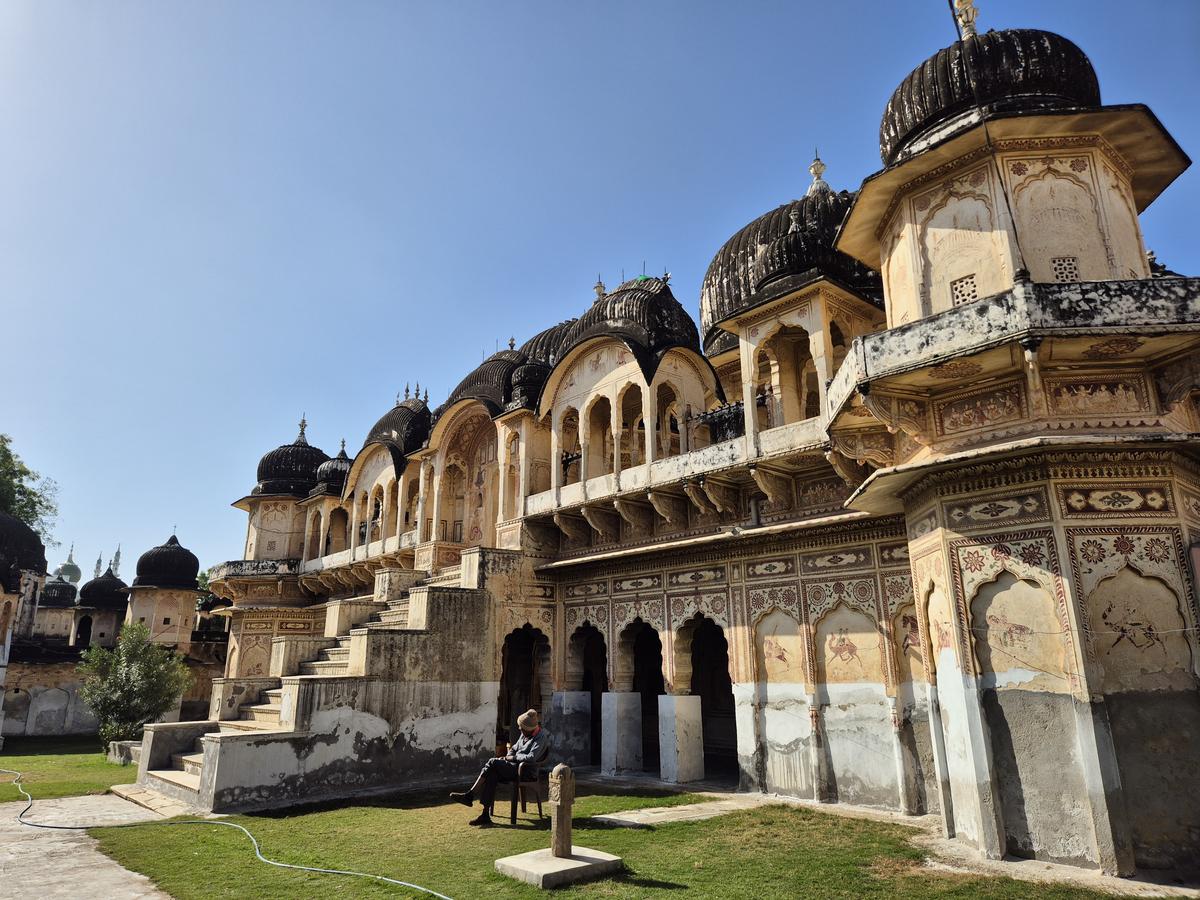
Churu offers a more rugged, authentic experience. The Surana Haveli, built around 1870, is a marvel of desert engineering. Known as the "Hawa Mahal of Churu," it features 1,111 windows and doors designed to facilitate cross-ventilation in the sweltering heat. Nearby, the Bhagwan Shri Shantinath Jain Temple provides a stark contrast; its white marble exterior hides an interior of gold-leaf work and vibrant religious murals.
Official and Expert Responses: The Conservation Challenge
While the aesthetic value of Shekhawati is undisputed, the logistics of its preservation are fraught with difficulty. Experts argue that the "open-air gallery" is at risk of being lost to time and neglect.
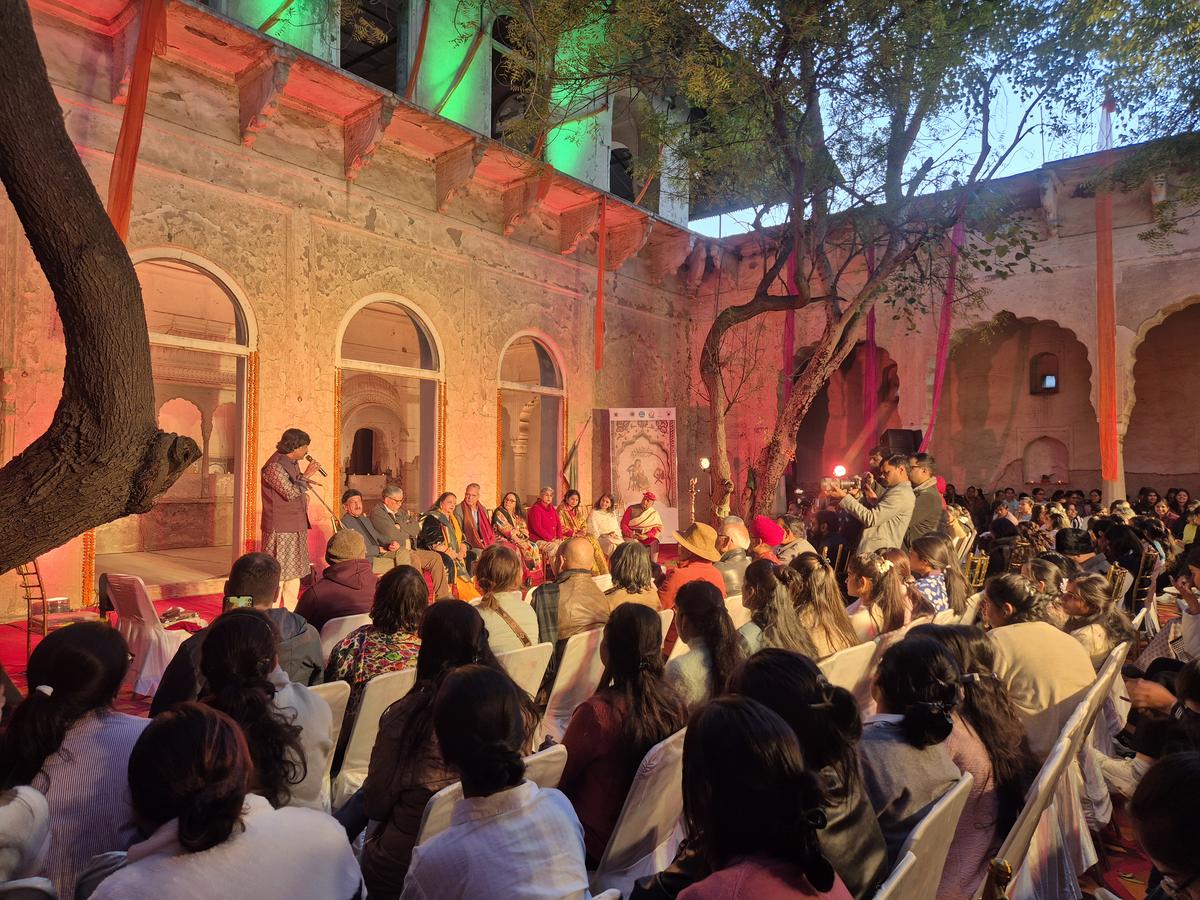
Shruti Nada Poddar, a heritage conservationist and founder of the VHAH Fest, emphasizes the need for a holistic approach. "Ramgarh Shekhawati was once known as ‘Doosra Kashi’ (The Second Varanasi) due to its status as a center for Sanskrit learning," she notes. Her work focuses on reviving the intangible heritage—music, Vedas, and traditional healing—to provide a reason for the physical structures to be maintained.
Atul Khanna, a conservationist responsible for the restoration of several havelis in Nawalgarh, advocates for "adaptive reuse" as the only sustainable path forward. According to Khanna, the cost of maintaining lime-plaster frescoes is prohibitive for private owners. By converting these spaces into heritage hotels, the buildings generate the revenue necessary for their own survival.
Mudita Saxena, the region’s first female tourist guide authorized by the Ministry of Tourism, highlights the educational gap. "Many visitors see these as just ‘pretty walls,’" she says. "Our role is to explain the sociology behind the paint—why a merchant in 1890 wanted a picture of a British lady on his wall, and how that reflected the changing power dynamics of India."
Implications: Tourism vs. Decay
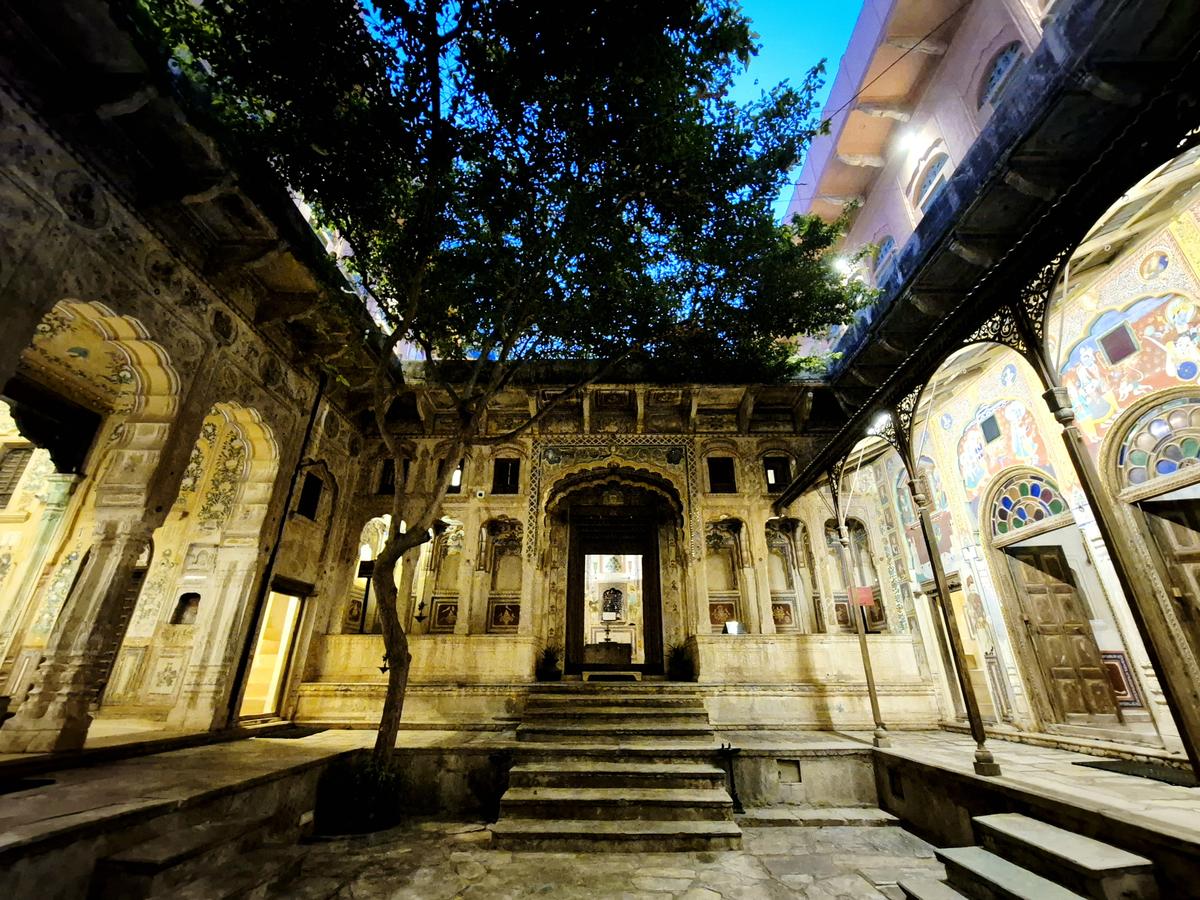
The future of Shekhawati rests on a delicate balance between commercial tourism and authentic preservation. Several implications arise from the current state of the region:
1. The Risk of "Disneyfication"
As towns like Mandawa become popular film sets, there is a risk that restoration will favor "vibrancy" over "accuracy." Conservationists warn against the use of modern synthetic paints, which trap moisture in the walls and eventually cause the original lime plaster to crumble.
2. Economic Revitalization
Heritage tourism offers a lifeline to a semi-arid region with limited industrial prospects. The "local eats" economy—ranging from the Pyaaj kachoris of Churu to the Chirawa pedas of Jhunjhunu—thrives on the influx of travelers. If the havelis disappear, the primary economic driver for these towns disappears with them.
3. Legal and Ownership Hurdles
A significant barrier to preservation is the complex ownership of these properties. Many havelis are owned by dozens of descendants of the original merchant princes, now scattered across the globe. Gaining legal consensus to restore or sell a property can take decades, during which time the structures often fall into irreparable ruin.
4. Climate Change and Environmental Stress
The harsh Rajasthan climate, characterized by extreme heat and occasional flash floods, is the frescoes’ greatest enemy. Without constant maintenance, the "fresco buono" (pigments applied to wet plaster) and "fresco secco" (applied to dry walls) techniques are susceptible to peeling and fading.
Conclusion: A Living Legacy
Shekhawati is not a museum; it is a living, breathing landscape where the past and present collide. From a cello recital by maestro Saskia Rao-de Haas at the historic Sethani Ka Johara stepwell to the bustling markets of Nawalgarh, the region proves that heritage is most vibrant when it is used.
The grand havelis of the Marwari traders remain as enduring records of a mercantile culture that once bridged the gap between the silk roads of Asia and the industrial hubs of Europe. Whether these "painted walls" will survive another century depends on the continued success of festivals like VHAH, the dedication of conservationists, and the recognition that Shekhawati is a global treasure that cannot be replaced once it fades.
The Flavors of Shekhawati: A Culinary Heritage
No exploration of the region is complete without acknowledging its intangible heritage—its food. The desert climate dictated a cuisine that relied on preserved grains and dried berries.
- Ker Sangri & Daal-Baati-Choorma: The staples of any Rajasthani table, best experienced at heritage properties like Vivaana.
- The Kachori Trail: From the onion-filled Pyaaj kachoris of Shri Ganesh Mishtan Bhandar in Churu to the Matar kachoris of Ramgarh, these fried delicacies are a local obsession.
- Sweets of the Sands: The Chirawa pedas from Lalchand Pedawala in Jhunjhunu and the Baked Rajbhog of Nawalgarh represent a centuries-old tradition of dairy-based confectionery.
