

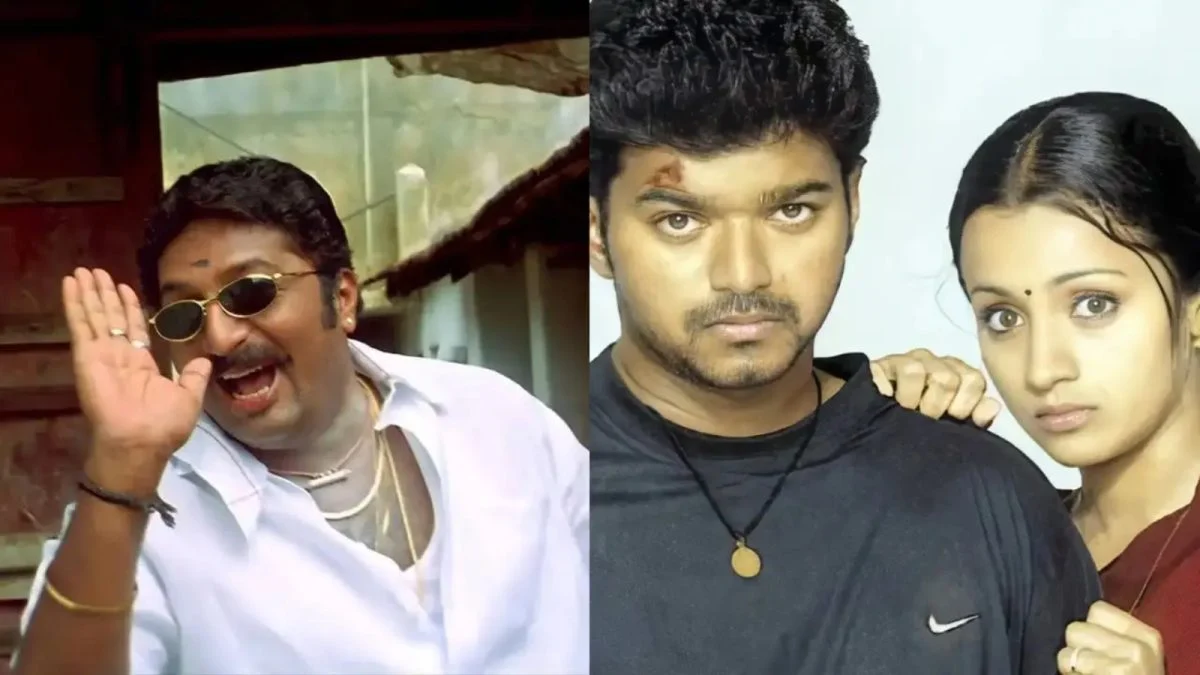
Mumbai, India – May 10, 2026 – In the annals of Tamil cinema, certain characters transcend the silver screen, etching themselves into the collective memory of audiences for generations. Muthu Pandi, the menacing and charismatic antagonist from the blockbuster 2004 film Ghilli, is undoubtedly one such figure. Brought to life with unparalleled intensity by the masterful Prakash Raj, the character’s sharp dialogues, chilling expressions, and formidable screen presence have cemented his cult status, making it nearly impossible to envision anyone else embodying this iconic villain. Yet, a recent revelation has sent ripples through the industry and among fans, disclosing that the role, now inextricably linked with Prakash Raj, was initially offered to another prominent figure in South Indian cinema: Kannada actor-filmmaker Upendra.
The Unforeseen Divergence: A Villain’s Tale Almost Told Differently
Prakash Raj’s portrayal of Muthu Pandi in Ghilli is widely regarded as a benchmark in commercial Tamil cinema’s villainous roles. His ability to blend a terrifying aura with a peculiar, almost endearing, swagger made him a formidable adversary for Vijay’s protagonist. Lines like "Chelloww I Love you Cheloww" became instant catchphrases, demonstrating the character’s deep penetration into popular culture. The film itself, a high-octane action entertainer directed by Dharani, was a monumental success, often cited as a pivotal moment in solidifying Vijay’s image as a mass-hero. The chemistry between Vijay and Trisha Krishnan, coupled with Vidyasagar’s electrifying music and the film’s slick action sequences, contributed to its enduring appeal.
However, the narrative surrounding the casting of this pivotal role has taken an unexpected turn. During a recent media interaction, Upendra, a multi-talented personality known for his work primarily in Kannada cinema, divulged that he was the first choice for the antagonist’s role in Ghilli. This disclosure has surprised many, prompting a re-evaluation of how iconic roles are shaped and the butterfly effect of casting decisions. Upendra’s revelation suggests that the character of Muthu Pandi, as we know it, might have taken a significantly different form, potentially altering the trajectory of both the film and the actors involved.
A Glimpse into the Past: The Genesis of Ghilli’s Antagonist
Ghilli, released in 2004, was a remake of the successful Tamil film Thiruda Thiruda. The film’s narrative revolved around a street-smart protagonist, Velu (Vijay), who gets entangled with a ruthless gangster, Muthu Pandi, while trying to save a budding actress, Dhanalakshmi (Trisha Krishnan), from his clutches. The film’s success was a testament to its engaging screenplay, dynamic performances, and robust action choreography.
The role of Muthu Pandi was crucial in elevating the film’s stakes and providing a formidable counterpoint to Vijay’s character. Prakash Raj, already an established name in South Indian cinema for his versatility, seized the opportunity and delivered a performance that became legendary. His nuanced portrayal, which managed to be both menacing and subtly humorous, was instrumental in the character’s widespread popularity. This performance not only solidified Prakash Raj’s reputation as a formidable villain but also became a defining role in his illustrious career.
Upendra’s statement suggests that before Prakash Raj stepped into Muthu Pandi’s shoes, the filmmakers had approached him. While the exact timeline and the specifics of the discussions remain largely undisclosed, the mere fact that he was considered for such a significant role is noteworthy. Upendra, known for his unconventional acting style and directorial prowess, has often essayed complex and layered characters. His potential interpretation of Muthu Pandi could have offered a different shade to the antagonist, perhaps exploring a more intellectual or psychologically driven villainy, contrasting with Prakash Raj’s more flamboyant and physically imposing approach.
The Ripple Effect: How Casting Choices Shape Cinematic Legacies
The revelation about Upendra’s almost-casting in Ghilli underscores the intricate and often serendipitous nature of filmmaking. A single casting decision can have far-reaching consequences, influencing not only the performance on screen but also the subsequent careers of actors and the overall reception of a film.
For Prakash Raj, Ghilli became a landmark film, further cementing his status as one of the most sought-after character actors in South Indian cinema. His portrayal of Muthu Pandi allowed him to showcase a range of emotions and a command over dialogue delivery that few could match. This role opened up numerous opportunities for him in Tamil cinema and beyond, solidifying his reputation as a versatile performer capable of essaying both heroic and villainous characters with equal conviction.
Had Upendra accepted the role, the landscape might have looked very different. Upendra, with his distinct acting style, might have brought a unique dimension to Muthu Pandi, potentially influencing how the character is remembered. His foray into Tamil cinema through such a prominent role could have also opened up new avenues for him in the industry, complementing his already successful career in Kannada cinema.
This situation also highlights the collaborative nature of filmmaking, where directors and producers often consider multiple actors for a role before settling on the perfect fit. The director, Dharani, and the producers of Ghilli ultimately chose Prakash Raj, and in retrospect, it is difficult to argue with the success of that decision. The synergy between Prakash Raj and Vijay in Ghilli is undeniable, and their on-screen confrontations are a significant reason for the film’s enduring popularity.
Beyond Ghilli: Upendra’s Multifaceted Career and Vijay’s Evolving Persona
The conversation around Upendra’s potential role in Ghilli comes at an interesting juncture, particularly given the recent political developments involving Vijay. Vijay, the star of Ghilli, has recently made significant strides in the political arena with his party, the Tamilaga Vettri Kazhagam (TVK). His transition from a celebrated film icon to a political leader has become a major talking point across South India, sparking discussions about the role of celebrities in public life and the potential for change in democratic structures.
Upendra, who has also navigated the complex intersection of cinema and politics, shared his thoughts on Vijay’s political ambitions. He reportedly stated that change is a necessary and inevitable aspect of any democracy, a sentiment that resonates across different regions and political landscapes. His perspective is rooted in his own experiences, having actively participated in politics himself.
Upendra’s journey is a testament to his versatility. He is not merely an actor but a filmmaker, writer, lyricist, playback singer, and producer, predominantly in Kannada cinema, but with notable appearances in Telugu and Tamil films. His foray into politics began in 2017 with the Karnataka Pragnyavanta Janata Paksha, though he later exited the party and founded his own, the Uttama Prajaakeeya Party (UPP), which advocates for "Prajakeeya" – a philosophy centered on transparency and citizen-led governance.
This duality of engaging in both the creative world of cinema and the demanding arena of politics is a rare feat, and Upendra has managed to balance these demanding pursuits with considerable success. His comments on Vijay’s political entry, therefore, carry a certain weight, drawing from his own lived experiences in navigating public life and political discourse.
On the cinematic front, Upendra was recently seen in the highly anticipated film Coolie, directed by Lokesh Kanagaraj. This ensemble cast film features a stellar lineup of actors, including Rajinikanth, Aamir Khan, Shruti Haasan, and Nagarjuna, further underscoring Upendra’s continued relevance and appeal in the film industry.
Conclusion: The Enduring Power of Iconic Performances and the Unseen Paths of Cinema
The revelation that Upendra was initially considered for the role of Muthu Pandi in Ghilli serves as a fascinating anecdote, reminding us that the cinematic landscape is shaped by a multitude of choices and near-misses. While Prakash Raj’s portrayal of Muthu Pandi is etched in the hearts of Tamil film enthusiasts, this piece of information offers a glimpse into an alternate reality, a path not taken that could have significantly altered the film’s iconic status.
Ultimately, the success of Ghilli and the enduring legacy of Muthu Pandi are a testament to the collaborative efforts of the cast and crew, and the vision of director Dharani. Prakash Raj’s masterful performance transcended the confines of the script, creating a character that continues to be celebrated. The story of Upendra’s near-casting serves as a valuable reminder of the unpredictable nature of the film industry and the myriad ways in which cinematic magic can unfold, often through paths unseen and decisions unmade. As Vijay embarks on his political journey and Upendra continues to balance his diverse artistic and political endeavors, the echoes of Ghilli and its unforgettable villain remain a vibrant part of South Indian cinema’s rich tapestry.
