

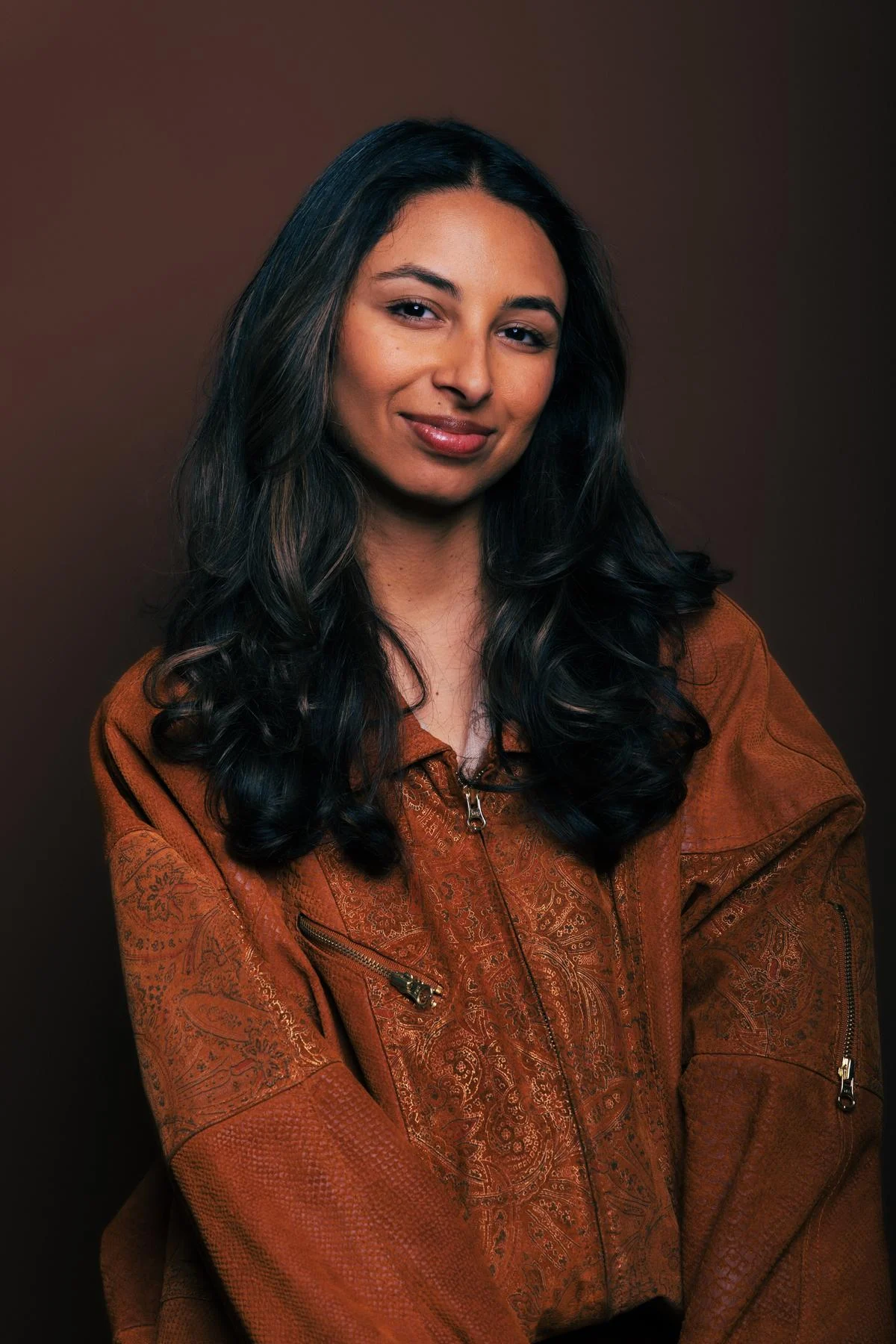
In the ever-evolving landscape of digital content, a seemingly simple concept – ordering coffee – has been transformed into a sharp, hilarious, and profoundly resonant commentary on modern life. The brainchild of Indian-American actor and writer Pooja Tripathi, Brooklyn Coffee Shop has transcended its humble origins on Instagram and YouTube to become a viral phenomenon, offering a weekly theatrical examination of taste, status, self-delusion, and the occasional moral collapse.
Tripathi, speaking from the bustling streets of Brooklyn, where the weather mirrors the dramatic flair of her fictional cafe, has created a world where the mundane act of purchasing a beverage becomes an intricate social dissection. As Thyme, the perpetually disdainful barista, alongside her equally formidable co-worker Kale, played by DJ Daughtry, Tripathi serves a clientele burdened by the spiritual detritus of urban existence. Each absurd order is a window into the customer’s psyche, a testament to the show’s ability to distill complex societal observations into bite-sized, comedic gold.
Brooklyn Coffee Shop is more than just satire; it’s a compelling argument for the smartphone screen as a legitimate and powerful comedic stage. The series, recently lauded with a 2026 Webby Award in Video & Film, Comedy, boasts episodes that, while typically clocking in at around a minute, possess the rhythmic pacing of a sitcom, the shareable essence of a meme, and the polished production value of a small television show. This unique blend of accessibility and artistic merit has propelled Tripathi and her creation into the cultural zeitgeist.

The Genesis of a Genius: From Solo Sketches to Viral Sensation
Pooja Tripathi’s journey to comedic stardom wasn’t paved with a five-year plan or a grand studio strategy. Initially, she was a one-woman show, crafting sketches on her phone, often employing green screens to embody both the judgmental barista and the bewildered customer. The turning point arrived when her nascent reels began garnering millions of views. A chance suggestion from a cinematographer friend to film within an actual coffee shop proved to be the catalyst, revealing the format’s inherent potential and widespread appeal.
The genius of the coffee shop setting lies in its universal familiarity. The basic architecture of a customer entering, baristas stationed behind a counter, and an expected transaction is ingrained in our collective consciousness. Brooklyn Coffee Shop masterfully subverts these expectations. Instead of a simple exchange, each interaction morphs into a nuanced social autopsy, exposing the hidden anxieties and aspirations of its characters.
This format’s efficacy is not unprecedented. Amelia Dimoldenberg’s British YouTube series, Chicken Shop Date, similarly transformed deadpan celebrity interviews conducted over fried chicken into a gateway to major red carpet events, including the Golden Globes and the Oscars. Likewise, Egyptian-American artist-comedian Kareem Rahma’s Subway Takes, filmed on the bustling New York subway, has become a vital promotional stop for a diverse array of public figures, while also expanding into more substantial YouTube formats. These successes underscore a paradigm shift, demonstrating that the digital realm can serve as a robust launching pad for creative careers, a lineage to which Brooklyn Coffee Shop undeniably belongs.

“Ten years ago, having a TV show was kind of the only way you could do something like this and get the reach,” Tripathi explains. “Then people started achieving reach online, but that was looked down on as content and not a TV show. But now, with what I’m doing, I started to realise, as we went along, that this is a very valid medium in and of itself.” This realization has empowered Tripathi to cultivate a distinct voice and a highly personal brand of comedy, unburdened by traditional industry gatekeepers.
The Art of the Judgy Barista: Satire with a Soul
What distinguishes Brooklyn Coffee Shop from its digital counterparts is its commitment to a scripted, character-driven narrative. It feels akin to a beloved sitcom that has found its way into your social media feed as a short-form video. The show taps into a profound sense of "I am her, she is me" existential identification as viewers witness characters divulge intimate details of their therapy sessions or observe a tech-bro, who was recently laid off by the AI he created, seeking employment as a barista.
There’s a certain poetic resonance in a South Asian woman embodying the archetype of the judgy, eye-rolling barista. Tripathi, an Indian-American, and Daughtry, who is Black, defy the stereotypical casting often seen in Hollywood for such roles. “If they were being cast by Hollywood, it’s very unlikely that they would choose an Indian girl and a Black man,” Tripathi candidly admits. “But because this is my project and because I’m writing it, I wanted to cast who I thought made sense to me. If the writing is good and the performances are good, people don’t question it. And then later, what it does is it expands your idea of what a person can be and who can play what kind of role without yelling it.” This deliberate casting choice not only reflects Tripathi’s artistic vision but also subtly challenges conventional representation in media.

The show’s success is also attributed to its fan-centric approach, rewarding attentive viewers with intricately woven Easter eggs. In one memorable episode, Tripathi ingeniously incorporated a live-stream feature complete with simulated comments, subtly revealing the names of future guests to those who looked closely.
The caliber of guests gracing Brooklyn Coffee Shop is another significant draw. Pakistani-American comedian and actor Kumail Nanjiani has made an appearance, and television host and author Padma Lakshmi has also filmed an episode. As the conversation unfolds, potential and dream guests like comedians Aziz Ansari and Hasan Minhaj, actors Priyanka Chopra and Jameela Jamil, and author-entrepreneur Jay Shetty are mentioned. However, Tripathi is not merely chasing celebrity for its own sake. Her primary focus is on whether a potential guest genuinely understands and is willing to engage with the show’s unique universe.
Protecting the Brand: Business Acumen Meets Creative Integrity
The burgeoning success of Brooklyn Coffee Shop has naturally attracted business opportunities. Tripathi, however, navigates these partnerships with meticulous care, ensuring they align with the show’s authentic voice and maintain audience trust. Brand deals are instrumental in keeping the project self-funded, but Tripathi asserts, “I’m pretty intense about the branding element. That’s how you maintain the trust and loyalty of an audience. If you don’t do that, people can tell you just did something for money or validation.” Consequently, she selectively partners with brands that seamlessly integrate into the show’s eccentric scenarios. Her background in business school and prior experience in marketing before embarking on her comedy career appear to be invaluable assets in this regard, providing a strategic advantage in the competitive digital landscape.

The question of transitioning Brooklyn Coffee Shop to traditional television is an inevitable one. Tripathi remains open to the possibility but emphasizes her reluctance to pursue validation through established mediums at the expense of creative control. “I feel strongly about retaining ownership over my IP [intellectual property],” she states firmly. This protective stance over her intellectual property underscores her commitment to maintaining artistic integrity and ensuring the long-term vision for her creation.
Beyond the Counter: Expanding the Digital Narrative
As of the publication of this article, Brooklyn Coffee Shop‘s YouTube Shorts are consistently garnering hundreds of thousands of views, with some episodes exceeding the 10 million mark. “The lucky thing about social media is that the results are public. Once something starts moving, it becomes hard to argue with,” Tripathi observes. These impressive numbers have become a powerful calling card, evidenced by Brooklyn Coffee Shop‘s nearly half a million followers on Instagram and over 260,000 on Tripathi’s personal account.
Tripathi’s ambitions extend far beyond the current iteration of Brooklyn Coffee Shop. She is already contemplating the creation of new series, aiming to further hone her skills as a writer and explore different creative avenues. “I would love to create another series in the same way and keep expanding my skills as a writer,” she shares. “Having another series is something that I’m interested in trying. And differentiating it enough from Coffee Shop to give myself a different character and some range in what I’m able to create.” This forward-thinking approach suggests a desire to build a diverse portfolio of digital content, showcasing her versatility and creative range.

Towards the conclusion of the conversation, Tripathi reveals a potential visit to India for a wedding in January. The idea of a watch party, perhaps accompanied by a panel discussion, is proposed. Her astonishment at the show’s viewership in India highlights the global reach of her work. “The idea that where you end up is a place where people have also seen the show is pretty amazing,” she exclaims.
While the internet has undoubtedly fostered a sense of global interconnectedness, Brooklyn Coffee Shop achieves something even more profound. It demonstrates that a fictional establishment in Brooklyn can serve as a potent mirror for any city where individuals perform their tastes, politics, wellness aspirations, and ambitions in public. In the discerning gaze of Thyme, the Indian-origin barista, we can perhaps see a reflection of ourselves, and the often-absurd realities of modern life, served with a side of sharp, insightful humor. The show’s success is a testament to the power of authentic storytelling and the burgeoning potential of digital platforms to redefine entertainment and cultural commentary.
