

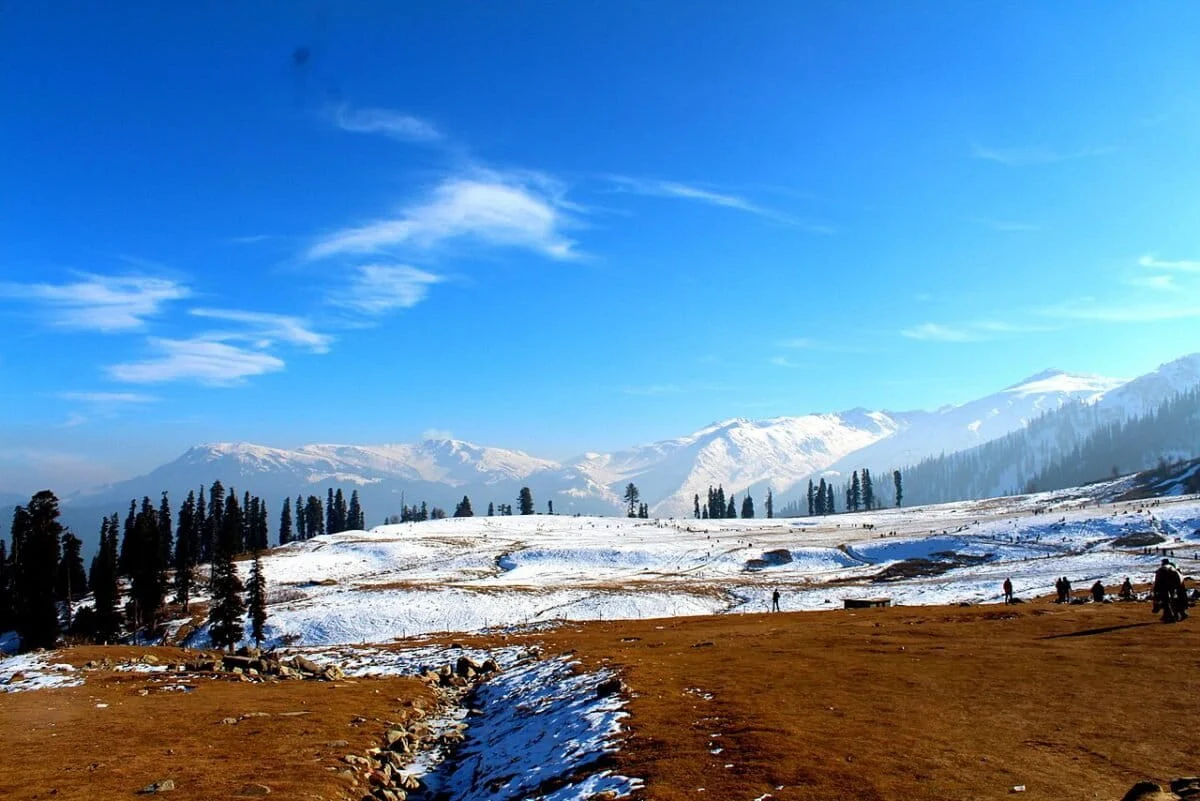
The pristine silence of the Western Himalayas is increasingly being shattered not by the roar of avalanches, but by the crackle of out-of-season wildfires. Traditionally, the fire season in this ecologically sensitive corridor is a predictable window between November and June, peaking during the parched pre-monsoon months. However, a landmark study conducted by researchers from the Forest Research Institute (FRI), Dehradun, and the Indian Institute of Technology (IIT), Roorkee, has unveiled a disturbing shift in the region’s fire dynamics. As the climate warms, the "fire window" is expanding, climbing to higher elevations and occurring during months once considered safe.
The findings underscore a grim reality: the Western Himalayas are no longer just a victim of seasonal drought, but are caught in a feedback loop of rising temperatures, shifting precipitation patterns, and human-driven environmental degradation.
Main Facts: The Anatomy of a Modern Himalayan Crisis
The core of the recent research, which analyzed a decade of data (2013–2022) across Uttarakhand, Himachal Pradesh, Jammu, Kashmir, and Ladakh, identifies temperature as the single most significant predictor of forest fire occurrence. While human activity remains the primary spark, the "fuel" and "breath" of these fires are being dictated by a changing atmosphere.
The Temperature-Fire Correlation
The most striking statistic to emerge from the study is the mathematical precision of warming’s impact: for every one-degree Celsius increase in mean summer temperatures, the region experiences approximately 128 additional fire incidences. This correlation highlights a terrifying sensitivity; even minor fluctuations in global or regional climate can lead to exponential increases in fire frequency.
The Vulnerability of Uttarakhand
Uttarakhand has emerged as the epicenter of this crisis. According to the Forest Survey of India, it remains the most fire-prone state in the Indian Western Himalayas. The study suggests that the higher frequency of fires in this state is directly linked to a decline in floristic diversity. Frequent blazes tend to kill off sensitive native flora, allowing fire-dominant, resinous species—such as the Chir Pine (Pinus roxburghii)—to take over. This creates a monoculture of highly flammable biomass, essentially turning the landscape into a tinderbox.
Carbon Stocks at Risk
The implications extend far beyond local ecology. The Himalayan forests, spanning both the Eastern and Western ranges, are estimated to hold a staggering 3,273.1 million tonnes of carbon. When these forests burn, they don’t just lose their ability to sequester carbon; they become massive carbon emitters, releasing decades of stored greenhouse gases back into the atmosphere and accelerating the very warming that fuels the fires.

Chronology: A Decade of Desiccation
To understand the current state of the Himalayas, researchers looked back at the period between 2013 and 2022, a decade marked by increasing climatic volatility.
2013–2022: The Data Foundation
During this window, researchers tracked over 18,000 independent fire locations. They analyzed 39 different variables, ranging from soil moisture and wind intensity to the proximity of human settlements. The data revealed that the months of March, April, and May have become increasingly lethal. This pre-monsoon period represents a "perfect storm" where dry biomass accumulated during the winter meets rising spring temperatures and low relative humidity.
The 2025 Winter Crisis
Moving closer to the present, the Indian Institute of Remote Sensing (IIRS) reported an "alarming decline" in winter precipitation between October and December 2025. Deficits ranged from 60% to a staggering 116% in some sectors of the North-Western Himalayas. This lack of "winter recharge"—the snow and rain that saturate the forest floor—left the undergrowth bone-dry well before the traditional fire season even began.
December 2025: A Policy Pivot
In response to the escalating threat, a significant legal and administrative shift occurred in late 2025. The Central Government granted the Uttarakhand government permission to fell trees to revive and maintain "fire lines" at elevations exceeding 1,000 meters. This move was a departure from previous Supreme Court mandates that strictly banned green cover removal at such heights, signaling that the fire threat had reached a level where traditional conservation rules had to be reconsidered for the sake of regional safety.
Supporting Data: The Variables Driving the Burn
The FRI and IIT Roorkee study utilized a multi-dimensional approach to categorize the drivers of fire. While temperature is the "leading edge," it operates in tandem with several other factors.
1. The Human-Road Interface
The study utilized scatter graphs to map fire locations relative to infrastructure. The results showed a "pronounced concentration" of fires within the first 0 to 1 kilometer of roads. Beyond this one-kilometer threshold, fire counts drop sharply. Roads provide mobility, but they also bring human presence—grazing, fuelwood collection, and the accidental or intentional ignition of fires.

2. Biomass and Flammability
The accumulation of biomass during wet months becomes a liability during subsequent droughts. The study noted that "seasonal precipitation" acts as a double-edged sword. Good rainfall promotes lush growth, but if that growth is followed by a weak winter or a hot spring, that same vegetation becomes highly combustible fuel. In the Western Himalayas, this fuel often consists of dried pine needles, which are rich in flammable resins and form a thick, oxygen-rich layer on the forest floor.
3. The Snow Factor
V.K. Dhawan, a former scientist with the Indian Council of Forestry Research and Education, points to the reduction in winter snow as a critical variable. Snow acts as a slow-release moisture source. Without it, glaciers shift and soil moisture is not recharged. "Reductions in rainfall and snow also control the soil moisture recharge and forest fuel conditions," the IIRS warned, noting cascading implications for both forest disturbance and wildlife dynamics.
Official Responses and Management Strategies
The management of Himalayan forest fires is transitioning from a reactive "firefighting" model to a proactive "landscape management" model.
The National Action Plan
In 2018, India released its National Action Plan on Forest Fires. This framework encourages states to move toward community-inclusive strategies. Key pillars include:
- Community Mock Drills: Engaging local villagers who are often the first responders.
- Fire Detection Systems: Utilizing satellite data for real-time alerts.
- Floor Biomass Management: Actively removing leaf litter and pine needles before the heat peaks.
The Revival of Fire Lines
Experts like Dhawan emphasize the critical need to revive "fire lines"—strips of land cleared of vegetation that act as barriers to stop a fire’s progress. The recent federal approval to clear these lines in Uttarakhand, even at high altitudes, is seen as a necessary evil. "Fuel needs to be removed from the forest floor ahead of the fire season, through controlled burning along roads and fire lines," Dhawan noted.
Incentivizing Conservation
A recurring theme in official responses is the role of Himalayan communities. Traditionally, these communities used fire to clear land for fodder. To change these practices, experts suggest that communities must be incentivized and compensated for cooperating with the forest department, turning them from potential sources of ignition into stewards of fire prevention.

Implications: An Ecosystem in Flux
The escalating fire regime in the Western Himalayas carries profound implications for the future of the region’s biodiversity and climate stability.
Ecological Homogenization
As fires become more frequent, the diverse mosaic of Himalayan flora is at risk of being replaced by a few fire-hardy species. This "homogenization" of the forest reduces the ecosystem’s resilience. When a forest loses its floristic diversity, it also loses the variety of insects, birds, and mammals that depend on specific plant species, leading to a collapse in food webs.
The Hydrological Cycle
The Himalayas are the "Water Tower of Asia." Forest fires destroy the root systems and leaf litter that help the soil retain water. This leads to increased runoff, soil erosion, and a higher risk of flash floods during the monsoon, while simultaneously depleting the groundwater springs (locally known as dharas) that communities rely on during the dry season.
The Feedback Loop of Climate Change
Perhaps the most concerning implication is the feedback loop. Rising temperatures cause more fires; these fires release massive amounts of carbon and black carbon (soot). Black carbon, when deposited on nearby Himalayan glaciers, darkens the ice, causing it to absorb more solar radiation and melt faster. This melting further alters regional temperatures and moisture levels, creating a cycle that is increasingly difficult to break.
Conclusion: A Call for Integrated Management
The study from the Western Himalayas serves as a clarion call for a more sophisticated approach to forest management. It is no longer enough to wait for the smoke to appear. Effective management in a changing climate requires an integration of satellite-based monitoring, rigorous biomass control, and a fundamental shift in how human infrastructure—specifically roads—is managed within forest boundaries.
As Amit Kumar Verma of the FRI aptly summarized, while humans may provide the spark, the warming climate has prepared the ground. Without a concerted effort to address both the climatic and anthropogenic drivers of these blazes, the "eternal snows" of the Himalayas may soon be defined more by the ash they leave behind than the water they provide.
