

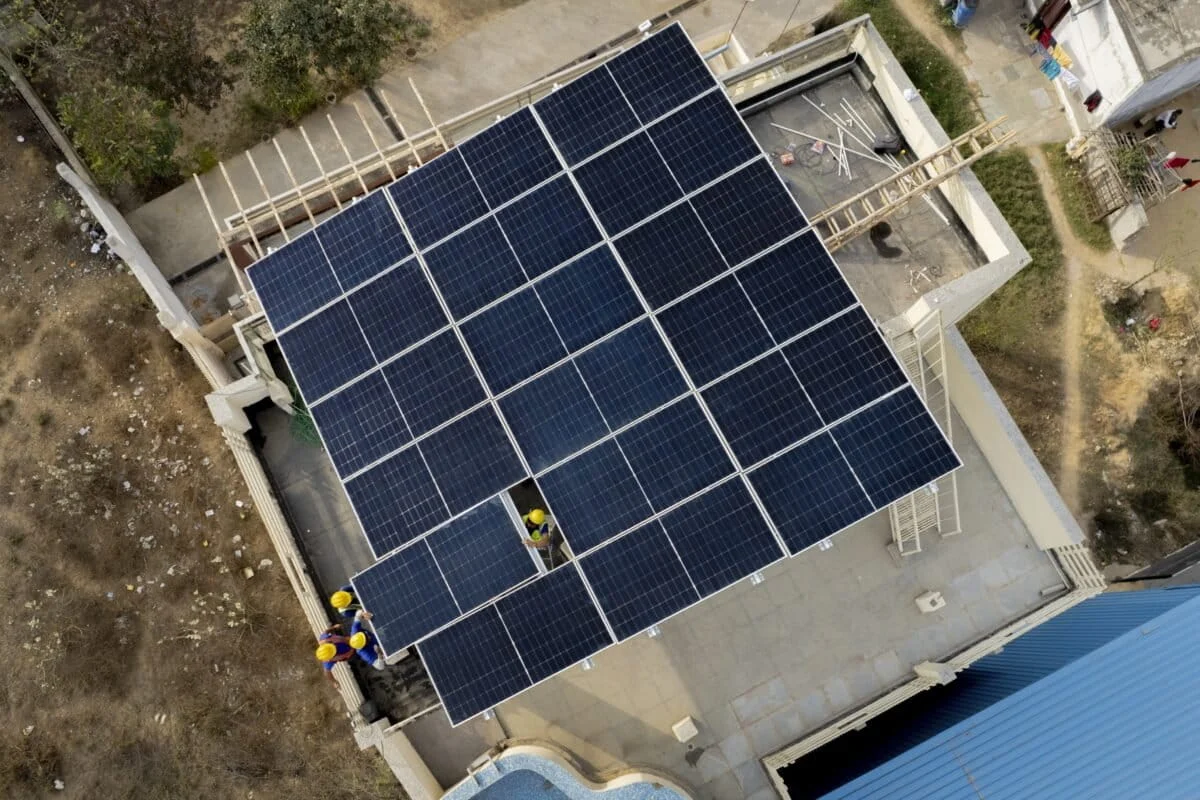
The global climate discourse is currently dominated by the concept of "ratcheting ambition"—the idea that every few years, nations must return to the negotiating table with increasingly aggressive pledges to curb greenhouse gas emissions. However, as the world prepares for the second Global Stocktake (GST2) later this year, a fundamental rift has emerged between developed and developing nations regarding how that ambition should be measured.
While Western observers often apply a singular, uniform metric—comparing all countries against a common temperature goal—this approach is increasingly criticized for ignoring the principles of equity and historical responsibility. India’s recently released third Nationally Determined Contribution (NDC 3.0) has become a flashpoint for this debate. Characterized by some international observers as "moderate," the plan is viewed by domestic experts and climate justice advocates as a robust, deliverable commitment that aligns with the unique developmental needs of a nation housing 17% of the world’s population.
Main Facts: India’s NDC 3.0 and the Struggle for Equity
In March 2026, India submitted its NDC 3.0, outlining its climate targets for the 2031-2035 period. Under the Paris Agreement, these pledges are expected to be "ratcheted up" in each cycle. India’s latest submission includes two primary pillars:
- Emissions Intensity: A commitment to reduce the emissions intensity of its GDP by 47% by 2035 compared to 2005 levels.
- Clean Power: A target to achieve 60% non-fossil fuel-based electric power installed capacity by 2035.
Despite these significant forward-looking commitments, which are integrated into the long-term "Viksit Bharat 2047" (Developed India) vision, several international media outlets and climate trackers have labeled the targets as conservative. This friction highlights a deeper systemic issue: the "ambition trap." This trap occurs when international standards fail to account for a country’s unique circumstances, including its development stage, historical contribution to atmospheric CO2, and the persistent shortage of promised climate finance from the Global North.
The core of India’s argument, supported by Article 2.2 of the Paris Agreement, is the principle of Common But Differentiated Responsibilities and Respective Capabilities (CBDR-RC). This principle mandates that while all nations must act, those with the highest historical emissions and the greatest financial means must lead the way. By this standard, India’s track record of over-delivering on previous pledges suggests that its "achievable" targets are a sign of credibility rather than a lack of will.
![Rethinking India’s climate plan through equity, delivery and intent [Commentary]](https://imgs.mongabay.com/wp-content/uploads/sites/30/2026/06/23131848/AP24052670530069-1200x800.jpg)
Chronology: The Evolution of India’s Climate Pledges
To understand the weight of NDC 3.0, one must look at the trajectory of India’s commitments since the landmark Paris Agreement in 2015:
- 2015 (NDC 1.0): India pledged to reduce emissions intensity by 33-35% by 2030 and achieve 40% non-fossil fuel power capacity.
- 2022 (Updated NDC): Recognizing its rapid progress, India voluntarily tightened its targets, raising the intensity reduction goal to 45% and the non-fossil capacity target to 50% by 2030.
- February 2026: India announced it had already surpassed its 50% non-fossil capacity target—achieving 52.57%—nearly five years ahead of schedule.
- March 2026 (NDC 3.0): India released its roadmap for 2031-2035, further increasing the intensity target to 47% and the clean energy capacity to 60%. It also raised its carbon sink ambition to 3.5-4 billion tonnes of CO2 equivalent.
- Present Day: As the international community moves toward the second Global Stocktake, India is positioning itself as a "performer" that scales up ambition despite a lack of international support.
This timeline demonstrates a consistent "decoupling" of economic growth from emissions. Between 2005 and 2019, India’s GDP grew at a Compound Annual Growth Rate (CAGR) of 7%, while its emissions grew at a much lower CAGR of 4%.
Supporting Data: Legacy Emissions and the Per Capita Divide
The criticism of India’s climate plans often ignores the stark data regarding "legacy emissions"—the CO2 pumped into the atmosphere by industrialized nations since the dawn of the Industrial Revolution.
According to data from the Global Carbon Project, the historical imbalance is staggering:
- The United States: Has emitted nearly 6.5 times as much CO2 as India since 1750.
- The European Union (including the UK): Has emitted approximately 5.8 times as much as India.
When looking at current per capita emissions, the disparity remains equally wide. In 2023, India’s per capita greenhouse gas (GHG) emissions stood at 2.9 tonnes of CO2 equivalent (tCO2e). This is less than half of the global average of 6.7 tCO2e. In contrast, the figures for developed nations are vastly higher:
- United States: 17.2 tCO2e
- Canada: 20.4 tCO2e
- Japan: 8.3 tCO2e
- European Union: 6.9 tCO2e
Furthermore, a modeling study by the Council on Energy, Environment and Water (CEEW) and the Alliance for an Energy Efficient Economy (AEEE) suggests that India is likely to exceed its 2030 targets. The study projects that the emissions intensity of India’s energy sector will likely decline by 48-57% by 2030, potentially hitting its 2035 targets five years early.
![Rethinking India’s climate plan through equity, delivery and intent [Commentary]](https://imgs.mongabay.com/wp-content/uploads/sites/30/2026/06/23132308/pexels-safir-khan-3779661-5657165-scaled-e1782201299706-768x512.jpg)
Another crucial data point is the impact of domestic policy. Analysis shows that current Indian policies across the power, residential, and transport sectors are projected to reduce CO2 emissions by 4 billion tonnes cumulatively between 2020 and 2030. This reduction is equivalent to 1.6 times the entire CO2 emissions of the European Union in 2023.
Official Responses and Global Perspectives
The international response to India’s climate strategy is split along traditional geopolitical lines. While Western observers push for absolute emission cuts and the immediate phase-out of fossil fuels, developing nations are calling for a more nuanced, "country-driven" process.
The G77+China Block: During recent climate negotiations in Bonn (SB64), the G77 and China—the largest negotiating block in the UNFCCC—emphasized that NDCs must be shaped by domestic resources and constraints. They argued against "top-down" approaches that bypass the principles of equity.
The Arab Group: Similarly, this group has expressed concern over processes outside the UNFCCC—such as the Fossil Fuel Non-Proliferation Treaty or the Santa Marta Declaration—influencing official mandates. They argue these "coalitions of the willing" often exclude the perspectives of nations still struggling with energy security.
Indian Officials: Ravi Shankar Prasad, India’s former Chief Climate Change Negotiator, argues that the "real test of ambition" is delivery. He points out that while the US has previously withdrawn from the Paris Agreement and the EU faces internal divisions over its own NDC 3.0, India has remained a steady performer. Indian officials have also highlighted the "abysmal" state of technology transfer, noting that mechanisms meant to assist developing nations under Article 10 of the Paris Agreement have yet to be operationalized for India.
The Finance Gap: At COP29 in Baku, the agreement on the New Collective Quantified Goal (NCQG) set a target of $300 billion a year by 2035. However, this falls critically short of the $455-584 billion annually that the UNFCCC Standing Committee on Finance estimates developing countries actually need to meet their goals.
![Rethinking India’s climate plan through equity, delivery and intent [Commentary]](https://imgs.mongabay.com/wp-content/uploads/sites/30/2026/06/23133620/pexels-nageswararao-upputuri-833340946-19413885-2-768x512.jpg)
Implications: The Credibility of the Paris Agreement
The debate over India’s NDC 3.0 carries profound implications for the future of global climate governance. If the international community continues to apply a "one-size-fits-all" metric to ambition, it risks undermining the very foundation of the Paris Agreement: the compact between the Global North and South.
1. The Erosion of Equity: Holding a country responsible for only 4% of historical emissions to the same standard as those responsible for the bulk of the atmospheric crisis threatens to delegitimize the UNFCCC process. If equity is sidelined, developing nations may become less inclined to participate in voluntary "ratcheting" cycles.
2. Shift Toward Behavioral Change: India’s emphasis on Mission LiFE (Lifestyle for Environment) introduces a new dimension to climate action—demand-side management. By fostering sustainable living and circular resource use, India argues that behavioral changes could deliver up to 10% emissions reductions by 2050. This shifts the focus from purely industrial targets to global consumption patterns, an area where developed nations have historically been reluctant to act.
3. The Rise of Domestic Carbon Markets: NDC 3.0 signals the emergence of India’s carbon market architecture. By generating surplus mitigation outcomes, India aims to engage in international trading under Article 6 of the Paris Agreement. This could provide the necessary financial influx that Western governments have failed to provide through direct aid.
4. Energy Security in a Volatile World: With ongoing conflicts in West Asia and shifting political tides in the West, India’s "achievable" targets reflect a pragmatic approach to energy security. By prioritizing a "green transition" that is aligned with economic development, India is attempting to avoid the social instability that could arise from over-ambitious, under-funded climate shocks.
In conclusion, the assessment of India’s climate ambition depends entirely on the lens through which it is viewed. If measured by absolute cuts without context, it may appear moderate. But when viewed through the lens of historical responsibility, per capita equity, and a proven track record of exceeding commitments without international help, India’s NDC 3.0 emerges as a sophisticated blueprint for sustainable development in the 21st century. The real question for the global community is not whether India is doing enough, but whether the global financial and technological systems are doing enough to support a nation that is already punching well above its weight.
