

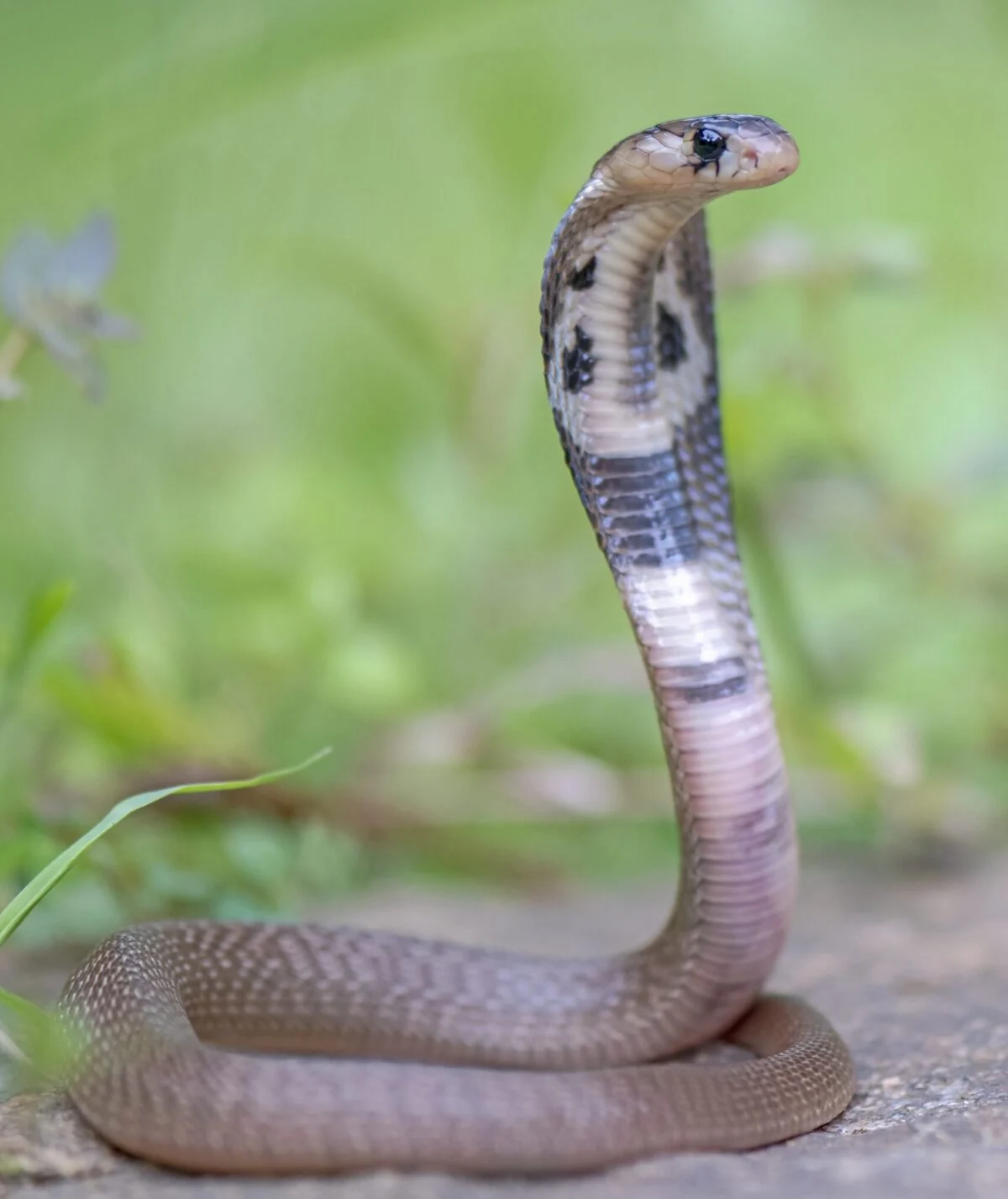
In the early months of 2025, a wave of palpable anxiety swept across the southern Indian state of Kerala. What began as a series of isolated incidents soon coalesced into a public health narrative that dominated both mainstream headlines and social media feeds. Within a window of just sixty days during the peak summer season, eight snakebite fatalities were recorded across six districts. Notably, six of these deaths occurred in a single harrowing week between April 20 and April 26.
This surge in fatalities, while statistically lower than historical peaks, triggered a disproportionate level of public panic. The digital age, with its rapid dissemination of "fear-inducing" reports, amplified the local crisis into a state-wide concern. However, beneath the sensationalist headlines lies a sophisticated, technology-driven framework of conservation and medical management that is quietly transforming how humans and snakes coexist in one of India’s most biodiverse regions.
Main Facts: The Intersection of Climate, Biology, and Human Activity
The "snakebite summer" of 2025 was not a random occurrence but the result of a "perfect storm" of ecological and climatic factors. According to experts, the primary drivers of the increased human-snake encounters were unusually high atmospheric temperatures and the natural reproductive cycles of venomous species.
The Role of Extreme Heat
Kerala, like much of South Asia, has been grappling with intensifying heatwaves. Snakes, being ectothermic (cold-blooded) animals, rely on their environment to regulate body temperature. While they often seek cool, sheltered spots to conserve energy during extreme heat, the need for hydration and food eventually forces them into the open. As natural water sources dry up, snakes are increasingly drawn toward human settlements—gardens, bathrooms, and kitchens—where water and shade are more readily available.

Breeding and Hatching Cycles
The summer months coincide with the egg-hatching season for some of India’s most medically significant venomous snakes, often referred to as the "Big Four": the Spectacled Cobra, the Common Krait, the Russell’s Viper, and the Saw-scaled Viper. Sandeep Das, a research associate at the University of Calicut and a master trainer for the state’s snake rescue network, notes that the emergence of hatchlings naturally increases the frequency of sightings.
The Paradox of Visibility
While the public perceives a "population explosion" of snakes, herpetologists argue that what we are seeing is an "awareness explosion." The proliferation of smartphones and social media means that a snake spotted in a library or a backyard is no longer a private event; it is a viral post. This has led to a paradoxical situation where reports are up, but actual mortality is down.
Chronology: From Crisis Management to Institutional Reform
The journey toward Kerala’s current snakebite management system has been a decade-long evolution, marked by several key milestones:
- August 2020: The Birth of SARPA: Recognizing the dangers of untrained individuals attempting to "rescue" snakes, the Kerala Forest Department introduced formal guidelines. This led to the creation of SARPA (Snake Awareness, Rescue, Protection App), a platform that certified and networked over 3,500 rescuers across the state.
- 2021: The Launch of Snakepedia: A collaborative effort between doctors, scientists, and nature enthusiasts resulted in the Snakepedia app, a comprehensive digital encyclopedia designed to provide instant identification of snakes and first-aid protocols.
- Summer 2025: The Panic Spike: A cluster of deaths in April led to a surge in calls to the SARPA network, exceeding 100 panic calls per day.
- October 2025: A Policy Milestone: The Kerala government officially declared snakebite envenomation a notifiable disease. This was a landmark move, making it mandatory for all health facilities to report cases, thereby ensuring more accurate data for resource allocation and research.
- June 2025: Post-Election Resurgence: After a brief lull during the state’s political election cycle—where media attention shifted away from wildlife—reports of sightings surged again with the onset of the monsoon. Notable incidents included the discovery of 18 python hatchlings in a residential area in Ponkunnam and a snake found among the stacks of Victoria College library in Palakkad.
Supporting Data: A Decade of Declining Mortality
While the recent cluster of deaths caused alarm, a look at the long-term data provided by the Forest Department reveals a significant success story in public health.

| Year | Recorded Snakebite Deaths |
|---|---|
| 2016-2017 | 119 |
| 2018-2019 | 123 |
| 2020-2021 | 52 |
| 2021-2022 | 65 |
| 2025 | 34 |
The data indicates that snakebite mortality in Kerala has decreased by approximately 70-75% over the last six to seven years. This decline is attributed to several factors:
- Faster Response Times: The average response time for medical advice within professional doctor networks in Kerala has dropped to a staggering 0.5 seconds, thanks to dedicated communication channels.
- Certified Rescuers: By moving away from "cowboy" rescues toward a certified, app-based system, the risk to both humans and snakes has been mitigated.
- Improved Hospital Networks: Kerala has established a robust network of hospitals equipped with anti-snake venom (ASV) and trained staff capable of managing envenomation complications.
Despite this progress, the state records between 3,000 and 8,000 snakebites annually. The vast majority are "dry bites" (where no venom is injected) or involve non-venomous species, yet every incident requires medical evaluation and psychological reassurance.
Official Responses: Technology and Education
The state’s response to the snakebite challenge is two-pronged: technological intervention and grassroots education.
The SARPA Ecosystem
The SARPA app serves as a bridge between the community and the state. When a resident spots a snake, they can use the app to alert the nearest certified rescuer. This system ensures that snakes are handled humanely and released into appropriate habitats, while also providing the Forest Department with invaluable data on snake distribution and human-wildlife conflict hotspots.

Medical Protocol and Snakepedia
Dr. Jaideep C. Menon, a WHO expert on snake envenomation, emphasizes that while Indian Polyvalent Antivenom is the gold standard for treatment, it is not without limitations. It can cause adverse reactions, and its efficacy varies across different regions and species. Snakepedia assists by helping victims and doctors identify the snake involved—often through photographs—which can influence clinical decisions and improve patient outcomes.
"Sarpa Paadam": Educating the Next Generation
To combat deep-seated myths and superstitions, the SARPA team introduced Sarpa Paadam, a specialized curriculum integrated into schools. By teaching children about snake behavior and the ecological role of reptiles as "rodent controllers," the state aims to foster a generation that prioritizes coexistence over conflict.
Implications: The Future of Coexistence in Urbanizing Landscapes
The "snake problem" in Kerala is increasingly becoming an "urban problem." Experts from the Zoological Survey of India (ZSI) and the Wildlife Institute of India (WII) point out that traditional boundaries between forest and settlement are blurring.
The Urban Lure
Rapid urbanization and, crucially, poor waste management have created thriving environments for rodents. These rodents, in turn, attract snakes like cobras and kraits, which are "human commensals"—species that have adapted to live alongside people. Furthermore, the high number of vacant houses in both rural and urban Kerala provides ideal, undisturbed breeding grounds for these reptiles.

Habitat Loss vs. Adaptation
Pratyush Mohapatra of the ZSI notes that while forest-dwelling snake diversity may be declining due to habitat loss, the population of certain venomous species that thrive in built environments may actually be increasing. This shift necessitates a change in how urban planning is approached, moving toward "snake-safe" environments that minimize attractants like debris and unmanaged organic waste.
The Need for "Stabilized" Data
The current surge in sightings should not be viewed as a biological anomaly but as a sign of a maturing reporting system. Mohapatra suggests that it will take another four to five years for the data to "stabilize." Once the novelty of the reporting apps wears off and participation becomes a standard civic habit, the state will have a clearer picture of whether snake populations are truly shifting or if we are simply seeing what was always there.
Conclusion: A Model for the Nation
Kerala’s proactive approach—declaring snakebite a notifiable disease, leveraging citizen science through SARPA and Snakepedia, and investing in school-level education—offers a blueprint for the rest of India. In a country that accounts for a significant portion of global snakebite deaths, the Kerala model suggests that the solution lies not in the eradication of snakes, but in the sophisticated management of human behavior and the rapid application of medical science.
As the monsoon rains continue to fall and snakes emerge from their summer retreats, the state remains on high alert. However, with 3,500 trained rescuers and a medical system operating at peak efficiency, the fear of the "serpent in the grass" is slowly being replaced by an informed, cautious respect for the natural world.
