

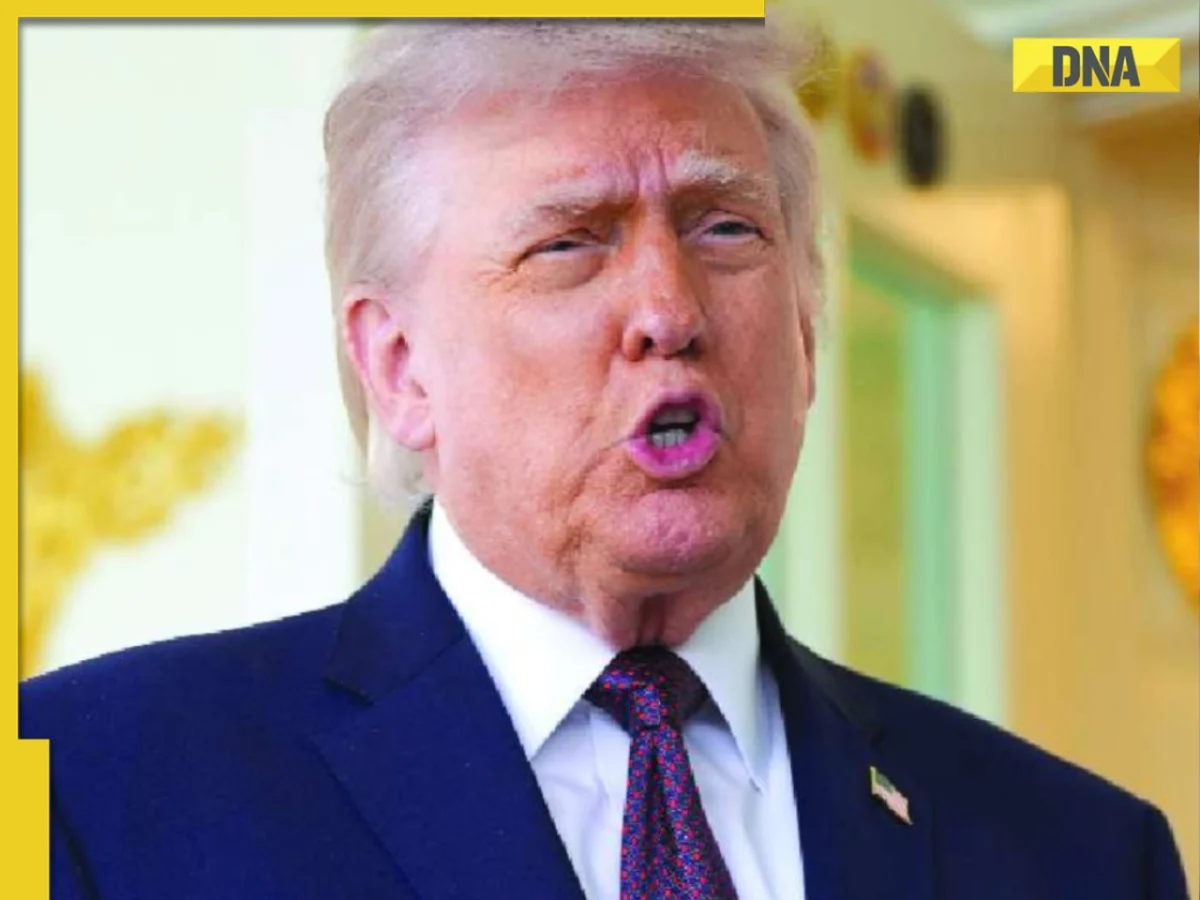
Washington D.C. – In a dramatic turn that has momentarily pulled the Middle East back from the brink of a potentially devastating conflict, US President Donald Trump announced on Monday (local time) that he had "put off" a planned military strike against Iran. The decision, revealed during a press briefing, came after urgent appeals from key regional allies, including Saudi Arabia, Qatar, and the United Arab Emirates, who expressed optimism that ongoing negotiations were on the verge of yielding a significant diplomatic breakthrough.
The surprise announcement injects a new layer of complexity into the escalating West Asia crisis, which has seen heightened tensions over Iran’s nuclear program, maritime security, and regional proxy conflicts. While President Trump expressed a desire for a peaceful resolution, the United States Central Command (CENTCOM) simultaneously confirmed its continued stringent enforcement of a naval blockade against Iranian ports, underscoring the delicate balance between diplomatic overtures and sustained pressure.
The Diplomatic Lifeline
President Trump’s declaration marked a pivotal moment in a crisis that has simmered for months, threatening to ignite into open warfare. His statement offered a glimmer of hope for a region perpetually on edge.
President Trump’s Announcement
Speaking to reporters, President Trump disclosed his decision to delay military action against Iran, a move he described as temporary but potentially permanent. "I put it (attack on Iran) off for a little while, hopefully maybe forever, but possibly for a little while because we’ve had very big discussions with Iran and we’ll see what they amount to," Trump stated. This candid admission of direct and substantive engagement with Tehran signals a significant shift, even if tentative, from the previously hardline rhetoric emanating from Washington.
)
The President’s remarks suggested a cautious optimism, acknowledging the fragility of the situation while highlighting the positive momentum. "It’s a very positive development, but we’ll see whether or not it amounts to anything," he added, indicating that the path to a lasting resolution remains uncertain and contingent on tangible progress from the Iranian side. His willingness to consider foregoing military action if diplomacy succeeds was palpable: "If we can do that without bombing the hell out of them, I will be very happy." This sentiment reflects a pragmatic approach, prioritizing a negotiated settlement over military intervention, provided it achieves Washington’s strategic objectives.
The Gulf States’ Urgent Appeal
Crucially, President Trump attributed the pause to direct requests from several influential regional actors. "I was asked by Saudi Arabia, Qatar, UAE and some others if we could put it off for two or three days, a short period of time, because they think that they are getting very close to making a deal," Trump explained. This revelation underscores the profound anxiety within the Gulf Cooperation Council (GCC) member states regarding the potential ramifications of a military conflict with Iran.
)
The intervention of these nations – long-standing US allies with deep economic and security interests intertwined with regional stability – highlights their recognition of the catastrophic consequences a full-scale war could unleash. A military confrontation would undoubtedly destabilize global oil markets, disrupt vital shipping lanes, and potentially draw other regional and international powers into the fray, with severe economic and human costs for the entire region. Their belief in the imminence of a "deal" suggests that back-channel communications and intermediary efforts have intensified significantly, culminating in a direct appeal to the US President at a critical juncture.
A Tense Chronology of Escalation and De-escalation
The current moment of paused hostilities is the culmination of a protracted period of rising tensions, marked by diplomatic deadlocks, economic pressure, and military posturing. Understanding the sequence of events is crucial to grasping the precariousness of the present situation.

Weeks of Rising Tensions
For months, the relationship between the United States and Iran has been characterized by escalating rhetoric and actions. Following the US withdrawal from the Joint Comprehensive Plan of Action (JCPOA), commonly known as the Iran nuclear deal, and the subsequent re-imposition of crippling sanctions, Tehran has progressively scaled back its commitments under the agreement. This has included increasing uranium enrichment levels and restricting international inspectors’ access, raising alarm bells in Washington and allied capitals about Iran’s nuclear ambitions.
Beyond the nuclear program, the region has witnessed a series of incidents that have fueled fears of conflict. These include alleged attacks on oil tankers in the Gulf, drone incursions, and proxy confrontations in Yemen, Iraq, and Syria. Each incident has drawn sharp condemnation from the US and its allies, with Washington often attributing responsibility directly to Tehran, leading to tit-for-tat threats and military buildups in the region. The deployment of additional US forces, including aircraft carriers and bomber task forces, served as a clear signal of Washington’s readiness to respond to any perceived Iranian aggression, further ratcheting up the tension.
)
Iran’s Rejected Peace Overture
Adding to this complex tapestry of diplomatic and military maneuvers, President Trump had, just prior to this latest development, reportedly rejected a peace proposal from Iran. According to Axios, citing senior US officials and briefed sources, Iran’s "latest counter-proposal was reportedly delivered on Sunday night through Pakistani mediators." This proposed text was deemed "short of expectations" by the US administration and "does not represent any meaningful progress towards a deal."
The rejection underscored the wide chasm between Washington and Tehran’s positions. While Iran sought relief from sanctions and guarantees regarding its security, the US continued to demand more comprehensive concessions, particularly concerning its nuclear program, ballistic missile development, and support for regional proxy groups. The failure of this direct diplomatic initiative suggested that a breakthrough remained elusive, leading many observers to conclude that military options were becoming increasingly probable.
)
The Intercession of Regional Powers
It was against this backdrop of escalating military preparations and failed direct diplomacy that the Gulf states stepped in. Saudi Arabia, Qatar, and the UAE, alongside "some others," made a direct appeal to President Trump. Their motivation is multifaceted:
- Economic Stability: A regional war would cripple their economies, heavily reliant on oil exports and global trade passing through the Strait of Hormuz.
- Security Concerns: Direct conflict would pose an immediate threat to their national security, potentially drawing them into the crossfire or becoming targets themselves.
- Humanitarian Catastrophe: They understand the immense human cost of war, which could lead to refugee crises and long-term instability.
- Mediation Efforts: These countries, despite their varying relationships with Iran, often serve as crucial conduits for communication in the region, possessing unique insights into the ongoing dynamics and potential avenues for negotiation. Their belief that a "deal" was "very close" suggests that substantial progress had been made in recent days through discreet channels, offering a credible reason for the US to reconsider immediate military action.
The Moment of Pause
The confluence of these factors – the imminent threat of military action, the explicit rejection of Iran’s proposal, and the eleventh-hour appeal from crucial allies – created the conditions for President Trump’s decision. The "two or three days" delay requested by the Gulf states, and granted by Trump, represents a narrow window. It is a testament to the diplomatic pressure exerted by these allies and, perhaps, an acknowledgment by the US administration that a non-military resolution, however remote, is preferable if attainable. This pause, therefore, is not an end to the crisis but a critical, fleeting opportunity for intensified diplomatic efforts.
)
Beneath the Surface: Underlying Dynamics and Data
Beyond the immediate headlines, the crisis is underpinned by complex geopolitical dynamics, economic pressures, and deeply entrenched strategic interests.
The Nuclear Impasse and Regional Stability
At the heart of the "West Asia crisis" lies Iran’s nuclear program. While Tehran maintains its program is purely for peaceful energy purposes, the international community, particularly the US and its allies, remains deeply concerned about its potential to develop nuclear weapons. The original JCPOA aimed to prevent this, but its unraveling has rekindled fears of proliferation. The "deal" currently being sought by the Gulf states and the US presumably focuses on reining in Iran’s nuclear activities, potentially re-establishing stricter enrichment limits and verification protocols, possibly even going beyond the original JCPOA’s scope to address ballistic missile development and regional proxy forces – issues not fully covered by the initial agreement.
)
The regional stability aspect is equally critical. Iran’s influence extends across the Middle East through various proxy groups and political alliances, from Hezbollah in Lebanon to Houthi rebels in Yemen and various militias in Iraq and Syria. These networks are perceived by Saudi Arabia, the UAE, and other Gulf states as a direct threat to their security and regional dominance. Any comprehensive deal would likely need to address these broader concerns, which contribute significantly to the overall instability in the region.
The Economic Blockade: CENTCOM’s Unwavering Stance
Despite the diplomatic pause, the United States Central Command (CENTCOM) made it unequivocally clear that the economic pressure campaign against Iran remains fully operational. "CENTCOM continues to strictly enforce the U.S. blockade against Iranian ports. U.S. forces have now redirected 85 commercial vessels to ensure full compliance," CENTCOM announced in a post on X (formerly Twitter).
)
This statement highlights a dual-track strategy: a willingness to engage diplomatically while maintaining maximum economic leverage. The blockade, a crucial component of the "maximum pressure" campaign, aims to choke off Iran’s oil exports and access to international finance, severely impacting its economy. By redirecting commercial vessels, the US ensures that sanctions are enforced, denying Iran critical revenue and resources. This sustained pressure is intended to compel Tehran to negotiate from a position of weakness and to make the necessary concessions for a lasting agreement. The fact that this enforcement continues even as diplomatic talks are reportedly nearing a breakthrough underscores the US’s determination to not ease pressure prematurely.
Geopolitical Chessboard: US, China, and the Middle East
President Trump’s brief mention of his conversation with Chinese President Xi Jinping – "President Xi was very complimentary of our military… We have the greatest military in the world. We’re not going to let Iran have a nuclear weapon" – offers a glimpse into the broader geopolitical context. China, a major global power and a significant consumer of Middle Eastern oil, has a vested interest in regional stability. While China has often expressed concerns about US unilateralism, it also shares a desire to prevent nuclear proliferation and ensure the free flow of energy resources.
)
The US strategy in the Middle East is not solely focused on Iran but is also intertwined with its global competition with powers like China and Russia. Maintaining a strong military presence and asserting its influence in key strategic regions remains a priority for Washington. The reference to China could be interpreted as a subtle message that major global players acknowledge US military might and that the US is unified with global partners on the red line of Iran developing nuclear weapons, even if their approaches to achieving that goal differ.
The Elusive "Deal"
The nature of the "deal" reportedly "close to yielding" remains unspecified. However, based on previous US demands and the concerns of regional allies, it likely encompasses several critical elements:
)
- Nuclear Program: Reinstatement of strict limits on uranium enrichment, comprehensive international inspections, and potentially dismantling certain nuclear infrastructure.
- Ballistic Missile Program: Limitations on the development and deployment of long-range ballistic missiles, which are not covered by the original JCPOA.
- Regional Influence: A reduction in Iran’s support for proxy groups and a cessation of destabilizing activities in the region.
- Prisoners/Hostages: A potential exchange of prisoners or hostages, which often accompanies high-stakes diplomatic negotiations between adversaries.
For Iran, a "deal" would undoubtedly involve significant sanctions relief, allowing its economy to recover and reintegrate into the global financial system. The challenge lies in finding a mutually acceptable equilibrium that addresses the core security concerns of all parties while allowing Iran a dignified path forward.
Official Responses and International Reactions
The pause in military action has elicited a range of responses, from cautious optimism to a wait-and-see approach, underscoring the deep divisions and uncertainties surrounding the Iran crisis.
)
Trump’s Calculated Optimism
President Trump’s public statements reflect a carefully calibrated optimism. On one hand, he expressed satisfaction with the diplomatic progress, noting that "multiple countries were directly engaging with US officials and Iran in an effort to resolve the situation diplomatically." This highlights a preference for a non-military solution, aligning with his past rhetoric about avoiding "endless wars." On the other hand, his repeated caveats – "we’ll see what they amount to," "possibly for a little while" – indicate a deep skepticism rooted in past failures of diplomacy with Iran and a readiness to revert to military options if talks falter. His reference to "bombing the hell out of them" serves as a stark reminder of the coercive power that underpins the current diplomatic push.
Statements from Gulf Capitals
While specific, immediate public statements from Saudi Arabia, Qatar, and the UAE were not detailed in the original report, it can be inferred that their appeal to Trump was a calculated diplomatic maneuver.
)
- Saudi Arabia: Would likely welcome any de-escalation that curtails Iran’s regional influence without sacrificing its own security interests. The Kingdom’s deep-seated rivalry with Iran means any deal would need to be robust.
- UAE: As a vital economic hub, the UAE has a strong interest in stability. Averting conflict would safeguard its massive investments and trade routes. Their involvement signals a proactive approach to regional security.
- Qatar: Often playing a mediating role in regional disputes, Qatar’s involvement suggests a commitment to diplomatic solutions and preventing widespread conflict. Their close ties with various actors in the region position them uniquely for such intercessions.
Collectively, their action demonstrates a unified regional desire to avoid a devastating war, even if their individual strategic alignments differ. They likely view the diplomatic window as a necessary, albeit narrow, opportunity to secure a more stable future.
Iran’s Stance
Iran’s official response to Trump’s announcement has not been explicitly detailed. However, given its long-standing demands for sanctions relief and an end to US pressure, any indication of a pause in military action and a potential opening for a "deal" would likely be cautiously welcomed. Iran has consistently stated its preference for diplomacy over conflict, provided its sovereignty and national interests are respected. The fact that its "counter-proposal" was delivered just hours before Trump’s announcement suggests that Tehran is actively engaged in the diplomatic process, despite publicly maintaining a defiant posture. The challenge for Iran will be to navigate domestic hardline factions who may view any concessions as a sign of weakness.
)
International Community’s Watchful Eye
The broader international community, including European signatories to the JCPOA (France, Germany, UK), Russia, and the United Nations, would undoubtedly view this development with a mix of relief and trepidation. For months, these actors have urged de-escalation and a return to diplomacy. The pause offers a chance to salvage the nuclear deal or forge a new, more comprehensive agreement. However, the fragility of the situation means that global leaders will be closely monitoring developments, aware that the window for peace could close as quickly as it opened. The implications for global energy markets, trade, and geopolitical stability are profound, making this a focal point of international concern.
Implications: A Precarious Path Forward
The decision to pause military action represents a critical juncture, with far-reaching implications for regional dynamics, international relations, and the future of the Iran nuclear program.
)
Shifting Sands of Regional Diplomacy
The direct involvement of Saudi Arabia, Qatar, and the UAE in appealing to President Trump signifies a potential shift in regional diplomatic paradigms. It suggests a growing recognition among Gulf states that their own security is best served by preventing a full-scale conflict, even if it means engaging in complex, indirect diplomacy with Iran. This could pave the way for more concerted regional efforts to de-escalate tensions and build confidence-building measures, moving beyond the traditional zero-sum game. However, the deep-seated rivalries and proxy conflicts will continue to challenge any attempts at lasting reconciliation.
The Future of the Iran Nuclear Deal (JCPOA)
The "deal" currently under discussion could potentially lead to a revival or renegotiation of the JCPOA. The US’s withdrawal from the original agreement was a major catalyst for the current crisis. A new agreement might aim to address the deficiencies identified by the Trump administration, such as the sunset clauses and the exclusion of Iran’s ballistic missile program and regional activities. For Iran, any new deal would need to provide substantial economic benefits and assurances against future US unilateral withdrawals. The success or failure of these talks will determine whether the international community can prevent Iran from developing nuclear weapons through diplomatic means.
)
Impact on Global Markets and Energy Security
The immediate impact of the pause on global oil markets is likely to be a temporary easing of anxiety, potentially leading to a slight dip in oil prices. However, this relief would be short-lived if the negotiations falter. A military conflict in the Persian Gulf, a vital waterway for global oil shipments, would send crude prices soaring, disrupt supply chains, and trigger a global economic recession. The continued enforcement of the US blockade, as confirmed by CENTCOM, ensures that economic pressure on Iran remains high, which in itself has implications for global energy supplies by limiting Iranian exports. The precariousness of the situation means that energy security remains a top concern for nations worldwide.
Domestic Political Ramifications for the US
For President Trump, this decision carries significant domestic political weight. While it could be hailed as a diplomatic triumph if a favorable deal is reached, it also exposes him to criticism from hawkish elements who advocate for a more aggressive stance against Iran. His ability to balance the demands of his political base with the complexities of international diplomacy will be crucial. A successful resolution could bolster his image as a dealmaker, while a failure could lead to renewed calls for military action and questions about his foreign policy judgment.
)
A Narrow Window for Peace?
The two-to-three-day delay requested by the Gulf states represents a fleeting, yet critical, window of opportunity. It is a moment where the trajectory of the West Asia crisis could fundamentally shift, either towards a painstaking diplomatic solution or a catastrophic military confrontation. The success hinges on the willingness of all parties – particularly the US and Iran – to make significant concessions, to engage in good faith, and to trust the mediating efforts of regional and international actors. The stakes are extraordinarily high, and the world watches with bated breath to see if this diplomatic lifeline can truly avert war and pave the way for a more stable future in one of the world’s most volatile regions. The coming days will be decisive in determining whether the "very big discussions with Iran" amount to lasting peace or merely a temporary reprieve.
