

Mohali, Punjab – The Greater Mohali Area Development Authority (GMADA), a cornerstone of urban planning and development in Punjab, has been thrust into the national spotlight following a series of extensive and unprecedented raids by the Enforcement Directorate (ED). What began as a money-laundering probe linked to a private infrastructure firm, Tirupati Infra Projects, has rapidly escalated into a high-stakes investigation, placing GMADA’s land deals, an alleged potential loss of thousands of crores, and the purported involvement of senior Aam Aadmi Party (AAP) leaders under the central agency’s intense scrutiny.
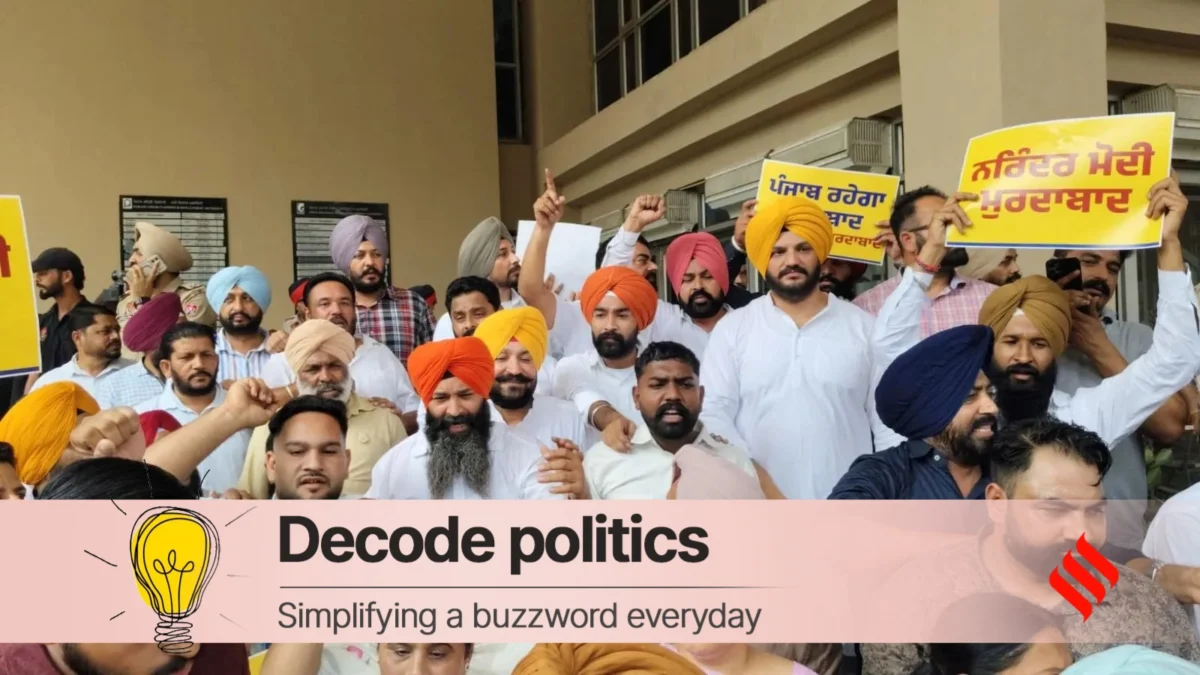
The marathon operation, which stretched for over 50 hours at GMADA’s headquarters in Mohali earlier this week, has ignited a fierce political firestorm in Punjab. The ruling AAP has vehemently dismissed the allegations as "baseless" and "politically-motivated," accusing the Bharatiya Janata Party (BJP)-led Centre of weaponizing its agencies against the Bhagwant Mann-led government, particularly in the run-up to the crucial state Assembly elections. The dramatic events have not only cast a long shadow over one of Punjab’s most significant urban bodies but also deepened the fissures in the already contentious political landscape of the state.
Main Facts: The Core of the Investigation
The core of the ED’s sweeping investigation centers on several grave allegations that could potentially reshape the administrative and political discourse in Punjab. At the heart of the matter is the claim of a potential loss of an astounding ₹10,000 crore to GMADA and the Punjab government, stemming from alleged irregularities in land transactions. This figure, as clarified by the ED, represents an estimate of potential loss rather than a confirmed amount already siphoned off, yet its sheer scale underscores the gravity of the ongoing probe.
The central agency’s focus includes the alleged "deliberate reduction" of reserve prices for unsold GMADA land prior to auctions, a mechanism that could have facilitated undervaluation and subsequent illicit gains. Beyond this, the ED is examining irregularities in land acquisition awards and compensation, the reallotment of cancelled plots, and the granting of undue concessions to various private developers. One specific transaction under the scanner involves Remigate Infra Developers, which allegedly benefited from a waiver of statutory dues and penal interest amounting to between ₹40 crore and ₹57 crore.
Furthermore, the investigation has expanded to include allegations of political interference at the highest levels. The ED has claimed that former Delhi ministers, Manish Sisodia and Satyendar Jain – both prominent figures within the AAP – held "unofficial meetings" with GMADA officials, where critical decisions regarding master plans, fresh auctions, and land acquisition were purportedly discussed and influenced. These claims have added a potent political dimension to an already complex financial investigation, drawing immediate and forceful denials from the AAP.
The raids themselves were characterized by an extensive data collection effort, with ED personnel questioning eight senior GMADA officials, cloning their mobile phones, and meticulously scanning computers, servers, and official records. A significant volume of electronic devices and crucial documents were seized, forming the backbone of the agency’s evidentiary trail. This multi-pronged approach signals the ED’s intent to unearth a deep-rooted network of alleged corruption and financial impropriety within the vital urban development authority.
Chronology of a Sweeping Probe
The ED’s operation against GMADA was not an isolated event but rather the culmination of a protracted investigation that evolved significantly over time.
The Genesis: From Bank Fraud to Land Deals
The origin of the current predicament facing GMADA traces back not to an initial complaint against the authority itself, but to a separate, underlying case. The ED’s money-laundering probe stemmed from an alleged bank fraud case involving Tirupati Infra Projects, which was initially investigated by the Central Bureau of Investigation (CBI). As the ED delved deeper into the financial trails associated with Tirupati Infra Projects, its investigators reportedly stumbled upon a web of transactions and material that pointed directly towards GMADA’s land dealings. This discovery served as the crucial pivot, expanding the scope of the probe from a specific company’s alleged fraud to the broader operations of a key government body. The interconnectedness of financial crimes often leads investigative agencies down unforeseen paths, and in this instance, it led them straight to the corridors of power in Mohali.
The Marathon Operation at GMADA Headquarters
The physical manifestation of this expanded probe began with the ED’s search and survey operation at the GMADA headquarters in Mohali. The raids commenced on Tuesday and continued relentlessly, stretching through Wednesday night and finally concluding on Thursday. This prolonged presence, lasting for over 50 hours, underscored the intensity and thoroughness of the ED’s methodology.
During this period, ED personnel engaged in exhaustive questioning of eight senior GMADA officials, seeking insights into the authority’s internal workings, decision-making processes, and specific land transactions under scrutiny. To gather comprehensive digital evidence, the agency employed advanced forensic techniques, including the cloning of officials’ mobile phones. This allowed investigators to access communication records, messages, and other digital data pertinent to the probe. Simultaneously, computers, servers, and physical official records were meticulously scanned and analyzed. The objective was clear: to trace financial flows, identify beneficiaries, and establish any potential nexus between officials, politicians, and private entities. The operation resulted in the seizure of numerous electronic devices and a trove of crucial documents, which are now being processed as evidence. The sheer volume and nature of the seized material suggest a significant accumulation of data that will likely form the basis of subsequent legal actions.
Multi-City Net Widens
The raids at GMADA were not confined to Mohali alone. The ED’s operation was part of a wider, coordinated effort spanning multiple locations across several cities. Simultaneous searches were conducted in Delhi, the national capital, as well as in Chandigarh, Panchkula, and Ludhiana. This multi-city approach indicates that the alleged money-laundering network and its beneficiaries might extend beyond Punjab’s borders, involving individuals and entities operating in different jurisdictions. Such widespread operations are characteristic of complex financial investigations, where money trails often lead across states and involve various intermediaries. The simultaneous nature of these raids also aims to prevent the destruction of evidence and ensure a comprehensive sweep of all suspected linked premises.
A Legal Challenge and its Outcome
The intensity of the ED’s operation at GMADA offices quickly escalated into a direct confrontation between the Bhagwant Mann-led government and the central agency, along with the BJP. Perceiving the raids as an overreach and potentially an illegal detention of its officials, the AAP government took immediate legal recourse, approaching the Punjab and Haryana High Court. The government’s petition alleged that GMADA officials were being unlawfully detained by the ED, hindering their work and infringing upon their rights.
In response to the plea, the High Court appointed a warrant officer to visit the GMADA premises and independently verify the situation. The warrant officer’s role was to ascertain whether the officials were indeed being illegally detained or subjected to undue pressure by the ED personnel. However, upon the warrant officer’s visit, the officials present at the GMADA offices reportedly stated that they had not been illegally detained or coerced. This outcome represented a setback for the AAP government’s initial legal challenge, allowing the ED to continue its search and survey operations unimpeded and bolstering the agency’s assertion of lawful conduct.
Supporting Data: The Allegations Unpacked
The allegations brought forth by the ED against GMADA are not merely procedural but strike at the core of governance, public trust, and financial integrity within a critical state institution.
GMADA’s Pivotal Role in Punjab’s Urban Landscape
To understand the magnitude of the alleged scam, it is crucial to appreciate GMADA’s significant role in Punjab. Established as one of the state’s key urban development authorities, GMADA is tasked with a broad and influential mandate. It is responsible for crafting master plans for the Greater Mohali Area, which encompasses a rapidly developing region around Mohali. Beyond planning, its responsibilities include land acquisition for public projects, spearheading urban development initiatives, and the crucial functions of allotment and auction of highly valuable residential and commercial properties.
GMADA commands a substantial land bank in and around Mohali and its adjoining areas, making its decisions inherently high-stakes. Any actions pertaining to the acquisition, pricing, and auction of this land involve transactions worth hundreds, if not thousands, of crores of rupees. The authority’s decisions directly impact real estate markets, infrastructure development, and the overall urban fabric of one of Punjab’s most economically dynamic regions. Therefore, any allegations of corruption within GMADA carry immense weight, threatening to undermine not only its financial health but also the planned growth and equitable development of the area.
Interestingly, the authority’s internal reputation had already been under scrutiny. Just a month prior to the ED raids, Malvinder Singh Kang, an AAP MP from Anandpur Sahib, publicly described GMADA as a "den of corruption" and a "centre of loot." He specifically alleged selective demolition of illegal structures and called for the transfer of officials who had remained posted in the authority for extended periods, hinting at systemic issues and entrenched interests even from within the ruling party’s ranks. This earlier criticism from an AAP insider adds a layer of complexity to the current allegations, suggesting that concerns about GMADA’s integrity might not be entirely new.
The Staggering ‘₹10,000 Crore Scam’ Allegation
The most attention-grabbing figure emerging from the ED’s probe is the alleged potential loss of nearly ₹10,000 crore to GMADA and the Punjab government. This staggering amount is primarily attributed to the "deliberate reduction" of reserve prices for some of GMADA’s unsold land parcels before their auction. The ED contends that by artificially lowering these reserve prices, the authority may have paved the way for private entities to acquire prime land at undervalued rates, thereby causing immense financial detriment to the public exchequer. It is vital to reiterate that this figure is the ED’s preliminary estimate of potential loss, a projection of what could have been lost due to alleged irregularities, rather than a confirmed amount that has already vanished. Proving actual loss and linking it to specific individuals will be a significant challenge for the agency.
Beyond the reserve price manipulation, the ED’s investigation also encompasses a broader range of alleged irregularities. These include discrepancies in land acquisition awards and compensation processes, where farmers and landowners might have been unfairly compensated or where undue benefits were extended. The reallotment of cancelled plots, often highly sought-after, is also under scrutiny for potential favoritism or lack of transparency. Furthermore, the agency is probing alleged concessions granted to private developers, which may have bypassed standard procedures or been awarded without sufficient justification, leading to illicit enrichment for specific companies at the expense of public interest.
Spotlight on Remigate Infra Developers
To substantiate its broader claims, the ED has pointed to specific instances of alleged financial impropriety. One such transaction under intense scrutiny involves Remigate Infra Developers. The agency has alleged that this company received substantial undue benefits through the waiver of statutory dues and penal interest. The estimated value of this alleged benefit ranges between ₹40 crore and ₹57 crore. Such a waiver, if proven to be irregular, would signify a direct financial loss to GMADA and a corresponding gain for the private developer, highlighting a potential pattern of favoritism and corruption. The focus on specific companies and transactions helps to provide concrete examples to support the ED’s overarching allegations of systemic irregularities.
Digital Trails and Hawala Suspicions
A significant aspect of the ED’s investigative methodology involved the forensic examination of digital devices and computer systems seized during the raids. This digital evidence is proving to be a critical component of the agency’s case. The ED has claimed that material recovered from the cloned mobile phones contained conversations relating to alleged hawala transactions. More alarmingly, these alleged hawala transactions are said to involve relatives of some Punjab politicians. Hawala, an informal system for transferring money without actual physical movement, is often used for illicit financial activities, including money laundering and tax evasion. If these allegations are substantiated, they would not only underscore the depth of the financial irregularities but also suggest a direct link between the alleged scam and political figures, adding another layer of complexity and sensitivity to the investigation. The digital trails are expected to provide crucial links between individuals and financial transactions, forming the backbone of the ED’s evidence.
Official Responses: A Storm of Denials and Accusations
The ED’s raids and subsequent allegations have triggered a furious exchange of words between the ruling AAP and its political rivals, with both sides trading accusations of corruption and political vendetta.
AAP’s Vehement Rejection
The Aam Aadmi Party, which came to power in Punjab on a strong anti-corruption platform, has vehemently rejected all allegations emanating from the ED’s probe. In a series of statements, party spokespersons and leaders have dismissed the claims as "baseless," "completely false," and "politically-motivated." The AAP’s central argument is that the BJP-led Centre is misusing its investigative agencies, particularly the ED, as a tool to destabilize opposition governments and create an unfavorable narrative ahead of crucial elections. This narrative of central agency overreach against opposition parties has been a recurring theme in Indian politics.
A key point raised by the AAP is the absence of a direct First Information Report (FIR) or any predicate offence specifically registered against GMADA itself. The party argues that the ED’s probe, having originated from a separate case involving Tirupati Infra Projects, is being opportunistically expanded to target the state government without a clear legal basis for investigating GMADA’s operations directly. They maintain that the entire exercise is designed to defame the Bhagwant Mann government and undermine its credibility, especially given its proclaimed commitment to rooting out corruption in the state. The AAP asserts that its leaders and government officials have no involvement in any alleged wrongdoing and are being unfairly implicated.
The Controversial Role of Delhi AAP Leaders
Perhaps the most politically explosive aspect of the ED’s claims concerns the alleged involvement of former Delhi ministers, Manish Sisodia and Satyendar Jain. The ED has explicitly stated that Sisodia and Jain held regular "unofficial meetings" with GMADA officials, where sensitive matters pertaining to the Authority’s master plans, fresh auctions, land acquisition policies, and compensation rates were reportedly discussed. According to the agency, critical decisions were "taken informally under the instructions of Jain," implying a significant level of influence and control exerted by these Delhi-based leaders over GMADA’s functioning.
The ED further detailed that officials allegedly carried sensitive files from GMADA’s PUDA Bhawan in Mohali to these meetings, which purportedly took place at a government bungalow in Sector 39, Chandigarh. This house, officially allotted to AAP leader Sunny Singh Ahluwalia, chairman of the Punjab Water Supply and Sewerage Board, is alleged to have been used by Jain for these crucial clandestine meetings with GMADA officials. In a statement issued on Thursday, the ED claimed that "searches have revealed that AAP leaders Satyendar Jain and Manish Sisodia have been regularly holding unofficial meetings with GMADA officials regarding the master plans and site auctions." It added that "Critical decisions including fresh auctions and acquisitions by GMADA as well as determination of compensation were all taken informally under the instructions of Jain."
The political context here is significant: Satyendar Jain serves as the AAP’s Punjab co-incharge, while Manish Sisodia has a long history of overseeing the party’s affairs in Punjab. Their alleged involvement, especially given their senior party positions and their current legal troubles (both have faced ED probes and arrests in other cases), provides potent ammunition for opposition parties.
However, the AAP has vehemently rejected these allegations against Jain and Sisodia. The party has categorically stated that reports of their meetings with GMADA officials are "completely false, baseless, and politically motivated." It asserts that neither leader has any role in GMADA’s projects, its day-to-day functioning, or any official matters related to the authority. The AAP’s defense centers on the argument that these claims are part of a broader smear campaign orchestrated by the BJP to tarnish the image of its national leaders and the party’s governance model.
Implications: Political Tempest and Future Ramifications
The ED’s ongoing investigation into GMADA has plunged Punjab into a significant political and administrative crisis, with far-reaching implications for the state’s governance, public trust, and upcoming electoral dynamics.
Pre-Election Heat: AAP vs. Opposition
The timing of the raids, nearly three years ahead of the Punjab Assembly elections due in February 2027, has immediately injected intense heat into the state’s political arena. For the opposition parties, the ED’s actions provide a potent weapon to challenge the AAP government’s core promise of clean governance.
BJP leader and former Union minister Ravneet Singh Bittu swiftly capitalized on the developments, stating in an X post that the ED action at the GMADA headquarters was "proof that the Bhagwant Mann government’s claims are limited merely to advertisements." He further asserted, "Those who have looted Punjab’s treasury and the rights of the people will be brought to justice under the law at all costs. The Modi government’s zero tolerance policy against corruption is clear." This statement aligns with the BJP’s national narrative of cracking down on corruption and puts direct pressure on the Mann government.
The Congress party’s Leader of Opposition, Partap Singh Bajwa, also demanded immediate answers from Chief Minister Mann regarding the alleged ₹10,000 crore potential loss. Bajwa pointedly questioned, "who fixed the reserve prices, who took the decisions and who benefited," seeking direct accountability from the state’s highest office. The Shiromani Akali Dal (SAD) chief, Sukhbir Singh Badal, echoed similar sentiments, demanding that "every file and link be investigated," underscoring the demand for a comprehensive and transparent probe.
The AAP, on its part, is fighting back by framing the entire episode as a political witch hunt. It continues to question the very basis of the ED action, emphasizing the lack of a direct FIR or predicate offence against GMADA. This narrative aims to rally public support against what it portrays as the misuse of central agencies to undermine democratically elected state governments. The political battle lines are clearly drawn, with the ED probe becoming a central plank of the pre-election discourse.
The Wider Shadow Over Governance
Beyond the immediate political skirmishes, the allegations cast a long and troubling shadow over the integrity of urban development authorities in Punjab. GMADA, as a key player in land management and infrastructure, holds immense power and influence. Allegations of deliberate undervaluation of public assets, irregular land acquisitions, and undue concessions to private developers can severely erode public trust in such institutions. If proven, these irregularities would not only signify massive financial losses but also highlight systemic vulnerabilities to corruption and influence peddling.
The ongoing probe raises critical questions about oversight mechanisms, transparency in land transactions, and the accountability of officials and political appointees. It could potentially lead to calls for significant administrative reforms within GMADA and other similar authorities across the state, demanding greater scrutiny over land deals, auction processes, and the awarding of development contracts. The potential for further investigations, arrests, and the unearthing of more layers of corruption remains a distinct possibility, keeping the state’s administrative machinery on edge.
Legal and Administrative Ramifications
The legal ramifications of the ED’s investigation are substantial. The agency will now have the arduous task of meticulously building its case based on the seized documents, digital evidence, and official testimonies. Proving "potential loss" is a complex legal exercise, requiring robust evidence to demonstrate malafide intent and direct links between specific actions and financial detriment. If charges are formally pressed, it could lead to lengthy legal battles for implicated officials and politicians, potentially resulting in asset attachments and criminal proceedings.
Administratively, the controversy could force GMADA to re-evaluate its internal processes, especially concerning land valuation, auction procedures, and the handling of development projects. There might be an increased push for digitization, greater transparency in public records, and stricter ethical guidelines for officials. The episode also underscores the delicate balance between federal investigative powers and state autonomy, a recurring point of contention in India’s political landscape. Ultimately, the outcome of this investigation will not only determine the fate of individuals but also shape the public perception of governance in Punjab and the broader narrative of the fight against corruption in India. The long road to justice, or exoneration, has only just begun.
