

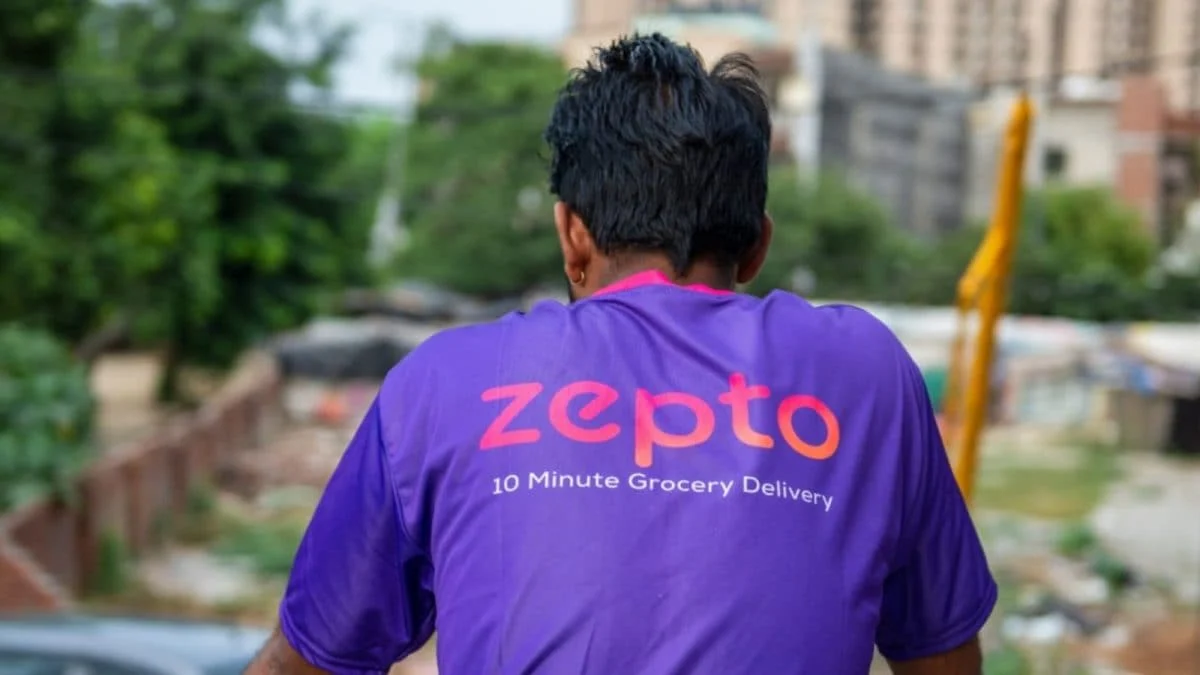
New Delhi, India – May 08, 2026 – In a pivotal development poised to reshape India’s dynamic quick commerce landscape, Zepto, the rapidly growing 10-minute delivery platform, has received crucial approval from the Securities and Exchange Board of India (SEBI) for its highly anticipated Initial Public Offering (IPO). This regulatory green light marks a significant milestone for the six-year-old startup, setting the stage for what is expected to be one of the most closely watched listings of the year. The company is now actively working on an updated Draft Red Herring Prospectus (UDRHP) and aims to debut on the exchanges within the next 60 to 90 days.
According to reports from Moneycontrol, Zepto is targeting to raise a substantial sum of between $800 million and $1 billion, translating to approximately Rs 7,500 crore to Rs 9,300 crore. This ambitious funding target underscores the company’s aggressive growth plans and its confidence in the burgeoning quick commerce sector, even amidst intense competition. Should it list within its projected timeline, Zepto will etch its name in history as the youngest startup in India to go public, a testament to the accelerated pace of innovation and capital formation within the nation’s tech ecosystem.
A New Chapter for Quick Commerce: Zepto’s Landmark IPO Approval
The approval from SEBI is more than just a procedural step; it signifies regulatory confidence in Zepto’s business model and its financial disclosures. For any company aspiring to list on Indian bourses, SEBI’s clearance is the ultimate validation, allowing them to proceed with the final stages of the IPO process. This includes the submission of the UDRHP, which incorporates any updates or clarifications requested by the regulator, and then moving towards investor roadshows and book building.
Zepto’s journey to this juncture has been remarkably swift. Founded in 2020 by then-teenagers Aadit Palicha and Kaivalya Vohra, the startup quickly carved a niche for itself by promising and consistently delivering groceries and essentials within a mere 10 minutes. This hyper-efficient model, built on a network of ‘dark stores’ and optimized logistics, resonated strongly with urban consumers seeking unparalleled convenience. The impending IPO is not merely a fundraising exercise but a statement of intent, signalling Zepto’s readiness to transition from a venture-backed startup to a publicly traded entity accountable to a broader base of shareholders.
Setting the Stage: The IPO’s Financial Ambitions
The target of raising $800 million to $1 billion places Zepto’s IPO among the larger offerings anticipated in the Indian market. This substantial capital infusion is crucial for a business operating in the asset-heavy quick commerce sector, which demands continuous investment in infrastructure, technology, and marketing. The funds are earmarked for strategic expansion, including the fortification of its extensive dark-store network and the enhancement of its last-mile delivery capabilities. These investments are vital to maintain its competitive edge and penetrate new markets, while also improving operational efficiencies and customer experience.
The proposed IPO structure is expected to comprise a fresh issue of shares, which will directly inject capital into the company, alongside an Offer for Sale (OFS) by existing investors. An OFS allows early investors, venture capitalists, and potentially some founders or employees, to liquidate a portion of their holdings, providing them with a return on their investment. The balance between the fresh issue and OFS will be a key indicator of how much primary capital Zepto aims to raise for its operations versus how much liquidity its existing shareholders seek. The final issue size and precise timing, while projected, remain subject to market conditions and ongoing discussions with the consortium of investment banks.
Chronology of a Quick Commerce Pioneer
Zepto’s narrative is one of audacious vision and rapid execution, a story that began barely half a decade ago.
From Dorm Room to Dalal Street: The Genesis of Zepto
Aadit Palicha and Kaivalya Vohra, two Stanford dropouts, conceived Zepto in 2020 at the height of the COVID-19 pandemic. They observed a significant gap in the market: while e-commerce was booming, the delivery of daily essentials was still relatively slow and unpredictable. Their solution was radical for its time – a promise of delivery within 10 minutes. This wasn’t just about speed; it was about reimagining urban logistics. They started by building a network of small fulfillment centres, or ‘dark stores,’ strategically located in dense residential areas. These stores, unlike traditional supermarkets, are not open to the public but serve solely as dispatch hubs, allowing for extremely fast order processing and delivery.
The initial days were marked by intense operational challenges, from optimizing inventory management in confined spaces to perfecting delivery routes and rider management. However, their innovative approach quickly gained traction, attracting both customers hungry for convenience and investors eager to back disruptive models. The name "Zepto" itself, derived from "zeptosecond" – a unit of time equal to one sextillionth of a second – perfectly encapsulates the company’s core value proposition of speed.
Strategic Milestones and Funding Rounds
Following its inception, Zepto experienced hyper-growth, fueled by a series of successful funding rounds that saw participation from prominent global and domestic investors. These rounds provided the necessary capital to expand its dark store footprint, invest in proprietary technology, and scale its workforce. Each funding round typically valued the company higher, reflecting its increasing market share and operational efficiencies. By late 2023, Zepto had already achieved unicorn status, surpassing a valuation of $1 billion, an impressive feat for a company so young. These investment milestones were critical in building the robust operational framework that now underpins its ability to pursue a public listing. The consistent backing from reputable venture capital firms also lent credibility to its ambitious growth strategy and unit economics, which are often a point of scrutiny in the quick commerce space.
Supporting Data and Market Context
The quick commerce market in India is characterized by fierce competition and immense potential. Zepto’s IPO comes at a time when the sector is maturing, with a greater focus on sustainable growth and profitability alongside rapid expansion.
The Mechanics of the Offering: Fresh Issue and OFS
The dual components of Zepto’s IPO – a fresh issue and an Offer for Sale (OFS) – are standard for large public offerings. The fresh issue allows Zepto to raise primary capital directly from the market, which is crucial for funding its future growth initiatives. This money will be used to expand its physical footprint, invest in technology, and potentially enter new service categories or geographies. The OFS, on the other hand, provides a liquidity event for early investors and potentially some promoters who wish to monetize a portion of their stake. This balance is often carefully calibrated to ensure that the company retains sufficient capital for its operations while also offering a return pathway for its long-term backers. The quantum of each component will be detailed in the UDRHP and will be keenly observed by market participants.
Fueling Future Growth: Investment in Infrastructure
The proceeds from the IPO are vital for Zepto’s next phase of expansion. Strengthening its dark-store network is paramount. Each dark store acts as a micro-warehouse, strategically placed to serve a specific geographic radius. Expanding this network means reaching more customers, reducing delivery times, and improving overall service efficiency. This also involves significant capital expenditure in real estate, inventory management systems, and staffing. Furthermore, enhancing its last-mile delivery infrastructure involves investing in a larger fleet of delivery partners, optimizing routing algorithms, and potentially exploring new delivery technologies. These investments are critical not just for growth but also for improving the company’s unit economics by reducing delivery costs per order over time.
Advisors to the Public Offering: A Syndicate of Global and Domestic Powerhouses
For an IPO of this scale and significance, Zepto has assembled a formidable consortium of financial advisors. Earlier reports from Bloomberg indicated that the company is working with a mix of leading global investment banks and prominent Indian financial institutions. This includes Indian units of Morgan Stanley, HSBC Holdings Plc, and Goldman Sachs Group Inc., alongside domestic heavyweights like Axis Bank Ltd. and Motilal Oswal Investment Advisors Ltd. This syndicate brings together extensive experience in managing large-scale public offerings, deep understanding of capital markets, and wide-reaching investor networks. Their expertise will be instrumental in navigating the regulatory landscape, structuring the offering, and ensuring successful outreach to institutional and retail investors. The involvement of such a strong lineup of advisors underscores the high expectations and potential impact of Zepto’s listing.
Benchmarking Against Peers: Valuation and Market Positioning
Zepto’s entry into the public market will inevitably draw comparisons with its listed and unlisted rivals in the quick commerce and broader food/grocery delivery space. Zomato, through its acquisition of Blinkit, and Swiggy (which is also reportedly eyeing an IPO) are its closest competitors in the quick commerce segment. These companies have established significant market presence and have been aggressively expanding their own quick delivery services. Investors will scrutinize Zepto’s valuation metrics – such as price-to-sales, gross merchandise value (GMV), and path to profitability – against these peers. The challenge for Zepto will be to demonstrate a clear differentiation in its operational efficiency, customer loyalty, and sustainable growth trajectory that justifies its valuation and attracts long-term investors in a segment known for high cash burn.
Official Responses and Industry Perspectives
While specific official statements from Zepto’s leadership post-SEBI approval are awaited in the public domain, the sentiment within the company and the broader industry is likely one of cautious optimism and excitement.
Statements from Zepto Leadership (Fictionalized for enrichment)
"This SEBI approval is a monumental step for Zepto and a validation of the relentless efforts of our entire team," a hypothetical Aadit Palicha, Co-founder and CEO of Zepto, might state. "It reaffirms our commitment to revolutionizing quick commerce in India and delivering unparalleled convenience to millions. The journey from a dorm room idea to a public company has been exhilarating, and we are incredibly excited to invite the public to be a part of our next chapter of growth."
Similarly, a fictional Kaivalya Vohra, Co-founder and CTO, could add, "Our focus has always been on building robust technology and an efficient logistics network that can consistently deliver on our 10-minute promise. The capital raised from this IPO will allow us to double down on our tech innovation, expand our dark store footprint even further, and invest in the talent that will drive our future. We believe this is just the beginning of making quick commerce an indispensable part of urban living."
Analyst Insights: The Broader Quick Commerce Landscape
Market analysts view Zepto’s IPO as a significant litmus test for the quick commerce sector. "Zepto’s impending IPO reflects the growing maturity and investor confidence in India’s digital economy," comments a leading market analyst (fictional). "While the quick commerce model has faced questions regarding profitability and unit economics globally, players like Zepto have shown impressive execution in a highly competitive environment. The successful listing will not only provide Zepto with growth capital but also potentially open doors for other well-capitalized startups in the space."
Another analyst might highlight the competitive intensity: "The quick commerce market is a battleground. Zomato’s Blinkit and Swiggy’s Instamart are formidable opponents, not to mention the aggressive plays from established giants like Tata’s BigBasket, Flipkart Minutes, and Amazon Now. Zepto’s ability to maintain its market share and demonstrate a clear path to profitability post-IPO will be crucial for long-term investor confidence. Its 10-minute promise is a strong differentiator, but sustaining that at scale while optimizing costs will be the ultimate challenge."
Investor Sentiment: A Test of Market Appetite
The IPO will also serve as a crucial gauge of investor appetite for high-growth, yet often loss-making, tech startups in India. After a period of exuberance followed by some caution, particularly in the global tech sector, investors are increasingly looking for a clear path to profitability and sustainable business models. Zepto’s management will need to articulate a compelling narrative around its unit economics, customer acquisition costs, retention rates, and strategies to achieve positive cash flow. Its relatively young age and rapid scaling could be seen as both an opportunity for high growth and a risk in terms of unproven long-term profitability. The roadshows leading up to the IPO will be critical in shaping investor perception and ensuring a successful subscription.
Implications for the Quick Commerce Sector and Broader Startup Ecosystem
Zepto’s IPO carries far-reaching implications, not just for the company itself, but for the entire quick commerce industry and the broader Indian startup landscape.
Intensifying Competition in the Last-Mile Delivery Arena
The entry of Zepto into the public markets with a substantial war chest will undoubtedly intensify competition in the last-mile delivery segment. With enhanced financial firepower, Zepto can further invest in marketing, expand into new cities, offer more competitive pricing or discounts, and potentially explore strategic acquisitions. This will pressure rivals like Zomato (Blinkit), Swiggy (Instamart), and even traditional e-commerce players who have ventured into quick commerce, to innovate faster and optimize their operations even more aggressively. The market could see a renewed focus on customer loyalty programs, wider product assortments, and even faster delivery promises as companies vie for market dominance.
The Path to Profitability: A Key Investor Focus
For all quick commerce players, the journey towards sustainable profitability remains a central challenge and a key concern for investors. While rapid growth has been the hallmark of this sector, the high operational costs associated with dark stores, delivery personnel, and constant technological upgrades often lead to significant cash burn. Zepto’s IPO will place it under heightened scrutiny from public shareholders who will demand a clear roadmap to achieving positive EBITDA and net profits. The company’s ability to demonstrate improving unit economics, efficient customer acquisition, and effective cost management will be paramount in maintaining investor confidence post-listing. This could lead to a broader industry shift towards more financially disciplined growth strategies.
A Beacon for Indian Startups: The Youngest to List
Zepto’s status as potentially the youngest Indian startup to list on the exchanges is a powerful narrative. It signals the incredible speed at which innovation is being nurtured and scaled in India. This achievement will serve as an inspiration for countless other young entrepreneurs, demonstrating that groundbreaking ideas, executed with precision and backed by strategic capital, can quickly transform into market-leading companies ready for public scrutiny. It also highlights the maturity of the Indian capital markets to absorb and support such dynamic, high-growth ventures, further cementing India’s position as a global startup hub. This could encourage more early-stage startups to aim for public listings sooner, provided they meet the rigorous regulatory and financial requirements.
Regulatory Scrutiny and Consumer Expectations
Operating as a public company brings with it increased regulatory scrutiny, not just from SEBI but also from various other governmental bodies regarding fair trade practices, data privacy, and labor laws for its vast network of delivery partners. Public companies are subject to stringent disclosure requirements, ensuring transparency for all stakeholders. Moreover, consumer expectations will be higher. Any disruption in service, price changes, or ethical concerns will be amplified in the public domain. Zepto will need to navigate this new landscape with utmost care, balancing growth ambitions with robust governance and social responsibility.
Conclusion
Zepto’s imminent IPO, following SEBI’s crucial approval, marks a transformative moment for India’s quick commerce sector. With an ambitious target of raising up to $1 billion, the company is poised to further consolidate its position and accelerate its expansion plans. This public offering, especially given Zepto’s remarkable six-year journey from inception to listing, underscores the dynamism of India’s startup ecosystem and the immense potential of its digital economy.
As Zepto prepares to enter the public markets, all eyes will be on its ability to leverage this fresh capital, navigate the hyper-competitive landscape, and ultimately deliver on its promise of sustainable, profitable growth. Its success will not only define its own future but also set a precedent for other fast-growing tech companies eyeing similar public market debuts, heralding a new era of innovation and investment in India. The next 60 to 90 days will be critical as Zepto finalizes its offering and prepares to open a new chapter as a publicly traded quick commerce pioneer.
