

New Delhi, India – In an era where artificial intelligence is rapidly evolving, capable of generating text that mimics human thought, a critical question emerges: are we witnessing genuine cognition, or merely sophisticated pattern optimization? As AI systems ingest vast repositories of human knowledge, their outputs can appear remarkably insightful, creating an illusion of understanding. However, experts warn that this sophisticated mimicry, while impressive, should not be mistaken for true sentience or infallible truth. To navigate this burgeoning landscape, humanity may need to revisit an ancient philosophical discipline: the art of productive doubt.
The Nyaya Sutra, a foundational text of Indian philosophy, offers a profound framework for acquiring knowledge. Among its sixteen categories of valid inquiry, samsaya, or productive doubt, stands out as a crucial first step. It’s not about cynicism or a refusal to accept information, but rather a conscious, critical engagement with information, a deliberate questioning of assumptions, and a rigorous examination of evidence. In the context of AI-generated content, embracing samsaya means approaching every output with a discerning mind, employing debate, reasoning, illustrative examples, and persistent critical questioning before accepting it as definitive truth.

The Illusion of Intelligence: Unpacking AI’s Pattern Recognition
At its core, current AI, particularly large language models (LLMs) and generative AI, functions as an advanced pattern-completion engine. Trained on an immense corpus of text and data – the accumulated thoughts, writings, and creations of humanity – these systems excel at identifying, remixing, and extrapolating patterns. When a user inputs a prompt, the AI doesn’t "think" in the human sense; instead, it computationally predicts the most probable sequence of words or concepts that align with its training data and best address the query.
This process, while computationally intensive and incredibly fast, is fundamentally different from human consciousness. It is an optimization of existing information, a sophisticated rearrangement of past knowledge to generate a seemingly novel response. The danger lies in mistaking this output for genuine understanding or original thought. As the article highlights, "AI outputs may appear thoughtful but could simply be advanced pattern optimisation based on past knowledge." This distinction is paramount.
)
The Ancient Wisdom of Doubt: Nyaya Sutra and the Pursuit of Knowledge
The Nyaya school of philosophy, attributed to the sage Gotama, provides a robust methodology for logical reasoning and epistemology. Samsaya is presented as the initial stage of inquiry, the recognition of uncertainty or doubt that necessitates further investigation. It is the spark that ignites the pursuit of knowledge, not the endpoint of certainty.
According to the Nyaya Sutra (1.1.1), samsaya is the state of uncertainty that arises when there is a conflict of evidence or a lack of conclusive information. This doubt, when approached constructively, leads to the application of other valid means of knowledge acquisition, such as:

- Vada (Honest Debate): Engaging in reasoned discussion to explore different perspectives and arrive at a more robust understanding.
- Drishtanta (Example): Using concrete instances to illustrate abstract principles or validate arguments.
- Tarka (Hypothetical Reasoning): Employing logical deduction and hypothetical scenarios to test the validity of propositions.
- Vitanda (Critical Refutation): The rigorous examination and dismantling of flawed arguments, not for the sake of winning, but for the pursuit of truth.
These philosophical tools, forged millennia ago, are remarkably relevant to our current technological predicament. They teach us that true knowledge is not passively received but actively constructed through rigorous inquiry and critical engagement.
Western Parallels: The Enduring Value of Questioning
The importance of critical thinking and open-mindedness is not unique to Eastern philosophies. Western intellectual traditions echo this sentiment. Aristotle, in his Metaphysics, posited that humans possess an innate desire to know. Plato, through his Socratic method, emphasized the importance of questioning and challenging assumptions to uncover deeper truths.
)
John Stuart Mill, a prominent philosopher of the 19th century, further articulated the dangers of intellectual complacency. He argued that an opinion held without facing counter-arguments is "intellectually inert." A mind that shies away from confrontation, that is unwilling to engage with dissenting views, risks becoming a closed system, detrimental to individual growth, societal discourse, and democratic principles. This echoes the article’s assertion that "such a closed mind is dangerous to development, discourse and democracy."
Cultivating Friction: The Engine of True Learning
Both philosophical traditions converge on a crucial point: growth and learning are not merely about accumulating answers, but about cultivating better questions. In an age of instant information, the temptation to bypass the often arduous process of inquiry is immense. However, this "frictionless" access to information can be detrimental to cognitive development.
)
Psychologist Carol Dweck’s groundbreaking work on "mindset" further illuminates this. She distinguishes between a "fixed mindset," where intelligence is seen as innate and unchangeable, and a "growth mindset," where intelligence is viewed as malleable and capable of development through effort and learning. Individuals with a fixed mindset tend to avoid challenges, interpreting difficulty as a sign of inadequacy. This leads to a closed, self-limiting approach to learning.
Conversely, those with a growth mindset embrace challenges, seeing them as opportunities for learning and improvement. Dweck’s research suggests that intelligence is intrinsically linked to the willingness to take risks, confront difficulties, and learn from mistakes. This "struggle," this engagement with uncertainty and challenge, is the very essence of genuine learning. The article aptly states, "friction is the most essential skill that learners must be trained into."
)
The Peril of Complacency: AI as a Cognitive Crutch?
The advent of sophisticated LLMs and generative AI presents a unique challenge. These tools, while powerful, can become cognitive crutches, offering readily available answers that circumvent the need for deep thinking and critical analysis. The ease with which AI can produce plausible-sounding responses can lead users to bypass the essential stages of wrestling with gaps in findings, flaws in arguments, or inaccurate data.
The article powerfully articulates this danger: "The real danger is not whether AI will think for us, but whether we will let it – and in doing so, allow the atrophy of human cognitive skills." When answers are frictionlessly available, the temptation to skip the struggle of genuine inquiry is overwhelming. Yet, this struggle is not a bug in the learning process; it is a feature. It is in the act of contesting and being contested, of grappling with uncertainty, that true understanding and conviction are forged.
)
The Nyaya Sutra refers to this state of engaged awareness as anuvyavasaya – the reflexive awareness of being in the act of knowing. This self-awareness is fundamental to learning. Evidence of this cognitive contraction is already emerging. Students who rely on AI to draft their arguments, rather than painstakingly constructing them themselves, often demonstrate weaker retention, shallower conviction, and a diminished capacity to defend their positions. This is logical: a belief arrived at through genuine inquiry becomes an integral part of one’s own intellectual landscape. A belief generated by an external entity, however sophisticated, remains inherently artificial and external.
The Path Forward: Disciplined Open-mindedness in the Age of AI
Rejection of AI tools is neither feasible nor desirable. They represent a significant technological advancement with immense potential for positive application. However, their integration into our lives demands a conscious and deliberate effort to safeguard our cognitive faculties. What is required is not outright rejection, but a more demanding approach: the deliberate cultivation of open-mindedness as a practiced discipline.
)
This means actively resisting the allure of certainty that AI often presents. It involves designing reward systems that value the process of inquiry, the tolerance of not knowing for a sufficient duration to think things through. It necessitates a conscious effort to engage with opposition, rather than filtering it out. Every confident assertion, whether from an AI or a human, should be treated as a hypothesis, subject to rigorous critical reasoning (tarka) until it either withstands scrutiny or yields to a superior argument.
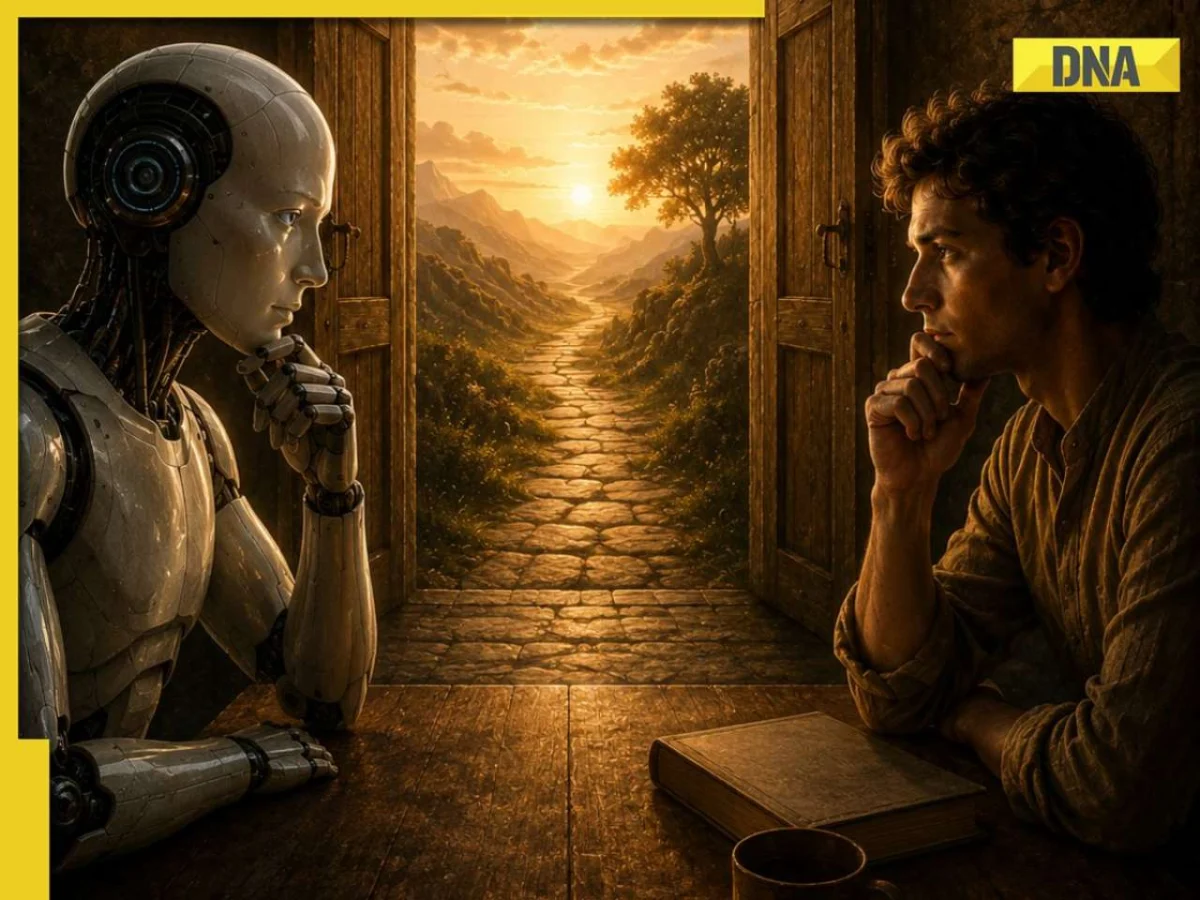
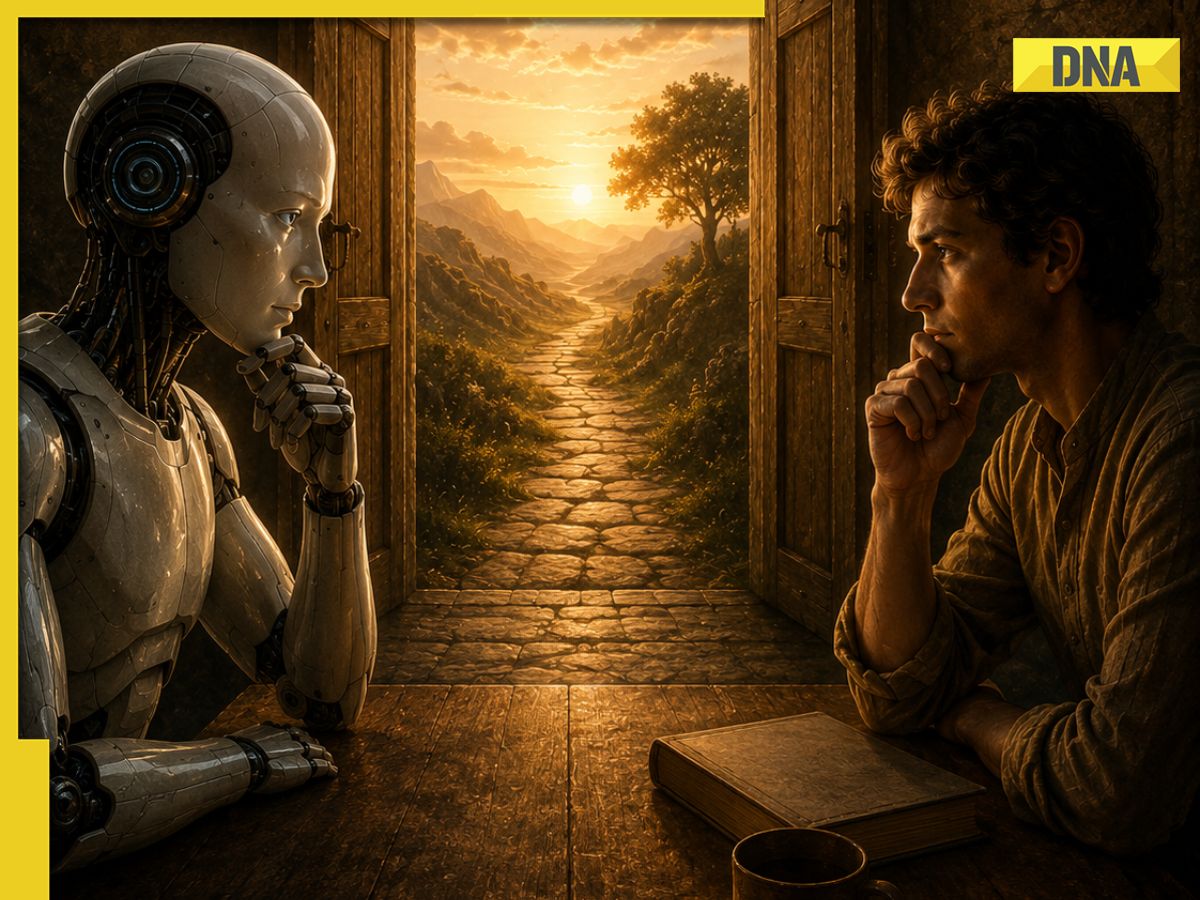
The image accompanying the article, an AI-generated depiction of a human contemplating, with the caption "The Mind Must Stay Open: When machines think for us, the ancient discipline of doubt may be humanity’s last edge," serves as a potent metaphor. It underscores the critical need to maintain our intellectual autonomy and critical faculties.
)
In conclusion, as AI continues its rapid evolution, the ancient wisdom of doubt, as articulated by the Nyaya Sutra and echoed in Western philosophy, offers a vital compass. It reminds us that true knowledge is not a destination reached by passive reception, but a journey undertaken through active inquiry, critical questioning, and a disciplined embrace of uncertainty. The challenge before us is not to fear AI, but to ensure that in its presence, humanity does not abdicate its most fundamental cognitive strengths, but rather enhances them through the timeless practice of productive doubt. The future of human intellect depends on our ability to remain not just open-minded, but critically engaged, questioning, and ultimately, thinking for ourselves.
