

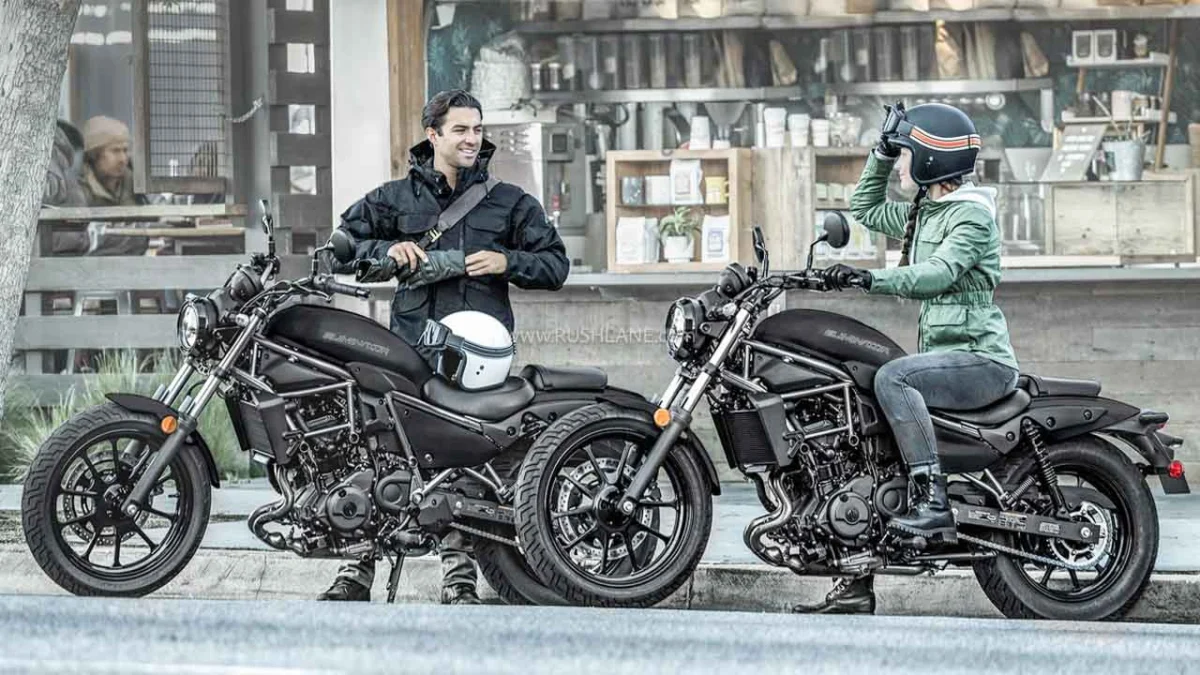
The Indian premium motorcycle landscape is undergoing a significant strategic realignment as Kawasaki India, one of the most prominent players in the performance biking segment, reportedly prepares to pull the plug on its 500cc portfolio. Industry reports indicate that the Japanese manufacturer will soon discontinue the Kawasaki Eliminator 500 and the Kawasaki Ninja 500 in the domestic market.
This move marks a pivotal shift in Kawasaki’s mid-capacity strategy, highlighting the challenges of balancing global product offerings with India’s increasingly stringent regulatory environment and price-sensitive consumer base. The departure of these two models leaves a notable void in the sub-650cc category, a segment that has become a fierce battleground for both domestic and international manufacturers.
1. Main Facts: The Catalyst for Discontinuation
The decision to retire the Eliminator 500 and Ninja 500 is not a result of a single factor but rather a combination of regulatory hurdles, logistical costs, and market dynamics.
The E20 Compliance Hurdle
The primary technical driver behind the discontinuation is the lack of E20 fuel compatibility. The Government of India has aggressively pushed for the adoption of E20 fuel (a blend of 20% ethanol and 80% gasoline) to reduce carbon emissions and lower the oil import bill. As of 2025, E20 compliance has become a standardized requirement for new vehicles sold in the country. Both the Eliminator and the Ninja 500, in their current CBU (Completely Built Unit) configurations, are not engineered to handle the corrosive nature of high-ethanol blends, making them ineligible for long-term sale in the evolving Indian market.
The CBU vs. CKD Pricing Dilemma
Unlike Kawasaki’s highly successful 650cc range, which is imported via the CKD (Completely Knocked Down) route and assembled locally at the company’s Chakan facility in Pune, the 500cc twins are imported as CBUs. This distinction is critical; CBU imports attract significantly higher customs duties, often exceeding 50% to 100% depending on various fiscal parameters.
Consequently, the Ninja 500 and Eliminator 500 were launched at "premium" price points that overlapped significantly with their larger, more powerful siblings. For most Indian enthusiasts, the marginal price difference between a 500cc CBU and a 650cc CKD motorcycle made the latter a far more attractive value proposition, leading to stagnant sales for the 500cc twins.
2. Chronology: The Short-Lived Journey of the 500cc Twins
The lifecycle of the 500cc platform in India has been relatively brief, characterized by a rapid introduction followed by an even faster obsolescence.
- Early 2024: Kawasaki introduces the Eliminator 500 to the Indian market, aiming to revive the "Eliminator" brand name that held nostalgic value for Indian riders. It was positioned as a sophisticated urban cruiser with a modern parallel-twin heart.
- Mid 2024: Following the global trend of replacing the Ninja 400, Kawasaki launches the Ninja 500 in India. It featured the updated 451cc engine, sharper styling, and improved ergonomics.
- Late 2024: The Indian government reinforces the E20 mandate. While Kawasaki successfully updates its 650cc lineup (Ninja 650, Vulcan S, Versys 650) to meet these standards by December 2025, the 500cc models remain on the older fuel standard.
- Early 2025: Sales data reveals a stark contrast. While the Ninja 300 (highly localized) and the 650cc range continue to post healthy numbers, the 500cc models struggle to find traction.
- Current Status: Kawasaki reportedly decides against investing in the engineering required to make the CBU 500cc models E20 compliant for the Indian market, leading to the decision to phase them out once current dealer stocks are exhausted.
3. Supporting Data: Technical Specifications and Market Comparison
To understand why the 500cc models struggled, one must look at the technical parity and the price-to-performance ratio that defines the Indian middleweight segment.
The 451cc Parallel-Twin Powerplant
Both the Eliminator and the Ninja 500 share the same 451cc liquid-cooled, parallel-twin engine, which was an evolution of the Ninja 400’s motor with a longer stroke.
| Feature | Kawasaki Ninja 500 | Kawasaki Eliminator 500 |
|---|---|---|
| Engine Type | 451cc Parallel-Twin, Liquid-Cooled | 451cc Parallel-Twin, Liquid-Cooled |
| Peak Power | 45.4 PS @ 9,000 RPM | 45 PS @ 9,000 RPM |
| Peak Torque | 42.6 Nm @ 6,000 RPM | 42.6 Nm @ 7,500 RPM |
| Transmission | 6-speed with Assist & Slipper Clutch | 6-speed with Assist & Slipper Clutch |
| Import Route | CBU (Completely Built Unit) | CBU (Completely Built Unit) |
| Compliance | Non-E20 (Standard Grade) | Non-E20 (Standard Grade) |
The Sales Cannibalization Factor
The 500cc models found themselves in a "no man’s land" regarding pricing. In India, the Ninja 500 was priced uncomfortably close to the Ninja 650.

- Ninja 500 (CBU): Higher tax bracket, lower displacement.
- Ninja 650 (CKD): Lower tax bracket (proportionally), higher displacement (68 PS vs 45 PS).
Because the 650cc models were updated to E20 standards in December 2025 and benefited from local assembly, they offered a superior "Bang for Buck" ratio. Historical sales data suggested that riders were willing to spend an extra 10-15% to jump from the 500cc class to the 650cc class, effectively rendering the 500cc CBU models niche products with limited volume potential.
4. Official Responses and Industry Insights
While Kawasaki India has not yet issued a formal "farewell" press release, sources within the dealership network and industry analysts have confirmed the shift in focus.
Dealer Perspectives
Dealerships across major metros like Mumbai, Delhi, and Bengaluru have indicated that fresh bookings for the Eliminator 500 are being handled with caution. "We are currently focusing on clearing existing inventory," a Kawasaki dealer representative stated under anonymity. "The 650cc range remains our bread and butter for enthusiasts looking to upgrade from 300cc bikes. The Ninja 500 was a great machine, but the pricing was always a hurdle for the volume we expected."
Strategic Rationalization
Industry experts suggest that Kawasaki is practicing "portfolio rationalization." By removing models that require expensive updates for a small sales return, Kawasaki can focus its resources on localizing other products or preparing for the next wave of EV/Hybrid offerings. The cost of re-homologating a CBU model for E20 fuel—especially when the global production line might not prioritize India’s specific ethanol requirements—often outweighs the potential profit from a low-volume product.
5. Implications: The Future of Kawasaki’s Entry-Level and Mid-Tier Segments
The exit of the 500cc lineup has several far-reaching implications for Kawasaki and the Indian motorcycling community.
A Growing Gap in the Portfolio
With the 500cc models gone, Kawasaki’s lineup will have a significant gap between the Ninja 300 (approx. 39 PS) and the Ninja 650 (approx. 68 PS). While the Ninja 300 remains a favorite due to its heavy localization and accessible pricing, it is an aging platform. The lack of a modern, E20-compliant 400-500cc motorcycle leaves the door wide open for competitors.
Opportunities for Competitors
The 400cc to 500cc segment is currently one of the most exciting in India. With the exit of the Kawasaki 500s, other manufacturers are likely to capitalize:
- Aprilia: The RS 457, which is manufactured in India, offers localized pricing and high performance, making it the direct beneficiary of the Ninja 500’s departure.
- Yamaha: The R3 and MT-03 continue to hover in the CBU space, though they face similar pricing challenges.
- Royal Enfield: The Himalayan 450 and the upcoming Guerilla 450 dominate the "value" end of this displacement bracket.
The CBU vs. CKD Lesson
This development serves as a case study for international manufacturers in India. The "CBU route" is increasingly becoming a graveyard for mid-capacity motorcycles. To survive in India’s competitive market, brands must commit to CKD assembly or deep localization to navigate the tax structure and meet fuel mandates like E20.
Conclusion: A Strategic Retreat
The discontinuation of the Kawasaki Eliminator 500 and Ninja 500 is a pragmatic, albeit disappointing, move for fans of the brand. It reflects the harsh reality of the Indian automotive market: technical excellence is not enough if it is not matched by fiscal viability and regulatory foresight.
As Kawasaki India doubles down on its locally assembled 650cc icons and its entry-level Ninja 300, the 500cc twins will likely become rare sights on Indian roads—reminders of a brief chapter where global engineering met the immovable object of local regulation. For now, prospective buyers are advised to check with local dealers for the final remaining units, as the "Green Team" prepares to turn the page on its 500cc experiment in India.
