

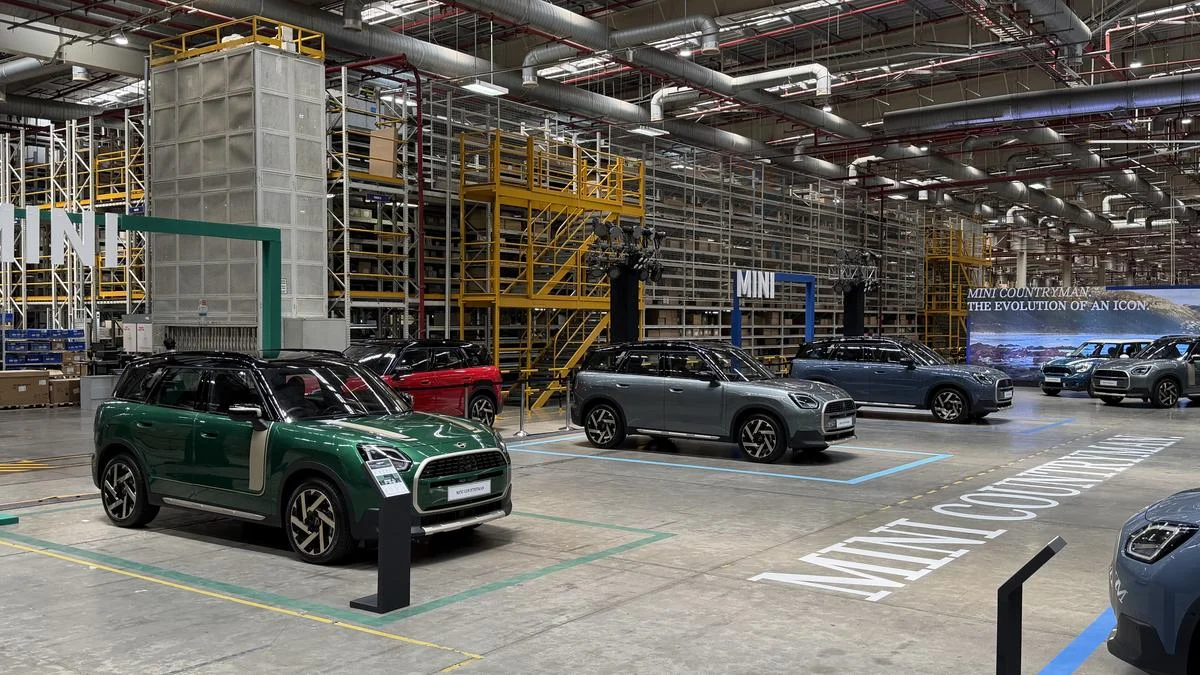
CHENNAI – In a move that underscores the growing importance of the Indian market for global luxury automotive manufacturers, MINI India has officially launched the all-new Countryman C. This latest iteration of the brand’s most versatile model marks a watershed moment for the British-born marque, as it becomes the first petrol-powered variant of the Countryman to be locally produced at the BMW Group Plant Chennai.
Priced at ₹47.50 lakhs (ex-showroom), the Countryman C is positioned as a sophisticated, technologically advanced, and significantly larger alternative to its predecessor. By shifting to local production, MINI—a subsidiary of the BMW Group—aims to offer a more competitive value proposition while catering to the burgeoning demand for premium compact SUVs in India’s urban centers.
Main Facts: A New Era of Localization and Design
The launch of the Countryman C represents more than just a model update; it is a strategic pivot toward deeper integration within the Indian manufacturing ecosystem. The vehicle, which has long been the "practical" choice in the MINI lineup, has undergone a comprehensive transformation that aligns it with the brand’s new design language: "Charismatic Simplicity."
Key Specifications and Pricing
- Price: ₹47.50 Lakhs (Ex-showroom, India).
- Manufacturing: Locally produced at BMW Group Plant Chennai.
- Engine: MINI TwinPower Turbo petrol engine.
- Performance: 156 hp and 240 Nm of torque.
- Transmission: 7-speed dual-clutch Steptronic Sport transmission.
- Cargo Capacity: 505 liters, expandable to 1,450 liters.
Aesthetics and Exterior
The all-new Countryman C is noticeably larger than the outgoing model, gaining height and length that translate into a more commanding road presence. The exterior design features a minimalist aesthetic, characterized by short overhangs, a long wheelbase, and large wheels that emphasize its SUV credentials.
A standout feature of the new design is the octagonal front grille, which houses a highly integrated sensor system for advanced driver assistance. The LED headlamps and redesigned rear lights offer three distinct light signatures, allowing owners to customize the vehicle’s "expression" via the infotainment system. This level of personalization is a hallmark of the MINI brand, now brought to a larger canvas.
Chronology: The Evolution of MINI in the Indian Market
To understand the significance of the Countryman C launch, one must look at the trajectory of the MINI brand in India over the last decade.

- 2012: The Arrival: MINI officially entered the Indian market as a CBU (Completely Built-Up) importer, launching the iconic Cooper and the first-generation Countryman. At the time, it was viewed primarily as a niche lifestyle brand for enthusiasts.
- 2013–2017: Market Testing: As the demand for premium compact cars grew, MINI began exploring local assembly to mitigate high import duties. The Countryman became the primary candidate for this transition due to its appeal as a family-oriented vehicle.
- 2018: First Local Assembly: The second-generation Countryman began rolling off the lines at the BMW Group Plant Chennai. This move allowed MINI to price the vehicle more aggressively against rivals like the Audi Q3 and the Mercedes-Benz GLA.
- 2020–2023: Digital and Electric Pivot: MINI introduced the Cooper SE (Electric) to India, signaling a shift toward sustainability. Meanwhile, the global development of the third-generation Countryman focused on digitalization and a "BIG" philosophy.
- June 2024: The Launch of the Countryman C: The unveiling in Chennai marks the culmination of these efforts. By producing the petrol variant locally from the outset, MINI is signaling that India is no longer an afterthought but a core pillar of its global production strategy.
Supporting Data: Technical Innovation and Interior Versatility
The Countryman C is not merely a facelift; it is a technological leap forward. The interior, in particular, showcases a radical departure from traditional automotive cabin design.
The OLED Revolution
The centerpiece of the cabin is a world-first: a 240mm-diameter circular OLED display. This high-resolution touchscreen serves as the nerve center for the vehicle. Developed in collaboration with Samsung Display, the unit provides vibrant colors and deep blacks, housing the new MINI Operating System 9.
This system is built on an Android Open Source Project (AOSP) stack, allowing for seamless integration of navigation, media, and vehicle settings. The "MINI Experience Modes" allow the driver to transform the cabin’s ambiance using light projections on the dashboard and specific soundscapes, ranging from the performance-oriented "Go-Kart Mode" to the efficiency-focused "Green Mode."
Performance and Efficiency
Under the hood, the Countryman C features a 1.5-liter, 3-cylinder TwinPower Turbo petrol engine. While the cylinder count may seem modest for a vehicle of this size, the integration of turbocharging and a 7-speed dual-clutch transmission ensures a 0–100 km/h sprint that remains competitive within its segment. The engine is tuned to provide maximum torque at low RPMs, facilitating effortless urban commuting and confident highway overtaking.
Sustainability and Space
In line with global sustainability trends, the interior of the Countryman C eschews traditional chrome and leather. Instead, it utilizes high-quality recycled polyester for the dashboard and door panels. The "Vescin" vegan leather upholstery offers a premium feel without the environmental footprint of animal hides.
Space management has also been optimized. The rear seats can slide fore and aft by up to 13 centimeters, allowing owners to prioritize either rear legroom or luggage space. The 505-liter boot is among the best in the premium compact SUV class, making it a viable primary car for small families.

Official Responses: "A New Kind of BIG"
During the launch event in Chennai, leadership from BMW Group India emphasized the strategic importance of this model.
Hardeep Singh Brar, President and CEO of BMW Group India, remarked:
"The all-new MINI Countryman C is a new kind of BIG. It is larger, bolder, and more technologically advanced than ever before. By producing this variant locally at our Chennai plant, we are not only supporting the ‘Make in India’ initiative but also ensuring that our customers receive a world-class product that is tailored for Indian conditions at a compelling price point."
Brar further noted that the Countryman remains the backbone of MINI’s sales in India, accounting for a significant percentage of the brand’s total volume. The move to localize the petrol variant is expected to drive a double-digit growth in sales for the marque in the coming fiscal year.
Plant Management at BMW Group Plant Chennai also highlighted the technical challenges overcome to integrate the MINI production line with existing BMW models. The plant now utilizes advanced robotics and AI-driven quality checks to ensure that the "Made in India" MINI meets the exact standards of the Oxford plant in the UK or the Leipzig plant in Germany.
Implications: Impact on the Luxury SUV Landscape
The launch of the locally produced Countryman C has several far-reaching implications for the Indian automotive industry and the luxury consumer.

1. Competitive Pricing and Market Share
By pricing the Countryman C at ₹47.50 lakhs, MINI is positioning itself directly in the crosshairs of the "entry-level" luxury SUV segment. Its primary competitors—the BMW X1, Audi Q3, and Mercedes-Benz GLA—often carry higher price tags for comparable features. The Countryman’s unique "cool factor" combined with its newfound practicality could see it stealing market share from more conservative luxury brands.
2. The "Make in India" Momentum
MINI’s commitment to local production is a significant endorsement of India’s manufacturing capabilities. As more luxury brands shift from CBU to CKD (Completely Knocked Down) assembly, the local component ecosystem matures. This leads to better after-sales service, more readily available spare parts, and lower long-term ownership costs for the consumer.
3. Transition to Digital-First Luxury
The heavy emphasis on the OLED interface and the MINI OS 9 suggests that the brand is targeting a younger, tech-savvy demographic. For Gen Z and Millennial buyers, the "connectedness" of a vehicle is often as important as its horsepower. MINI is betting that its digital-first approach will resonate with this cohort more effectively than the traditional luxury cues of its rivals.
4. Expansion of the Brand Identity
For decades, MINI was defined by the "Small" in its name. The Countryman C represents a successful evolution of the brand identity where "MINI" refers to a design philosophy and driving feel rather than physical dimensions. This expansion allows the brand to retain customers as they transition through different life stages—from the single professional in a 3-Door Hatch to the young family in a Countryman.
Conclusion
The launch of the MINI Countryman C in Chennai is a calculated move to solidify the brand’s presence in one of the world’s fastest-growing luxury markets. With its blend of British heritage, German engineering, and Indian craftsmanship, the Countryman C is well-positioned to redefine what a premium compact SUV can be. As it hits Indian roads, it carries with it the hopes of a brand that is no longer content with being a niche player, but is instead aiming for the heart of the premium mainstream.
