

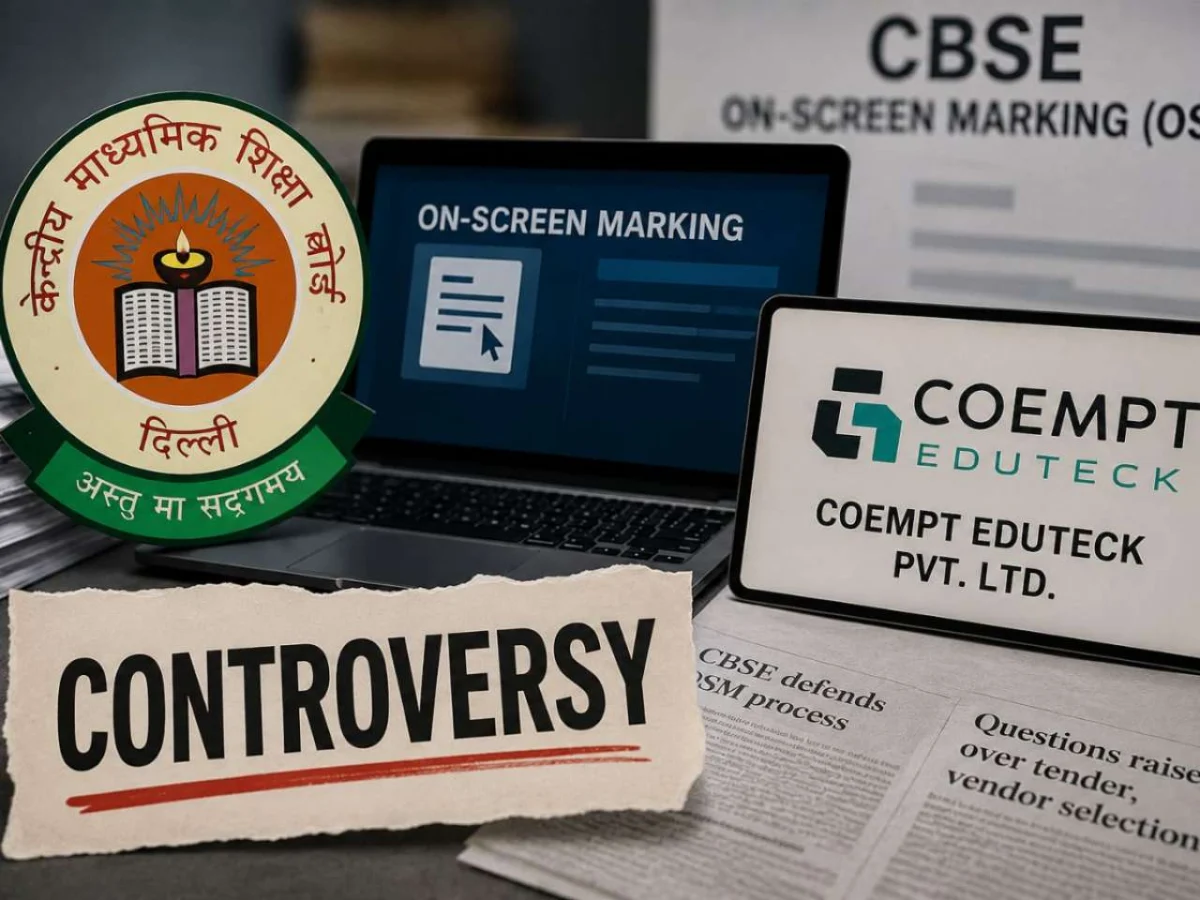
Hyderabad, India – [Current Date] – Coempt Eduteck, the Hyderabad-based technology firm at the heart of the Central Board of Secondary Education’s (CBSE) controversial On-Screen Marking (OSM) project, has broken its silence, vehemently denying technical glitches and attributing recent discrepancies to manual errors. The company, which provides the technological backbone for the OSM initiative, finds itself under intense scrutiny following allegations of misplaced answer sheets and blurred digital copies, sparking widespread concern among students, parents, and educators.
In a detailed statement released on Thursday, Coempt Eduteck sought to assuage fears and clarify its operational integrity. The firm asserted that it employs standard, industry-grade scanners, including high-resolution models widely utilized across the sector. Furthermore, the company highlighted its commitment to maintaining cutting-edge technology through annual system upgrades, ensuring optimal scanning capabilities.
The controversy erupted when a Class 12 student, Vedant Sharma, took to social media platform X (formerly Twitter) to allege that his answer sheet had been erroneously replaced with another student’s. This incident, coupled with other reports of blurred digital evaluations, cast a shadow over the reliability of the OSM system and the technological prowess of Coempt Eduteck.
Coempt Eduteck’s Official Response: A Technical Defense
Coempt Eduteck’s official response has been resolute, emphasizing the robustness of its systems and processes. The company stated, "Through direct communications with universities, public clarifications, and references to official records, the company maintained that its operations, compliance standards, and service delivery remain fully intact." This statement suggests a proactive approach to addressing concerns and a confidence in their adherence to established protocols.
)
The firm further elaborated on the hardware employed in the OSM project. "The scanners used by Coempt are standard, industry-grade models utilized across the sector. We upgrade our hardware year-on-year, and the scanning resolution is perfect," the company declared. This claim aims to dispel any notion that outdated or inferior equipment might be a contributing factor to the alleged issues. The mention of annual upgrades underscores a commitment to technological advancement and maintaining a competitive edge in the ed-tech landscape.
Regarding the accessibility of scanned answer sheets, Coempt Eduteck reported a high success rate. "Despite isolated bottlenecks, answer sheets have already been successfully delivered to nearly 95% of the students who applied for access," the company stated. This statistic, if accurate, indicates that the majority of the OSM process is functioning as intended, with only a small percentage of cases experiencing delays or issues.

Unraveling the "Manual Oversight" Allegation
The pivotal point of Coempt Eduteck’s defense lies in its explanation of the alleged answer sheet mix-up. Citing the incident involving Vedant Sharma, the company clarified that the issue stemmed from the "physical scanning process rather than a software glitch." This assertion strongly suggests that the error was a result of human intervention, or lack thereof, during the physical handling and scanning of the answer sheets.
"We have identified the location and the individual who conducted the scanning. We have verified 100 percent that, technologically, there is no error in this case," the company stated definitively. This detailed investigative approach, identifying both the location and the individual responsible, lends credence to their claim of manual oversight. It implies that the technological infrastructure remained sound, but the human element introduced an error.
)
The company also addressed the concerns surrounding blurred images of answer sheets. While not providing specific details on the resolution of each case, Coempt Eduteck assured that "matters are being systematically reviewed in sync with relevant evaluation authorities." This indicates a collaborative effort with CBSE and other stakeholders to rectify any instances of poor image quality that may have impacted the evaluation process.
Chronology of the Controversy: A Rapid Escalation
The controversy surrounding CBSE’s OSM project and Coempt Eduteck’s involvement escalated rapidly in recent weeks. The timeline of events can be broadly outlined as follows:
)
- [Approximate Start Date of OSM Project]: CBSE implements its On-Screen Marking (OSM) system, with Coempt Eduteck as the chosen technology partner for scanning and digitization of answer sheets.
- [Date of Vedant Sharma’s Allegation]: Vedant Sharma, a Class 12 student, publicly shares his experience on X, alleging that his answer sheet was replaced with another student’s, sparking widespread concern.
- [Subsequent Days]: Other students begin to report similar issues, including instances of blurred answer sheet images, further fueling the controversy.
- [Date of Coempt Eduteck’s Statement]: Coempt Eduteck issues a comprehensive statement addressing the allegations, denying technical glitches, and attributing discrepancies to manual errors.
This rapid escalation highlights the sensitivity of examination processes and the significant impact of any perceived flaws on the academic futures of students. The speed at which the allegations gained traction underscores the power of social media in bringing such issues to the forefront.
Supporting Data and Industry Standards
While Coempt Eduteck has provided its internal findings, the broader context of the ed-tech industry and scanning technologies offers further insight. The use of "industry-grade models" for scanning is standard practice in any large-scale digitization project. These scanners are typically designed for high throughput and excellent image quality, often featuring resolutions far exceeding what is necessary for legible text.
)
Industry-grade scanners can range from high-speed document scanners capable of processing hundreds of pages per minute to specialized flatbed scanners for delicate or large-format documents. For academic answer sheets, the primary requirements are clarity, accuracy, and the ability to capture handwritten content without distortion. Resolutions are typically measured in dots per inch (DPI), with common values for document scanning being 300 DPI or 600 DPI, which are more than sufficient for most applications.
The mention of "annual upgrades" by Coempt Eduteck is also a standard practice for technology providers. This ensures that their hardware remains current with technological advancements and maintains optimal performance. In the context of OSM, this would imply that the scanning equipment is regularly updated to maintain high resolution and efficiency.
)
The claim of a 95% success rate in delivering answer sheets also aligns with the realities of large-scale digital projects, where some level of operational friction is often anticipated. The critical factor is how effectively these "bottlenecks" are managed and resolved.
Official Responses and Implications
The CBSE has been closely monitoring the situation and is expected to provide its own official statement or take further action based on Coempt Eduteck’s clarification and its own internal investigations. The board’s primary responsibility is to ensure the fairness and accuracy of its examination processes, and any compromise in this regard can have far-reaching consequences.
)
Implications for Students:
- Academic Integrity: The primary concern for students is the integrity of their examinations. Any doubt cast on the evaluation process can lead to anxiety and distress.
- Access to Answer Sheets: The ability to access and review one’s answer sheet is a fundamental right for students, allowing them to understand their performance and identify potential errors. Issues with this process directly impact this right.
- Fairness of Evaluation: If blurred images or misplaced answer sheets lead to incorrect marking, students could be unfairly penalized, potentially affecting their academic progression and future opportunities.
Implications for CBSE:
)
- Reputation and Trust: The credibility of the CBSE as a national examination board is paramount. Any significant controversy can erode public trust in its systems and processes.
- Operational Efficiency: The OSM project was likely implemented to enhance efficiency and transparency. Any operational failures necessitate a re-evaluation of the implementation strategy.
- Vendor Management: This incident also raises questions about the due diligence and oversight of technology partners like Coempt Eduteck.
Implications for Coempt Eduteck:
- Reputational Damage: Despite their defense, the controversy has undoubtedly impacted Coempt Eduteck’s reputation. Future contracts and partnerships may be influenced by this incident.
- Contractual Obligations: The company’s contractual obligations with CBSE will likely be under scrutiny. Depending on the findings, there could be contractual repercussions.
- Industry Standards: The incident serves as a stark reminder for all ed-tech companies involved in critical educational infrastructure to maintain the highest standards of technological reliability and operational oversight.
Moving Forward: Towards Transparency and Accountability
The onus is now on both Coempt Eduteck and the CBSE to provide a comprehensive and transparent account of the events. While Coempt Eduteck has presented its case, further investigation and independent verification may be necessary to fully restore confidence.
)
The future of the OSM project, and indeed the broader use of technology in examination processes, hinges on the ability of all stakeholders to learn from this experience. A thorough review of the physical scanning and handling protocols, coupled with enhanced quality control measures and potentially more robust software checks, will be crucial. Ultimately, the goal must be to ensure that technology serves to enhance, rather than compromise, the integrity and fairness of education for all students. The ed-tech sector, while promising immense benefits, must also operate with a profound sense of responsibility when entrusted with the critical task of shaping young minds’ futures.
