

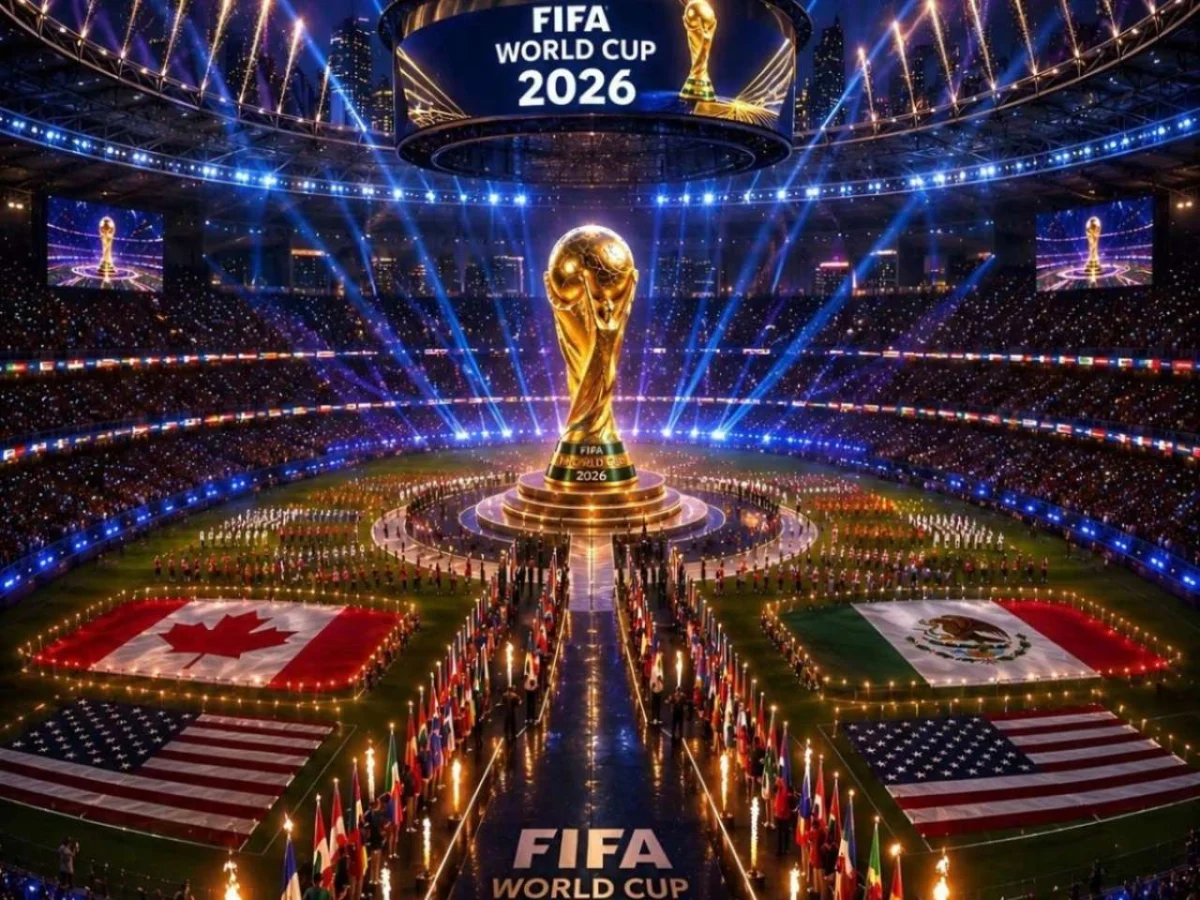
The beautiful game is experiencing an unprecedented evolution on its grandest stage. The FIFA World Cup 2026, co-hosted by the United States, Canada, and Mexico, has ushered in a new era for international football, marked by a seismic expansion from 32 to 48 participating nations. This monumental shift has not only broadened the tournament’s global reach but fundamentally reshaped its competitive structure, introducing a brand-new Round of 32 and, most notably, a compelling pathway for teams to advance to the knockout stages even without securing a top-two finish in their respective groups.
As the tournament, which commenced on June 11, unfolds, football enthusiasts and pundits alike are keenly observing how this revamped format will influence strategy, drama, and ultimately, the destiny of nations vying for the coveted golden trophy. For the first time, twelve groups of four teams will battle it out, with the traditional security of a top-two spot no longer the sole determinant of progression. A significant portion of the knockout berths – a full eight, in fact – are now reserved for the best-performing third-placed teams, adding an intricate layer of calculation and tension to every single group stage encounter. Mexico has already made history as one of the early qualifiers for the Round of 32, showcasing the swift pace at which this expanded tournament progresses.
The Core Transformation: A New World Order
The 2026 FIFA World Cup is more than just an increase in team numbers; it represents a philosophical shift by FIFA towards greater inclusivity and global participation. The tournament will feature 104 matches, a substantial increase from the 64 played in the 32-team format, stretching across 16 vibrant host cities in three nations. This expansion culminates in a brand-new knockout stage, the Round of 32, which paves the way to the traditional Round of 16, quarter-finals, semi-finals, and ultimately, the final on July 19.
The fundamental change lies in the group stage dynamics. With 12 groups of four teams each, a total of 48 nations embark on their World Cup journey. The most straightforward path to the knockouts remains for the top two teams from each group, securing 24 of the 32 available spots in the next round. This leaves eight crucial places open, which are fiercely contested by the third-placed teams across all groups. This innovative approach ensures that even teams that might struggle against two dominant group opponents still have a fighting chance based on their overall performance relative to other third-placed sides.
)
A Journey Through Time: The World Cup’s Evolutionary Path
The FIFA World Cup has always been a dynamic entity, its format evolving in response to the sport’s global growth and commercial imperatives. Understanding the historical context of its expansion helps to frame the significance of the 2026 changes.
The inaugural World Cup in 1930 featured just 13 teams. For decades, the tournament maintained a relatively small scale, gradually expanding to 16 teams by 1954. The first significant jump came in 1982 when the competition grew to 24 teams. This format introduced a system where the top two teams from each of the six groups advanced, along with the four best third-placed teams, making the concept of third-place qualification a familiar, albeit historical, precedent. This 24-team model persisted until 1994, offering a taste of the intricate calculations that fans are now revisiting.

The modern era, prior to 2026, was defined by the 32-team format, introduced in 1998. This structure, which saw eight groups of four, with the top two teams from each group directly advancing to a Round of 16, became the established norm for a quarter-century. It was lauded for its clear progression, minimized complexity, and high-stakes group stage where only outright success guaranteed passage. The 32-team format was widely considered a near-perfect balance of competitiveness and global representation, producing memorable tournaments and iconic moments.
The decision to expand to 48 teams for 2026 was formally approved by the FIFA Council in January 2017. Initially, FIFA had proposed a format of 16 groups of three teams, which would have seen 80 matches in total. However, concerns were raised about the potential for ‘dead rubbers’ (matches with no competitive significance) and the increased likelihood of collusion in the final group games. After further deliberation and a recognition of the need to maintain competitive integrity throughout the group stage, FIFA reverted to the more familiar four-team group structure, albeit with more groups, resulting in the current 12-group format and a total of 104 matches. This historical back-and-forth demonstrates FIFA’s ongoing struggle to balance expansion with maintaining the sporting quality and fairness of its flagship event.
)
The impact of this expansion has been profound on continental qualification cycles. Previously, slots were highly coveted, leading to intense and often brutal qualifying campaigns. With 16 additional berths, the allocations for each confederation have increased:
- AFC (Asia): 8 direct slots (up from 4.5)
- CAF (Africa): 9 direct slots (up from 5)
- CONCACAF (North, Central America & Caribbean): 6 direct slots (up from 3.5, including 3 hosts)
- CONMEBOL (South America): 6 direct slots (up from 4.5)
- OFC (Oceania): 1 direct slot (up from 0.5)
- UEFA (Europe): 16 direct slots (up from 13)
Additionally, two inter-confederation play-off spots will determine the final two qualifiers, further extending opportunities. This increased accessibility has ignited hope and spurred development efforts in many footballing nations that previously faced near-insurmountable odds to reach the finals.
)
The Crucible of Competition: Decoding Third-Placed Qualification
The heart of the 2026 World Cup’s competitive intrigue lies in the mechanism for selecting the eight best third-placed teams. This system ensures that even a single victory or a hard-fought draw can be the difference between progression and elimination, turning every minute of every group stage match into a high-stakes affair.
Once all group stage matches are concluded, the 12 teams that finished third in their respective groups are ranked against each other. This ranking follows a stringent hierarchy of criteria, designed to ensure fairness and reward performance:
)
- Points: This is the primary and most significant criterion. Teams are first ordered based on the total number of points accumulated in their three group stage matches. A win yields 3 points, a draw 1 point, and a loss 0 points. Naturally, teams with higher point totals are ranked above those with fewer.
- Goal Difference: If two or more third-placed teams are level on points, their goal difference comes into play. This metric, calculated by subtracting the number of goals conceded from the number of goals scored, rewards teams that have been both offensively potent and defensively resolute. A higher goal difference indicates a stronger overall performance.
- Goals Scored: Should teams remain inseparable after points and goal difference, the total number of goals they have scored in their group matches becomes the tie-breaker. This criterion favors attacking football and can be crucial in separating teams that have otherwise performed similarly.
- Fair Play Points: In the event that teams are still deadlocked after considering points, goal difference, and goals scored, FIFA turns to a measure of sportsmanship: fair play points. This system penalizes teams for disciplinary infringements during their group matches, with fewer penalty points indicating better fair play. The calculation is as follows:
- Yellow card: -1 point
- Indirect red card (two yellow cards in one match): -3 points
- Direct red card: -4 points
- Yellow card + direct red card: -5 points
The team with the highest fair play score (i.e., fewest penalty points) ranks higher. This criterion adds an interesting dimension, potentially making players think twice about tactical fouls or dissent.
- Drawing of Lots: In the highly improbable, yet statistically possible, scenario that teams cannot be separated by any of the aforementioned criteria, FIFA will resort to drawing lots. This ultimate tie-breaker is a measure of last resort, acknowledging that sometimes, after all objective metrics are exhausted, pure chance must intervene. While not ideal from a sporting perspective, it is a clear and transparent method to resolve an absolute deadlock.
This multi-layered tie-breaking system ensures that every goal, every tackle, and even every yellow card could have profound implications for a team’s World Cup journey, injecting an unparalleled level of drama and calculation into the group stage. Coaches and players will need to be acutely aware of these rules, as strategic decisions in the final group matches might hinge not just on winning, but on winning by a certain margin, or even avoiding unnecessary bookings.
The Knockout Gauntlet: A Marathon to the Trophy
Once the dust settles on the group stage and the 32 qualifiers are confirmed, the tournament transitions into its relentless knockout phase. This is where the stakes elevate, as every match becomes a do-or-die encounter.
)
The newly introduced Round of 32 will see the 24 group winners and runners-up, along with the 8 best third-placed teams, paired off for single-elimination matches. While the exact pairings are often pre-determined by FIFA to ensure competitive balance and avoid early clashes between top-seeded teams, the general principle will likely see group winners facing either a third-placed team or a runner-up from another group. For instance, the winner of Group A might play a specific third-placed team from Group C, D, or E, based on a pre-defined bracket. This ensures a structured pathway, although the unpredictability of who those third-placed teams will be adds an element of surprise.
From the Round of 32, the tournament progresses swiftly:
)
- Round of 16: The 16 winners from the Round of 32 advance.
- Quarter-finals: The 8 winners from the Round of 16.
- Semi-finals: The 4 winners from the quarter-finals.
- Final: The two remaining teams will duel for global supremacy on July 19.
There will also be a third-place play-off match between the two losing semi-finalists. The knockout stage, spanning nearly a month, promises to be a grueling test of endurance, tactical acumen, and mental fortitude for the teams involved. For those who finish last in their groups, the journey ends abruptly, with no second chances in this unforgiving format.
Official Voices and the Roar of Opinion: Justifying the Expansion
FIFA’s decision to expand the World Cup to 48 teams was not without its fervent debates and diverse reactions. The governing body has consistently articulated its primary motivations, largely centered on the "globalisation of football."
)
FIFA’s Rationale:
- Inclusivity and Development: FIFA President Gianni Infantino has repeatedly emphasized that the expansion offers more nations the "opportunity to dream" and participate in the World Cup. This, in turn, is expected to stimulate football development in countries that previously had little realistic hope of qualifying, fostering investment in infrastructure, coaching, and youth programs.
- Increased Revenue: Unquestionably, a larger tournament translates to significantly higher revenue streams. More matches mean more broadcasting rights, increased sponsorship opportunities, and greater ticket sales. These financial windfalls are crucial for FIFA’s operational budget and its development programs worldwide.
- Enhanced Drama and Engagement: The new format, particularly the third-place qualification mechanism, is designed to keep more teams in contention for longer, ensuring that the final round of group matches remains highly competitive and unpredictable. This promises increased fan engagement and viewership.
- Legacy for Host Nations: Hosting an expanded World Cup across three nations, with 16 cities, is expected to leave a lasting legacy in terms of infrastructure development, tourism, and increased interest in football across North America.
Criticisms and Concerns:
However, the expansion has also drawn considerable criticism from various quarters, including prominent coaches, players, and football purists.
)
- Dilution of Quality: The most common concern is that increasing the number of participants will inevitably lead to a dilution of the overall quality of football on display. Critics argue that adding more teams from lower-ranked confederations could result in more one-sided matches and a less compelling spectacle in the group stages.
- Complexity for Fans: The expanded format, with its 12 groups, third-place rankings, and Round of 32, is undeniably more complex than the previous 32-team setup. There are fears that this complexity could confuse casual fans and detract from the straightforward excitement of the competition.
- Player Welfare and Burnout: A longer tournament duration (39 days) and an increased number of matches (104) raise significant concerns about player fatigue and burnout. This could impact the quality of play in the latter stages and potentially lead to more injuries, particularly given the already packed international football calendar.
- Logistical Challenges: Spanning three large countries across multiple time zones presents enormous logistical hurdles for teams, fans, and organizers alike, particularly concerning travel and accommodation.
- Sporting Integrity: Some critics argue that allowing third-placed teams to advance diminishes the achievement of finishing in the top two and could lead to situations where a third-placed team with fewer points or an inferior goal difference (compared to a second-placed team in a hypothetical different group scenario) advances, raising questions about ultimate sporting merit.
FIFA has largely countered these criticisms by reiterating the benefits of global development and the financial stability the expansion provides. They also emphasize that the new format maintains competitive balance through carefully designed match pairings and tie-breaking rules, ensuring that only genuinely deserving teams progress.
The Implications: Shaping Football’s Future
The 2026 FIFA World Cup is more than just a tournament; it is a grand experiment that will have far-reaching implications for the future of international football.
)
For Participating Nations: The expanded format is a game-changer for "smaller" footballing nations. Countries that once viewed World Cup qualification as an impossible dream now have a tangible pathway. This will likely lead to increased government and private investment in football programs, fostering a new generation of talent and elevating the sport’s profile in previously underrepresented regions. The potential for more "Cinderella stories" and unexpected upsets will undoubtedly capture the imagination of fans worldwide.
For Football Fans: While the complexity might initially be a hurdle, the promise of more matches and extended drama in the group stages could be a major draw. Fans will have more opportunities to see their favorite teams and players, and the added tension of third-place qualification means that interest in group stage results will likely remain high until the very end. However, the logistical challenges of following teams across vast distances will be a significant factor for those wishing to attend matches in person.
)
For the Global Football Landscape: The success or failure of this 48-team model will heavily influence future FIFA tournaments. If successful, it could become the new standard, solidifying FIFA’s vision of a truly global World Cup. It will also necessitate continued adjustments to the international match calendar to accommodate the longer tournament duration. Commercially, the World Cup’s increased scale will further cement its position as one of the most lucrative sporting events globally, attracting even larger investments from broadcasters and sponsors.
As the tournament’s early stages unfold, with Mexico already securing a spot in the Round of 32, the world is watching. The drama of the group stages, the calculations surrounding the best third-placed teams, and the sheer scale of the event across three nations promise a World Cup unlike any before. The 2026 edition is set to be a landmark moment, not just for its expanded format, but for its potential to redefine the very essence of global football competition, proving that even without a top-two finish, the dream of World Cup glory can indeed live on.
