

For decades, the Indian summer holiday followed a predictable, almost ritualistic itinerary. As temperatures soared across the subcontinent in May, thousands of families would pack their bags for the "Grand Tour" of Europe. This migration was timed perfectly with school vacations and the promise of a warm, sun-drenched Mediterranean. However, as 2025 approaches, this familiar pattern is undergoing a radical transformation. Driven by the crushing weight of overtourism, shifting geopolitical landscapes, and a desire for more authentic experiences, travelers are increasingly abandoning the sweltering July heat for the crisp, quiet allure of the "off-season."
The shift represents more than just a change in calendar dates; it is a fundamental rethinking of what a "holiday" entails. As Europe’s most iconic cities buckle under the pressure of record-breaking visitor numbers, the savvy traveler is discovering that the continent’s true charm often emerges only when the crowds depart.
Main Facts: The End of the Traditional Summer Exodus
The traditional peak season for European travel—spanning May to September—is no longer the idyllic escape it once was. Historically, Indian travelers concentrated their visits within the May-June window to coincide with school breaks, extending through the European summer months of July and August. While the weather was guaranteed to be sunny, the reality of the experience has become increasingly fraught.

Today, those who travel during the height of summer face a trifecta of challenges: extreme heatwaves fueled by climate change, exorbitant pricing for flights and accommodation, and "human traffic jams" at every major landmark. Destinations that were once the pinnacle of relaxation, such as the Balearic Islands or the Venetian canals, have become victims of their own popularity.
In response, a new trend is emerging. Travelers are opting for the "shoulder seasons" (April to June and September to October) or even the deep winter months. This pivot is supported by major airlines, such as Germany’s Lufthansa, which has significantly increased its flight frequencies to European hubs to accommodate a more distributed year-round demand. Furthermore, unrest in the Persian Gulf has made traditional stopover routes more challenging and North American connections costlier, further incentivizing travelers to spend more time exploring the European continent in a slower, more deliberate fashion.
Chronology: From Post-Pandemic Surge to the Overtourism Crisis
The current state of European tourism can be traced through a clear chronological progression over the last half-decade.

- 2019: The Pre-Pandemic Baseline: In the last "normal" year of global travel, Europe recorded an estimated 270 million international arrivals during the core July–August period. While busy, the infrastructure largely managed the load.
- 2020–2022: The Great Pause and Rebound: The pandemic halted global movement, but it also created a massive reservoir of "pent-up demand." When borders fully reopened, the phenomenon of "revenge travel" saw millions flocking back to classic destinations with little regard for cost or crowds.
- 2023–2024: The Breaking Point: By the summer of 2024, the "revenge travel" phase evolved into a permanent state of high demand. Protests began to erupt in cities like Barcelona and Palma de Mallorca, where locals expressed frustration over rising rents and the "Disneyfication" of their neighborhoods.
- 2025 and Beyond: The New Normal: Projections for summer 2025 suggest that international arrivals during the July-August window will exceed 300 million. This sustained growth has forced both travelers and local governments to seek alternatives, leading to the current rise in off-season exploration.
Supporting Data: The Stark Reality of the Numbers
To understand why travelers are rethinking their plans, one must look at the staggering data points that define the European summer.
The Mallorca Case Study
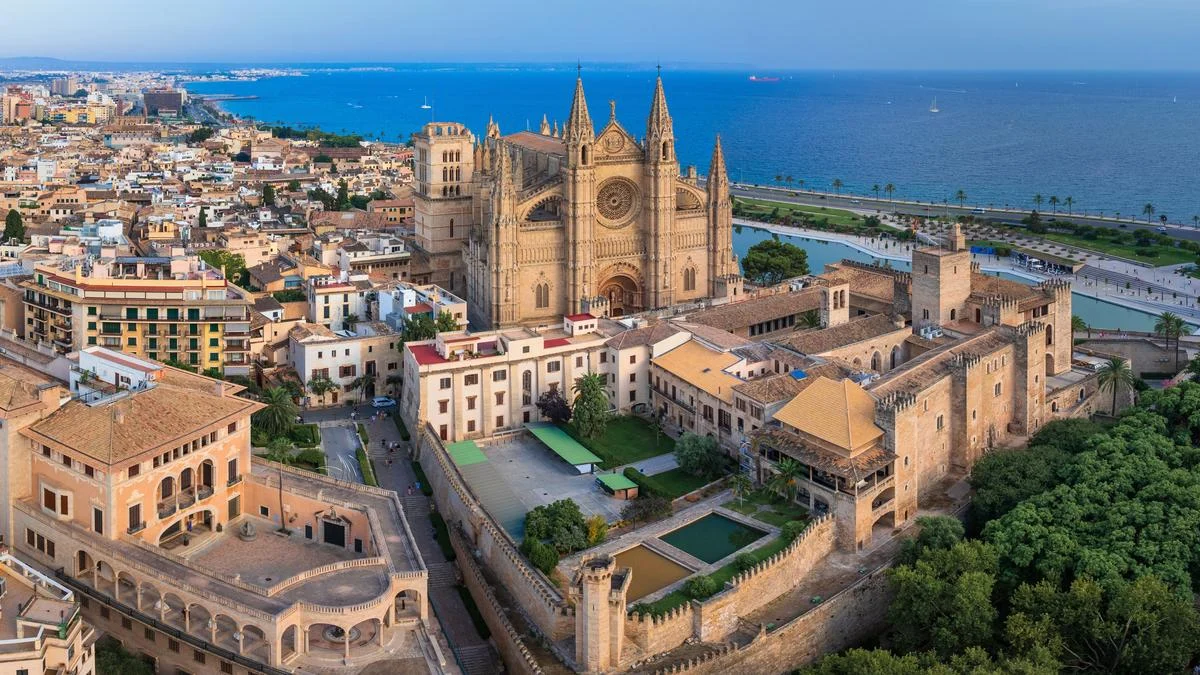
Mallorca, the largest of Spain’s Balearic Islands, serves as a microcosm of the overtourism crisis. In July of last year alone, the island welcomed over 2.5 million tourists. To put this in perspective, the permanent resident population of Mallorca is only about 920,000. During the peak weeks, tourists outnumber locals by a ratio of more than 14 to one.
The economic impact is equally telling. In the peak season, the pressure on services is so intense that the quality of interaction drops significantly. Local hospitality workers note that during the busiest weeks, the average visitor spends a mere seven minutes in a café or restaurant before being shuffled along to make room for the next person in line.

The Continental Perspective
The crisis is not limited to Spain. Consider these figures from across the continent:
- Venice: The city sees approximately 25 million visitors annually. On peak summer days, 80,000 tourists may be packed into a historic center that houses fewer than 50,000 residents.
- Santorini: A single day can see cruise ships disgorge 10,000 passengers onto the island’s narrow volcanic cliffs, completely paralyzing the local infrastructure.
- Dubrovnik: Famous for its Game of Thrones filming locations, the walled city frequently reaches "maximum capacity," forcing authorities to monitor entrances to ensure the safety of the crowds.
Conversely, the data for off-season travel presents a compelling argument for the pivot. Between November and March, hotel rates in cities like Palma or Venice can drop by as much as 40-60%. Queue times for major attractions, such as the Uffizi Gallery in Florence or the Louvre in Paris, shrink from hours to minutes.
Official Responses: Taming the Tourist Tide
Governments and local councils across Europe are no longer welcoming every tourist with open arms. Instead, they are implementing "degrowth" strategies and "quality over quantity" policies.

Entry Fees and Caps
Venice made global headlines by introducing a pilot entry fee for day-trippers on peak days, a move designed to discourage the "hit-and-run" tourism that contributes little to the local economy while placing a heavy burden on infrastructure. Similarly, the Greek government has moved to limit the number of cruise ship passengers allowed to disembark daily at popular islands like Santorini and Mykonos.
Anti-Tourism Sentiments and Legislation
In Barcelona, Mayor Jaume Collboni has announced plans to eliminate all short-term tourist rentals by 2028 to return housing stock to residents. In Mallorca, local activist groups have organized protests under the slogan "SOS Residents," demanding a cap on the number of rental cars and a reduction in flight slots at Palma airport.
Airlines and travel agencies are also responding. Recognizing the shift, many are now marketing "Winter in the Med" or "Autumn in the Alps" packages, focusing on culinary tourism and cultural heritage rather than beach-and-sun holidays. Lufthansa’s strategic addition of flights to secondary European cities during the winter months is a direct response to this diversifying demand.

Implications: The Search for the "Unhurried" Experience
The move toward off-season travel carries profound implications for the future of the tourism industry and the traveler’s own psychological fulfillment.
The Return of Authenticity
When a traveler visits Mallorca in December, as described in recent accounts, the experience is transformative. In the capital, Palma, one can walk into a high-end Japanese-fusion restaurant like Japo Santa Catalina without a reservation—a feat impossible in July. The "village-like" pace returns.
Historical sites regain their dignity. The historic bakery Can Joan de s’Aigo, which dates back to 1700, becomes a sanctuary rather than a tourist trap. Here, one can enjoy a traditional ensaimada—a spiral pastry dusted with sugar—paired with a thick, decadent hot chocolate, without the pressure of a ticking clock. The local "unhurried" rhythm allows for a deeper connection with the culture.

Cultural and Culinary Depth
Traveling outside the summer window forces a shift in focus from the "sightseeing checklist" to cultural immersion. In the town of Pollença, the famous 365-step Calvari staircase, usually swarming with selfie-stick-wielding tourists, becomes a quiet path of reflection. The 13th-century Church of Our Lady of the Angels stands in silent majesty, its architectural details visible rather than obscured by crowds.
In the mountain town of Sóller, the historic wooden tram that runs through citrus groves to the harbor offers a leisurely journey. While some beach bars may be shuttered, the open cafés are filled with locals, providing a glimpse into the genuine Mallorcan way of life.
The Necessary Compromises
Journalistic integrity requires acknowledging the trade-offs. Off-season travel is not a perfect substitute for the summer holiday. The weather is cooler; Mediterranean daytime temperatures often hover between 15 and 20 degrees Celsius, and evenings can be chilly. The sea is generally too cold for swimming, and shorter daylight hours mean less time for outdoor exploration.

Furthermore, some seasonal businesses do close. Those seeking high-octane nightlife or specific beach-club vibes may find the off-season disappointing. However, for the modern traveler, these are often seen as small prices to pay for the luxury of space.
Conclusion: A New Philosophy of Travel
The key to enjoying Europe in the mid-2020s is no longer about finding a "hidden gem" that no one else knows about—in the age of Instagram, such places rarely exist. Instead, the secret lies in timing.
By choosing the "unhurried" months, travelers are helping to distribute the economic benefits of tourism more evenly throughout the year, easing the burden on local residents and infrastructure. Most importantly, they are reclaiming the essence of travel: the ability to see a city not as a stage set designed for their entertainment, but as a living, breathing community. As the tides of summer tourism recede, the real Europe—quiet, historic, and profoundly beautiful—finally reveals itself.
