

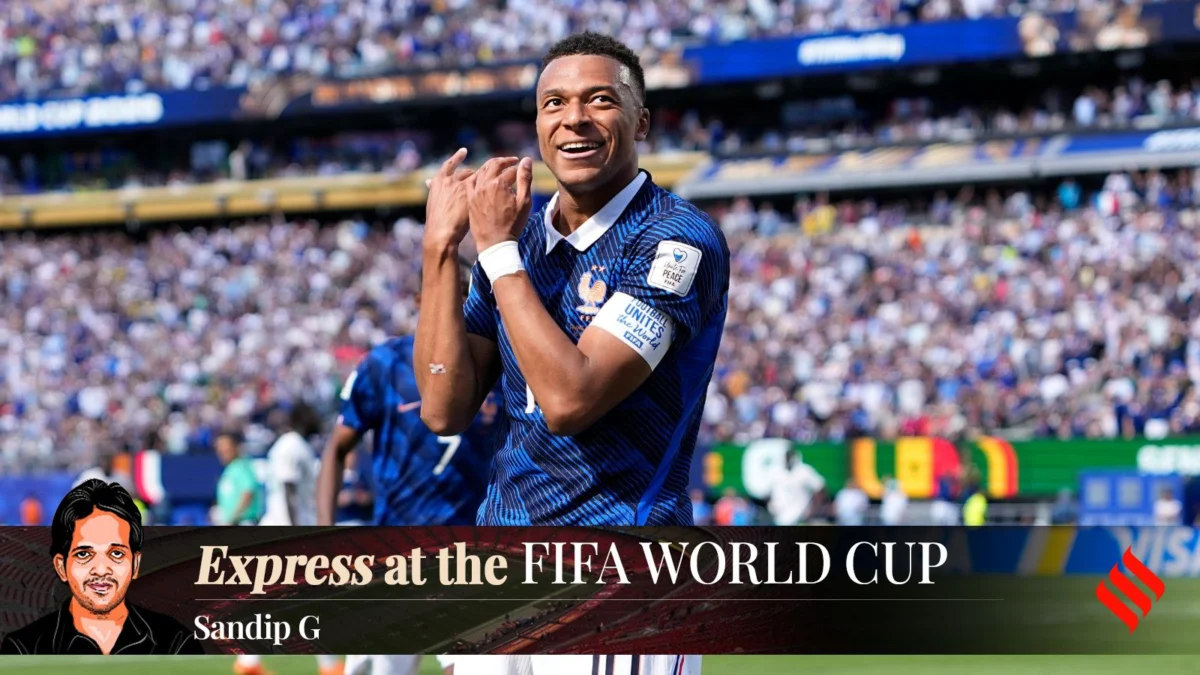
Philadelphia, PA – June 2026 – The vibrant city of Philadelphia is poised to host a captivating FIFA World Cup 2026 Group Stage encounter as two-time champions France, spearheaded by their talismanic captain Kylian Mbappé, prepare to lock horns with a determined Iraq. The Lincoln Financial Field, a coliseum of modern sport, will be the stage for this Monday night clash, a match steeped in contrasting narratives: France’s pursuit of global dominance versus Iraq’s valiant fight for survival and pride.
Coming off a hard-fought 3-1 victory against a spirited Senegal side, Les Bleus are looking to consolidate their position atop Group D. Their opening performance, while ultimately successful, revealed a team capable of both flashes of brilliance and moments of unexpected vulnerability. Iraq, conversely, enters this fixture reeling from a chastening 4-1 defeat at the hands of Norway, a result that underscores the monumental challenge they face in a group featuring two European powerhouses.
The anticipation surrounding Mbappé’s performance is palpable. The Real Madrid sensation, who netted a brace against Senegal – including a decisive strike in the 66th and a clinical finish in the 90th minute – carries the hopes of a nation. His ability to conjure magic from seemingly quiet periods will be key against an Iraqi side expected to defend deep and with fervor. Bradley Barcola also impressed with a goal in the 82nd minute against Senegal, highlighting France’s offensive depth even as they navigate initial tactical hurdles.
For Iraq, this match is more than just a quest for points; it is a test of character, a chance to restore national pride, and an opportunity to defy expectations against one of the tournament’s perennial favorites. Their solitary goal against Norway came from Aymen Hussain in the 39th minute, a brief glimmer of hope in an otherwise difficult outing that saw Norway’s Erling Haaland bag two goals, Leo Ostigard add another, and an unfortunate own goal from Hussain himself cap off their misery. The "Lions of Mesopotamia" know the odds are stacked against them, but the World Cup stage often delivers moments of unexpected heroism.
This fixture promises to be a compelling study in tactical contrasts: France’s fluid attacking prowess and individual brilliance against Iraq’s disciplined, resilient, and potentially desperate defensive setup. The atmosphere in Philadelphia is expected to be electric, with fans eager to witness the global spectacle and the dramatic unfolding of the beautiful game.
Main Facts: A High-Stakes Encounter in the City of Brotherly Love
The FIFA World Cup 2026 Group D fixture between France and Iraq is scheduled for Monday night at the Lincoln Financial Field in Philadelphia, Pennsylvania. This marks the second group stage match for both nations, with significant implications for their respective campaigns.
France, the reigning World Cup finalists and two-time champions (1998, 2018), enter the match as overwhelming favorites. Their squad, brimming with world-class talent, is led by captain Kylian Mbappé, arguably the most electrifying player in world football. The French contingent is expected to command possession, dictate the tempo, and unleash a relentless attacking threat. Their objective is clear: secure three points, solidify their position at the top of Group D, and move closer to an early qualification for the knockout stages.
Iraq, making a rare appearance on the global stage, are considered significant underdogs. Their journey to the World Cup itself was a triumph, a testament to their resilience and growing footballing infrastructure in Asia. However, the step up in competition against European giants like Norway and France has proven to be a harsh reality check. For the "Lions of Mesopotamia," this match is about more than just the scoreline. It’s an opportunity to showcase their national pride, execute a disciplined tactical plan, and potentially cause one of the biggest upsets in World Cup history. A draw would be celebrated like a victory, while even a narrow, spirited defeat could offer valuable lessons and a moral boost ahead of their final group game.
The refereeing team, hailing from CONMEBOL, brings an international standard of officiating to this critical match, ensuring fair play in what is anticipated to be a physically demanding encounter. The Lincoln Financial Field, home to the NFL’s Philadelphia Eagles, offers a state-of-the-art facility capable of accommodating over 69,000 spectators, guaranteeing a vibrant backdrop for this pivotal Group D clash.
Chronology: Contrasting Journeys into the World Cup Crucible
The paths of France and Iraq to this highly anticipated encounter could not be more divergent, each shaped by their footballing heritage, regional challenges, and recent performances.
France’s Journey: From European Dominance to Global Ambition
France arrived at the FIFA World Cup 2026 as one of the top-seeded nations, their qualification campaign a testament to their consistent excellence in European football. Under the astute management of Didier Deschamps, a figure synonymous with French footballing success both as a player and coach, Les Bleus navigated a challenging European qualifying group with characteristic efficiency. Their squad, a formidable blend of experienced veterans and prodigious young talents, is designed to compete at the highest level.
Their opening Group D match against Senegal provided an early test of their championship credentials. Deschamps had opted for a strong starting XI, indicating his intent to secure maximum points from the outset. However, the first half against the "Teranga Lions" was uncharacteristically subdued for France. Senegal, displaying remarkable tactical discipline and athleticism, managed to largely nullify France’s creative threats, particularly stifling Mbappé’s usual influence. The score remained locked at 0-0 at halftime, prompting questions about France’s initial tactical approach and the readiness of their star-studded lineup.
The second half, however, saw a dramatic shift in momentum. Whether due to Deschamps’ half-time adjustments or a collective resurgence from the players, France burst into life. The turning point arrived in the 66th minute when Kylian Mbappé, after a period of relative quiet, showcased his explosive talent. Receiving a pinpoint pass from Michael Olise, Mbappé demonstrated his exceptional close control and clinical finishing, slotting the ball diagonally past the lunging Senegalese goalkeeper, Edouard Mendy. This goal shattered the deadlock and visibly invigorated the French side.
Building on this momentum, France extended their lead in the 82nd minute through Bradley Barcola, a testament to their attacking depth. Barcola, often deployed as a wide forward, capitalized on a defensive lapse to double France’s advantage. While Senegal managed to pull one back through Ibrahim Mbaye, providing a brief scare, Mbappé once again extinguished any hopes of a comeback, sealing his brace and France’s 3-1 victory with a composed finish in the 90th minute. The win, while not entirely dominant for 90 minutes, ultimately delivered the crucial three points and demonstrated France’s ability to find another gear when needed, particularly through the individual brilliance of their captain.
Iraq’s Journey: A Path of Resilience and Rising Challenges
Iraq’s qualification for the FIFA World Cup 2026 was a historic achievement, marking a significant milestone for football in the Middle East. Their journey through the AFC qualifiers was arduous, requiring them to overcome formidable regional rivals and demonstrate unwavering determination. Under the guidance of their Spanish coach Jesús Casas, the team exhibited a newfound tactical discipline and a fighting spirit that resonated deeply with their passionate fanbase. The qualification itself sparked immense joy and national pride, offering a beacon of hope for a nation that has endured significant challenges.
However, the transition from Asian qualifiers to the global stage of the World Cup has proven to be a steep learning curve. Their opening Group D fixture against Norway served as a stark reminder of the immense gulf in class between some of the world’s elite footballing nations and emerging contenders.
The match against Norway at a neutral venue (presumably in the same group region) began with Iraq attempting to absorb pressure and hit on the counter. However, Norway’s relentless attacking prowess, spearheaded by the prolific Erling Haaland, quickly exposed Iraq’s defensive vulnerabilities. Haaland, a striker in blistering form, grabbed a brace, demonstrating his clinical finishing and powerful presence in the box. Leo Østigård also contributed to Norway’s tally, further highlighting the defensive struggles faced by the "Lions of Mesopotamia."
Iraq did manage a moment of brilliance in the 39th minute when their primary forward, Aymen Hussain, found the back of the net, offering a glimmer of hope and a momentary reprieve for the Iraqi faithful. However, this proved to be a fleeting moment. The second half saw Norway continue their dominance, and in a cruel twist of fate, Aymen Hussain scored an own goal, effectively sealing Iraq’s debilitating 4-1 defeat. This result not only meant a loss of three crucial points but also a significant blow to their goal difference, which could prove vital in a tight group. The psychological impact of such a heavy defeat, especially with an own goal from their key striker, is undoubtedly a major concern for Coach Casas and his squad.
Supporting Data: Tactical Formations, Key Players, and Statistical Insights
A deeper dive into the statistical and tactical aspects of both teams reveals the immense challenge facing Iraq and the expectations placed upon France.
France: A Symphony of Talent and Tactical Versatility
Expected Formation: 4-3-3 or 4-2-3-1
Key Players Beyond Mbappé:
- Antoine Griezmann (Midfielder/Forward): The orchestrator of France’s attack, Griezmann’s vision, passing range, and tireless work rate make him indispensable. He often drops deep to link play and can create chances with exquisite through balls.
- Aurélien Tchouaméni (Defensive Midfielder): The anchor of the midfield, Tchouaméni’s physicality, ball-winning ability, and calm distribution provide crucial protection for the defense and initiation for attacks.
- William Saliba (Centre-back): A towering presence in defense, Saliba’s pace, strength, and composure on the ball make him a cornerstone of France’s backline.
- Mike Maignan (Goalkeeper): An athletic and commanding presence between the sticks, Maignan’s shot-stopping abilities and leadership are vital for France’s defensive solidity.
- Bradley Barcola (Winger): His goal against Senegal highlighted his emerging talent and ability to provide direct attacking threat and pace on the flanks.
Tactical Strengths:
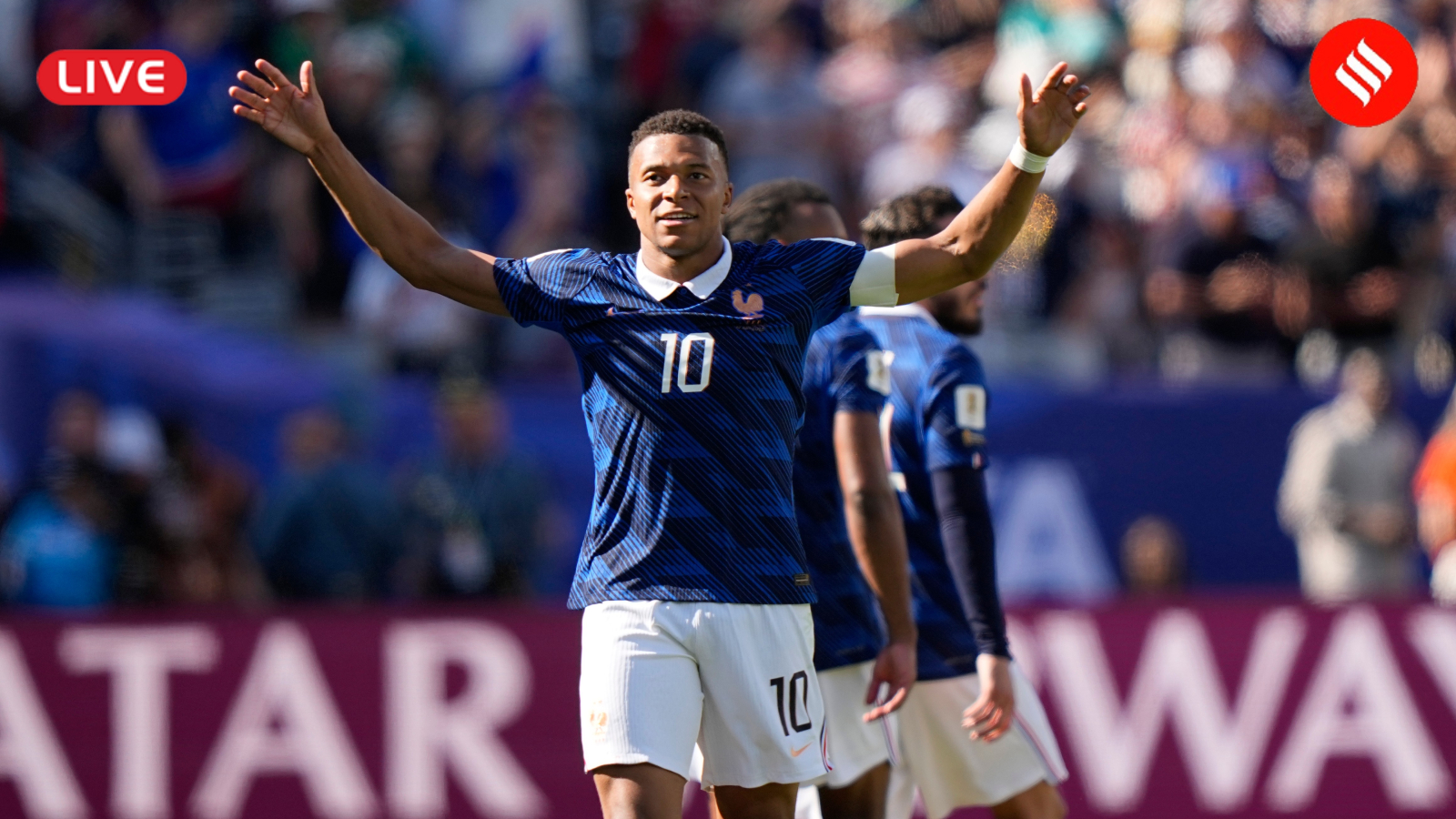
- Offensive Firepower: With Mbappé, Barcola, and potentially Olivier Giroud or Randal Kolo Muani up front, France possesses diverse attacking options, capable of scoring from various situations.
- Midfield Control: The combination of Tchouaméni, Griezmann, and potentially Eduardo Camavinga or Adrien Rabiot offers a blend of defensive solidity, creativity, and energy.
- Defensive Resilience (when focused): While susceptible to early pressure, France’s defense, featuring players like Saliba, Dayot Upamecano, and Theo Hernandez, is generally robust and athletic.
- Individual Brilliance: The ability of players like Mbappé and Griezmann to change a game in an instant is a significant advantage.
Statistical Edge (from Senegal match):
- Possession: France typically dominates possession (around 60% vs. Senegal in the second half).
- Shots on Target: High conversion rate, especially from Mbappé.
- Pass Accuracy: Consistently high, reflecting their technical proficiency.
Iraq: The Underdog’s Resolve and Counter-Attacking Hopes
Expected Formation: 5-4-1 or 4-4-2 (deep defensive block)
Key Players:
- Aymen Hussain (Striker): Their main goal threat, Hussain possesses decent aerial ability and a knack for being in the right place. His goal against Norway, despite the subsequent own goal, highlights his importance.
- Zidane Iqbal (Midfielder): A young, technically gifted midfielder who, if given space, can dictate play and provide creative passes. He’ll be crucial for any counter-attacking endeavors.
- Ali Adnan (Defender/Captain): An experienced defender and likely captain, Adnan’s leadership and defensive organization will be paramount in trying to contain France’s attack.
- Jalal Hassan (Goalkeeper): The veteran goalkeeper will be expected to make numerous saves and command his area under intense pressure.
Tactical Strengths:
- Defensive Discipline (potential): Under Casas, Iraq has shown periods of organized defending, aiming to frustrate opponents and deny space.
- Counter-Attacking Threat: With pace on the wings and Hussain up front, Iraq will look to exploit any French turnovers and launch quick transitions.
- Team Spirit: The "Lions of Mesopotamia" are known for their passionate and collective effort, often playing with an intensity born of national pride.
Statistical Disadvantage (from Norway match):
- Possession: Significantly lower than opponents (likely under 30% vs. Norway).
- Shots on Target: Limited opportunities, relying on clinical finishing from few chances.
- Defensive Vulnerabilities: Exposed by top-tier attacking talent, particularly in wide areas and set pieces.
Head-to-Head and Venue Impact
Historically, competitive fixtures between France and Iraq are rare, if non-existent, underscoring the novelty of this World Cup encounter. This lack of historical precedent means neither team can draw extensively on past encounters for psychological advantage.
The Lincoln Financial Field in Philadelphia, with its natural grass pitch and state-of-the-art facilities, provides an ideal environment for top-tier football. The atmosphere is expected to be vibrant, with a significant expatriate community in Philadelphia likely to turn out in support of both teams, adding a unique cultural flavor to the match. The mid-June weather in Philadelphia can be warm and humid, a factor that both teams will need to manage, though professional athletes are accustomed to such conditions.
Official Responses: Voices from the Dugout and Dressing Room
The pre-match press conferences and post-match reactions from the opening games offer insights into the mindset of both camps.
Didier Deschamps (France Coach)
Following the win against Senegal, Deschamps acknowledged the uneven performance but emphasized the result. "We knew Senegal would be a difficult opponent, physically strong and well-organized," he stated. "We were perhaps too passive in the first half, but the team showed character and quality to turn it around in the second. Kylian [Mbappé] was decisive, as always. We secured the three points, which is the most important thing in a tournament. Now our focus immediately shifts to Iraq. We will approach this match with the utmost respect. Every team here has earned their place, and we will not underestimate anyone. We need to be more consistent from the first whistle."
On managing player fatigue and potential rotation, Deschamps remained guarded. "We have a deep squad, and every player is ready to contribute. We will assess everyone’s fitness and make decisions that are best for the team’s overall performance and progression in the tournament."
Jesús Casas (Iraq Coach)
Addressing the heavy defeat to Norway, Coach Casas was pragmatic yet defiant. "It was a very difficult match for us," he conceded. "Norway, with players like Haaland, are simply at another level. We made mistakes, and we paid for them. It’s a harsh lesson, but one we must learn quickly. My players gave everything, and I am proud of their effort, even if the result was not what we hoped for."
Looking ahead to France, Casas articulated the monumental task. "We are now facing arguably the best team in the world. It is a huge challenge, perhaps the biggest in our footballing history. But we are not here to simply make up the numbers. We are here to represent our country with pride and fight for every ball. We know we will have to be perfect defensively, disciplined, and seize any small opportunities we create. We will play with courage and hope to give our fans something to cheer about."
Player Perspectives
Kylian Mbappé (France Captain): "It was important to start with a win, even if the first half wasn’t our best. We showed what we are capable of after the break. For me, it’s always about helping the team, scoring goals, and pushing for victory. Against Iraq, we need to be switched on from the start. We know they will be motivated, and we must match their intensity while playing our game."
Aymen Hussain (Iraq Forward): "Scoring a goal in the World Cup was a dream, but the result against Norway was very disappointing. The own goal was unfortunate, but we must put it behind us. Now we face France, a team full of superstars. It will be incredibly tough, but we will not give up. We will fight for each other, for our coach, and for our country. We want to show the world that Iraq can compete, even against the best."
Implications: Group Dynamics, National Pride, and Tournament Trajectories
The outcome of the France vs. Iraq match holds significant implications, not only for the immediate standings of Group D but also for the broader narratives of both nations within the FIFA World Cup 2026.
For France: Consolidating Dominance and Strategic Planning
A victory for France would firmly establish their dominance in Group D, likely placing them at the top of the standings with six points. This would provide Didier Deschamps with valuable flexibility, potentially allowing him to rotate key players in their final group match to manage fatigue and avoid suspensions ahead of the knockout stages. Early qualification would also send a strong message to other contenders, reinforcing their status as a primary favorite for the trophy.
More importantly, a convincing win, especially if they can maintain a high level of performance for the full 90 minutes, would address any lingering concerns from their patchy first half against Senegal. It would boost team confidence, fine-tune tactical cohesion, and provide a platform for their star players to hit peak form. However, complacency against an underdog could prove costly, as even a moment of lapse can lead to an unexpected concession, something Deschamps will undoubtedly be keen to avoid.
For Iraq: The Quest for Pride and a Glimmer of Hope
For Iraq, the implications are more existential. Another heavy defeat would severely damage their goal difference and virtually extinguish any mathematical hopes of progressing to the knockout stages. More significantly, it could be a blow to morale, making their final group game an uphill battle to salvage pride.
However, should Iraq manage to secure even a draw – a truly monumental achievement against a team of France’s caliber – it would be celebrated as a historic triumph. Such a result would not only provide a massive psychological boost but also keep their slim hopes of progressing alive, albeit requiring favorable results elsewhere and a strong performance in their final match. A draw would resonate deeply within Iraq, showcasing their national team’s resilience on the world stage and inspiring a new generation of footballers. Even a narrow, hard-fought defeat, where they demonstrate tactical discipline and a fighting spirit, could restore some of the pride lost against Norway and prove valuable for their long-term footballing development.
Group D Dynamics and Broader World Cup Narrative
The result will directly impact the other teams in Group D, namely Norway and Senegal. If France wins decisively, it could put pressure on Norway and Senegal to secure strong results in their own matches to avoid falling too far behind. Conversely, any slip-up by France would blow the group wide open, creating a thrilling race for the knockout berths.
Beyond the group, the match contributes to the overarching narrative of the World Cup: the clash of footballing titans against determined underdogs. It embodies the spirit of the tournament, where every match, regardless of the perceived disparity in strength, carries immense weight and the potential for unforgettable moments. The performance of Kylian Mbappé will continue to be scrutinized as he aims to cement his legacy, while Iraq’s fight for recognition against overwhelming odds will capture the hearts of neutral fans worldwide.
As the floodlights illuminate Lincoln Financial Field, the stage is set for a captivating encounter that transcends mere football. It is a story of ambition, resilience, and the enduring power of the beautiful game. The world watches to see if France can assert their authority or if Iraq can author a chapter of World Cup folklore.
