

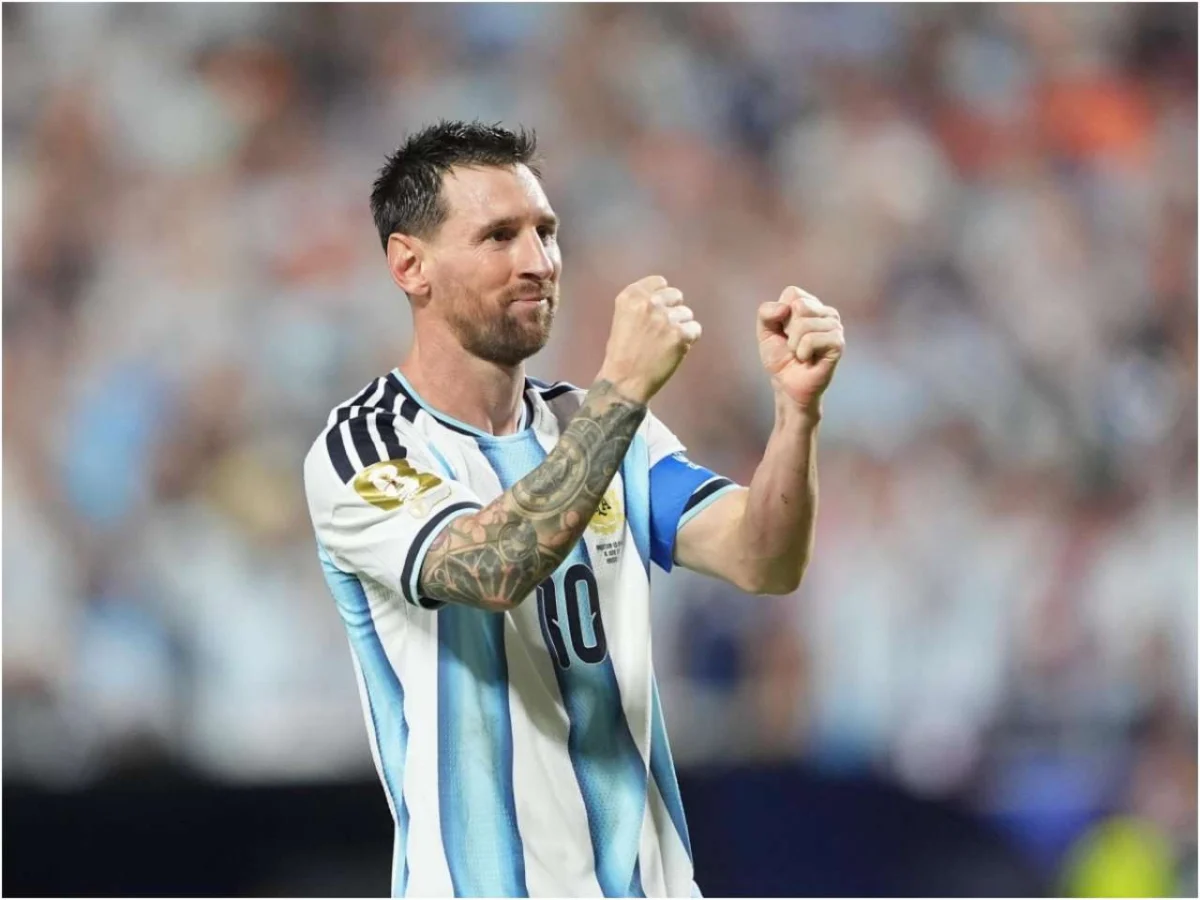
Doha, Qatar – June 23, 2026 – In a moment that will forever be etched into the annals of football history, Lionel Messi, the revered Argentine captain, has officially become the highest goal-scorer in the FIFA World Cup, surpassing Germany’s legendary Miroslav Klose. The iconic forward netted his record-breaking 17th World Cup goal in the first half of Argentina’s crucial group stage encounter against Austria on Monday, sending waves of exhilaration across the globe and further solidifying his undisputed status as one of the game’s greatest.
The landmark goal, struck in the 38th minute of a captivating match, not only propelled Argentina forward in their 2026 World Cup campaign but also marked a personal triumph of monumental proportions for the 38-year-old maestro. This historic achievement arrives after Messi had already equalled Klose’s long-standing record of 16 goals with a sensational hat-trick in Argentina’s World Cup opener against Algeria. Now, with 17 goals to his name, Messi stands alone atop the men’s scoring chart, adding yet another glistening jewel to a career already overflowing with unparalleled accolades.
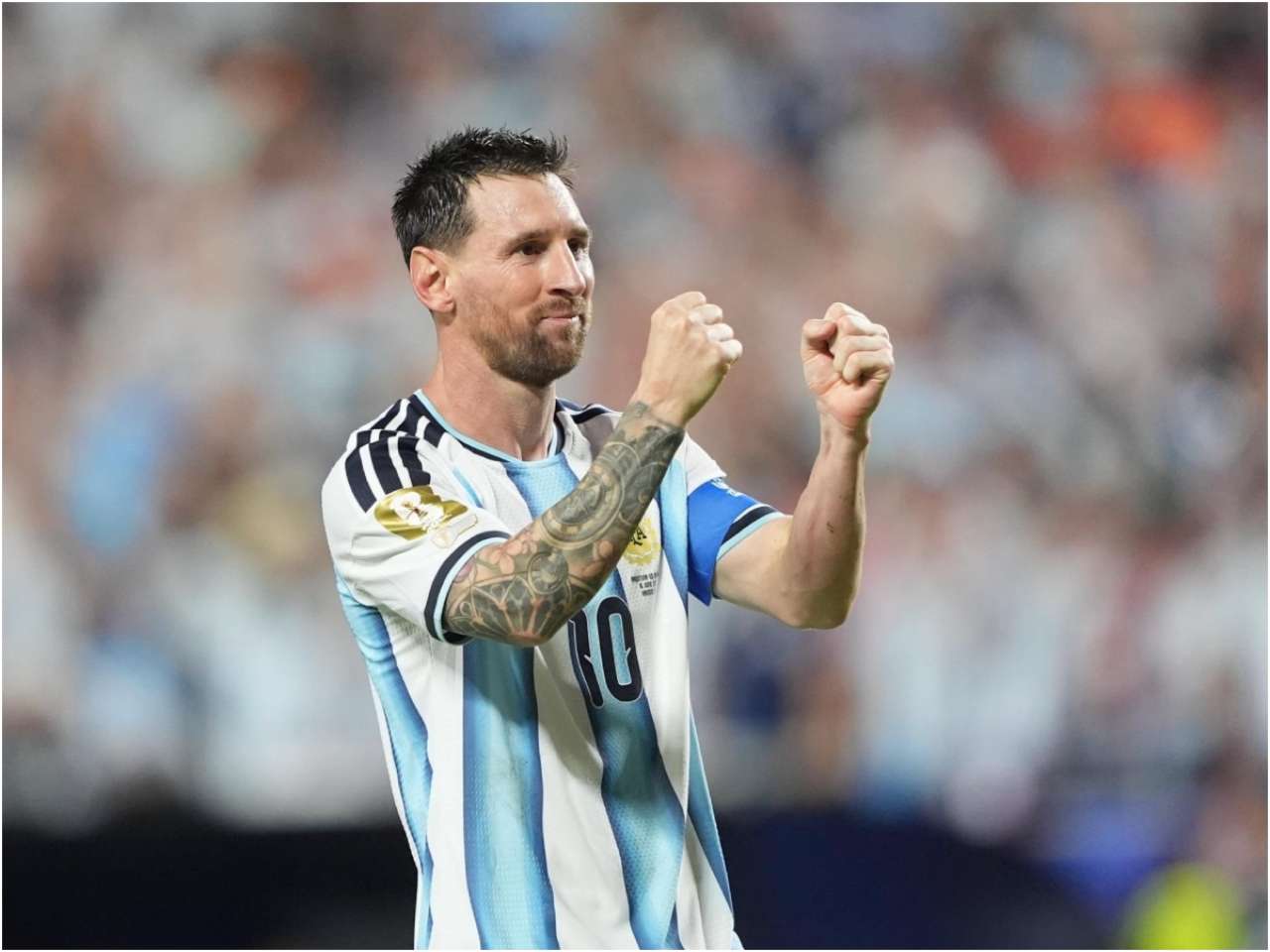
This 2026 tournament marks Messi’s sixth FIFA World Cup appearance, a testament to his extraordinary longevity, unwavering dedication, and sustained brilliance at the highest level of international football. His relentless pursuit of excellence has now culminated in a record that many believed would stand for generations. Beyond the sheer number, this record speaks volumes about Messi’s evolution as a player, his tactical intelligence, and his enduring ability to perform under immense pressure on the grandest stage. The football world collectively rose to applaud the living legend, acknowledging a feat that transcends national allegiances and celebrates the beautiful game itself.
A Chronology of Milestones: Messi’s World Cup Journey to Immortality
Lionel Messi’s journey to becoming the FIFA World Cup’s all-time leading scorer is a saga woven through six tournaments, marked by moments of dazzling brilliance, agonizing near-misses, and ultimately, triumphant glory. His progression from a prodigious teenager to an undisputed global icon has unfolded across two decades, each World Cup chapter adding layers to his legend.
)
Germany 2006: The Genesis (1 goal)
Messi made his World Cup debut at just 18 years old in the 2006 tournament. His first goal came against Serbia and Montenegro, a tidy finish after coming on as a substitute, showcasing glimpses of the magic that was to come. Argentina’s campaign ended in the quarter-finals, but a star had been born.
South Africa 2010: Frustration and Evolution (0 goals)
Despite being a central figure, the 2010 World Cup proved to be a rare goalless tournament for Messi. Under Diego Maradona’s management, Argentina once again exited in the quarter-finals. While personally frustrating in terms of goals, this tournament saw Messi’s influence grow as a playmaker, despite not finding the back of the net himself.

Brazil 2014: Carrying a Nation (4 goals)
The 2014 World Cup in Brazil saw Messi truly carry the hopes of Argentina. He delivered four crucial goals, including unforgettable strikes against Bosnia and Herzegovina, Iran, and two against Nigeria in the group stage. His performances earned him the Golden Ball award for the tournament’s best player, but Argentina ultimately fell short in the final against Germany, a heart-wrenching defeat that only fueled his desire for ultimate glory.
Russia 2018: A Flash of Brilliance (1 goal)
In a challenging campaign for Argentina, Messi managed a single, but spectacular, goal against Nigeria in the group stage – a masterclass of control and finish. Argentina’s journey ended in the Round of 16, but Messi’s individual moments continued to captivate.
)
Qatar 2022: The Crowning Glory (7 goals)
The 2022 FIFA World Cup was the tournament where Messi finally achieved his ultimate dream, leading Argentina to their third World Cup title. His seven goals were pivotal, including two in the thrilling final against France. He netted against Saudi Arabia, Mexico, Australia, Netherlands, Croatia, and twice in the final, displaying a relentless hunger and an unparalleled ability to deliver in the biggest moments. This triumph, coupled with his second Golden Ball, set the stage for further records. By the end of this tournament, his tally stood at 13 goals, placing him among the elite.
Canada/Mexico/USA 2026: The Record Breaker (4 goals and counting)
Entering his sixth World Cup, Messi was already on 13 goals. His first match of the 2026 campaign against Algeria saw him unleash a magnificent hat-trick, propelling his total to 16 goals and drawing him level with Miroslav Klose as the joint-highest scorer in men’s World Cup history. The anticipation for the record-breaking moment was palpable. It arrived swiftly in the subsequent group stage match against Austria. In the 38th minute, receiving a perfectly weighted pass on the edge of the box, Messi controlled with his customary elegance, shifted the ball onto his favored left foot, and curled an exquisite shot past the Austrian goalkeeper, sparking pandemonium. His 17th goal not only broke the record but also underscored his enduring quality and determination, even at 38 years old. This goal was a culmination of decades of dedication, skill, and an unwavering love for the game.
)
Supporting Data and Historical Context: A Deep Dive into World Cup Goal-Scoring
Lionel Messi’s achievement is not just a personal milestone; it’s a significant moment that reshapes the narrative of World Cup goal-scoring history. To fully appreciate its magnitude, it’s essential to place it within a broader context, examining the legends he has surpassed and the unique aspects of his accomplishment.
The Elusive World Cup Record: Surpassing Klose and Others
Before Messi’s latest heroics, the pinnacle of World Cup goal-scoring belonged to Germany’s Miroslav Klose. Klose, known for his predatory instinct and aerial prowess, accumulated his 16 goals across four World Cup tournaments (2002, 2006, 2010, 2014). His consistency and ability to deliver crucial goals earned him immense respect, and his record was widely considered one of the toughest to break. Klose’s goals were often described as workmanlike, a testament to his tireless effort and positioning. Messi, in contrast, often combines breathtaking artistry with his goal-scoring, delivering moments of individual brilliance alongside clinical finishes.
)
The pantheon of World Cup goal-scorers is a distinguished one. Brazilian legend Ronaldo Nazário sits third on the all-time men’s list with 15 goals, achieved across three tournaments (1998, 2002, 2006), showcasing his explosive power and finishing ability. Germany’s Gerd Müller, a prolific scorer, managed 14 goals in just two tournaments (1970, 1974), holding the record for a significant period. France’s Just Fontaine holds the extraordinary record for most goals in a single tournament, with an astonishing 13 goals in 1958 – a benchmark that still appears insurmountable. Pelé, with 12 goals across four tournaments, rounds out the top tier of World Cup goal-scorers, his legacy intertwining with Brazil’s golden era. Messi’s surpassing of these titans underscores the unique blend of longevity, consistency, and sheer talent he brings to the field.
Messi’s Longevity and Consistency: A Six-Tournament Saga
One of the most remarkable aspects of Messi’s record is that it spans six FIFA World Cup tournaments. Playing in six World Cups is an exceptional feat in itself, a testament to his rigorous physical conditioning, disciplined lifestyle, and unwavering mental fortitude. Only a handful of players in history have achieved this level of sustained participation, including Mexico’s Rafael Márquez and Antonio Carbajal, Germany’s Lothar Matthäus, and Italy’s Gianluigi Buffon. To not only participate but to remain a pivotal, goal-scoring force across such a long period is unprecedented for an attacking player.
)
His goal-scoring consistency, though not always uniform across tournaments (e.g., 0 goals in 2010), demonstrates his adaptability and ability to influence games even when not directly on the scoresheet. The fact that he has scored in five of his six World Cups, including the record-breaking 2026 edition, highlights his enduring threat. Even at 38, his movements, vision, and finishing remain elite, defying the typical decline associated with age in football.
Beyond Goal-Scoring: The Maestro’s All-Round Impact
While goal-scoring records capture headlines, Messi’s World Cup legacy extends far beyond the net. He is also among the leading assist providers in World Cup history, consistently creating opportunities for his teammates. His vision, dribbling, and ability to unlock defenses have been equally crucial to Argentina’s campaigns. His leadership, particularly evident in the 2022 and 2026 tournaments, has been inspirational, rallying his team and demonstrating a profound connection with his nation’s aspirations.
)
Furthermore, Messi’s record-breaking goal against Austria also saw him equal another significant World Cup milestone: scoring in six consecutive World Cup matches. This incredible streak puts him alongside the legendary Just Fontaine (France, 1958) and Jairzinho (Brazil, 1970), both of whom achieved this feat within a single tournament. Messi’s accomplishment, spread across different campaigns, speaks to his unparalleled consistency and ability to find the back of the net when it matters most, making him a perpetual threat.
The Women’s Game Perspective: Marta’s Unmatched Feat
It is also vital to acknowledge and celebrate the achievements in the women’s game. Brazil’s iconic forward, Marta Vieira da Silva, holds the overall record for most goals scored at a FIFA World Cup tournament, with an astounding 18 goals. Marta’s career, spanning six World Cups from 2003 to 2023, is a parallel narrative of sustained excellence and groundbreaking achievement. Her record stands as a testament to her prolific scoring ability and immense impact on women’s football. While comparisons between men’s and women’s records are often made, it is more appropriate to view them as distinct yet equally phenomenal achievements that highlight the global reach and diverse talent within the sport. Messi’s record now places him at the summit of the men’s game, while Marta continues to reign supreme across both genders, showcasing the universal appeal of goal-scoring prowess.
)
Official Responses and Global Acclaim
The moment Lionel Messi broke the World Cup goal-scoring record ignited an immediate and overwhelming wave of reactions from across the footballing world, from official bodies to former legends and passionate fans.
FIFA, the global governing body of football, wasted no time in officially recognizing the monumental achievement. Their social media channels, including Instagram and X (formerly Twitter), exploded with congratulatory messages. "History is made. Lionel Messi is the all-time top goalscorer in @FIFAWorldCup history!" FIFA declared, accompanying the message with a montage of Messi’s iconic World Cup goals. Gianno Infantino, FIFA President, reportedly sent a personal message of congratulations, stating, "Lionel Messi continues to redefine what is possible in football. This record is not just about goals; it’s about passion, dedication, and inspiring billions. He is truly the G.O.A.T."
)
Reactions from football legends and pundits poured in, each offering their unique perspective on Messi’s enduring brilliance. Miroslav Klose, the man whose record was surpassed, offered a gracious and heartfelt message. "Records are meant to be broken, and there is no one more deserving than Leo," Klose was quoted as saying in German media. "I always admired his game, his humility, and his consistency. It was an honor to hold the record, and now it is an honor to pass it to a player like him. Congratulations, Leo."
Former England striker and prominent football pundit Gary Lineker, known for his effusive praise of Messi, simply tweeted, "THE GREATEST. End of discussion. 17 World Cup goals. Unfathomable." Arsène Wenger, the legendary former Arsenal manager and FIFA’s Chief of Global Football Development, lauded Messi’s longevity. "To maintain that level of performance, that hunger for goals, across six World Cups is extraordinary," Wenger remarked in an interview. "It speaks to a professionalism and an innate talent that few players in history have possessed."
)
The sentiment was particularly fervent in Argentina. News channels interrupted regular programming to celebrate the milestone. Argentine media outlets, such as Olé and Clarín, ran special editions with headlines proclaiming Messi as "Immortal" and "The King of Goals." Celebrations erupted spontaneously in Buenos Aires and Rosario, with fans taking to the streets, waving flags, and chanting Messi’s name. Social media platforms were awash with tributes, analyses, and nostalgic flashbacks to Messi’s earlier World Cup moments. Fans from across the globe, irrespective of their club loyalties, united in their appreciation for a player who has consistently delivered magic on the biggest stage. Hashtags related to Messi and the World Cup record trended globally for hours, underscoring the universal impact of his achievement.
Implications for Messi’s Legacy and Future
Lionel Messi’s ascent to the pinnacle of World Cup goal-scoring carries profound implications, not only for his personal legacy but also for Argentina’s 2026 campaign and the broader narrative of football history.
)
Solidifying G.O.A.T Status: An Unassailable Argument
This record-breaking achievement significantly bolsters Messi’s already formidable claim to the title of the ‘Greatest Of All Time’ (G.O.A.T). For years, debates have raged comparing him to legends like Pelé and Diego Maradona. While Pelé boasts three World Cup titles and Maradona famously led Argentina to glory in 1986 with an iconic individual performance, Messi now possesses a World Cup trophy, a record number of Ballon d’Or awards, numerous club titles, and now, the most coveted individual goal-scoring record in the World Cup.
His ability to combine individual brilliance, sustained excellence over two decades, unparalleled creativity, and now, record-breaking goal-scoring on the biggest stage, creates an almost unassailable argument for his G.O.A.T status. This record is not merely a statistical footnote; it’s a testament to his evolution from a winger to a false nine, to a deep-lying playmaker, and ultimately, to a complete footballing phenomenon who adapts and excels regardless of role or age. It fills one of the few remaining "gaps" in his extraordinary resume, silencing any lingering doubts about his World Cup impact.
)
Impact on Argentina’s World Cup Campaign: A Renewed Momentum
For Argentina, Messi’s record provides an immeasurable boost in morale and confidence during their 2026 World Cup journey. Having already secured the 2022 title, the team entered this tournament with the weight of defending their crown. Messi’s individual brilliance and his continued ability to break records serve as a powerful psychological advantage. It sends a clear message to opponents that even at 38, the Argentine captain remains a potent and decisive force.
The celebratory atmosphere surrounding his achievement can galvanize the squad, fostering a collective belief that with their talisman in such form, anything is possible. It might also alleviate some pressure from other players, knowing that Messi continues to attract significant defensive attention. As Argentina navigates the group stages and looks towards the knockout rounds, this record will be a constant source of inspiration, fueling their pursuit of back-to-back World Cup titles, an achievement only Brazil has managed in the modern era.
)
The Enduring Appeal of the World Cup and Future Records
Messi’s record serves as a powerful reminder of the enduring allure and historical significance of the FIFA World Cup. These milestones captivate audiences globally, connecting generations of football fans and inspiring aspiring athletes. They contribute to the rich tapestry of the tournament, creating indelible memories and moments that transcend the sport itself.
Looking ahead, while Messi has now claimed the men’s World Cup goal-scoring record, there remain other potential milestones he could pursue, even in what is likely his final World Cup. The overall record of 18 goals held by Marta of Brazil in the women’s tournament is still within reach if Messi continues his prolific form in 2026. Given his current tally of 17, just two more goals would see him claim the undisputed top spot across both men’s and women’s World Cups. He is also already the player with the most World Cup appearances (28), a record he will continue to extend with each match played in 2026. These potential achievements only add to the excitement and anticipation surrounding every one of Messi’s remaining World Cup performances.
)
In breaking Klose’s record, Lionel Messi has not just etched his name deeper into the history books; he has reaffirmed his status as a living legend whose career continues to defy expectations and redefine greatness. The world watches, captivated, as he continues to write the final, glorious chapters of his extraordinary World Cup saga.
