

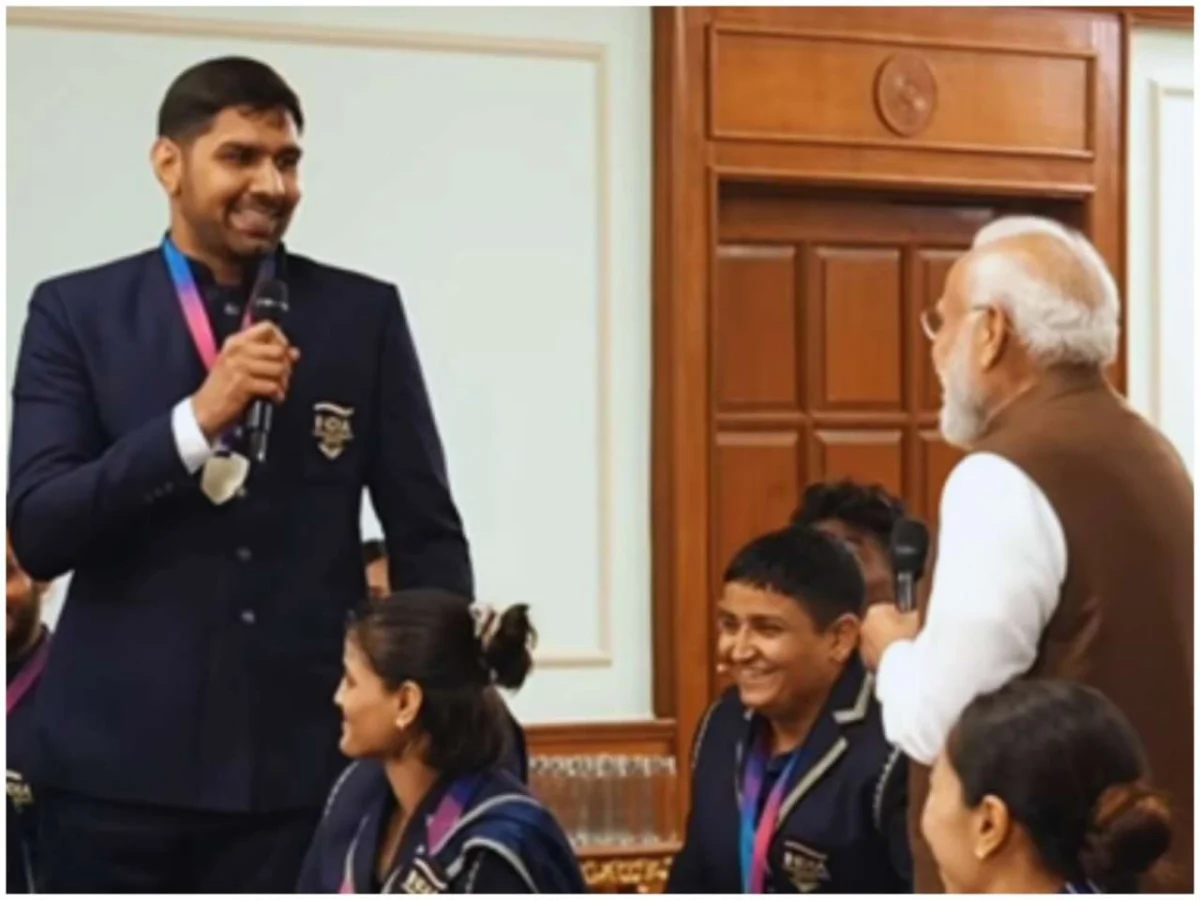
NEW DELHI, India – In a moment that perfectly encapsulated the spirit of sportsmanship and the lighter side of international rivalries, Indian boxer Narendra Berwal, a silver medallist at the Commonwealth Games 2026, recently left Prime Minister Narendra Modi thoroughly amused. The heavyweight pugilist recounted a hilarious exchange with a Pakistani opponent from the 2015 World Military Games, whose exasperation stemmed from the ubiquitous presence of the name ‘Narendra’ in Berwal’s life. This anecdote, shared during a celebratory interaction with CWG medallists at the Prime Minister’s residence, not only brought a wave of laughter but also underscored the unique blend of competitive fire and camaraderie that defines sporting encounters between India and Pakistan.
The viral video of Berwal’s recollection has captivated audiences across social media platforms, highlighting a candid and heartwarming interaction between the nation’s leader and its sporting heroes. Beyond the medals and podium finishes, such moments serve as powerful reminders of the human element in high-stakes competition, often fostering unexpected bonds and memorable tales.
A Name, A Legacy: Berwal’s Amusing Anecdote
The heart of the story lies in an incident that transcends the conventional narrative of sporting rivalry, offering a glimpse into the humorous frustrations that can arise even on the global stage. Berwal, a formidable presence in the men’s 90+ kg category, recounted his post-match interaction with a Pakistani boxer, a tale that resonated deeply with the Prime Minister and the assembled athletes.
The Viral Revelation at the PM’s Residence
The scene was set at the Prime Minister’s official residence in New Delhi, where a special reception was hosted for all Indian medallists from the Commonwealth Games 2026. The atmosphere was one of celebration and mutual admiration, as athletes mingled with PM Modi, sharing their experiences and triumphs. It was amidst this celebratory backdrop that Narendra Berwal stepped forward, his silver medal gleaming, to share a story that would soon become an internet sensation.
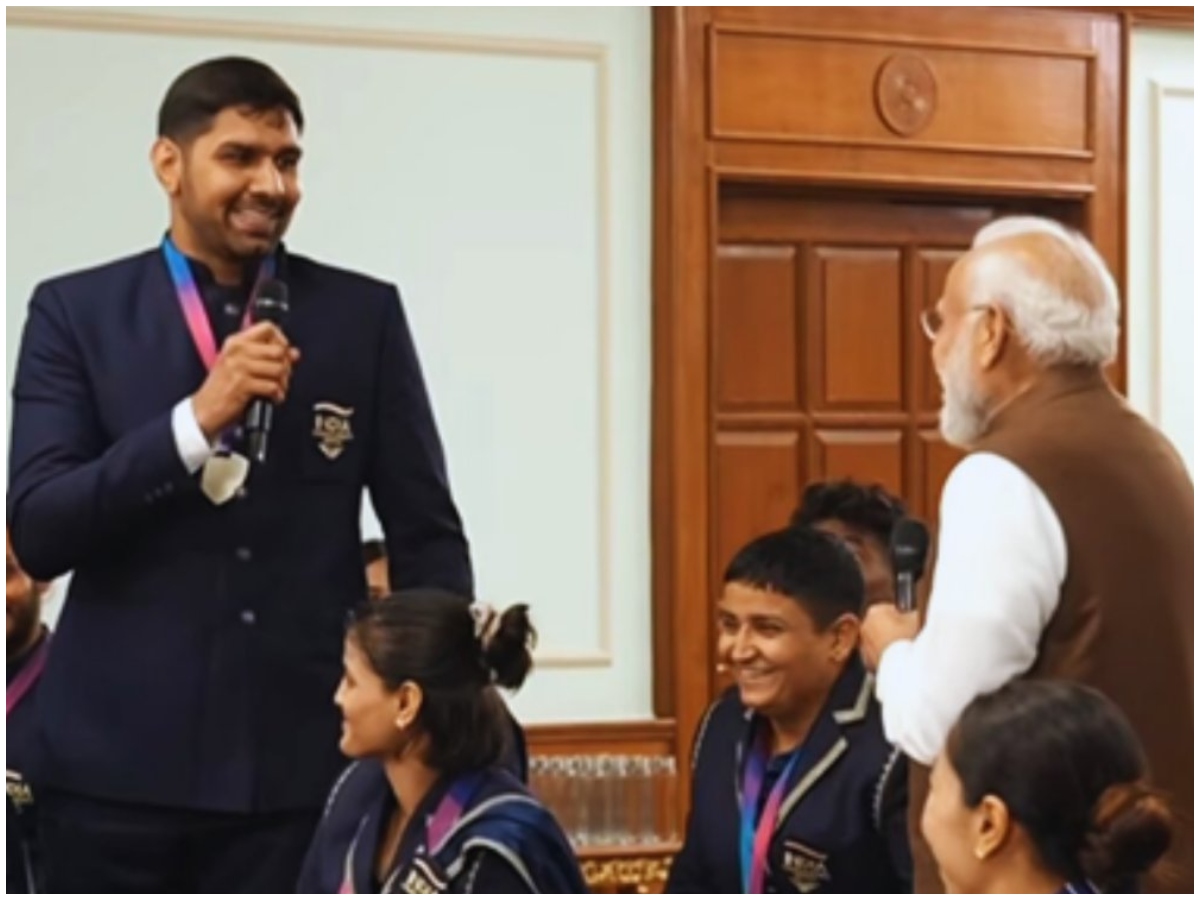)
With a mischievous grin, Berwal recounted the incident, directly addressing PM Modi, whose own name is a prominent feature of the anecdote. The boxer explained that after defeating his Pakistani counterpart at the 2015 World Military Games, the vanquished opponent approached him, visibly perturbed by a recurring theme in Berwal’s life. "Aapka naam Narendra hai, aapke coach ka naam Narendra hai, aapke Pradhan Mantri ka naam Narendra hai. Mujhe Narendra naam se nafrat ho gayi hai," Berwal quoted the Pakistani boxer as saying. The statement, roughly translating to, "Your name is Narendra, your coach’s name is Narendra, your Prime Minister’s name is Narendra. I’ve started hating the name Narendra," elicited a hearty laugh from PM Modi, whose face lit up with amusement. The Prime Minister’s characteristic warmth and appreciation for such light-hearted moments were evident, creating an unforgettable memory for Berwal and all those present. The exchange quickly went viral, illustrating the charming irony and shared humanity that can sometimes overshadow intense sporting contests.
Flashback to the 2015 World Military Games
To fully appreciate the humour of the Pakistani boxer’s complaint, it’s essential to rewind to the 2015 World Military Games. These games, often a stage for fierce competition among athlete-soldiers from various nations, saw Narendra Berwal representing India with distinction. The specific bout against the Pakistani boxer would have been charged with the usual intensity characteristic of India-Pakistan sporting encounters, irrespective of the discipline.

Following Berwal’s victory, the interaction that unfolded was far from typical post-match pleasantries. The Pakistani boxer, perhaps still reeling from the defeat, expressed a genuine, albeit comical, frustration. His surprise and exasperation at the "repeated use of the name Narendra" in Berwal’s immediate sphere—his own name, his coach’s name, and the name of India’s then (and current) Prime Minister—highlighted a cultural nuance. In many South Asian cultures, the repetition of a name, especially one associated with authority or prominence, can become a point of playful or even exasperated observation. For the Pakistani boxer, the sheer coincidence of so many Narendras in Berwal’s orbit, culminating in his defeat, became a source of bewildered humour. This incident, while humorous, also subtly underscored the deep-seated awareness of figures and names from the rival nation, even in the context of a military sporting event. It was a testament to the fact that even amidst fierce competition, a shared human experience of irony and wit can prevail, building bridges of understanding, however fleeting.
Beyond the Ring: PM Modi’s Interaction with CWG Heroes
The reception at the Prime Minister’s residence was more than just a formal felicitation; it was a testament to the government’s commitment to acknowledging and encouraging national sporting talent. Such interactions play a crucial role in boosting athlete morale and cementing their status as national heroes.
)
A Warm Welcome for National Champions
On Sunday, Prime Minister Narendra Modi extended a grand welcome to the Indian contingent that had proudly represented the nation at the Commonwealth Games 2026 in Glasgow. The event at his New Delhi residence was meticulously planned to ensure every medallist felt the nation’s gratitude and admiration. The air buzzed with excitement and pride as athletes, coaches, and support staff gathered, many still basking in the glory of their recent achievements.
PM Modi, known for his ability to connect with people from all walks of life, engaged personally with many of the athletes. He listened attentively to their stories, offered words of encouragement, and shared light-hearted moments, just as he did with Berwal. A particularly charming segment involved India’s gold medal-winning boxer, Sakshi Chaudhary, who captured a selfie video with the Prime Minister. Holding a selfie stick, Sakshi enthusiastically addressed the camera, "Hello friends. Our honourable PM sir has invited all the Commonwealth Games medallists here, and we are feeling proud about it. We felt good meeting him. He is very humble. Sir, you also please say something." Responding with his characteristic enthusiasm and a motivational message, PM Modi declared, "Jo khelega, wo khilega. Always cheer for Bharat. Bharat mata ki jai." This slogan, translating to "He who plays, will shine," perfectly encapsulates the government’s vision for sports development and its emphasis on active participation for national growth and pride. These interactions are invaluable, as they directly link the highest office with the grassroots of sporting excellence, inspiring a new generation to pursue athletic dreams.
)
Government’s Commitment to Sports Development
The Prime Minister’s reception for the CWG medallists is a visible manifestation of the Indian government’s overarching strategy to bolster the nation’s sporting prowess. Beyond mere felicitations, significant policy initiatives and financial commitments underpin this drive. Schemes like ‘Khelo India’ are designed to identify and nurture talent at the grassroots level, providing state-of-the-art facilities and coaching from an early age. The ‘Target Olympic Podium Scheme (TOPS)’ specifically focuses on elite athletes, offering them comprehensive support, including advanced training, international exposure, and access to sports science and medicine, with the ultimate goal of excelling at major international events like the Olympics and Commonwealth Games.
These initiatives represent a holistic approach, aiming not only to produce medal winners but also to foster a robust sports culture across the country. The government’s emphasis on recognition, financial incentives, and providing a supportive ecosystem ensures that athletes can focus on their training without undue financial or logistical burdens. By elevating sports to a national priority, the government aims to transform India from a nation with sporting potential to a global sporting powerhouse, where every athlete has the opportunity to achieve their full potential and bring laurels to the country.
)
India’s Performance at Commonwealth Games 2026: A Deep Dive
The Commonwealth Games 2026 in Glasgow provided a significant platform for Indian athletes to showcase their talent. While the overall medal tally might appear lower than previous editions, a closer look reveals nuanced insights into India’s performance and the evolving landscape of global sports.
Glasgow’s Medal Tally: A Mixed Bag
India concluded its campaign at the Commonwealth Games 2026 in Glasgow with a commendable fourth-place finish in the overall medal tally. The contingent secured a total of 39 medals, comprising 13 gold, 17 silver, and 9 bronze. This achievement placed India firmly among the top sporting nations within the Commonwealth, trailing only powerhouses like Australia, England, and Canada.
)
Boxing emerged as India’s undisputed strength, contributing significantly to the medal haul. Indian pugilists showcased exceptional skill and resilience, clinching an impressive 10 medals from the sport. This included a remarkable 7 gold medals, alongside 3 other medals (silver or bronze), underscoring India’s growing dominance in various weight categories on the Commonwealth stage. The success in boxing highlights targeted investment and training programs yielding substantial dividends, positioning India as a formidable force in amateur boxing globally. Other sports also contributed vital medals, demonstrating the breadth of talent across the Indian sporting ecosystem, from wrestling and weightlifting to badminton and athletics.
The Glasgow vs. Birmingham Comparison: Understanding the Nuances
While a fourth-place finish with 39 medals is undoubtedly a strong performance, it’s essential to compare it with India’s previous outing at Birmingham 2022, where the nation secured a significantly higher tally of 61 medals. This stark difference might initially suggest a decline, but a deeper analysis reveals a more complex picture primarily attributable to the structural changes in the Glasgow programme.
)
The Commonwealth Games Federation, in conjunction with host cities, often adjusts the list of sports included in each edition. For Glasgow 2026, several medal-producing sports that traditionally contributed significantly to India’s tally were either excluded or had fewer events. Notably, sports like shooting and wrestling, which have historically been strongholds for India and where the nation consistently garners a large number of medals, had a reduced presence or were entirely absent from the Glasgow schedule. Shooting, for instance, has been a perennial source of multiple medals for India in previous CWG editions, and its partial or complete exclusion inevitably impacts the overall count.
Therefore, while the numerical drop from 61 to 39 medals appears substantial, it does not necessarily reflect a decline in the quality or competitive spirit of Indian athletes. Instead, it underscores the need to evaluate performance in the context of the specific sporting disciplines offered. In the sports that were included and where India competed, the athletes performed admirably, often exceeding expectations. This nuanced understanding is crucial for charting future strategies, emphasizing adaptable training programs that prepare athletes for varying game rosters, and potentially advocating for the inclusion of India’s strong suit sports in future multi-sport events.
)
The Broader Implications: Sports Diplomacy and National Identity
The anecdote shared by Narendra Berwal, alongside India’s performance at the CWG 2026 and the Prime Minister’s engagement, carries broader implications that extend beyond individual achievements and national pride, touching upon aspects of sports diplomacy and the evolving narrative of national identity.
Sports as a Bridge: India-Pakistan Dynamics
Narendra Berwal’s humorous recollection of his Pakistani opponent’s frustration with the name ‘Narendra’ serves as a poignant reminder of sports’ unique power to transcend political tensions and foster human connections. Despite the often-fraught diplomatic relationship between India and Pakistan, sporting encounters frequently provide avenues for interaction, mutual respect, and even light-hearted camaraderie. The boxer’s anecdote, while amusing, subtly underscores this dynamic. It humanizes the ‘opponent,’ transforming a rival into someone capable of witty observation and shared laughter.
)
Historically, sports, particularly cricket and hockey, have been significant platforms for India-Pakistan interactions. While these encounters are often charged with intense emotions and nationalistic fervour, they also occasionally yield moments of profound sportsmanship and mutual admiration. Athletes, in their roles as unofficial ambassadors, have the unique ability to bridge divides and project an image of respectful competition. Such lighthearted exchanges, widely publicized, contribute to softening rigid narratives and reminding citizens on both sides of the border of their shared cultural heritage and common human experiences, proving that even in rivalry, a sense of humour can prevail.
Inspiring a Generation: The Role of Medallists and Leadership
The success of athletes like Narendra Berwal and his fellow medallists at the Commonwealth Games, coupled with the high-profile recognition from leaders like Prime Minister Modi, plays an indispensable role in inspiring the next generation. When young individuals witness their sporting heroes being celebrated at the highest echelons of government, it instills a sense of possibility and validates the pursuit of athletic excellence as a viable and respected career path.
)
PM Modi’s direct engagement, his motivational slogans like "Jo khelega, wo khilega," and the genuine warmth he extends to athletes, project a powerful message: that the nation values and supports its sporting talent. This top-down encouragement is crucial for fostering a robust sports culture, encouraging greater participation in physical activities, and promoting health and fitness across all demographics. Such events contribute to building a narrative of a ‘New India’ – one that is not only economically and technologically advanced but also excelling on the global sporting stage, driven by the dedication of its athletes and the unwavering support of its leadership.
Charting the Future: India’s Global Sporting Ambitions
India’s performance at the Commonwealth Games 2026, while demonstrating significant strengths in certain disciplines, also offers valuable insights for charting the nation’s future global sporting ambitions. The nuanced comparison between Glasgow 2026 and Birmingham 2022 highlights the need for a dynamic and adaptive strategy. To transition from regional dominance to consistent global excellence, particularly at events like the Olympic Games, India must continue to invest in sustained talent identification programs, enhance world-class training infrastructure, and embrace sports science and technology.
)
The focus must extend beyond traditional strengths to cultivate excellence in a wider array of sports, anticipating changes in event rosters and adapting to evolving international standards. Furthermore, hosting major international sporting events, potentially even an Olympic Games in the future, could significantly boost India’s sporting profile and infrastructure. The journey towards becoming a global sporting powerhouse is long and arduous, but with continued government support, corporate investment, and the unwavering spirit of its athletes, India is steadily progressing towards its goal of etching its name firmly in the annals of global sports history.
Conclusion
Narendra Berwal’s delightful anecdote, shared with a beaming Prime Minister Narendra Modi, transcended a mere moment of humour. It became a viral sensation, a testament to the unexpected camaraderie found even in the most intense sporting rivalries between nations. This light-hearted exchange, set against the backdrop of India’s strong performance at the Commonwealth Games 2026 and the Prime Minister’s heartfelt felicitation of the medallists, paints a vivid picture of a nation increasingly embracing and celebrating its sporting heroes.
)
While India’s medal tally at Glasgow 2026 presented a nuanced outcome compared to previous editions, driven by changes in the sports programme, the underlying message remains clear: Indian athletes continue to strive for excellence, bringing pride and recognition to the country. The government’s proactive engagement, through initiatives and direct interaction, underscores a robust commitment to fostering a vibrant sports culture and nurturing future champions. As India continues its journey on the global sporting stage, moments like Berwal’s anecdote serve as a reminder that beyond the medals and statistics, it is the human stories, the spirit of competition, and the shared laughter that truly enrich the narrative of sports, forging connections and inspiring generations to come.
