


India’s aviation sector is soaring, with air traffic exceeding 350 million passengers annually and the country poised to become the world’s third-largest aviation market. This unprecedented growth necessitates a significant evolution in airport infrastructure, moving beyond mere functionality to encompass thoughtful design, passenger experience, and a deep connection to local culture. Once characterized as utilitarian spaces, Indian airports are now transforming into vibrant, architecturally significant destinations that aim to elevate the travel experience from a chore to an integral part of the journey.
The Shifting Paradigm: From Efficiency to Experience
For decades, the primary focus of airport design in India, as in many parts of the world, was efficiency. The goal was to move passengers and aircraft as quickly and seamlessly as possible. However, as air travel became more accessible and passenger expectations grew, the limitations of this purely functional approach became apparent. Travelers now seek more than just a place to check in and board a plane; they desire comfort, convenience, and an environment that reflects the spirit of their destination.

This shift is evident in the emerging airport designs across India, which are increasingly prioritizing passenger well-being, sustainability, and a sense of place. Celebrated architect and director Revathy, a frequent flyer who travels for work at least twice a month from Kochi International Airport, highlights this evolution. "It is designed in such a way that it has a single floor for most processes and you go through so easily. Even the pick-up area for cabs is organised so well," she remarks, contrasting it with her experiences at other airports. While acknowledging the comfort offered by Goa’s airport, especially for her parents who used wheelchairs, she finds Bengaluru’s Terminal 2, despite its beauty, to be an uncomfortably long walk. This sentiment underscores the critical importance of intuitive design and accessibility in creating a positive airport experience.
The sheer volume of passengers, now numbering in the hundreds of millions, demands an infrastructure that can not only handle the load but also enhance the journey. This means moving beyond the "serpentine queues and dimly lit interiors" that have characterized some older facilities. Globally, the trend is towards modernizing terminals, embracing sustainability, and implementing intuitive designs that prioritize passenger flow and comfort. India is actively participating in this global movement, even as occasional headlines about structural issues and safety concerns remind us of the ongoing challenges.

Yvonne Rasquinha, a senior traveler, shares her positive experience at Mumbai’s Terminal 2: "Terminal 2 in Mumbai is well maintained and easy to get through. Also, the staff are attentive. While travelling from there last year, I had not booked a wheelchair. But they noticed my gait and made it a point to request one for me. It made the whole journey so much smoother, and a welcome reminder of how these positive experiences leave a lasting impression." This anecdote emphasizes that while grand architectural statements are important, the human element and proactive service are equally crucial in shaping a memorable travel experience.
The "Big Three" Lead the Way: Architectural Marvels and Cultural Narratives
The past year has seen Indian airports gain significant attention, not just for their operational capacity but for their innovative designs. Newer terminals are garnering accolades on social media for their biophilic elements, intricate craftsmanship, and commitment to sustainability. This month’s inauguration of the Navi Mumbai International Airport marks a significant milestone, showcasing a hi-tech design deeply rooted in Indian traditions and promising exemplary performance.
Navi Mumbai International Airport: A Lotus in Bloom
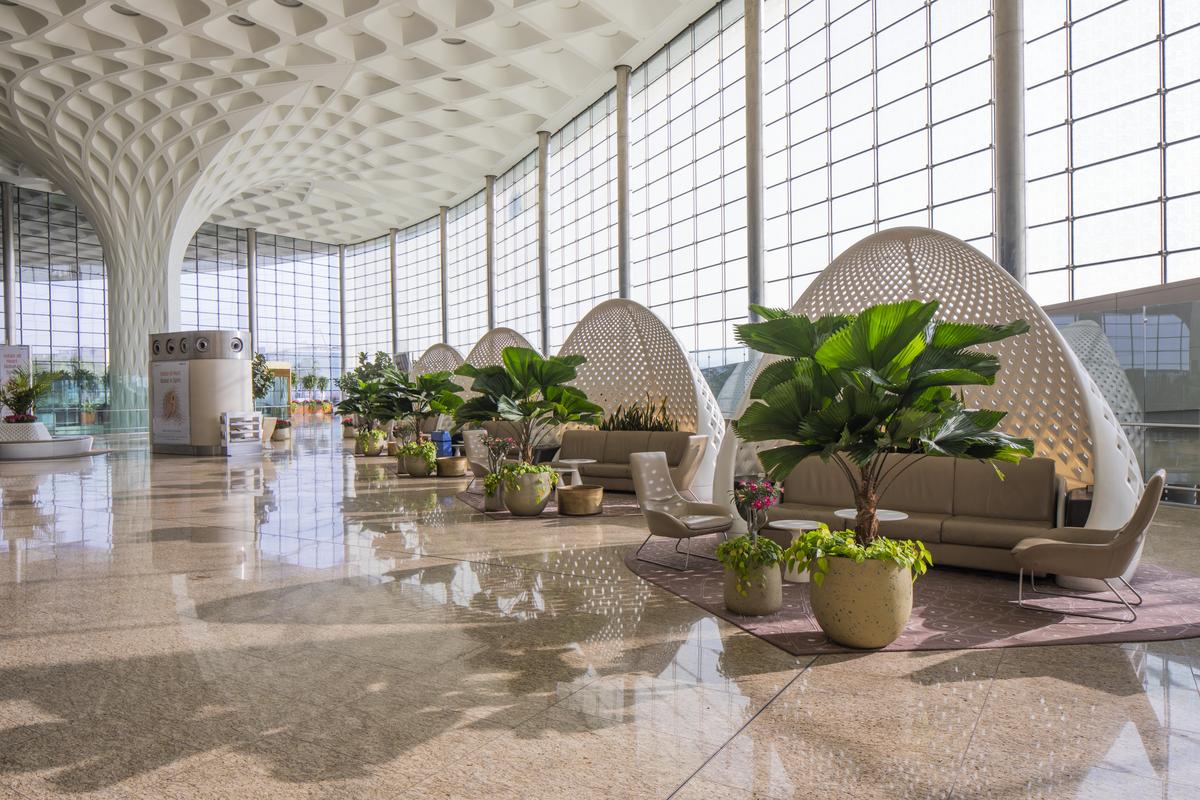
Designed by the globally renowned Zaha Hadid Architects, the Navi Mumbai International Airport is a testament to architectural prowess and cultural integration. Its striking design is inspired by the lotus, a symbol of purity and divinity in Indian culture. This inspiration is translated into a unique structural system featuring 12 sculptural columns that rise like unfurling petals, supporting 17 mega columns that bear the weight of the concentric, petal-shaped roof canopies. Each segment of the roof is meticulously engineered to optimize daylight, manage wind pressure, and efficiently handle monsoon drainage.
Inside, the design continues to impress with innovative interventions aimed at creating an airy and welcoming atmosphere. The check-in hall, for instance, utilizes "light architecture" with hollow columns acting as vertical light wells, drawing natural sunlight deep into the passenger halls. This thoughtful approach to natural lighting not only enhances the aesthetic appeal but also contributes to energy efficiency.

Guwahati International Airport: A Symphony of Assam’s Heritage
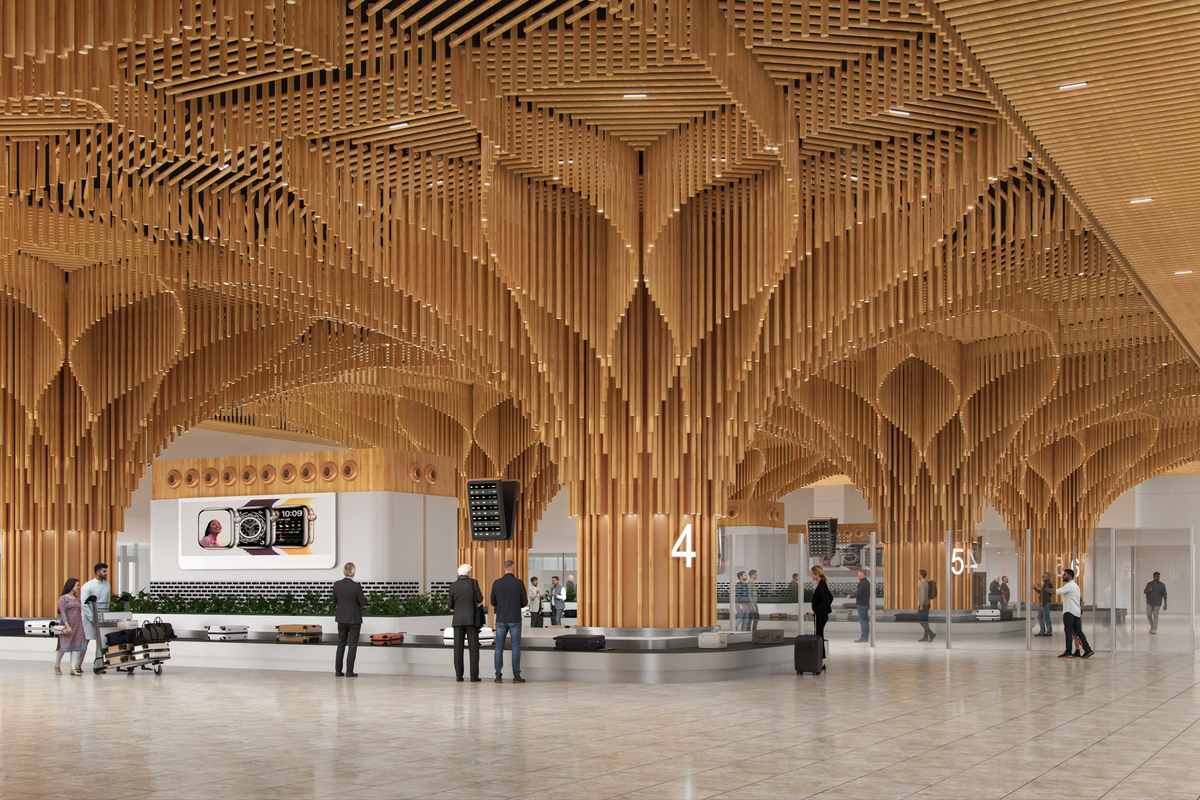
Last month, Guwahati International Airport’s Terminal 2 was recognized at the International Architecture Awards in Athens for its compelling cultural storytelling. Positioned as the "gateway to the Northeast," the terminal’s design draws inspiration from the resilience of local bamboo and the delicate beauty of its orchids. Nuru Karim, principal architect at Mumbai-based Nudes Architecture, explains the symbolism: "The kopou phool or foxtail orchid is a symbol of beauty and celebration, and Assamese women wear it during the Bihu festival. In the terminal’s design, this elegance is paired with the versatility of bamboo."
Karim’s vision extended beyond mere aesthetics, involving local craftspeople in the creation of the bamboo structures and integrating regional motifs. The traditional jaapi (headgear) is featured prominently in the terminal’s decor, and the wall paneling showcases the gamocha pattern, a traditional Assamese textile known for its intricate interplay of red and white. A unique "sky forest" further enhances the terminal’s connection to its locale, featuring tropical and subtropical plants native to Assam, alongside bamboo groves and flowering shrubs.

Bengaluru’s Kempegowda International Airport Terminal 2: A Verdant Oasis
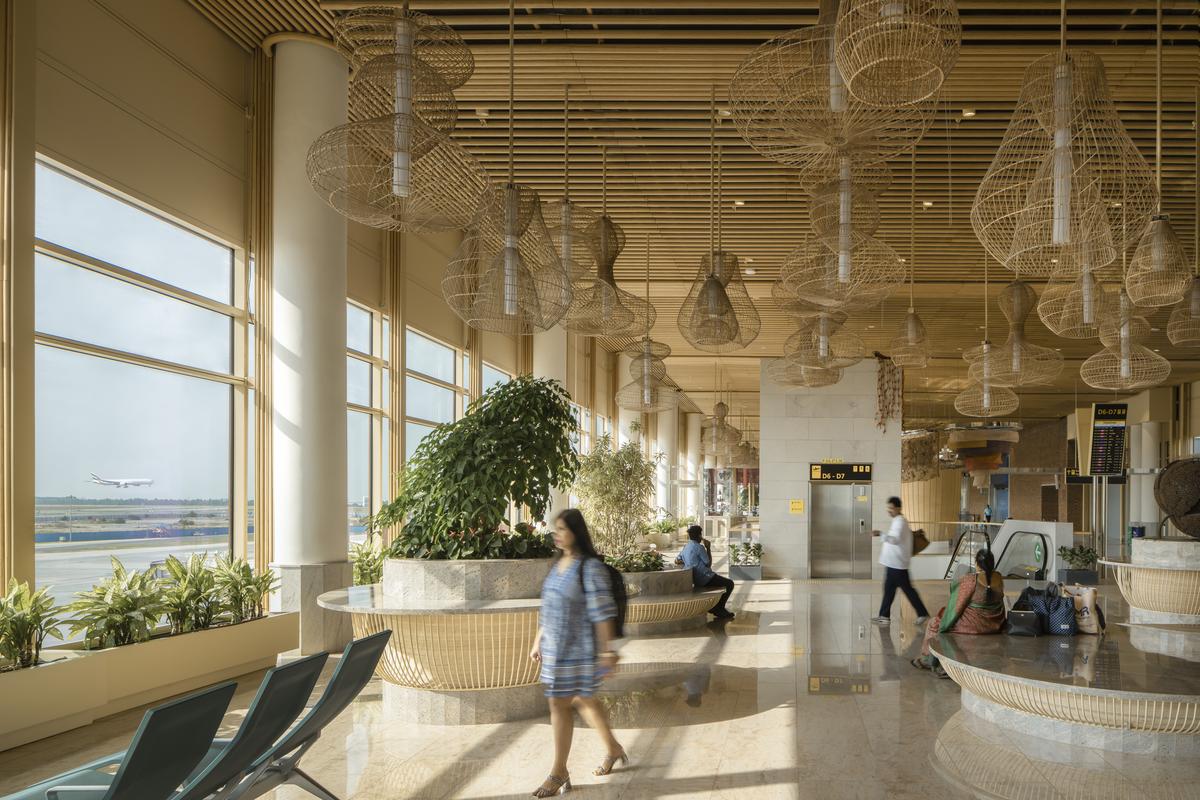
Even before the recent accolades, Bengaluru’s Kempegowda International Airport Terminal 2 made headlines in 2023 by clinching the prestigious Prix Versailles Special Prize for an Interior. This award recognized its groundbreaking achievement of bringing the "garden" into an airport terminal. The design is a breathtaking fusion of nature and architecture, featuring bamboo bells suspended from high ceilings adorned with local plants, lantana elephant sculptures, an indoor waterfall, and a cactus garden.
Peter Lefkovits, principal architect at Skidmore, Owings and Merrill (SOM), the firm behind the design, explains the philosophy: "We spoke with people who grew up in the city and reminisced about tree-lined streets and a certain nostalgic longing for that era. Our aspiration for the terminal was to integrate sustainability using locally sourced materials – ivory brown granite, umber red bricks, and steel – and integrate local art forms." The "forest belt" spanning a 90-meter-wide stretch of planted landscape between the gate concourses and the terminal building, crossed via open-air bridges, further immerses passengers in a natural environment.
However, the pursuit of beauty must be balanced with practicality. Architect Chitra Vishwanath offers a nuanced perspective: "Sometimes, beauty gets in the way of functionality. I found Bengaluru’s T1 has a cleaner Swiss design celebrating natural lighting, while T2 is more bejewelled but takes very long to navigate. T1 is also easier to manoeuvre from entrance to gate." This highlights the ongoing debate between aesthetic appeal and the fundamental need for efficient passenger flow.
Beyond Transit: Airports as Experiential Destinations
The transformation of Indian airports goes beyond mere architectural marvels; it signifies a fundamental shift in their role. They are no longer just impersonal transit hubs but are increasingly becoming destinations in themselves, offering a glimpse into India’s rich cultural tapestry and a commitment to modern, sustainable design.
Embracing Local Identity and Craftsmanship
A key trend in contemporary airport design is the emphasis on "sense of place." This involves honoring indigenous materials and craftsmanship, and shaping the guest experience through regionally inspired dining and art installations by local artists. At Kempegowda International Airport, SOM’s use of materials like bamboo, brick, and natural stone creates a unique aesthetic rarely seen in airports. Similarly, in Guwahati, Karim’s extensive use of bamboo not only lowers the carbon footprint but also imbues the terminal with a distinct regional character. Even at Kochi, Revathy notes the immediate connection she feels to Kerala through the airport’s wooden furniture, a subtle yet effective touch that enhances the passenger’s sense of belonging.
The Challenge of Functionality and Accessibility
While the aesthetic and cultural aspects are being celebrated, the fundamental needs of diverse travelers continue to be a critical area for improvement. Divya Prabhu, a mother of two toddlers, articulates a common concern: "If only they had clean, sanitised strollers available at entry points, instead of making us walk halfway across. We have travelled via the airports in New Delhi, Goa and Mumbai, and we have missed simple things like clean bathrooms with diaper changing tables, and play areas."

For senior citizens, accessibility and ease of navigation are paramount. Usha Varma, a 76-year-old frequent flyer, emphasizes the need for immediate wheelchair access and shorter distances within large terminals like Bengaluru’s. She contrasts this with her positive experiences in Abu Dhabi and Japan, where staff are proactive and kind with wheelchair assistance.
Vinita Chaitanya, an interior stylist and designer, voices concerns about gender-specific facilities and operational efficiency. "For every 10 security lines, there’s only one for women. That needs to change," she states. She also points out the need for better spacing of elevators for those with wheelchairs and more escalators leading to baggage carousels, advocating for a more streamlined and equitable passenger experience.

Innovation in Inclusivity: The Sunflower Scheme and Beyond
Recognizing the diverse needs of travelers, Indian airports are also adopting initiatives to enhance inclusivity. The "Sunflower" program, originating from the UK’s Gatwick Airport, is now available at Hyderabad’s Rajiv Gandhi International Airport and Bengaluru’s Kempegowda International Airport. This program discreetly assists travelers with hidden disabilities, such as low vision, autism, dementia, and hearing loss, by providing them with a sunflower motif lanyard or button, signaling their need for special assistance.
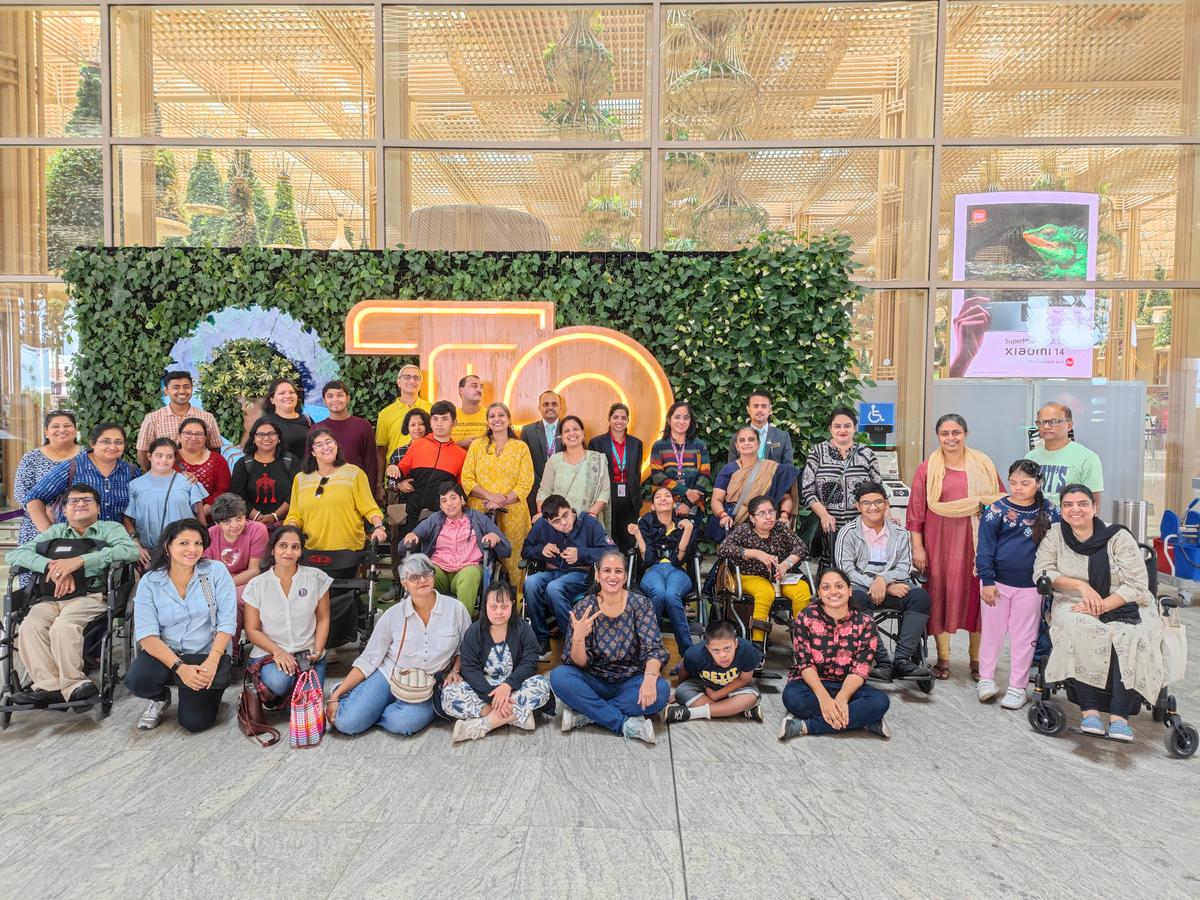
Furthermore, the establishment of organizations like 18NotOut in Bengaluru, founded in memory of a young man with cerebral palsy, highlights the growing focus on accessible travel. Ligi Sunil and Sunil Baby of 18NotOut praise Bengaluru Airport’s T2 for its gender and age-agnostic approach to assisting travelers with special needs. They commend the airport’s WhatsApp guidance system and the nuanced approach of their staff in assisting families and children, including dedicated rooms for neurodivergent individuals. However, they also point out areas for improvement, such as designing food courts with wheelchair-accessible tables, enhanced assistance around baggage carousels, and smoother use of aerobridges for wheelchair passengers.

Vinaya Chinnappa, CEO of Incluzza, a social enterprise focused on disability inclusion, stresses the importance of empathy and staff sensitization. She notes the positive change in security protocols that now allow individuals with prosthetic limbs to avoid removal, a step in the right direction. Incluzza’s involvement in designing Bengaluru airport’s Sensory Room, the first of its kind in India, offers a low-sensory environment with calming inputs for passengers who are not neurotypical, demonstrating a commitment to mental well-being.
Looking Ahead: Sustainability, Technology, and Living Ecosystems
The future of Indian airports lies in their ability to integrate cutting-edge technology with a deep commitment to sustainability and passenger-centric design. As the aviation industry grapples with its environmental impact, airports are becoming laboratories for green innovation.
Sustainable Design and Resilience
S.R. Sikka, principal architect at Sikka Associate Architects, emphasizes the need to embed sustainability and climate resilience at the core of airport design. This involves climate-responsive planning, optimizing daylighting, shading, and natural ventilation to reduce energy demand. On-site renewable energy generation and adaptive design strategies for stormwater management and flexible infrastructure are also crucial for building resilience against changing climatic conditions.
Nuru Karim echoes this sentiment, envisioning terminals built with smart materials that are climate-resilient, respond to passengers with haptic technology, and generate their own clean energy. The integration of AI for managing passenger flow could lead to the disappearance of traditional waiting areas, with terminals transforming into "sentient environments" that adapt light, sound, and air to enhance comfort.

The Role of Technology and Human Touch
While technologies like DigiYatra offer time efficiency, they must be complemented by human interaction. Abha Narain Lambah, a conservation architect and frequent traveler, points out the need for better-lit immigration areas, moving away from the "forbidding, dimly lit" spaces that can be intimidating. Natural lighting and intuitive wayfinding, as seen in Bengaluru and Mumbai’s T2, are essential for easy navigation.
The integration of digital systems, IoT, and automation is making travel more seamless. However, considerations like queue wait time information, as implemented in Dubai Airport, and the balance between technology and trained personnel for directing passengers, particularly seniors and those with disabilities, remain critical. Increased medical facilities spread across terminals are also a welcome addition.

Airports as Living Ecosystems
The vision for future airports extends beyond functionality and sustainability to becoming dynamic, living ecosystems. This could include features like rooftop open garden lounges, seasonal planting over walking paths, and even pod hotels for passengers with layovers, as suggested by architect Gautam Bhatia. The integration of cultural performances and workshops, as seen in Delhi International Airport’s "Del Vibes" initiative, further transforms airports into vibrant public spaces.
Ultimately, the evolution of Indian airports signifies a move towards creating spaces that are not just for travel but for experience. By blending cutting-edge architecture, a deep respect for local culture, a commitment to sustainability, and an unwavering focus on passenger well-being and inclusivity, India’s airports are poised to redefine the very essence of air travel. The journey from a functional transit point to an experiential destination is well underway, promising a more pleasant, enriching, and memorable travel experience for all.
