

Main Facts: A Paradigm Shift in Forest Conservation
Nestled approximately 70 kilometers from the bustling industrial hub of Coimbatore, the Baralikadu eco-tourism initiative has emerged as a benchmark for sustainable conservation in South India. Situated within the Karamadai Forest Range, Baralikadu is not merely a weekend getaway; it is a meticulously designed socio-economic engine that harmonizes the needs of the indigenous Irula tribes with the preservation of the Nilgiri Biosphere Reserve.
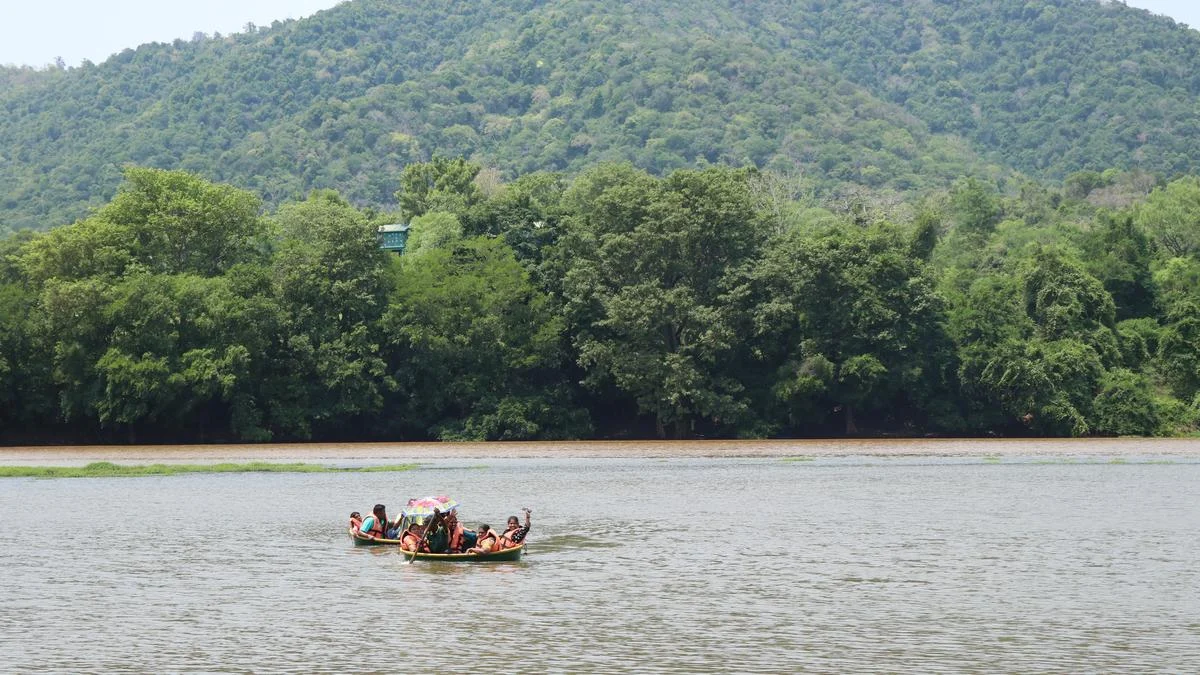
The heart of this destination is the River Bhavani, whose pristine waters are fed by the Pilloor Dam—a critical lifeline providing drinking water to millions in Coimbatore. What distinguishes Baralikadu from conventional tourism spots is its community-centric architecture. Managed by the Tamil Nadu Forest Department in collaboration with local tribal settlements, the project offers an immersive experience involving coracle rides, traditional culinary journeys, and cultural showcases.
Since its inception, the project has achieved remarkable milestones:

- Economic Impact: Over ₹7.5 crore in cumulative revenue generated.
- Livelihood Support: Sustainable income for over 100 tribal families across 20 settlements.
- Conservation Success: Funding of anti-poaching camps and human-animal conflict mitigation through tourism proceeds.
- Regulated Access: A strict cap of 250 visitors per day to maintain ecological integrity.
Chronology: From Necessity to Sustainable Enterprise
The evolution of Baralikadu is a story of transforming traditional survival skills into a modern service economy.
The Pre-2007 Era: Isolation and Subsistence
Before the formalization of the eco-tourism model, the Irula communities living in the Karamadai Range faced significant economic hardship. Employment was largely restricted to irregular daily labor. For generations, the coracle—a lightweight, circular boat—was a tool of necessity rather than leisure. To reach the village of Poochamarathur or access markets, residents had to choose between a 10-minute river crossing by coracle or a grueling 20-kilometer trek by road.
2007: The Inception of the Model
The initiative was the brainchild of I. Anwardeen, then a forest official and currently the Principal Chief Conservator of Forests (Research and Education). Recognizing the breathtaking beauty of the landscape and the effortless skill with which tribal women rowed coracles across the Bhavani, the Forest Department saw an opportunity. With a modest initial investment of approximately ₹2 lakhs, the department partnered with the local communities to create a low-impact tourism model.

2010–2020: Scaling and Modernization
As word of mouth grew, the "Baralikadu experience" became a sought-after destination. The infrastructure evolved from rudimentary bamboo and coconut frond coracles to modern fiber-reinforced vessels equipped with safety features like life jackets. The establishment of the Thamarai Self-Help Group (SHG) allowed tribal women to take the lead in catering and hospitality, moving the community from the periphery of the project to its operational core.
2024 and Beyond: A Digital-First Approach
Today, Baralikadu operates through a streamlined online booking system (coimbatorewilderness.com). It has transitioned into a highly regulated "responsible tourism" zone, where the balance between visitor satisfaction and environmental protection is maintained through strict digital oversight and community monitoring.
Supporting Data: Socio-Economic and Environmental Impact
The success of Baralikadu is quantifiable through various metrics that highlight the project’s dual benefit to the people and the planet.

Economic Empowerment
The financial transformation of the participating families is perhaps the most significant data point. Prior to 2007, household incomes were negligible and erratic. Currently, families involved in coracle rowing, catering, and guest management earn between ₹25,000 and ₹30,000 per month. This steady income has facilitated better education for the next generation and improved healthcare access.
Biodiversity Stewardship
The revenue generated from the ₹7.5 crore kitty is not solely for profit. A significant portion is reinvested into the forest’s health. This includes:
- Anti-Poaching Operations: Funding for forest guards and trackers.
- Conflict Mitigation: Resources to manage elephant and leopard movements near human settlements.
- Waste Management: A "zero-plastic" policy enforced by community members, ensuring that the Bhavani River remains free of urban pollutants.
The Culinary and Cultural Asset
The Thamarai Self-Help Group manages the food logistics, which serves as a repository of indigenous knowledge. The menu features:

- Ragi Kali: A nutrient-dense finger millet ball served with spinach gravy made from foraged greens.
- Forest Produce: Use of kanthari (bird’s eye chillies) and wild sweet potatoes.
- Traditional Methods: Grinding masalas by hand on an ammikal (stone grinder) and cooking over firewood, which visitors cite as a primary draw for the "authentic" experience.
Official Responses: The Vision of Governance
The project’s longevity is attributed to the strong support of the Tamil Nadu Forest Department.
Joseph Stalin, Karamadai Forest Range Officer, emphasizes the necessity of alternative livelihoods in conservation. "The idea was simple: if we wanted the forests to remain sustainable for future generations, we had to create alternative sources of income. By making the tribal communities the primary stakeholders, we turned potential forest exploiters into forest protectors."
Stalin notes that the project also accommodates special requests for educational groups and large organizations on weekdays, provided they meet the 50-member threshold, ensuring the facility remains productive while adhering to carrying-capacity limits.

I. Anwardeen, Principal Chief Conservator of Forests (Research and Education), reflects on the early days of the project with a sense of pride. "The transformation also brought electricity to the settlements. When we first came for inspection, the crossing was effortless because of the villagers’ skill. We saw women carrying babies rowing coracles with remarkable ease. That experience stayed with us. We didn’t just want to build a park; we wanted to become partners with the people who knew this land best."
Implications: A Blueprint for the Future of Eco-Tourism
The Baralikadu model offers several critical implications for the future of environmental management and indigenous rights in India.
1. Conservation Through Inclusion
Baralikadu proves that excluding indigenous people from protected areas is not the only way to conserve nature. By integrating their traditional skills—such as rowing, foraging, and music—into the tourism product, the project ensures that the community has a vested interest in keeping the ecosystem healthy. If the river is polluted or the forest degraded, their livelihood disappears.

2. The Power of Cultural Preservation
As noted by Raja, a member of the cultural troupe, the initiative serves as a living museum. The songs performed for visitors—using traditional instruments like the porai, thavilu, and pogal—are not just entertainment; they are oral histories of weddings, farming, and wildlife encounters. This platform ensures that the Irula culture survives in the minds of the younger generation of the tribe and is respected by outsiders.
3. Sustainable Revenue for State Forestry
The revenue model provides a blueprint for how state forest departments can become self-sustaining. Instead of relying solely on government grants, the Karamadai Range uses tourism to fund its essential conservation tasks. This creates a virtuous cycle where tourism pays for the protection of the very assets that tourists come to see.
4. Psychological Impact on Urban Visitors
For the Gen Z and millennial demographic, Baralikadu represents a "digital detox" and a return to nature. As visitor Anushka from Mumbai noted, the ability to dip one’s hand into an open stream or sit in a coracle surrounded by silence is a "magical" escape from urban fatigue. This fosters a broader public sentiment in favor of forest conservation.

Conclusion
As dusk settles over the Karamadai Range and the songs of the Irula people echo across the Bhavani, the success of Baralikadu stands as a testament to the power of collaborative stewardship. It is a place where the ripple of a coracle paddle and the taste of a hand-ground masala tell a story of resilience and rebirth. For Coimbatore and the wider region of Tamil Nadu, Baralikadu is more than a getaway; it is a living proof that when humanity respects the forest, the forest, in turn, provides for humanity.
Logistics for Visitors:
- Location: Baralikadu, 70km from Coimbatore.
- Booking: Exclusively online via coimbatorewilderness.com.
- Capacity: 250 persons per day.
- Key Attractions: Coracle rides, tribal lunch, cultural dance, and river bathing (no soap allowed).
