

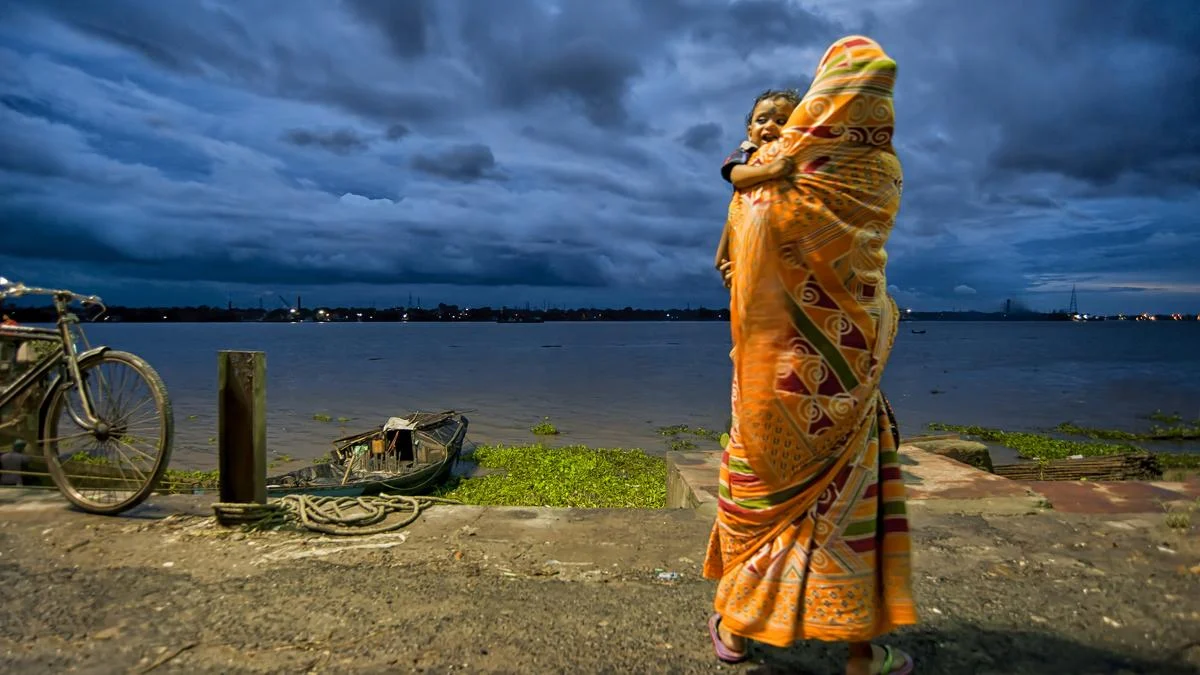
“I think that was Remal, no?”
“No, no. That was Bulbul.”
“But Fani was something else entirely.”
“And you’ve forgotten Mocha.”
In a quiet room in Kolkata, names are tossed around with the familiarity usually reserved for childhood friends or long-lost relatives. However, these are not people. They are cyclones—monsters of wind and rain that have, at various points over the last decade, brought the state of West Bengal to its knees. To the average citizen, these names represent trauma, property damage, and the terrifying roar of nature. But for the eight members of the Kolkata Cloud Chasers (KCC), these names represent "encounters"—moments of profound connection with the raw, untamable power of the Earth’s atmosphere.

For twelve years, this eclectic group of professionals has spent their weekends and holidays doing exactly what the government and common sense suggest one should not: driving toward the heart of the storm.
Main Facts: The Anatomy of an Extreme Weather Pursuit
The Kolkata Cloud Chasers is a specialized collective of eight individuals dedicated to extreme weather photography, meteorological observation, and storm tracking. While storm chasing is a well-documented phenomenon in the "Tornado Alley" of the United States, it remains a rare and burgeoning field in India. KCC is one of the few organized units in the country that combines high-end digital photography with real-time atmospheric data analysis.

The group operates primarily in the Gangetic West Bengal region, extending their reach into Jharkhand and Odisha. Their "prey" includes:
- Cyclonic Systems: Massive low-pressure systems originating in the Bay of Bengal (e.g., Amphan, Remal).
- Kalbaisakhis (Nor’westers): Violent local thunderstorms that occur during the pre-monsoon season, characterized by gale-force winds, torrential rain, and frequent lightning.
- Squall Lines and Supercells: Organized lines of thunderstorms that can travel hundreds of kilometers.
The group’s methodology is a blend of modern technology and old-school field intuition. They utilize "Storm and Cloud-chasing Four-Wheelers" (SCIF) equipped with recovery gear like winches and sand ladders, ensuring they can navigate the muddy, unpaved backroads of rural Bengal. Despite their high-tech approach, they maintain a strict non-commercial ethos, refusing to sell their data or photographs, driven instead by a shared obsession with the "sublime"—the aesthetic quality of greatness, whether physical, moral, intellectual, metaphysical, aesthetic, spiritual, or artistic.

Chronology: From Orkut Communities to Real-Time Tracking
The genesis of the Kolkata Cloud Chasers can be traced back to 2009, a pivotal year for digital connectivity in India. The members first crossed paths through the Kolkata Photographer’s Club, a community on the now-defunct social media platform Orkut. At the time, the club boasted roughly 2,500 members, but a small subset found themselves less interested in street photography or weddings and more captivated by the darkening horizons of the monsoon.
2009–2013: The Era of Observation
In the early years, the group was informal. The arrival of the first Android smartphones in 2009 changed the game. Suddenly, satellite imagery and rudimentary weather apps like AccuWeather were available in the palm of their hands. No longer were they relying solely on the evening news; they could see the clouds gathering in real-time.

March 24, 2014: The Birth of KCC
The group officially coalesced on March 24, 2014, with the formation of a dedicated WhatsApp group. This allowed for instant coordination. If a member in one part of the city saw a "shelf cloud" forming, the entire team could be mobilized within minutes. Over the next decade, the group evolved from hobbyist photographers into amateur meteorologists.
2014–Present: Technical Sophistication
As global weather modeling improved, so did KCC’s success rate. They moved from chasing any rain cloud to targeting specific atmospheric events. They began studying GFS (Global Forecast System) models and ECMWF (European Centre for Medium-Range Weather Forecasts) data. Their fleet of vehicles grew more specialized, and their roles became more defined, transforming the group into a highly coordinated tactical unit.

Supporting Data: The Science and Strategy of the Chase
Storm chasing is often romanticized, but the data suggests it is a pursuit defined by failure and patience. According to Debarshi Duttagupta, the group’s lead navigator, their success rate—defined as successfully positioning themselves to document a major weather event—is only about 20% to 22%.
The "Bardhaman Pivot"
Strategic positioning is the difference between a successful shoot and a wasted 400-kilometer drive. The group has identified the town of Bardhaman as a crucial tactical hub. Situated at a crossroads, it allows the team to pivot in multiple directions:

- Westward: Toward Bankura and Purulia to catch storms emerging from the Chhotanagpur Plateau.
- Northwestward: Toward Durgapur and Asansol.
- Southward: Toward the coastal belts if a cyclone is making landfall.
The Team Roles
The KCC functions like a flight crew, with each member providing a specific skill set:
- Meteorological Analysis: Chirasree Chakraborty and Suman Kumar Ghosh monitor wind data, trajectories, and atmospheric pressure.
- Navigation: Debarshi Duttagupta and Joyjeet Mukherjee handle the logistics of movement, predicting where a storm will be rather than where it is.
- Visual Documentation: Diganta Gogoi and Krishnendu Chakraborty focus on high-speed capture and wide-angle cinematography.
- Lightning Specialists: Abhishek Saigal and Joyjeet Mukherjee specialize in the dangerous art of long-exposure lightning photography.
The Technical Lag
A significant challenge the group faces is the 10-minute data lag. The radar images provided by official sources are often delayed by ten to fifteen minutes. In the world of a Kalbaisakhi, which can move at speeds exceeding 60-80 km/h, a ten-minute delay means the storm has already moved 10-15 kilometers from its last reported position. This necessitates "predictive navigation," where the team uses visual cues—such as the shape of the "anvil" or the color of the sky—to stay ahead of the cell.

Official Responses and the Meteorological Context
While the KCC operates independently, their work exists within the broader context of India’s meteorological infrastructure. The India Meteorological Department (IMD) is the primary body responsible for weather forecasting and disaster warnings.
The Rise of Citizen Science
In recent years, the IMD and various state disaster management authorities have increasingly recognized the value of "ground-truthing." While satellites provide a macro view, storm chasers provide the micro view—real-time photos of hail size, wind damage, and cloud formations that satellites might miss.

Although the KCC does not have a formal partnership with the IMD, their public documentation provides a historical record of storm behavior in the region. Their observations of Kalbaisakhis are particularly valuable, as these storms are notoriously difficult to predict with 100% accuracy due to their localized nature.
Safety and Public Warnings
The KCC is vocal about the dangers of their passion. They emphasize that while they "chase," they do so with an exit strategy. Official responses from safety experts often highlight the "lightning capital" status of rural Bengal. Lightning kills thousands in India annually, and the KCC’s experiences—including Abhishek Saigal being struck and temporarily paralyzed below the waist—serve as a grim reminder of why the general public should seek shelter during such events.

Implications: Beyond the Photograph
The work of the Kolkata Cloud Chasers carries implications that extend far beyond the aesthetic beauty of a lightning bolt over a mustard field.
1. Climate Change Documentation
As the planet warms, the intensity and frequency of cyclonic storms in the Bay of Bengal are changing. The KCC’s twelve-year archive serves as a visual longitudinal study of these shifts. They are witnessing firsthand the increasing "erraticism" of the pre-monsoon season, documenting storms that behave in ways that defy traditional local wisdom.

2. Public Education and Safety
Perhaps the group’s most significant contribution is their refusal to monetize. Instead of selling their images to stock photo agencies, they take their findings to schools, colleges, and Rotary clubs. They deliver presentations on:
- Lightning Safety: Teaching rural and urban populations how to survive a strike.
- Cloud Identification: Helping people understand when a cloud formation signals imminent danger.
- Environmental Stewardship: Using the "awe" of nature to foster a desire to protect it.
3. The Philosophy of the "Small Human"
In an era of digital dominance and human-centric urban life, the KCC’s pursuits highlight a profound psychological truth. "You feel very small in front of nature," says Chirasree Chakraborty. This sense of insignificance is not presented as a negative; rather, it is a humbling reminder of the Earth’s majesty. It offers a perspective that is often lost in the modern world: that humans are participants in a vast, powerful, and often indifferent atmospheric system.

4. The Bond of the Chase
Finally, the KCC represents a unique form of modern brotherhood and sisterhood. In a world of fleeting digital connections, this group has maintained a twenty-five-year bond (counting their time before KCC) forged in the crucibles of mud, wind, and rain. Their ritual after a "failed" chase—stopping at a roadside eatery for a good meal before driving home in the rain—underscores that for them, the journey and the company are as vital as the destination.
Conclusion
The Kolkata Cloud Chasers are more than just photographers; they are chroniclers of the sky. As they prepare for the next season of Kalbaisakhis, their vehicles are ready, their sensors are calibrated, and their eyes are fixed on the horizon. In the face of a storm that sends others running for cover, they find a rare kind of peace—a moment where the noise of the world is drowned out by the roar of the wind, and for a few fleeting seconds, they are witnesses to the sublime.
