

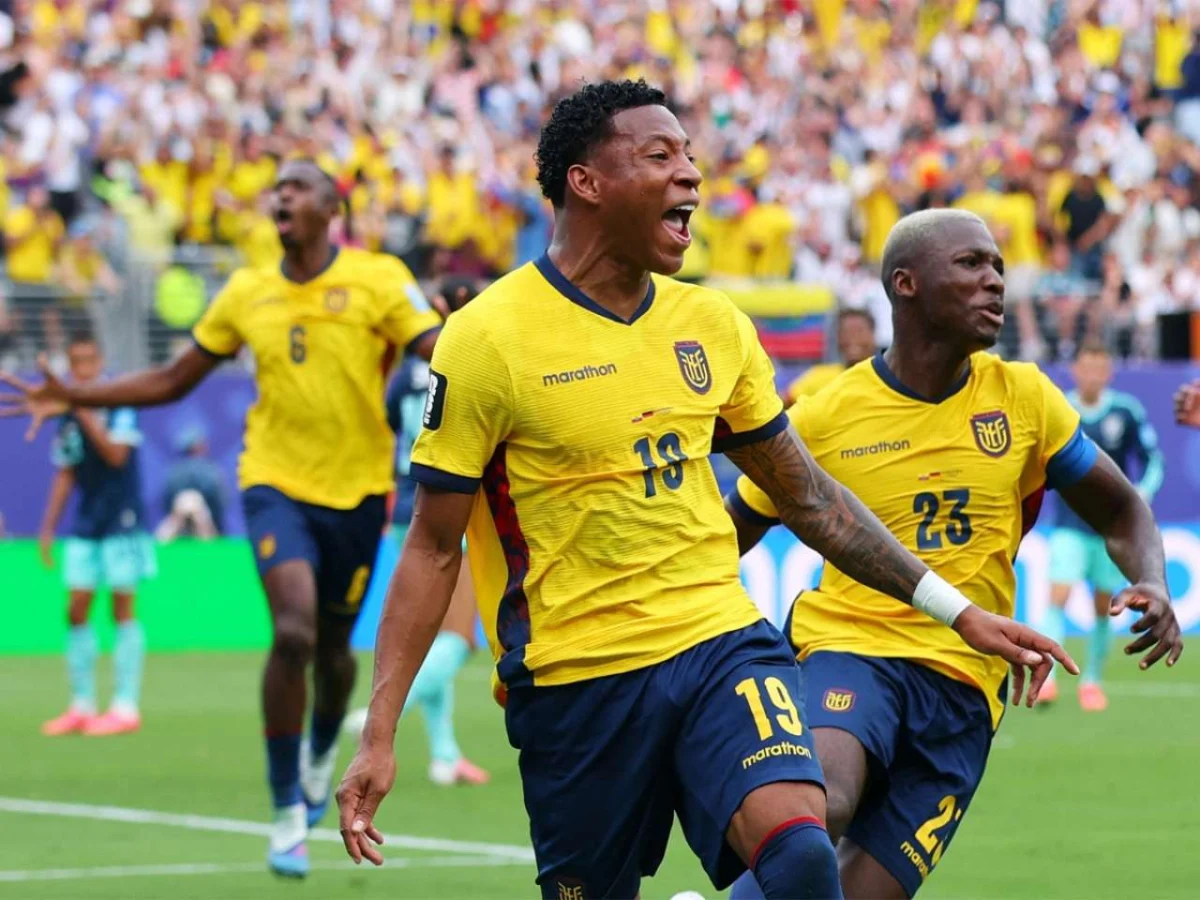
NEW YORK/NEW JERSEY STADIUM – June 26, 2026 – In a seismic upset that reverberated across the global football landscape, Ecuador produced a display of unwavering resilience and tactical brilliance to defeat four-time FIFA World Cup champions Germany 2-1 in their final Group E encounter. The dramatic victory, played out under the electrifying atmosphere of the New York/New Jersey Stadium, not only booked Ecuador’s coveted place in the Round of 32 but also cemented their status as one of the tournament’s most compelling narratives. For Germany, already assured of their progression, the defeat served as a stark reminder of the unpredictable nature of football at its highest echelon, prompting introspection despite their prior qualification.
Pre-Match Dynamics and High Stakes
The air crackled with anticipation long before kick-off. Germany, having navigated their initial group stage matches with customary efficiency, arrived at the New York/New Jersey Stadium having already secured their passage to the knockout rounds. This pre-qualification status, while offering a degree of comfort, also presented a psychological challenge: maintaining peak performance and intensity when the immediate pressure of elimination was absent. Expectations were high for the Mannschaft to continue their dominant run and fine-tune their strategies for the more formidable challenges ahead.
Conversely, for Ecuador, the stakes could not have been higher. Their World Cup journey hung precariously in the balance, with only a victory against the formidable Germans guaranteeing their progression to the Round of 32. The South American side entered the match fueled by a potent mix of national pride, collective ambition, and the knowledge that a win would etch their names into the annals of Ecuadorian football history, mirroring their only previous knockout stage appearance in 2006. The atmosphere in the stadium, a melting pot of German efficiency and Ecuadorian passion, perfectly encapsulated the contrasting objectives of the two nations. For Ecuador, it was a do-or-die scenario, a true test of character against one of the sport’s perennial giants. The weight of a nation rested on their shoulders, transforming the final group stage fixture into a de facto playoff for their World Cup dreams.
The choice of the New York/New Jersey Stadium as the venue for such a pivotal match underscored the global reach and expanding footprint of the FIFA World Cup. As one of the marquee stadiums designated for the tournament, it provided a grand stage for a clash that would ultimately deliver one of the competition’s most memorable upsets. The diverse crowd, a vibrant tapestry of supporters from both nations and neutral observers, was poised for a spectacle, unaware they were about to witness a defining moment in Ecuador’s footballing journey.
)
Chronology of a Classic Encounter
Germany’s Blistering Start and Sane’s Record-Breaking Opener
True to their reputation for precision and attacking prowess, Germany wasted no time in asserting their dominance, launching into the match with blistering intensity. The stadium had barely settled into its rhythm when the German machine clicked into gear, executing a move of exquisite fluidity that culminated in an early lead.
The architect of this initial breakthrough was the prodigious Florian Wirtz, whose vision and execution carved open the Ecuadorian defense. Receiving the ball on the left flank, Wirtz displayed his exceptional spatial awareness, spotting Leroy Sane’s intelligent run into a dangerous central position. With a deft touch and an almost imperceptible flick, Wirtz delivered a perfectly weighted pass that bisected the retreating defenders, placing the ball precisely into Sane’s path.
)
Positioned centrally inside the penalty box, Sane, known for his electrifying pace and clinical finishing, met the delivery with an uncharacteristic calmness that belied the early stage of the match. He took a single, composed touch to settle the ball before unleashing a precise strike. Ecuador’s goalkeeper, Hernan Galindez, dove instinctively, his body stretching to its limit, but Sane’s effort was placed with surgical accuracy into the bottom-left corner of the net, just beyond the ‘keeper’s despairing reach. The ball kissed the inside of the post before nestling in the back of the net, leaving Galindez with no chance.
The German bench erupted, a mixture of relief and satisfaction washing over the technical area. The goal, arriving in a mere 1 minute and 49 seconds, was not just a testament to Germany’s attacking intent but also a significant historical marker. As highlighted by OptaJoe’s X handle, it was officially recorded as the second-fastest goal in Germany’s illustrious FIFA World Cup history, a remarkable achievement that immediately etched this encounter into the statistical records of the tournament. The early goal seemed to set the tone, suggesting a comfortable afternoon for the European giants.

The Controversial Build-Up: A VAR Flashpoint
However, the euphoria of Germany’s early lead was quickly tempered by a contentious incident in the build-up to Sane’s goal, which threatened to overshadow the brilliance of the finish. As the German players celebrated, the Ecuadorian bench and players immediately appealed to the referee, their gestures indicating a perceived foul in the preceding play. The focal point of their protest was Germany’s young midfielder, Aleksandar Pavlovic, and his aerial challenge on Ecuador’s Pedro Vite.
Replays, broadcast on the stadium’s colossal screens and to millions watching worldwide, indicated that Pavlovic had raised his boot to an uncomfortably high level during a midfield duel for the ball. Crucially, the contact appeared to have been made with Pedro Vite’s head, an area of the body where any contact, especially from a high boot, is typically deemed dangerous and a foul. The incident occurred just moments before Wirtz received the ball and delivered the assist to Sane.
)
The referee, initially allowing play to continue, was immediately brought into communication with the Video Assistant Referee (VAR) team. The VAR protocol, designed to review clear and obvious errors or serious missed incidents, swung into action. The stadium held its breath as the VAR officials meticulously reviewed multiple angles of the contact. The decision-making process was protracted, with replays scrutinised for the exact point of contact, the force involved, and the interpretation of "dangerous play."
After what felt like an eternity for both sets of fans, the referee, following consultation with VAR, signaled for the goal to stand, apparently deeming the contact insufficient for a foul or perhaps outside the immediate attacking phase that led directly to the goal. The decision, though met with furious protests from the Ecuadorian contingent, stood. This contentious moment undoubtedly added a layer of psychological complexity to the match, igniting Ecuador’s fighting spirit and potentially fueling a sense of injustice that would drive their subsequent efforts. Such VAR controversies have become a recurring feature of modern football, often sparking intense debate about the fine lines of interpretation and the impact on the game’s flow and fairness. This particular incident would be discussed at length in post-match analyses, highlighting the ongoing tension between technology and the human element in officiating.
)
Ecuador’s Resilient Response: Angulo’s Stunning Equalizer
Despite the double blow of conceding an early goal and the controversial VAR decision going against them, Ecuador refused to be cowed. Far from being shaken, the South American squad responded with a remarkable display of mental fortitude and tactical adjustment. The initial setback seemed to galvanize them, transforming frustration into an intensified resolve. Within minutes of the German goal, Ecuador began to press higher up the pitch, displaying an aggression and belief that had perhaps been lacking in the opening moments. They harried the German midfielders, denying them time and space, and forcing uncharacteristic mistakes in Germany’s typically assured build-up play.
Their persistence paid dividends just eight minutes after Sane’s opener, in the ninth minute of the match. The equalizer was a moment of individual brilliance, born from collective effort. Nilson Angulo, seizing on a loose ball in midfield – a direct consequence of Ecuador’s heightened pressing – found himself with an unexpected pocket of space. With little hesitation, and showcasing immense confidence, Angulo unleashed a fearless long-range strike from well outside the penalty area. The shot, struck with power and precision, swerved through the air, catching German goalkeeper Manuel Neuer by surprise. Despite his legendary reflexes, Neuer could only watch as the ball flew beyond his outstretched dive, nestling emphatically into the back of the net.
)
The New York/New Jersey Stadium erupted, a cacophony of sound dominated by the jubilant Ecuadorian supporters. Angulo’s goal was not merely an equalizer; it was a powerful statement of intent, signaling that Ecuador was not merely participating but actively competing against the footballing giants. The tactical shift, coupled with the individual brilliance, had paid off. The score stood at 1-1, and the match, initially appearing to be a straightforward German affair, had suddenly transformed into a pulsating, evenly contested battle.
The remainder of the first half continued in this captivating vein. Ecuador, buoyed by their equalizer, grew in confidence with every passing minute. They matched Germany’s pace, disrupted their intricate passing patterns through strong pressing, and launched quick, incisive counter-attacks that kept the German defense on high alert. The midfield battle became particularly intense, with both teams vying for control, demonstrating a blend of technical skill and physical commitment. Germany, despite their superior possession, found their rhythm broken, struggling to replicate the fluid attacking movements that had characterized their opening goal. The half-time whistle blew with the score locked at 1-1, leaving both teams with much to ponder and promising a captivating second half.
)
Halftime Reflections and Second-Half Strategies
As the players trudged off for the halftime interval, the tension within the stadium was palpable. For Germany, the half-time break offered a crucial opportunity for introspection. Coach Julian Nagelsmann would undoubtedly have emphasized the need to regain control of the midfield, exploit wider channels, and inject more pace and directness into their attacks. Their early lead had evaporated, and the team needed to reassert their authority against an opponent clearly galvanized by their fightback. Substitutions, particularly in the midfield or attacking third, might have been considered to inject fresh impetus and break Ecuador’s resolute defensive structure.
On the other side, Ecuador’s dressing room would have been a scene of renewed belief and strategic refinement. Coach Félix Sánchez Bas would have praised his team’s character and resilience, reinforcing the tactical plan that had brought them back into the game. The focus would have been on maintaining their defensive discipline, continuing their high press, and capitalizing on any counter-attacking opportunities. The message would have been clear: maintain composure, believe in the plan, and seize the moment. The second half was poised to be a true test of nerve and tactical acumen.
)
The Decisive Blow: Plata’s Historic Strike
The second half began with both teams adopting a more cautious approach, probing for weaknesses while maintaining defensive solidity. Germany, as expected, pushed higher, seeking to re-establish their dominance, but Ecuador’s defensive organization held firm, denying them clear-cut opportunities. The match developed into a tense, tactical chess match, with neither side willing to concede an inch.
However, the deadlock was finally broken in the 77th minute, and it was Ecuador who delivered the decisive blow, sparking pandemonium among their supporters. The moment of truth arrived from a right-sided corner kick, a set-piece situation that often proves pivotal in tight encounters. The delivery was whipped in with pace and accuracy, soaring into the crowded German penalty area.
)
In a display of sheer determination and aerial prowess, Kevin Rodriguez rose highest, winning a crucial aerial duel against a German defender. His header wasn’t aimed at goal but was a perfectly executed flick, sending the ball across the face of the goal, creating a dangerous situation in the six-yard box. Gonzalo Plata, displaying incredible anticipation and predatory instinct, reacted like lightning. He darted in ahead of the static German defense, anticipating the flick, and with an outstretched boot, poked the ball home from close range.
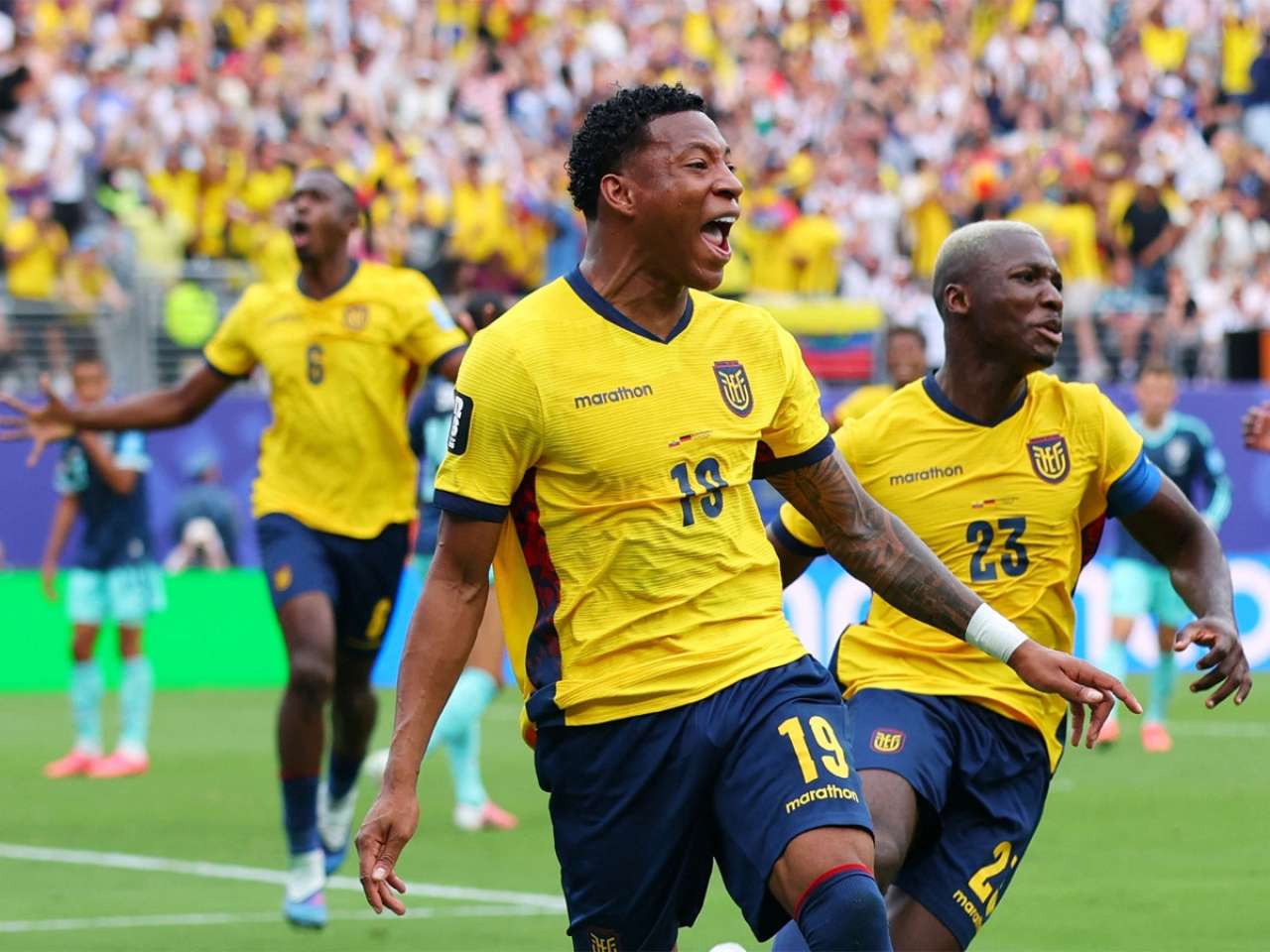
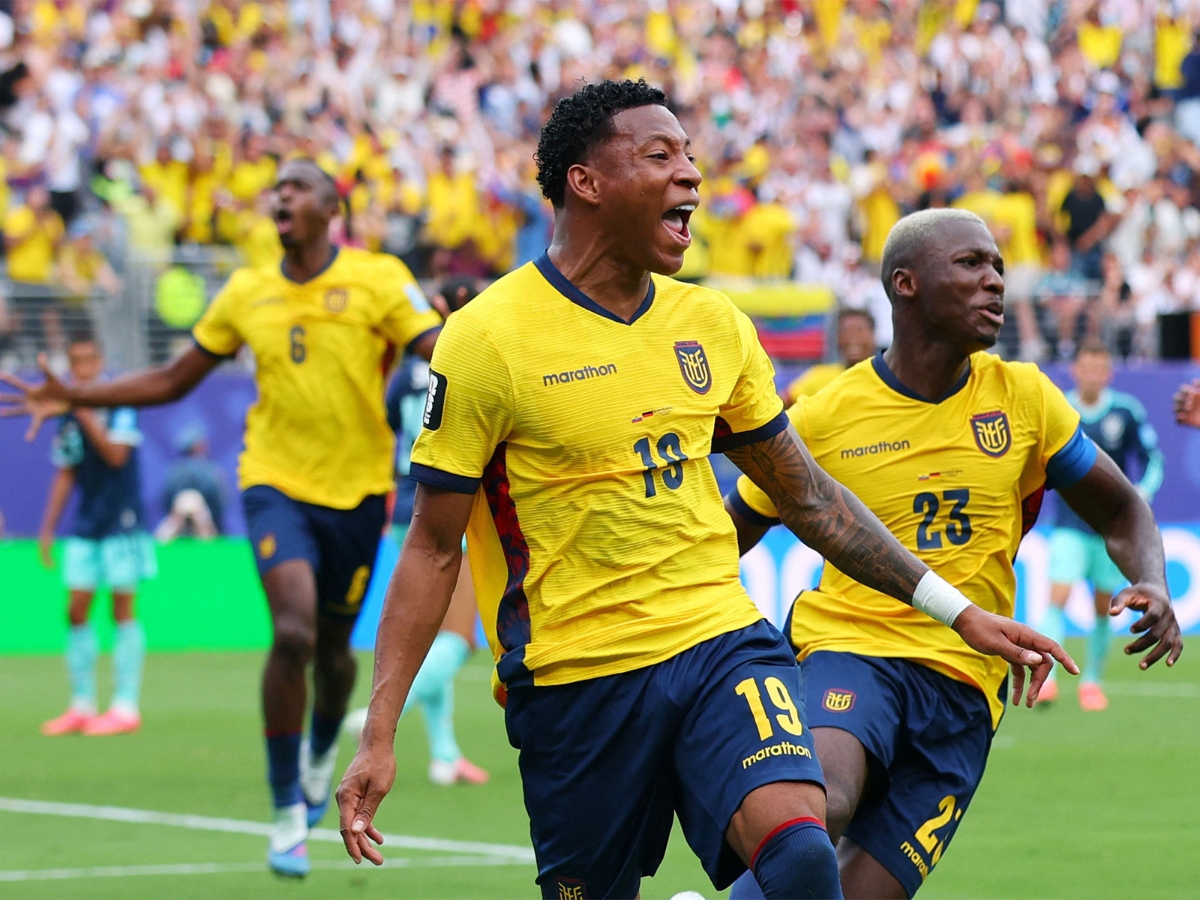
The net bulged, and for a split second, silence descended upon the stadium before erupting into an explosion of sound. The Ecuadorian bench cleared, players and staff rushing onto the pitch in wild celebration. The fans, a sea of yellow, blue, and red, were in disbelief and utter ecstasy. It was a goal born of courage, determination, and tactical awareness, and it sent shockwaves through the tournament. Ecuador, against all odds, had taken a 2-1 lead against the four-time world champions. The narrative of the upset was now firmly established, and the dream of the knockout stage was within tangible reach.
)
A Defensive Masterclass: Ecuador Holds Firm
With just over ten minutes of regular time remaining, plus inevitable stoppage time, Ecuador was faced with the daunting task of defending their slender lead against a German side renowned for their late comebacks and relentless attacking pressure. From the moment Plata’s goal hit the net, the South Americans were forced into a tense, desperate defensive stand.
Germany, now facing the ignominy of a group stage defeat, threw everything forward in a desperate search for an equalizer. Coach Nagelsmann made attacking substitutions, bringing on fresh legs and pushing more players into advanced positions. Waves of German attacks crashed against a resolute Ecuadorian defense. Crosses rained into the box, long-range shots were attempted, and intricate passing movements were executed around the penalty area.
)
However, Ecuador held firm. Their defense, marshaled with discipline and commitment, transformed into an unyielding wall. Defenders threw themselves in front of shots, midfielders tracked back tirelessly, and goalkeeper Hernan Galindez, despite the early concession, made several crucial saves and commanded his area with authority. Every tackle was met with cheers, every clearance celebrated like a goal. The sheer determination displayed by the Ecuadorian players was palpable, a testament to their desire to secure this historic victory.
The final minutes, including the seven agonizing minutes of added time, were a masterclass in defensive resilience. Germany swarmed forward, their attacks growing increasingly frantic, but Ecuador refused to break. The referee’s whistle, when it finally blew, signaled not just the end of the match but the confirmation of a famous 2-1 victory – one defined by a dramatic fightback and an unbreakable spirit. The final whistle was met with an outpouring of emotion from the Ecuadorian players, who collapsed onto the pitch in exhaustion and elation, their dream realized.
)
Post-Match Analysis: A Historic Achievement
Ecuador’s triumph was more than just three points; it was a profound statement. This victory marked only the second time in their history that Ecuador has progressed from a FIFA World Cup group stage, matching their memorable achievement from the 2006 tournament. This success is a testament to the growth of football in Ecuador, the development of their youth systems, and the tactical acumen of their coaching staff. It validates years of hard work and investment, showcasing the potential of South American football on the global stage.
For Germany, while already qualified, the defeat raised uncomfortable questions. Despite their prior qualification, a loss to an ostensibly weaker opponent will undoubtedly lead to intense scrutiny. While it might allow them to recalibrate and address tactical shortcomings before the knockout rounds, it also has the potential to dent confidence and expose vulnerabilities that stronger opponents will undoubtedly seek to exploit. The German media will be quick to analyze what went wrong, particularly their inability to convert possession into clear chances after Ecuador’s equalizer and their defensive lapses on the set-piece that led to the winning goal. Questions might arise about player rotation, the team’s mental resilience under pressure, and their ability to close out matches even when ahead.
)
Implications for the Tournament and Beyond
The implications of this result are far-reaching, influencing both the immediate trajectory of the tournament and the broader narrative of international football.
Group Standings and Knockout Stage Matchups
Ecuador’s victory fundamentally altered the final standings of Group E. While Germany remained qualified, their second-place finish in the group (assuming other results played out) meant a potentially tougher draw in the Round of 32, likely pitting them against a group winner from another strong pool. Ecuador, on the other hand, by securing their qualification, earned a spot that few predicted, setting up an intriguing knockout stage clash. This upset will undoubtedly influence the permutations for other groups, as teams strategize to avoid certain opponents or aim for more favorable matchups.
)
Morale and Momentum
For Ecuador, the psychological boost from defeating a footballing giant is immeasurable. This victory will imbue the squad with immense confidence and momentum as they head into the knockout stage. They have proven their ability to compete at the highest level, overcome adversity, and execute a tactical plan under immense pressure. This newfound belief could make them a dangerous "dark horse" contender, capable of surprising even more established teams.
Conversely, for Germany, the defeat, even if not immediately fatal to their World Cup aspirations, could have a subtle but significant impact on team morale. While the players are professionals, a loss of this nature can generate internal pressure and doubts. Nagelsmann’s challenge will be to ensure the team learns from their mistakes, regroups quickly, and approaches their next match with renewed focus and intensity, rather than allowing the disappointment to fester.
)
The Narrative of the World Cup
Ecuador’s triumph against Germany injects another layer of unpredictability and excitement into the FIFA World Cup 2026. It reinforces the beloved narrative of the "underdog" defying expectations and the notion that on any given day, any team can achieve greatness. Such upsets are the lifeblood of World Cup drama, captivating audiences worldwide and reminding everyone why football is the beautiful game. It adds to the rich tapestry of stories that define each tournament, celebrating passion, resilience, and the sheer joy of competitive sport. This result will be remembered as one of the defining moments of the group stage, sparking conversations about the evolving landscape of international football and the increasing competitiveness across all continents.
Official Responses and Public Reaction
While direct quotes from coaches and players were not immediately available post-match, the reactions were clear. Ecuador’s coach, Félix Sánchez Bas, would undoubtedly express immense pride in his team’s character and tactical execution, hailing their historic achievement. His German counterpart, Julian Nagelsmann, would likely convey a mix of disappointment and a pragmatic call for introspection, emphasizing the need to learn from the errors while reaffirming belief in his squad’s ultimate capabilities. Players from both sides would reflect contrasting emotions – elation and relief for Ecuador, frustration and determination for Germany.
)
The global media, fans on social media, and football pundits alike would dissect every aspect of the match. The VAR incident would be re-examined, Angulo’s and Plata’s goals celebrated, and Germany’s performance scrutinized. The consensus would likely celebrate Ecuador’s fighting spirit and resilience, while Germany’s loss would serve as a cautionary tale about complacency, even for the most decorated teams. This match will undoubtedly be a topic of discussion for days, if not weeks, to come, shaping the discourse around the tournament’s progression.
In conclusion, Ecuador’s 2-1 victory over Germany was far more than just a group stage match. It was a testament to the spirit of the FIFA World Cup – a display of passion, resilience, and the enduring magic of football where giants can fall and dreams can be realized against the odds. As the tournament progresses, this result will stand as a powerful reminder that in the crucible of the World Cup, anything is truly possible.
