

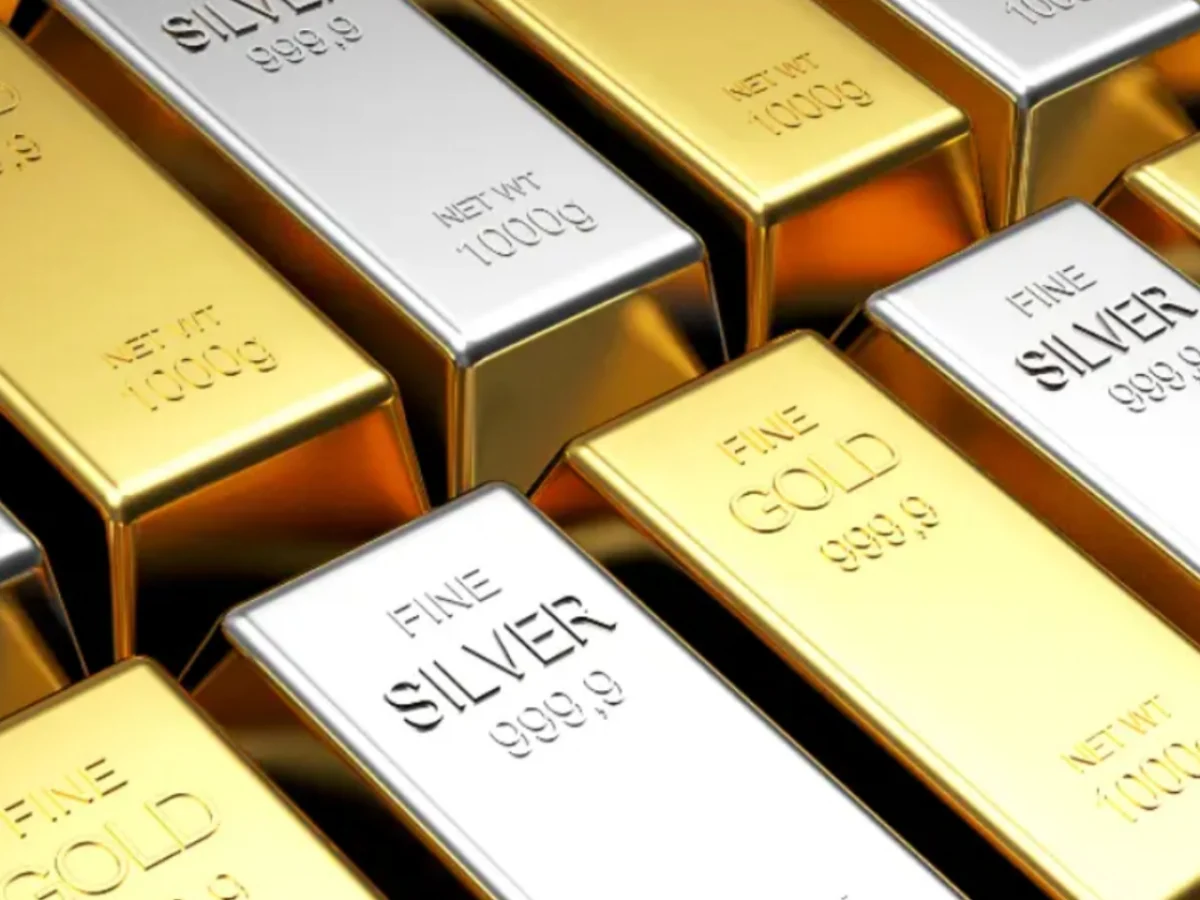
New Delhi, India – June 26, 2026 – India’s vibrant bullion market continues its dynamic dance with a complex interplay of international economic currents, domestic purchasing power, and fluctuating currency valuations. As of Thursday, June 26, 2026, gold prices across major Indian cities have shown a slight upward trajectory, primarily influenced by global demand and persistent inflationary pressures. Silver, while maintaining its appeal as both an industrial metal and a precious commodity, has held relatively steady, reflecting its unique market drivers. This comprehensive analysis delves into the current pricing landscape, the underlying factors shaping these values, and the broader implications for consumers, investors, and the Indian economy.
Main Facts: A Snapshot of Today’s Precious Metal Prices
The Indian precious metals market remains a focal point for millions, from traditional households acquiring for auspicious occasions to savvy investors seeking safe-haven assets. Today’s movements reflect a cautious optimism tempered by ongoing global uncertainties.
As of June 26, 2026, the national average for 24K gold (999 pure gold) stands at Rs 14,132 per gram, marking a marginal increase that underscores its role as an inflation hedge. Similarly, 22K gold, the preferred purity for jewellery, is priced at Rs 12,954 per gram. Silver, often considered the common person’s gold, is currently trading at approximately Rs 2,34,900 per kilogram for 999 purity, with Silver 925 (sterling silver) mirroring this rate. These figures represent the delicate balance between international commodity market movements and India’s inherent appetite for physical gold and silver.
The slight uptick in gold prices is largely attributed to renewed interest from international institutional investors looking to diversify portfolios amidst lingering global economic concerns and the ongoing quest for protection against currency devaluation. Domestic demand, while not at its festive peak, provides a strong foundational support for these prices, especially in anticipation of the upcoming wedding season.
Unpacking the Trends: A Chronological Perspective
Understanding today’s prices requires a look at the trajectory that has brought them here. The past year, leading up to June 2026, has been characterized by significant volatility in the global precious metals market, with India’s domestic prices reacting in kind.
Recent Price Dynamics
Over the last few months, specifically since early 2026, gold has demonstrated resilience, gradually clawing back some of the losses experienced during periods of strong US dollar performance and aggressive interest rate hikes in late 2025. This recovery has been fueled by a confluence of factors:
)
- Persistent Inflationary Concerns: Despite central bank efforts, inflation in several major economies has proven stickier than anticipated, pushing investors towards gold as a traditional store of value.
- Geopolitical Instability: Ongoing conflicts in Eastern Europe and the Middle East, coupled with rising trade tensions between major economic blocs, have periodically spurred safe-haven buying.
- Softening US Dollar: A recent trend of the US dollar weakening against a basket of major currencies has made gold, which is typically priced in dollars, more attractive to holders of other currencies, thereby boosting demand.
Silver, on the other hand, has seen its price movements more closely tied to industrial demand. While it benefits from its status as a precious metal during times of economic uncertainty, its significant usage in electronics, solar panels, and medical technologies means its valuation is also sensitive to global manufacturing output and technological advancements. The past few months have seen a moderate but steady industrial demand, preventing sharp declines and contributing to its current stability.
Historical Context: Major Drivers Over the Past Year
The period from mid-2025 to mid-2026 has been marked by several key events that have shaped the precious metals market:
- Mid-2025: Gold and silver experienced a correction phase as major central banks signalled continued hawkish monetary policies to combat inflation. Higher interest rates typically increase the opportunity cost of holding non-yielding assets like gold.
- Late 2025: A resurgence in safe-haven demand emerged as global growth forecasts were trimmed, and several geopolitical flashpoints intensified. This period also saw significant central bank gold purchases, particularly from emerging economies, indicating a strategic shift towards diversifying reserves away from traditional fiat currencies.
- Early 2026: Economic data indicating a potential slowdown in key global economies, coupled with a slightly less aggressive stance from some central banks, reignited investor interest in precious metals. The Indian market also saw a seasonal uptick in demand leading up to festivals like Akshaya Tritiya, providing a strong domestic floor for prices.
Seasonal Influences and Domestic Demand Cycles
India’s unique cultural relationship with gold and silver plays a pivotal role in price dynamics, often overriding purely global trends during peak seasons. The country’s demand for precious metals is deeply intertwined with its social fabric, with major festivals and wedding seasons being primary drivers. While June 26th falls outside the immediate festive rush, the market is already beginning to factor in the upcoming demand spikes associated with the monsoon wedding season and the subsequent major festivals like Diwali and Dhanteras later in the year. Jewellers often begin stocking up, and consumers start making pre-bookings, contributing to a sustained baseline demand that prevents significant price drops even when global cues might suggest otherwise.

Supporting Data: Delving Deeper into Market Forces and City-Wise Rates
The intricate dance of supply and demand, influenced by a myriad of global and local factors, determines the daily fluctuations in gold and silver prices. India’s status as one of the world’s largest consumers of gold means these external forces are keenly felt domestically.
Global Economic Indicators
The global macroeconomic environment is arguably the most significant determinant of precious metal prices.
- US Dollar Strength: Gold is denominated in US dollars, so a stronger dollar makes gold more expensive for holders of other currencies, often leading to reduced demand and lower prices, and vice versa. The recent slight weakening of the dollar has provided a tailwind for gold prices.
- Inflation and Interest Rates: Gold is often considered a hedge against inflation. When inflation rises, the purchasing power of fiat currencies erodes, making gold a more attractive store of value. Conversely, higher real interest rates (interest rates minus inflation) increase the opportunity cost of holding non-yielding gold, tending to push prices down.
- Geopolitical Stability: Periods of political instability, economic uncertainty, or military conflicts typically drive investors towards safe-haven assets like gold, leading to price surges. The ongoing global landscape has kept a floor under gold prices.
- Central Bank Policies: Decisions by central banks regarding interest rates, quantitative easing, and their own gold reserves can significantly impact market sentiment and prices. Many central banks have been net buyers of gold in recent years, reflecting a diversification strategy.
Domestic Demand Drivers
Beyond global dynamics, India’s internal market characteristics are crucial:
)
- Cultural Significance: Gold holds immense cultural and religious significance in India, deeply embedded in traditions, festivals, and rites of passage, particularly weddings. This inherent demand ensures a consistent baseline regardless of price.
- Investment Preference: For many Indian households, gold is not just an ornament but a traditional form of investment and savings, offering financial security, especially in rural areas where access to formal banking might be limited.
- Urban vs. Rural Demand: While urban centers often exhibit more price-sensitive demand, rural demand tends to be more consistent, driven by agricultural income and cultural traditions.
- Government Policies: Import duties on gold and various gold monetization schemes can influence local prices and demand patterns.
Currency Fluctuations: The USD-INR Exchange Rate’s Role
The exchange rate between the US Dollar and the Indian Rupee (USD-INR) is a critical factor in determining domestic gold prices. Since India imports almost all its gold, a weaker Rupee makes imports more expensive, thereby increasing the landed cost of gold and pushing up local prices, even if international dollar-denominated prices remain stable. Conversely, a stronger Rupee can help temper domestic price increases. The recent stability, or slight depreciation, of the Rupee against the Dollar has contributed to the current price levels.
Detailed Gold Prices on June 26, 2026
The purity of gold significantly impacts its price. 24K gold, being 99.9% pure, is the benchmark for investment and often for making coins and bars. 22K gold, containing 91.67% pure gold mixed with other metals like copper or silver to increase durability, is primarily used for jewellery.
National Averages for Gold (June 26, 2026):
)
- 24K Gold (999 Purity):
- Per 1 Gram: Rs 14,132
- Per 10 Grams: Rs 141,320
- Per 100 Grams: Rs 1,413,200
- 22K Gold (91.67% Purity):
- Per 1 Gram: Rs 12,954
- Per 10 Grams: Rs 129,540
- Per 100 Grams: Rs 1,295,400
City-Wise Gold Rates (June 26, 2026):
Local taxes, transportation costs, and specific market dynamics lead to slight variations in prices across major Indian cities.
-
Gold Prices in Delhi:
- 24K Gold: Rs 14,147 per gram
- 22K Gold: Rs 12,969 per gram
- (Delhi’s slightly higher rate can be attributed to its status as a major consumption hub and logistical considerations.)
-
Gold Prices in Mumbai:
)
- 24K Gold: Rs 14,132 per gram
- 22K Gold: Rs 12,954 per gram
- (Mumbai often sets the national benchmark due to its role as a primary port for gold imports and a major financial center.)
-
Gold Prices in Kolkata:
- 24K Gold: Rs 15,432 per gram
- 22K Gold: Rs 12,954 per gram
- (The notable difference in Kolkata’s 24K price, while 22K matches Mumbai, suggests specific local market factors or premium structures for highly pure gold products.)
-
Gold Prices in Chennai:
- 24K Gold: Rs 14,334 per gram
- 22K Gold: Rs 13,139 per gram
- (Chennai, a significant hub for gold jewellery, often sees slightly higher premiums reflecting strong regional demand and artisan craftsmanship.)
Detailed Silver Prices on June 26, 2026
Silver, like gold, is traded in different purities. Silver 999 (fine silver) is 99.9% pure, commonly used for investment bars, coins, and industrial applications. Silver 925 (sterling silver) is 92.5% pure, alloyed with other metals to increase its strength and suitability for jewellery and silverware.
)
National Averages for Silver (June 26, 2026):
- 999 Pure Silver:
- Per 1 Gram: Rs 234.90
- Per 10 Grams: Rs 2,349
- Per 100 Grams: Rs 23,490
- Per 1 Kilogram: Rs 234,900
- 925 Sterling Silver:
- Per 1 Kilogram: Rs 234,900 (price often aligns closely with 999 for bulk; specific jewellery items will have added making charges)
City-Wise Silver Rates (June 26, 2026):
-
Silver Price in Delhi Today:
)
- 999 Silver: Rs 2,349 per 10 grams
-
Silver Price in Mumbai Today:
- 999 Silver: Rs 2,349 per 10 grams
-
Silver Price in Kolkata Today:
- 999 Silver: Rs 2,349 per 10 grams
-
Silver Price in Chennai Today:
)
- 999 Silver: Rs 2,299 per 10 grams
- (Chennai shows a slight variance for silver, similar to gold, potentially due to regional demand and supply chain specifics.)
Supply-Demand Dynamics: Industrial Usage for Silver
While gold’s demand is predominantly investment and jewellery, silver enjoys dual demand as both a precious metal and a vital industrial commodity. Its properties make it indispensable in:
- Electronics: Conductors, switches, and contacts in various electronic devices.
- Solar Panels: A key component in photovoltaic cells, making its demand highly sensitive to renewable energy growth.
- Photography: Though less prominent now, silver halides were crucial in traditional photography.
- Medical Applications: Used in various medical instruments and antibacterial agents.
- Automotive Industry: Essential in many electrical components and catalysts.
This industrial component adds a layer of complexity to silver’s price movements, making it more susceptible to global manufacturing cycles and technological shifts than gold.
Official Responses and Expert Commentary
The movements in precious metal prices are closely watched by governments, central banks, and industry bodies, given their significant impact on trade, economy, and public sentiment.
)
Government Stance
The Indian government consistently monitors gold imports due to their impact on the nation’s current account deficit. While there haven’t been recent major policy changes, the long-standing gold monetization schemes (GMS) continue to encourage households to deposit idle gold, thereby reducing import reliance. A senior official from the Ministry of Finance, speaking off the record, indicated that "the government remains vigilant on gold imports, ensuring they don’t unduly strain our foreign exchange reserves, especially in a volatile global trade environment. We are exploring avenues to boost domestic recycling and formalize the sector further."
RBI’s Perspective
The Reserve Bank of India (RBI) views gold as a critical component of its foreign exchange reserves, providing stability during economic shocks. The RBI’s recent statements have reiterated its commitment to managing inflation and maintaining currency stability, both of which indirectly influence gold prices. "Our monetary policy aims for price stability, which naturally impacts the perceived value of inflation hedges like gold," stated an RBI spokesperson in a recent press briefing. "The Rupee’s stability against major currencies is also a key focus, as it directly translates to the cost of imported commodities for Indian consumers." The RBI has also continued to strategically augment its gold reserves, reflecting a global trend among central banks to diversify assets.
Industry Voices
Mr. Surendra Mehta, National Secretary of the Indian Bullion and Jewellers Association (IBJA), commented on the current market sentiment: "Today’s slight increase in gold prices reflects a combination of global safe-haven buying and a steady underlying domestic demand. While we anticipate a stronger surge closer to the festive season, the market is currently stable. Jewellers are managing inventory carefully, balancing global price risks with local consumer purchasing power." He also highlighted the resilience of the Indian market, stating, "Despite international volatility, the cultural significance of gold in India ensures a consistent floor for prices."
)
The World Gold Council (WGC), in its latest report on India, emphasized the long-term bullish outlook for gold in the country. "India’s structural demand for gold, driven by cultural practices and its role as a store of wealth, remains robust," noted a WGC analyst. "We expect sustained demand, potentially growing further if global economic uncertainties persist and real interest rates remain accommodative." The report also pointed to the growing trend of digital gold investments, which offers easier access to smaller investors.
Economic Analysts
Leading financial analysts offer a mixed but generally optimistic outlook for precious metals in the medium term. Dr. Priya Sharma, Chief Economist at Zenith Financial Services, remarked, "Gold is currently benefiting from a trifecta of factors: persistent inflation, geopolitical risks, and a potentially peaking interest rate cycle in some major economies. While short-term corrections are always possible, the macro backdrop suggests gold will remain a favoured asset for diversification and wealth preservation through 2026."
For silver, Mr. Rajeev Kapoor, Head of Commodities Research at Capital Insights, added, "Silver’s dual nature makes its trajectory more nuanced. Strong industrial demand, particularly from the renewable energy sector, provides a solid base. Any significant global economic slowdown could temper this, but its precious metal appeal provides a hedge. We foresee moderate growth for silver, potentially outperforming gold if industrial activity accelerates significantly."
)
Broader Implications: Navigating the Nuances of Precious Metal Prices
The daily fluctuations in gold and silver prices reverberate across various segments of society and the economy, influencing decisions from household budgets to national trade policies.
For Consumers and Households
For the average Indian household, current gold prices necessitate careful budgeting, especially for significant life events like weddings. The slight increase means that purchasing the traditional quantities of jewellery requires a larger financial outlay. However, for those who purchased gold when prices were lower, the current rates represent a healthy appreciation in their assets. Gold also continues to serve as a critical form of emergency savings, particularly for rural families, providing a liquid asset during times of need. The stability of silver prices makes it an attractive alternative for those seeking precious metal investments at a lower entry point, or for daily wear jewellery.
For Investors
Gold and silver continue to be strategic assets for investors seeking diversification and a hedge against market volatility. In an environment of fluctuating equity markets and uncertain global growth, precious metals offer a safe harbour. Long-term investors often view gold as a wealth preservation tool, while short-term traders might capitalize on price swings driven by economic data releases or geopolitical headlines. The advent of digital gold and gold ETFs has democratized access, allowing smaller investors to participate without the complexities of physical storage. However, investors are cautioned to consider the non-yielding nature of gold and the potential for currency risk.
)
For the Jewellery Industry
The jewellery industry, a significant employer and economic contributor in India, is directly impacted by precious metal prices. Higher prices can sometimes dampen immediate consumer demand, leading retailers to focus on lighter designs or promote financing options. Conversely, a rising price trend can encourage consumers to buy, anticipating further increases. Manufacturers and retailers must skillfully manage their inventory, hedging against price volatility to maintain profitability. The current stable-to-slightly-upward trend provides a predictable environment for planning, though competition remains fierce. Innovations in design and craftsmanship, especially for 22K gold, remain key to attracting buyers.
Macroeconomic Impact
At a macroeconomic level, gold and silver prices have several implications for India:
- Balance of Trade: India’s heavy reliance on gold imports can widen the current account deficit, impacting the nation’s balance of payments. High import bills for gold divert valuable foreign exchange that could otherwise be used for essential capital goods or technology imports.
- Inflation: While gold is a hedge against inflation, its price movements can also reflect underlying inflationary pressures in the economy.
- Household Savings: Gold has traditionally been a significant component of household savings in India. Its appreciation contributes to household wealth, though it can also divert funds from other productive investments.
- Capital Flows: Significant price differentials between domestic and international markets can sometimes encourage informal trade or smuggling, impacting government revenues and market transparency.
Future Outlook and Projections
The outlook for gold and silver in the latter half of 2026 remains cautiously optimistic, with experts pointing to several key factors to watch:
)
- Global Interest Rate Trajectory: Any significant shifts in the monetary policies of major central banks, particularly the US Federal Reserve, will heavily influence precious metal prices. A pivot towards rate cuts could be a strong bullish signal.
- Geopolitical Developments: The continuation or de-escalation of existing conflicts and the emergence of new geopolitical tensions will dictate safe-haven demand.
- Economic Growth: A global recession or significant slowdown would likely boost gold’s appeal, while robust growth could shift investor focus towards riskier assets.
- Industrial Demand for Silver: The pace of expansion in the renewable energy sector (solar in particular) and broader manufacturing will be critical for silver’s performance.
- USD-INR Exchange Rate: The Rupee’s stability will continue to play a crucial role in determining domestic prices.
Short-term volatility is expected to persist, influenced by daily economic data releases and market sentiment. However, the long-term fundamentals supporting gold and silver as essential components of global financial systems and cultural heritage remain strong.
Conclusion: The Enduring Allure of Gold and Silver
As of June 26, 2026, India’s precious metals market stands at a fascinating juncture, reflecting both global economic anxieties and the steadfast cultural reverence for gold and silver. While gold has seen a modest uptick, driven by its inflation-hedging properties and safe-haven appeal, silver maintains a stable course, bolstered by its dual role as a precious and industrial metal. For consumers, the current prices represent an ongoing commitment to tradition and investment; for investors, they offer a tangible asset in uncertain times. As the global economy continues to navigate complex waters, the enduring allure and intrinsic value of gold and silver ensure their continued prominence in India’s financial and cultural landscape.
