

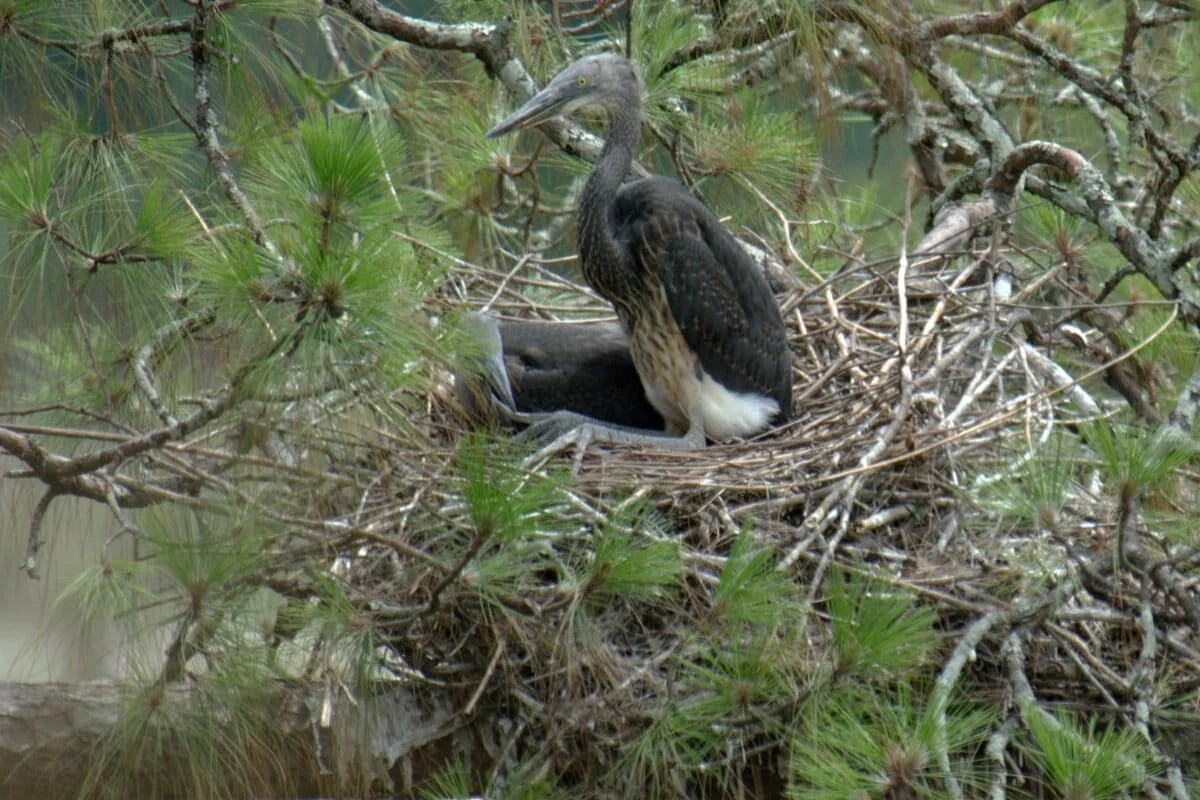
The delicate balance between India’s ambitious renewable energy goals and its commitment to biodiversity conservation has reached a new flashpoint in the Eastern Himalayas. In a move that has sparked intense debate among conservationists, the Forest Advisory Committee (FAC), a statutory body under the Ministry of Environment, Forest and Climate Change (MoEFCC), has granted “in principle” approval to the Kalai II hydroelectric power project.
While the 1,200-megawatt (MW) project is touted as a cornerstone for regional development and clean energy, its location in the Anjaw district of Arunachal Pradesh places it directly in the fragile habitat of the white-bellied heron (Ardea insignis). This avian species is currently classified as critically endangered, with global population estimates suggesting fewer than 60 individuals remained as of 2015. Experts warn that the project, and the controversial mitigation strategies proposed alongside it, could signal a "death knell" for the species in India.
Main Facts: The Kalai II Hydroelectric Project
The Kalai II project is a massive "run-of-the-river" dam planned for the Lohit River, a major tributary of the Brahmaputra. Developed by THDC Limited in partnership with the Arunachal Pradesh state government, the facility is designed to generate 1,200 MW of electricity.
However, the environmental price tag is significant. The project is situated within the Eastern Himalaya biodiversity hotspot, a region globally recognized for its high levels of endemism and ecological sensitivity. According to the project proposal, the development will necessitate the felling of 33,338 trees. The surrounding landscape consists of tropical wet and dense mixed forests, providing a sanctuary for a plethora of rare flora and fauna.
The most contentious aspect of the FAC’s approval is the compensatory afforestation (CA) plan. To offset the loss of thousands of hectares of pristine Himalayan forest, the committee has sanctioned afforestation efforts in Guna, Madhya Pradesh—a central Indian state located more than 2,000 kilometers away. Ecologists have lambasted this decision, arguing that planting dry deciduous trees in Central India does nothing to replace the lost habitat of species endemic to the humid, high-altitude Northeast.
Chronology of Development and Approval
The journey of the Kalai II project has been marked by nearly two decades of administrative processing and community resistance:

- 2008: The project was first proposed as part of a broader push to harness the hydropower potential of Arunachal Pradesh’s river systems.
- August 20, 2025: A public hearing was held in the Anjaw district. While some local stakeholders saw opportunities for employment, many community leaders raised red flags regarding inadequate flora and fauna surveys and the potential for water pollution.
- October 2025: Roshman Tawsik, a resident and political leader, filed a legal notice against WAPCOS (the consultancy firm that prepared the Environmental Impact Assessment), alleging that sections of the report were "copy-pasted" from previous studies and failed to reflect the ground reality of the project site.
- May 8 (Current Year): The FAC held a pivotal meeting where it evaluated the forest diversion proposal. Despite noting the initial absence of the white-bellied heron in the impact list, the committee granted "in principle" approval, contingent on a vet by the Wildlife Institute of India (WII).
Supporting Data: An Ecosystem on the Edge
The White-Bellied Heron: A Specialist Under Siege
The white-bellied heron is perhaps the rarest heron in the world. Once found across a wide arc spanning Nepal, Sikkim, Bhutan, Myanmar, and Bangladesh, its range has contracted violently. Today, it is found only in small, isolated pockets of Bhutan, Myanmar, and Arunachal Pradesh.
In Arunachal Pradesh, researchers estimate that only six to nine individuals remain. The bird is a "habitat specialist," meaning it has extremely specific requirements for survival. It requires clear, fast-flowing, shallow river streams surrounded by undisturbed forest.
Yumlam Benjamin Bida, a project manager at the Ashoka Trust for Research in Ecology and the Environment (ATREE), emphasizes the bird’s vulnerability: “The white-bellied heron is an indicator species of a pristine habitat. Unlike other herons that can adapt to various wetlands, this species relies solely on specific fish found in clear Himalayan streams. Any disturbance—be it noise, siltation, or changes in water flow—drastically reduces their ability to forage, leading to starvation.”
Broader Biodiversity Impacts
The heron is not the only species at risk. The Environmental Impact Assessment (EIA) identifies several other significant species in the 10-kilometer radius of the project site, including:
- Takin: A large, goat-antelope ungulate endemic to the region.
- Mishmi Teeta (Coptis teeta): A critically endangered medicinal herb.
- Large Indian Civet and Assamese Macaque: Mammals that rely on the dense canopy of the Lohit valley.
The proposed dam site in Hawai is strategically located near protected areas: just 26.5 kilometers from the Namdapha Tiger Reserve and 11 kilometers from the Kamlang Wildlife Sanctuary. This proximity suggests that the dam will disrupt vital wildlife corridors that connect these protected zones.
Official Responses and Justifications
The Government Perspective
The Central Government and the state of Arunachal Pradesh have defended the project as a vital economic engine. A press release from the central government highlighted a financial assistance package of ₹1,300 crores provided to the state for hydropower development.

Officials argue that the project will bring:
- Infrastructure Development: 29 kilometers of new roads and bridges.
- Economic Upliftment: Employment opportunities for local youth and Corporate Social Responsibility (CSR) activities.
- National Energy Security: Contributing to India’s transition away from fossil fuels.
The EIA Controversy
WAPCOS, the consultancy firm under the Ministry of Jal Shakti responsible for the EIA, faced criticism for failing to record the white-bellied heron at the project site. In response to the FAC’s queries, state officials claimed the bird was not present during their surveys. However, conservationists pointed out that the heron has been documented just 50 kilometers upstream in Walong, and its foraging range likely encompasses the project area.
To address these concerns, the FAC has mandated that THDC Limited must have its Wildlife Management Plan vetted by the Wildlife Institute of India, with a specific focus on the heron’s habitat.
Implications: The Futility of Remote Afforestation
The decision to conduct compensatory afforestation in Madhya Pradesh has become a symbol of what many experts call "ecological illiteracy" in policy-making.
Umesh Srinivasan, an Associate Professor at the Indian Institute of Science, explains the scientific disconnect: “Compensatory afforestation is based on the flawed logic that one hectare of forest is equal to another. The forests of Anjaw are among the most biodiverse in the world. The species there have evolved over millions of years to fit that specific climate and topography. Moving the ‘compensation’ to the dry, deciduous landscape of Guna, Madhya Pradesh, is ecologically futile. You cannot replace a Himalayan stream-side ecosystem with a central Indian woodland.”
Furthermore, the project raises serious questions about the rights of indigenous communities. While the government promises infrastructure, residents like Roshman Tawsik fear the loss of ancestral lands to submergence. “We have opposed this since 2008,” Tawsik stated. “We are being asked to sacrifice our livelihoods and our environment for a project that may not even benefit the local people in the long run.”

A Precedent for the Future
The "in principle" approval of Kalai II sets a concerning precedent for other pending projects in the Northeast. As India seeks to establish Arunachal Pradesh as the "powerhouse of India," the pressure to bypass stringent environmental checks is mounting.
The fate of the white-bellied heron now rests with the Wildlife Institute of India and the potential for legal intervention. If the project proceeds without a radical redesign to protect the Lohit River’s natural flow, one of the world’s rarest birds may find its last refuge transformed into a reservoir, effectively pushing the species toward extinction in the name of progress.
The case of Kalai II serves as a stark reminder: in the race for renewable energy, the cost of "clean" power must be measured not just in carbon emissions, but in the survival of the unique life forms that call these ancient landscapes home.
