

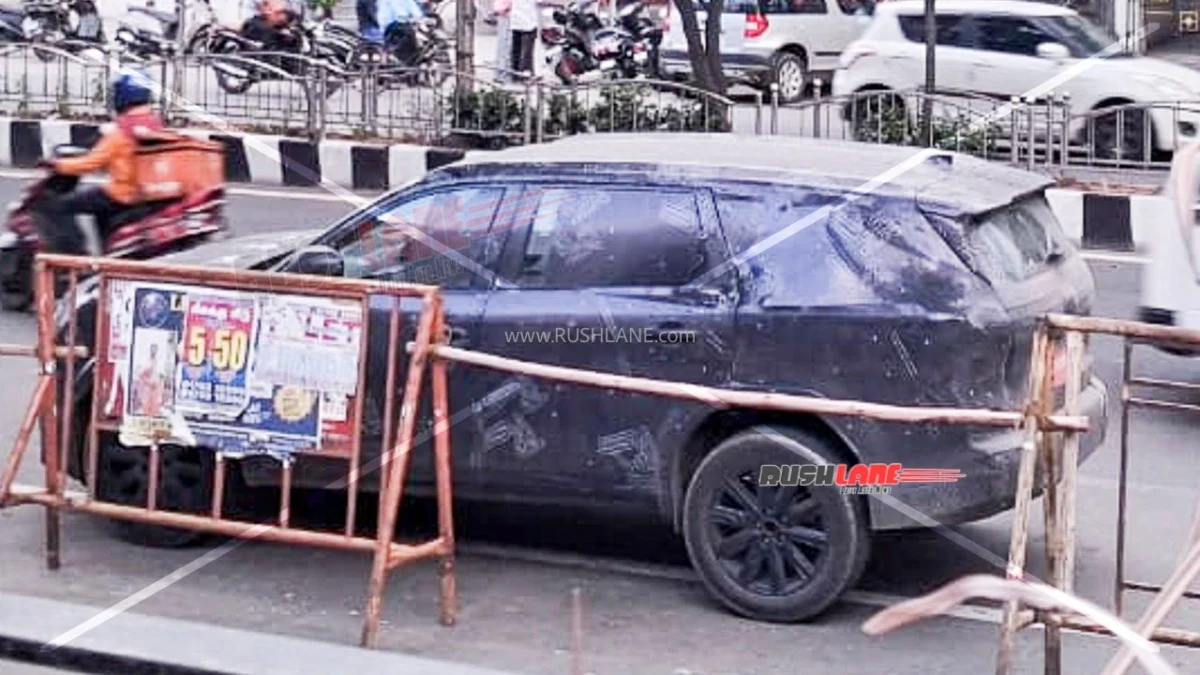
The Indian automotive landscape is currently witnessing a high-stakes transformation, characterized by a decisive shift toward premium, multi-row SUVs and sustainable powertrain technologies. At the heart of this evolution is the Renault Group, which is preparing a significant offensive to reclaim its erstwhile dominance in the mid-size SUV segment. The most recent and compelling evidence of this strategy is the repeated sighting of the upcoming 2027 Renault Duster 7-seater—internationally referred to as the Bigster or Boreal—testing on the streets of Chennai.
Captured by automotive enthusiasts near Renault-Nissan’s manufacturing hub, these spy shots provide a window into the French automaker’s most ambitious project for the Indian market since the original Duster’s debut in 2012. This article provides a comprehensive analysis of the vehicle’s design, the strategic roadmap for its launch, the technical specifications of its localized hybrid powertrain, and the broader implications for the Indian automotive industry.
Main Facts: Decoding the 2027 Renault Duster 7-Seater
The latest test mule spotted in Chennai reveals critical design and structural details that distinguish the 7-seater variant from the standard five-seater Duster. While the vehicle remains heavily camouflaged, several "tell-tale" signs of its extended proportions are visible.
Architectural Foundations and Dimensions
The 2027 Renault Duster 7-seater is built upon the Renault Group Modular Platform (RGMP), a versatile architecture designed to support a wide range of body styles and powertrain configurations, including internal combustion engines (ICE) and strong hybrids.
The spy shots highlight a significantly extended rear overhang and a longer wheelbase compared to the standard Duster. The roofline remains flat and upright, maximizing headroom for third-row occupants. Furthermore, the rear quarter glass is substantially larger, a design choice intended to reduce the "claustrophobic" feel often associated with the third row of mid-size SUVs.
Visual Identity and Rugged Aesthetics
Renault has opted for a "tough-luxury" design language. The test mule displays:

- Chunky Wheel Arch Cladding: Emphasizing its off-road pedigree.
- Integrated Roof Rails: Suggesting utility and adventure readiness.
- Y-Shaped Lighting Signature: Expected to mirror the global Dacia/Renault design language seen on the new-generation Duster.
- High Ground Clearance: A prerequisite for the Indian market’s varying road conditions.
Interior and Technology Suite
While the interior remains shielded from view, industry insiders suggest that the 7-seater will serve as Renault’s flagship in India. Consequently, it is expected to feature a premium cabin layout, including:
- A 10.1-inch floating touchscreen infotainment system with wireless smartphone integration.
- A 7-inch fully digital instrument cluster.
- A panoramic sunroof, a feature that has become a "deal-breaker" for Indian SUV buyers.
- Advanced Driver Assistance Systems (ADAS) Level 2, including autonomous emergency braking and lane-keep assist.
- Ventilated front seats and a powered driver’s seat.
Chronology: The Road to the 2027 Launch
The journey of the Duster in India has been one of soaring highs and a quiet exit, followed by a long-awaited resurrection. Understanding the timeline is crucial to appreciating the 2027 launch.
- 2012–2022: The First Era: The first-generation Renault Duster was a trailblazer, single-handedly creating the mid-size SUV segment in India. However, the lack of a timely second-generation update led to its eventual discontinuation in early 2022.
- February 2023: The Alliance Reinvestment: Renault and Nissan announced a fresh investment of approximately $600 million (Rs 5,300 crore) for the Indian market, specifically targeting the development of six new models, including C-segment SUVs.
- Early 2024: Global Unveiling: The third-generation Dacia Duster (to be sold as Renault in India) was unveiled globally, showcasing the RGMP platform and hybrid capabilities.
- Mid-2024: The "Bigster" Debut: The Dacia Bigster concept transitioned into a production-ready 7-seater model for international markets, providing the blueprint for the India-spec 2027 Duster 7-seater.
- 2025–2026: The Pre-Launch Phase: Testing of the 5-seater Duster began in India, with an expected launch around Diwali 2026.
- Early 2027: The Flagship Arrival: The 7-seater variant, currently undergoing rigorous localized testing in Tamil Nadu, is slated for a commercial launch in the first quarter of 2027.
Supporting Data: The Competitive Landscape and Market Dynamics
The decision to bring a 7-seater variant is backed by shifting consumer preferences in India. Data from the Society of Indian Automobile Manufacturers (SIAM) indicates that the "Plus-Sized" SUV segment (vehicles offering 6 or 7 seats) has seen a 25% year-on-year growth, outperforming the standard 5-seater SUV sub-segment.
The Competition
When the 2027 Renault Duster 7-seater arrives, it will enter one of the most competitive segments in the world. Its primary rivals include:
- Mahindra XUV700: The current benchmark for technology and performance.
- Tata Safari: A leader in design and safety (5-star Bharat NCAP).
- Hyundai Alcazar: Known for its feature-rich cabin and refinement.
- MG Hector Plus: A strong contender in terms of interior space and "connected car" features.
The Hybrid Advantage
Renault’s differentiator will likely be its powertrain. While competitors like Tata and Mahindra rely heavily on diesel, Renault is pivoting toward a 1.8-litre E-Tech strong hybrid system. This move is strategic, as tightening emission norms (BS6 Phase 2 and beyond) make diesel engines increasingly expensive to produce. A strong hybrid offers diesel-like fuel efficiency with the smoothness and environmental benefits of a petrol-electric setup.
Official Responses and Strategic Investments
While Renault India has maintained a degree of confidentiality regarding specific launch dates, their corporate strategy, dubbed "Futuready," provides clear indicators of their intent.

The Horse Powertrain Partnership
A critical component of the 2027 Duster’s success is the localization of its heart. Renault and Nissan have partnered with "Horse Powertrain," a joint venture dedicated to developing low-emission thermal and hybrid powertrains. Horse Powertrain has committed to investing roughly $370 million (Rs 3,500 crore) in India to manufacture hybrid engines locally. This investment is vital for achieving a competitive price point, as imported hybrid components are subject to high duties.
The Renault-Nissan Alliance 2.0
Official statements from the Alliance leadership emphasize that India is a "pillar" of their global growth strategy. The Chennai plant, which currently operates at a significant portion of its capacity, is being retooled to handle the RGMP platform. This platform will also spawn Nissan-badged counterparts to the Duster and the 7-seater SUV, ensuring economies of scale.
Implications: What This Means for the Indian Market
The re-entry of the Duster brand, particularly in a 7-seater avatar, has far-reaching implications for consumers, competitors, and the industry at large.
1. The "Democratization" of Strong Hybrids
Currently, strong hybrid technology is largely the domain of Toyota and Maruti Suzuki in the mid-size SUV space (e.g., the Grand Vitara and Hyryder). Renault’s entry with a 1.8-litre system could break this duopoly, offering consumers more choices and potentially driving down costs through increased competition and localized manufacturing.
2. Brand Resurgence for Renault
For the past few years, Renault India has relied heavily on its entry-level models—the Kwid, Triber, and Kiger. While successful, these models operate in lower-margin segments. The 2027 Duster 7-seater will allow Renault to move up the value chain, attracting more affluent buyers and improving brand perception from a "budget" manufacturer to a "tech-led" global brand.
3. The Displacement of Diesel
The 7-seater SUV segment has traditionally been the last stronghold for diesel engines in India. However, if Renault can deliver a 7-seater that matches the torque and efficiency of a diesel engine through its E-Tech hybrid system, it could accelerate the "de-dieselization" of the Indian market.

4. Strengthening the Manufacturing Ecosystem
The $370 million investment in Horse Powertrain and the broader $600 million Alliance investment will bolster India’s position as a global manufacturing hub. The 7-seater Duster is expected not just for domestic consumption but also as a key export product to other Right-Hand Drive (RHD) markets, aligning with the "Make in India" initiative.
Conclusion
The sighting of the 2027 Renault Duster 7-seater in Chennai is more than just a routine spy shot; it is a signal of a massive corporate comeback. By leveraging a legendary brand name, a versatile new platform, and a localized hybrid powertrain, Renault is positioning itself to challenge the established leaders of the Indian SUV market.
While the 2027 launch date may seem distant, the complexity of localizing a global platform and a sophisticated hybrid system requires the rigorous testing currently observed in Tamil Nadu. For the Indian consumer, the wait promises a vehicle that combines the rugged, "go-anywhere" DNA of the original Duster with the space, technology, and efficiency required for the next decade of motoring. As the development program gathers pace, the 2027 Duster 7-seater stands as one of the most anticipated arrivals in the Indian automotive calendar.
