

The production of a single malt Scotch whisky is, at its core, a defiance of the modern world’s obsession with immediacy. It is a craft that demands an almost monastic level of patience—from the slow germination of barley to the decades-long slumber of the spirit within charred oak staves. In the damp, cool warehouses of the Scottish Highlands, time is the most critical ingredient, moving at a pace dictated by the seasons rather than the clock.
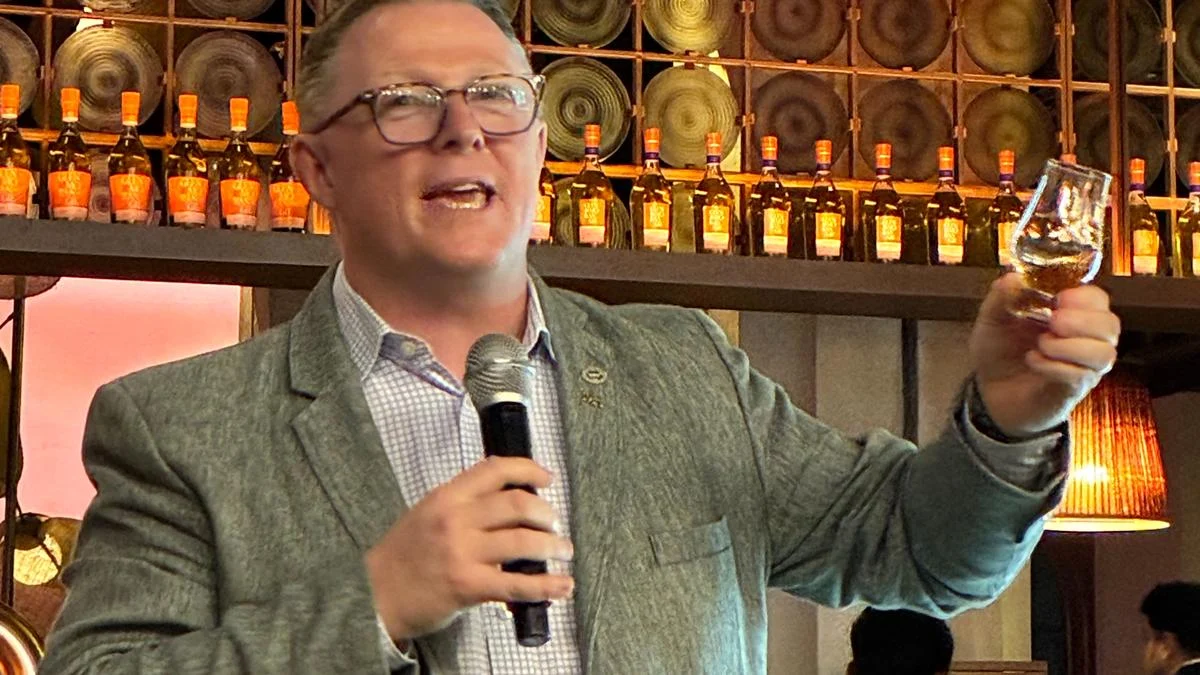
On June 11, this philosophy of slow craftsmanship was transported from the rugged coastlines of Scotland to the vibrant heart of West Bengal. At Olterra, a Greek-themed bar and microbrewery in Kolkata, an exclusive cohort of enthusiasts gathered for an evening titled "Cask and Conversation." Hosted by Glenmorangie and Moët Hennessy India, the event served as a sensory masterclass led by David Blackmore, the Global Brand Ambassador for Glenmorangie and Ardbeg.
The evening was more than a mere tasting; it was a deep dive into the "slow and mysterious work of time," exploring how wood, weather, and water converge to create some of the world’s most revered spirits.
Main Facts: A Convergence of Heritage and Hospitality
The "Cask and Conversation" evening marked a significant moment for the luxury spirits market in Kolkata, a city with a long-standing appreciation for Scotch whisky but an increasingly sophisticated palate for single malts. The event centered on four distinct expressions from the LVMH (Louis Vuitton Moët Hennessy) portfolio, specifically focusing on the Highland elegance of Glenmorangie and the peaty intensity of Ardbeg.

Key highlights of the event included:
- The Venue: Olterra, Kolkata, provided a thematic backdrop, blending Mediterranean aesthetics with the industrial chic of a microbrewery.
- The Lead: David Blackmore, a veteran of the industry who has spent years traversing the globe to demystify the complexities of Scotch.
- The Portfolio: A curated selection including the Glenmorangie 12-Year-Old, the newly unveiled Lasanta 15-Year-Old, the prestigious 18-Year-Old, and a non-vintage Ardbeg expression.
- The Focus: Education on "extra-maturation"—a process Glenmorangie pioneered—and the impact of different cask finishes (Sherry vs. Bourbon) on the final flavor profile.
Chronology of the Evening: From Highland Orchards to Islay Shores
The evening was structured as a chronological journey through the maturation process, starting with the lightest expressions and culminating in the heavy, complex notes of Islay peat.
The Foundation: Glenmorangie 12-Year-Old
The tasting commenced with the Glenmorangie 12-Year-Old, a whisky that encapsulates the "house style" of the distillery. David Blackmore introduced this expression as the baseline of Highland elegance. Glenmorangie is famous for possessing the tallest stills in Scotland—standing at the height of an adult giraffe—which ensures that only the lightest, purest vapors reach the top, resulting in a fruity and floral spirit.
Attendees noted immediate hits of honey and vanilla, followed by a bright citrus finish. Blackmore encouraged the room to experiment with a "dash of water," explaining that a small amount of H2O breaks the surface tension of the alcohol, allowing the volatile aromatic compounds to "blossom."

The Evolution: Lasanta 15-Year-Old
The centerpiece of the evening was the unveiling of the Lasanta 15-Year-Old. This expression represents the pinnacle of Glenmorangie’s expertise in wood management. The spirit spends its first 12 years in American white oak ex-bourbon casks before being moved into Spanish Oloroso and Pedro Ximénez sherry casks for an additional three years.
"Lasanta means warmth and passion in Gaelic," Blackmore noted. The extra three years in sherry wood transform the whisky’s hue to a deep sunset orange and infuse the palate with rich notes of marmalade, dark chocolate, and toasted hazelnuts. It served as a practical demonstration of how a secondary cask can entirely redefine a whisky’s DNA.
The Pinnacle: Glenmorangie 18-Year-Old
Moving further into the depths of maturation, the 18-Year-Old was presented as the "older, more complex sibling." This expression is a masterclass in blending; approximately 30% of the liquid is aged in Oloroso sherry casks, while the remainder stays in bourbon casks. Blackmore confessed that if he were stranded on a desert island, this would be his bottle of choice. Its silky texture and layered complexity—balancing dried fruits with a "kiss" of sherry—highlighted the elegance that only nearly two decades of stillness can produce.
The Turning Point: The Ardbeg Experience
The evening took a dramatic turn with the introduction of Ardbeg. Unlike the floral heights of Glenmorangie, Ardbeg hails from the island of Islay and is defined by its elemental, peaty character. The room’s atmosphere shifted as the scent of sea spray, wet earth, and campfire smoke filled the glasses.

Blackmore acknowledged that Ardbeg is a "divisive" spirit, often described as an acquired taste. However, for the connoisseurs in the room, it was the highlight—a liquid representation of Islay’s rugged weather and salt-soaked air. The lack of a vintage specification on this particular bottle emphasized the brand’s focus on consistency of character over age alone.
Supporting Data: The Science of the Cask and the Indian Market
To understand the significance of this event, one must look at the data driving the premiumization of spirits in India. According to recent market reports, India has overtaken France to become the world’s largest market for Scotch whisky by volume. However, the real story lies in the "Value Growth" of single malts, which is outpacing cheaper blended varieties.
The Physics of Maturation
During the tasting, Blackmore touched upon the "Angel’s Share"—the 2% of whisky that evaporates through the oak pores every year. In the cool climate of Scotland, this process is slow, allowing the wood to gently filter out harsh impurities. Supporting research into wood chemistry shows that up to 60% to 70% of a whisky’s flavor is derived from the cask. Glenmorangie’s use of "designer casks"—wood sourced from specific slow-growth trees in the Ozark Mountains—is a testament to the scientific rigor behind the flavor.
The Indian Consumer Shift
Data from the International Spirits and Wines Association of India (ISWAI) indicates a significant shift in consumer behavior in Tier-1 cities like Kolkata. Post-pandemic, there has been a "drink less, but drink better" trend. High-net-worth individuals (HNWIs) and young professionals are increasingly seeking out "educational" drinking experiences, such as the Cask and Conversation evening, to justify the premium price points of bottles like the Glenmorangie 18-Year-Old.

Official Responses: Insights from the Ambassador
David Blackmore’s role as a Global Brand Ambassador is part educator and part storyteller. During the event, his responses to guest inquiries shed light on the brand’s future direction.
"Whisky is a living thing," Blackmore remarked during a Q&A session. "It remembers the wood it sat in; it remembers the air of the warehouse. My job is to remind people that when they pull a cork, they are releasing 12, 15, or 18 years of Scottish history."
When asked about the importance of the Indian market, Blackmore emphasized that Indian consumers are among the most knowledgeable in the world. "There is a deep-seated respect for heritage here, but also a curiosity for innovation—like our Lasanta or the smoky complexity of Ardbeg. Kolkata, with its colonial history and love for the finer things, is a natural home for these stories."
Moët Hennessy India representatives also noted that events like these are crucial for building "brand advocacy" in a market where direct advertising of alcohol is restricted. By focusing on the "craft" and "heritage," they create a lifestyle narrative that resonates with the modern Indian epicurean.

Implications: The Future of Luxury Spirits in India
The success of the "Cask and Conversation" evening in Kolkata carries several implications for the beverage industry and the cultural landscape of urban India.
1. The Rise of "Edutainment"
The event highlights a shift away from traditional bar culture toward "edutainment." Consumers no longer want to just consume a product; they want to understand its provenance. This trend is likely to lead to more distillery-led masterclasses and pop-up experiences across India.
2. Diversification of the Palate
The enthusiastic reception of Ardbeg—a notoriously medicinal and smoky whisky—suggests that the Indian palate is maturing beyond the traditional preference for sweet, honeyed blends. This opens the door for more "niche" and "experimental" Scotch expressions to enter the Indian market.
3. Kolkata as a Luxury Hub
While Mumbai and Delhi have traditionally been the focus of luxury brand activations, the success of this event at Olterra proves that Kolkata remains a formidable market for high-end spirits. The city’s appreciation for "patience" and "tradition" aligns perfectly with the marketing ethos of single malt Scotch.

4. The Sustainability of Craft
As demand for aged spirits grows, distilleries face the challenge of managing stocks that were laid down decades ago. The emphasis on non-vintage expressions (like the Ardbeg tasted) or specific cask finishes (like Lasanta) shows how the industry is innovating to provide complex flavors without solely relying on increasingly rare 25 or 30-year-old stocks.
In conclusion, the evening at Olterra was a reminder that while the world outside may move at a breakneck pace, some things—like a perfectly aged Highland malt—cannot be rushed. As David Blackmore and the guests at Olterra discovered, the best things in life are not just worth waiting for; they are the result of the wait itself. In every drop of Glenmorangie and Ardbeg, there is a story of rain, oak, and the silent, patient passage of time.
