

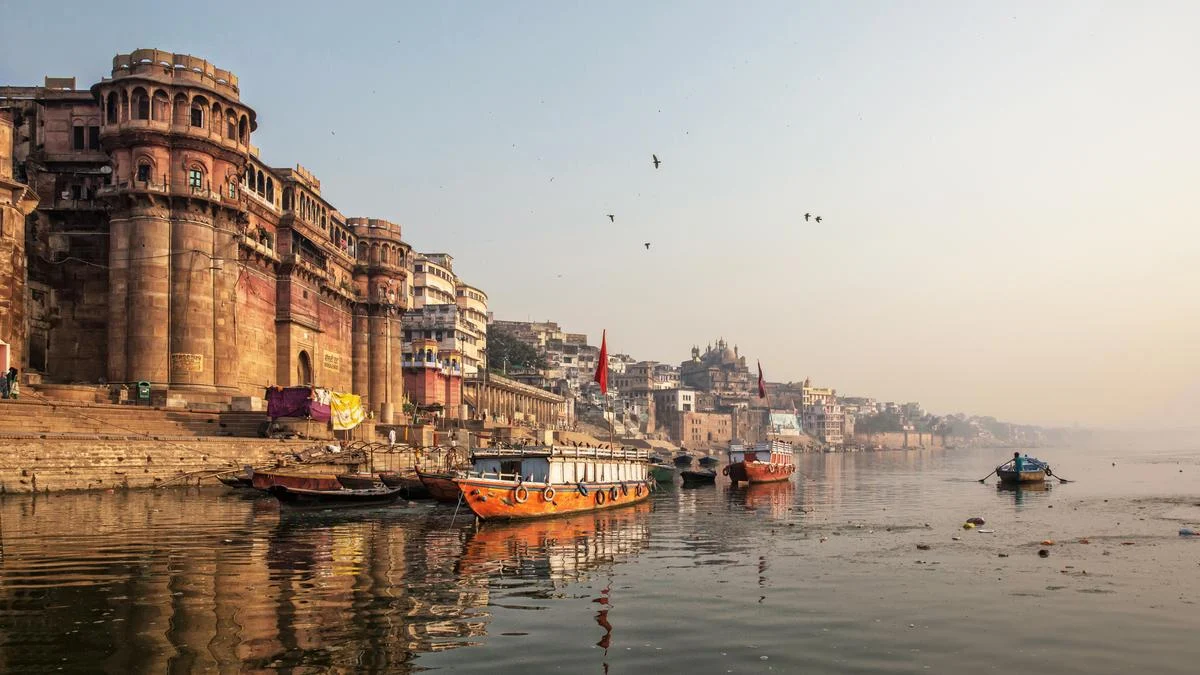
VARANASI — In the labyrinthine heart of one of the world’s oldest living cities, a metamorphosis is taking place. Varanasi, a city historically defined by its spiritual gravity and chaotic charm, is increasingly becoming a crucible for high-end experiential luxury. At the center of this transition is the BrijRama Palace, a 214-year-old fort-turned-hotel that has recently unveiled an ambitious 10-course vegetarian tasting menu at its flagship restaurant, Aangan.
This culinary evolution serves as a microcosm for the broader shifts within Varanasi’s tourism landscape: a delicate balancing act between preserving the "Eternal City’s" raw, historic essence and catering to a new generation of global travelers seeking contemporary refinement.

Main Facts: A Convergence of Heritage and Haute Cuisine
The primary catalyst for this exploration is the launch of a sophisticated degustation menu designed by Chef Devansh Seth and his team. In a city where meat and alcohol are largely prohibited near the sacred ghats, BrijRama Palace has pivoted toward high-concept vegetarianism. The menu features avant-garde interpretations of local staples, such as "fortified heritage radish bricks" and a "Rasmalai tres leches cake."
Beyond the plate, the story of BrijRama Palace itself is one of monumental restoration. Originally built as a fort in 1812, the structure underwent an 18-year renovation starting in 1994 to transform a dilapidated ruin into a 32-room luxury destination. Today, it stands as a sentinel on Darbhanga Ghat, offering a vantage point that bridges the gap between the city’s ancient rituals and modern hospitality standards.

Chronology: From Street-Side Stalls to Palatial Dining
The Street Food Preamble
The journey into Varanasi’s soul often begins not in a palace, but on a sweaty bench. At Kashi Chaat Bandar, a legendary institution, the "tamatar chaat" weather—warm and sticky—mirrors the city’s favorite snack. This soupy concoction of tomatoes and potatoes, simmered in ghee and topped with crisp namkeen, represents the democratic heart of Kashi’s food culture. Here, tourists and locals alike wedge themselves between strangers to consume street food that has remained unchanged for decades.
Dusk at the River’s Edge
As evening falls, the focus shifts to the river. At the Alka Hotel, a multi-generational establishment, the perspective is one of observation. Over glasses of chilled, cashew-rich thandai, the city’s rhythm is dictated by the setting sun. Ashutosh Choudhary, whose family has operated the hotel for years, notes that the city’s power lies in its ability to bring scholars, students, and artists together through a shared love for snacks like paan and jalebis. This communal atmosphere sets the stage for the nightly Ganga Aarti at Dashashwamedh Ghat, a choreographed spectacle of fire and faith.

The Arrival at Darbhanga Ghat
The transition to BrijRama Palace begins at the modern Namo Ghat, where guests are ferried by boat past the eternal pyres of Manikarnika. The arrival at the palace is intentionally theatrical: a conch shell heralds the guest’s entry, and a reception committee—complete with gold-tasselled umbrellas—guides visitors through the crowds of devotees performing their sacred dips.
The 10-Course Gastronomic Narrative
The climax of the visit is the tasting menu at Aangan. The meal is designed as a theatrical homage to the city’s history. It opens with a savory achappam biscuit paired with pea and curry leaf, followed by the much-anticipated radish bricks served in a moat of chaas. The menu oscillates between technical experimentation and confident local flavors. Highlights include cauliflower croquettes unveiled in savory smoke and a siphoned version of malaiyo, a traditional winter sweet transformed into a fluffy cloud of saffron and sugar.

Supporting Data: The Architecture of Preservation
The restoration of BrijRama Palace is a case study in the logistical challenges of working within a UNESCO-protected site. The property’s history is layered:
- 1812: Built by Shridhara Narayana Munshi, a minister to the Nagpur estate, as a defensive fort.
- 1915: Acquired by King Rameshwar Singh Bahadur of Darbhanga, who installed Asia’s first manual elevator to navigate the steep climb from the river.
- 1994-2012: An 18-year restoration period led by Brijrama Hospitality.
The logistical hurdles were significant. Because the city’s narrow gullies (alleys) are inaccessible to cars, all construction materials—including 90-kilogram sandstone pillars—had to be transported via boats. The stone itself was sourced from Mirzapur to match the original aesthetic. The interior now features a "magpie-like" collection of vintage furniture from royal estate sales, Tehkari mirror work, and Makrana marble, all centered around the Bada Aangan courtyard.

The hotel’s "Varuna Burj" room, a restored cannon room, exemplifies the architectural ingenuity required to convert a military structure into a luxury suite. Despite its diminutive size, it offers a 180-degree view of the Ganga, providing what guests describe as a "cinematic" awakening to the sound of distant flutes.
Official Responses: Balancing Luxury and Responsibility
Manish Singh, General Manager of BrijRama Palace, emphasizes that the hotel’s mission extends beyond providing luxury. "This is a labor of love, prizing passion over economics," Singh states. He notes that the property views itself as a "guardian" of the ghat, with a responsibility to maintain the city’s heritage while offering contemporary comforts.

Chef Devansh Seth explains that the new tasting menu is a response to the "limitations" of the city’s dietary restrictions. By focusing on locally sourced produce and pivoting on traditional recipes, the culinary team aims to prove that vegetarian fine dining can be as complex and rewarding as its meat-based counterparts. "We are showcasing the history of Varanasi through flavor profiles that locals recognize, but in forms they have never seen," Seth remarks.
Implications: The Future of Spiritual Tourism
The evolution of BrijRama Palace and the introduction of fine-dining concepts in Varanasi signify a broader trend in Indian tourism: the rise of "Spiritual Luxury."

1. Diversification of the Tourist Demographic
Historically, Varanasi was a destination for pilgrims and backpackers. The advent of properties like BrijRama and the modernization of ghats (like Namo Ghat) are attracting high-net-worth individuals and "experiential" travelers who seek cultural immersion without sacrificing comfort.
2. Economic Uplift vs. Gentrification
The restoration of historic properties provides significant employment for local artisans—from stone carvers to traditional weavers. However, the contrast between the palace’s "theatrical" arrival and the bathers struggling with gamchas on the steps highlights the ongoing tension between luxury tourism and the lived reality of the city’s residents.

3. Cultural Preservation Through Innovation
By modernizing traditional dishes like malaiyo or hosting strength-training sessions at the 450-year-old Swaminath Akhara (wrestling arena), the city is finding ways to keep its traditions relevant. At the Akhara, under the guidance of poet and coach Gyanshankul Singh, visitors learn to swing the Hanuman gada (mace), a practice that blends physical discipline with spiritual devotion. These interactions ensure that the "Varanasi experience" remains rooted in local life rather than becoming a sterilized museum exhibit.
Conclusion: Answering the Call
Legend suggests that one does not simply visit Varanasi; one is "called" by the city. Today, that call is being answered by a diverse array of visitors drawn by an improbable blend of "radish bricks," ancient wrestling pits, and the timeless rhythm of the Ganga. As BrijRama Palace demonstrates, the city’s future lies not in choosing between the old and the new, but in finding a way to let them coexist—much like the smoke of the Aarti mingling with the steam of a high-end kitchen.

Varanasi remains a city of contradictions, but through its evolving culinary and hospitality landscape, it is proving that even the oldest living city in the world can learn new ways to tell its story.
