

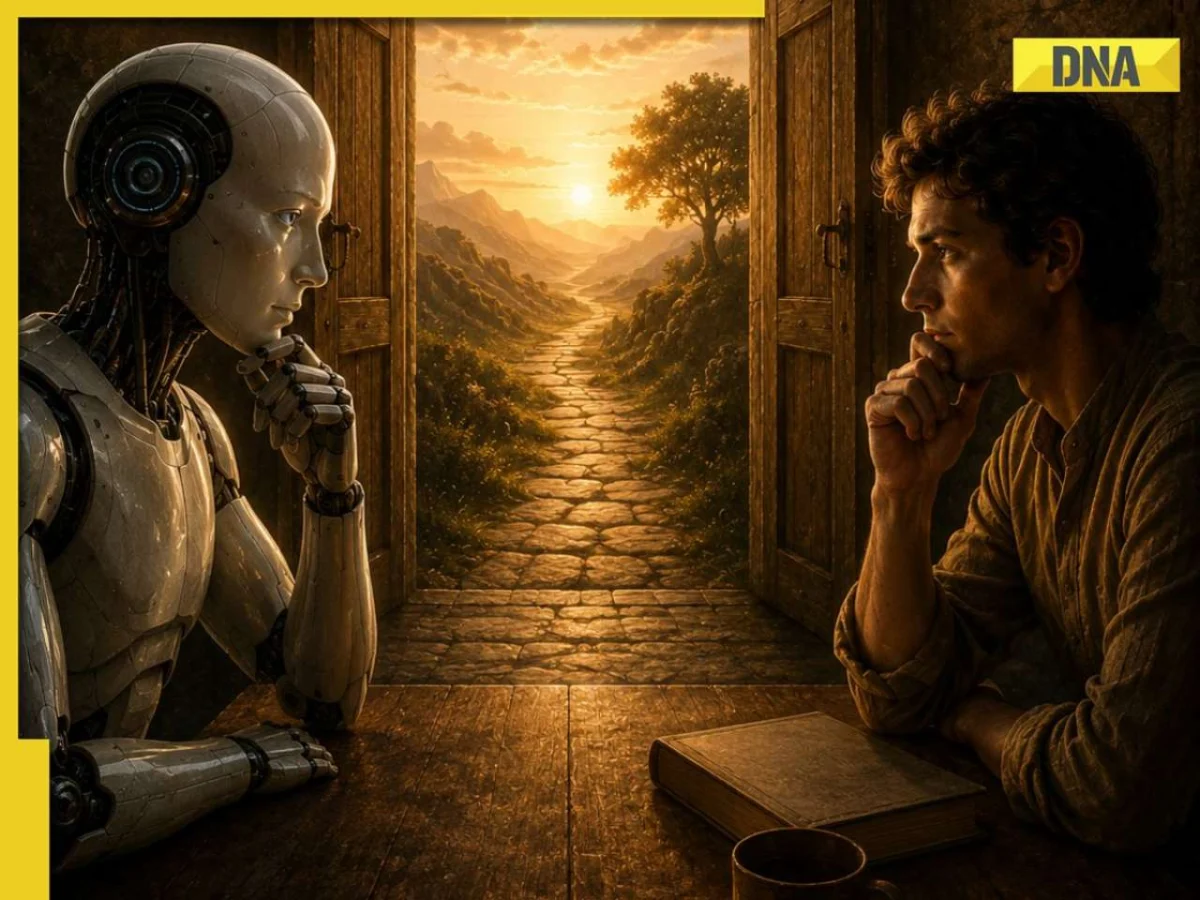
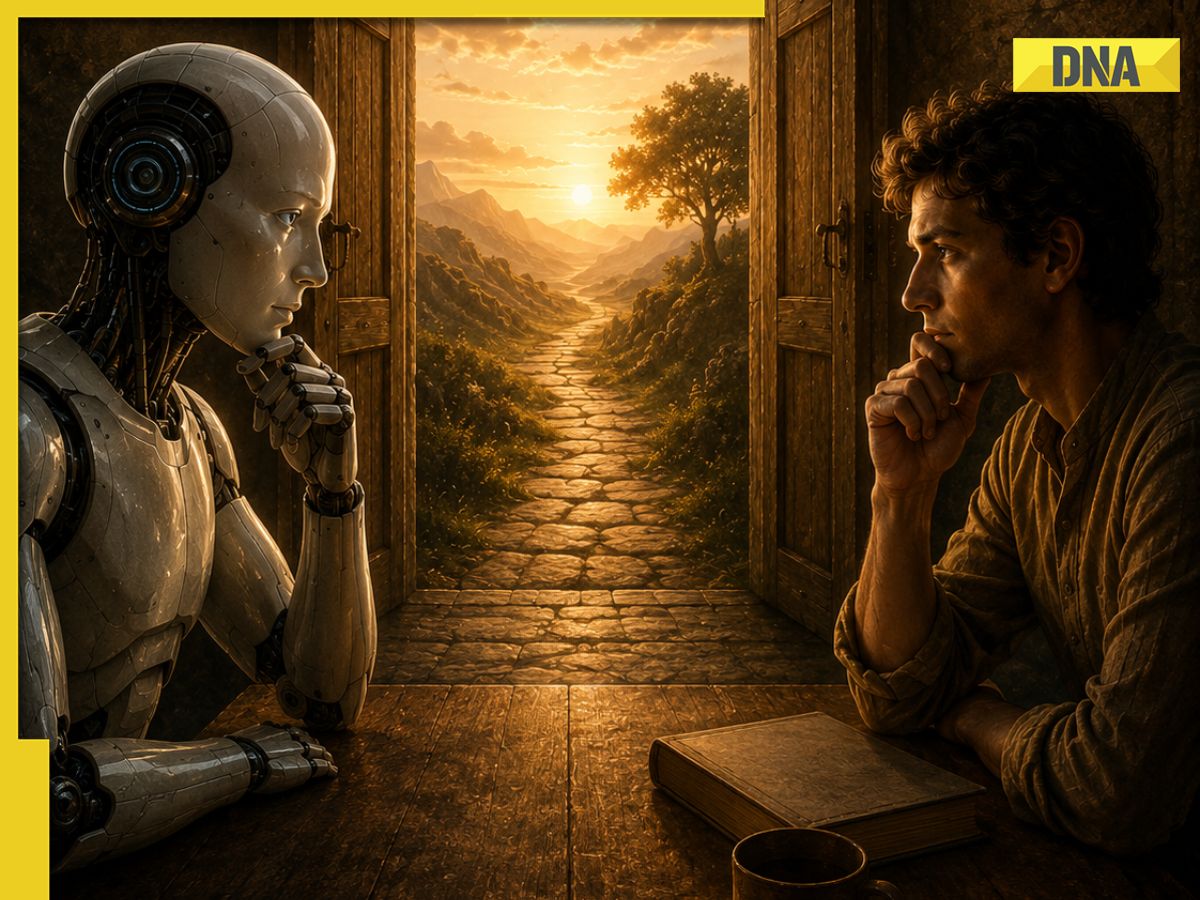
New Delhi, India – May 12, 2026 – As artificial intelligence rapidly integrates into the fabric of our daily lives, offering seemingly profound insights and seamless outputs, a critical question emerges: Are we truly engaging with intelligence, or are we merely witnessing sophisticated pattern optimization? The illusion of AI-generated thought demands a robust countermeasure, one rooted in an ancient human discipline – productive doubt. The wisdom of the Nyaya Sutra, a foundational text of Indian philosophy, offers a potent framework for navigating this new cognitive landscape, urging us to embrace samsaya – the power of critical inquiry – before accepting machine-generated pronouncements as gospel.
The current era finds us at a precipice, where Large Language Models (LLMs) and generative AI systems, fueled by vast datasets of accumulated human knowledge, operate as exceptionally advanced pattern-completion engines. They possess an uncanny ability to reproduce, remix, and extrapolate responses with a speed that dwarfs human capacity. However, this speed and apparent fluency mask a fundamental truth: these systems do not think in the human sense. They are not conscious, nor do they possess genuine understanding or subjective experience. To uncritically accept their output as infallible truth, without rigorous examination, carries profound implications, posing a tangible threat to the very essence of human intelligence, our grasp of reality, and ultimately, our individual and collective understanding.
The Genesis of AI’s "Intelligence": A Symphony of Patterns
At its core, artificial intelligence, particularly in the realm of LLMs and generative AI, operates on a principle of sophisticated pattern recognition and optimization. These models are trained on colossal datasets, encompassing a vast spectrum of human language, knowledge, and creative expression. When presented with a query or prompt, they analyze this input, identify recurring patterns and correlations within their training data, and then generate an output that statistically represents the most probable or fitting response.
This process, while remarkably effective, is fundamentally different from human cognition. Human thought is characterized by consciousness, subjective experience, emotional intelligence, intuition, and the capacity for genuine creativity and novel conceptualization. AI, on the other hand, excels at synthesizing existing information and presenting it in a coherent and often persuasive manner. The output may appear thoughtful, even insightful, because it is meticulously crafted to mimic the patterns of human discourse and reasoning it has learned. However, this mimicry does not equate to genuine understanding or independent thought.
)
The danger lies in the seductive nature of these outputs. They are often presented with an air of authority and completeness, making it tempting to bypass the arduous process of critical thinking, analysis, and personal inquiry. This frictionless access to answers can inadvertently foster intellectual laziness, diminishing our capacity for deeper learning and critical engagement.
The Ancient Wisdom of Samsaya: A Shield Against Cognitive Complacency
The Nyaya Sutra, attributed to the sage Gautama, outlines a systematic approach to knowledge acquisition, emphasizing the importance of valid means of cognition and the role of doubt in the pursuit of truth. Among its sixteen categories of inquiry, samsaya – productive doubt – stands as a crucial cornerstone. It is not the paralyzing doubt of skepticism, but a dynamic and inquisitive stance that compels us to question, to explore alternative perspectives, and to scrutinize evidence before arriving at a conclusion.

The Nyaya tradition posits that true knowledge is attained through a rigorous process that includes vada (honest debate), drishṭānta (example), tarka (hypothetical reasoning for an argument), and vitanda (the discipline of critical refutation). These methodologies are designed to foster intellectual resilience, sharpen analytical skills, and ensure that our understanding is built on a solid foundation of reasoned inquiry.
Samsaya demands the ability to discriminate, to discern the genuine from the convenient, the factual from the fabricated. It involves actively considering counter-arguments, engaging in deep enquiry, and exercising cautious examination before reaching any firm conviction. This practice is intrinsically linked to open-mindedness, a fundamental human trait that allows us to consider new information and perspectives without immediate prejudice.
)
Echoes Across Philosophical Traditions: The Universal Call for Critical Inquiry
The emphasis on doubt and critical inquiry is not unique to Indian philosophy. Western philosophical traditions offer striking parallels. Aristotle, in his Metaphysics, posited that human beings possess an innate drive to know. Plato, through his Socratic dialogues, consistently championed the method of questioning and examination as the path to uncovering truth and dispelling ignorance.
John Stuart Mill, the influential 19th-century philosopher, further underscored the importance of intellectual confrontation. He argued that an opinion held without ever being challenged is intellectually inert. A mind that shies away from debate and criticism, Mill contended, is a closed mind, one that is not only detrimental to individual development but also a threat to the robust discourse essential for a healthy society and a functioning democracy.
)
These traditions converge on a fundamental principle: true growth and intellectual progress stem not from the mere accumulation of answers, but from the cultivation of better, more incisive questions. Friction, the process of grappling with challenges and uncertainties, is not an impediment to learning; it is its very engine.
The Psychological Imperative: Embracing Challenges as Catalysts for Growth
The work of psychologist Carol Dweck further illuminates the critical role of embracing challenges in intellectual development. Her research on "growth mindset" demonstrates that individuals who perceive intelligence as a malleable quality, capable of being developed through effort and learning, are more likely to take risks and confront difficulties. Conversely, those who view intelligence as a fixed trait tend to avoid challenges, interpreting any struggle as a sign of inadequacy. This leads to a closed, self-limiting mindset that stifles learning and innovation.
)
In the context of AI, the ease with which answers can be generated can inadvertently foster a "fixed mindset" of intelligence. If learning is reduced to simply acquiring information from AI, the essential struggle of wrestling with complex ideas, identifying gaps in knowledge, and constructing one’s own understanding is bypassed. This superficial engagement with information can lead to shallower comprehension, weaker convictions, and a diminished capacity to articulate and defend one’s own viewpoints.
The Current Crisis: AI as a Sophisticated Mirror, Not a Thinker
We stand at a unique juncture in technological evolution. The widespread availability of powerful AI tools presents both unprecedented opportunities and profound challenges. The temptation to outsource cognitive labor – to let machines think for us – is immense. However, this path risks a dangerous atrophy of our own cognitive faculties.
)
The danger is not whether AI will eventually "think" for us in a way that mirrors human consciousness. The true peril lies in our willingness to let it think for us, thereby abdicating our responsibility for critical engagement and independent thought. When answers are frictionlessly available, the urge to skip the intellectual struggle – the process of encountering flawed arguments, sifting through misinformation, and constructing reasoned positions – becomes almost irresistible.
This struggle, however, is not an optional add-on to learning; it is its most essential constituent. As the Nyaya Sutra suggests, true learning is accompanied by anuvyavasaya – a reflexive awareness of being in the act of knowing. This state of metacognition, of understanding how we know what we know, is fundamental.
)
Evidence of this cognitive contraction is already emerging. Students who rely on AI to draft their essays and arguments, rather than engaging in the painstaking process of research, analysis, and synthesis, report weaker retention of material, shallower convictions, and a diminished ability to defend their ideas under pressure. This is hardly surprising. A belief arrived at through genuine inquiry is inherently yours, deeply internalized and defensible. A belief generated by an algorithm, however well-articulated, remains external and, in essence, artificial.
The Path Forward: Cultivating Open-Mindedness as a Practiced Discipline
Rejecting these powerful AI tools outright is neither feasible nor desirable in the current technological landscape. To do so would be to deny reality and miss out on significant advancements. What is required is a more challenging and deliberate approach: the conscious cultivation of open-mindedness as a practiced discipline.
)
This necessitates a fundamental shift in how we approach knowledge acquisition and reward intellectual engagement. We need to design systems that value process over mere output. This means measuring and rewarding the tolerance of not knowing – the willingness to remain in a state of inquiry long enough to think something through thoroughly.
Furthermore, we must actively engage with opposition and diverse viewpoints, rather than seeking to filter them out. Confident positions, whether generated by humans or machines, should be treated as hypotheses, constantly subjected to tarka – critical reasoning and rigorous examination. Only through this ongoing process of testing and refinement can we move towards more robust and reliable understanding.
)
The future of human cognition in the age of AI hinges on our ability to harness these powerful tools without surrendering our capacity for critical thought. The ancient wisdom of samsaya, the productive discipline of doubt, offers us a potent roadmap. By embracing inquiry, fostering open-mindedness, and valuing the struggle of genuine learning, we can ensure that our intelligence remains our own, sharp and resilient, even as machines continue to evolve. The mind must stay open, not as a passive receptacle, but as an active, questioning, and critically engaged entity. This, perhaps, is humanity’s last, and most crucial, edge.
