

“I think that was Remal, no?”
“No, no. That was Bulbul.”
“But Fani was something else entirely.”
“And you’ve forgotten Mocha.”
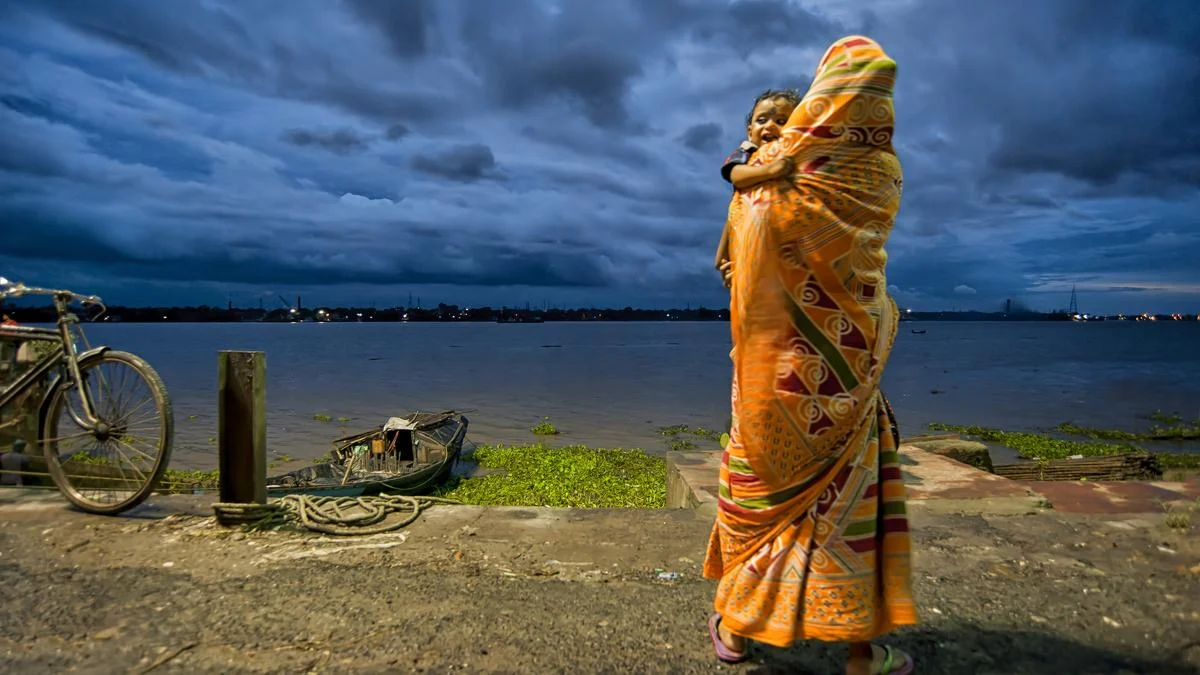
In a quiet room in Kolkata, a group of friends engages in a peculiar form of collective remembering. To a casual observer, the names might sound like old schoolmates or distant relatives. But in the context of the Bay of Bengal’s volatile meteorology, these names represent some of the most destructive forces of nature to hit the Indian subcontinent in recent years. For most residents of West Bengal, these names evoke memories of shattered windows, uprooted banyan trees, and days spent in darkness. For the Kolkata Cloud Chasers (KCC), however, these names represent "encounters"—fleeting moments where human curiosity met the raw, untamable power of the atmosphere.

For twelve years, this eight-member collective of extreme weather photographers has redefined the relationship between the city and its storms. While the rest of the metropolis retreats behind bolted doors at the first sign of a darkening horizon, the KCC fuels their vehicles and drives directly into the heart of the tempest.
Main Facts: The Anatomy of a Storm Chase
The Kolkata Cloud Chasers is not merely a group of hobbyists with cameras; it is a highly coordinated unit that blends atmospheric science, advanced logistics, and artistic vision. Their mission is to document the "sublime"—the terrifying beauty of severe weather events—ranging from the localized summer tempests known as Kalbaisakhis (Nor’westers) to the massive cyclonic systems that brew in the Bay of Bengal.

The group operates on a philosophy of "patience and surrender." Despite their use of sophisticated meteorological models, the success rate of a chase remains humble, hovering around 20 to 22 percent. This unpredictability is the core of their obsession. A storm cell might look formidable on a radar screen in Ranchi, only to dissipate over the fields of Bardhaman, or it might split into two systems, leaving the chasers stranded between two disappearing horizons.
The KCC’s work is characterized by three pillars:

- Meteorological Rigor: Utilizing real-time data from the India Meteorological Department (IMD) and global tracking apps.
- Field Expertise: Navigating challenging rural terrains using "Storm and Cloud-chasing Four-Wheelers" (SCIF) equipped with recovery gear.
- Visual Documentation: Capturing high-resolution imagery and data of lightning strikes and cloud formations that are often missed by stationary weather stations.
Chronology: From Orkut Communities to WhatsApp Command Centers
The origins of the KCC can be traced back to the digital landscape of the late 2000s. In 2009, the Kolkata Photographer’s Club on Orkut—a community of roughly 2,500 enthusiasts—served as the breeding ground for like-minded individuals fascinated by the aesthetics of the sky.
The evolution of the group mirrors the technological revolution of the last decade:

- 2009–2010: The arrival of the first Android smartphones and early weather applications like AccuWeather and The Weather Channel. This shifted the hobby from "reactive" (photographing what happened to pass overhead) to "proactive" (tracking storms via satellite imagery).
- March 24, 2014: The official birth of the group. A WhatsApp group was formed, formalizing the eight-member core and moving their operations into a real-time collaborative space.
- 2014–2024: A decade of refinement. What began as a photography club evolved into a specialized unit incorporating wind-data analysis, trajectory modeling, and specialized storm-spotting techniques.
Throughout this period, the group has documented a "who’s who" of regional disasters, including Cyclones Fani (2019), Bulbul (2019), Amphan (2020), and most recently, Remal (2024).
Supporting Data: The Logistics of the Hunt
The KCC is a diverse assembly of professionals whose day jobs stand in stark contrast to their weekend pursuits. The team includes a pharmaceutical executive, an engineer, a publisher, a debt recovery expert, a marketing professional, and specialized photographers.

Team Roles and Specialized Equipment
The group functions like a flight crew, with each member assigned a specific role to ensure both the success of the shot and the safety of the team:
- Navigators: Debarshi Duttagupta and Joyjeet Mukherjee handle the complex task of predicting storm movement and finding drivable routes in rural Bengal.
- Data Analysts: Suman Kumar Ghosh and Chirasree Chakraborty monitor wind trajectories and atmospheric pressure models.
- Spotters: Diganta Gogoi and Krishnendu Chakraborty act as the eyes of the team, identifying storm cells from a distance while the vehicles are in motion.
- Technological Arsenal: The team utilizes Nikon full-frame DSLRs, Sony mirrorless systems, and GoPro cameras. Their vehicles, dubbed SCIFs, are outfitted with winches, sand ladders, and tow straps—essential for the muddy, unpaved roads of the Chhotanagpur Plateau.
The "Bardhaman Pivot"
Strategic positioning is the hallmark of the KCC. Through years of trial and error, the group has identified Bardhaman as the critical strategic junction. From this point, the team can pivot in any direction—towards Bankura, Purulia, Durgapur, or Asansol—depending on how a storm evolves as it moves from Jharkhand into West Bengal.

The Data Lag Challenge
One of the most significant hurdles the group faces is the "ten-minute lag." The satellite and radar data available to the public is often at least ten minutes old. In the world of a fast-moving Kalbaisakhi, ten minutes can be the difference between being in the "inflow" of a storm and being caught in a dangerous "downburst." Consequently, the KCC relies heavily on visual spotting and "probabilistic navigation"—predicting where the storm will be rather than where it is.
Official Context and Safety Protocols
While the KCC operates independently, their activities occur within a broader framework of disaster management and meteorological observation. The group maintains a deep respect for the official warnings issued by the IMD, often using them as the baseline for their expeditions.

The Price of the Chase
The risks involved in storm chasing are not theoretical. Members of the KCC have faced life-threatening situations in pursuit of the perfect frame:
- Lightning Strikes: Team member Abhishek Saigal was once struck by lightning, resulting in a temporary loss of sensation below the waist.
- Electrical Shocks: Chirasree Chakraborty has experienced shocks from "upward streamers"—the electrical discharges that rise from the ground just before a lightning strike connects.
- Zero Visibility: The team frequently drives through "white-out" conditions where rain and wind reduce visibility to near zero, requiring high-level driving skills and nerves of steel.
Safety Infrastructure
To mitigate these risks, the KCC follows a strict protocol. Cars are always parked facing the exit route with keys in the ignition. At least one member is always designated as a safety officer, tasked with watching the sky for "bolt-from-the-blue" lightning while others are distracted by their viewfinders.

Implications: Passion Over Profit
In an era where data is a commodity, the Kolkata Cloud Chasers remain a rare anomaly. Despite the high costs of their equipment, fuel, and vehicle maintenance—all of which are self-funded—the group has a steadfast policy against monetization.
Educational Outreach
Instead of selling their data or imagery, the KCC focuses on community service. During the weather off-season, they visit schools, colleges, and social organizations like the Rotary Club. They provide free presentations on:

- Lightning Safety: Educating rural and urban populations on how to survive strikes.
- Climate Change: Using their decade of visual evidence to show how storm patterns in Bengal are shifting.
- Atmospheric Science: Encouraging students to take an interest in meteorology.
The group believes that introducing money into the equation would "dilute the passion" that has kept them together for a quarter-century.
The Human Element
Ultimately, the story of the KCC is one of perspective. In a rapidly urbanizing world, where humans often feel in total control of their environment, the KCC’s work serves as a reminder of our inherent fragility.

“You feel very small in front of nature,” says Chirasree Chakraborty. “Your existence feels almost insignificant. The clouds are rumbling, the thunder is cracking, and you realize how tiny you are in comparison. It’s risky, but that feeling is priceless.”
As the climate continues to change and the storms of the Bay of Bengal grow increasingly frequent and intense, the Kolkata Cloud Chasers will continue to be there—not as victims of the weather, but as its most dedicated biographers, standing beneath the wall of clouds, waiting for the sky to speak.
