

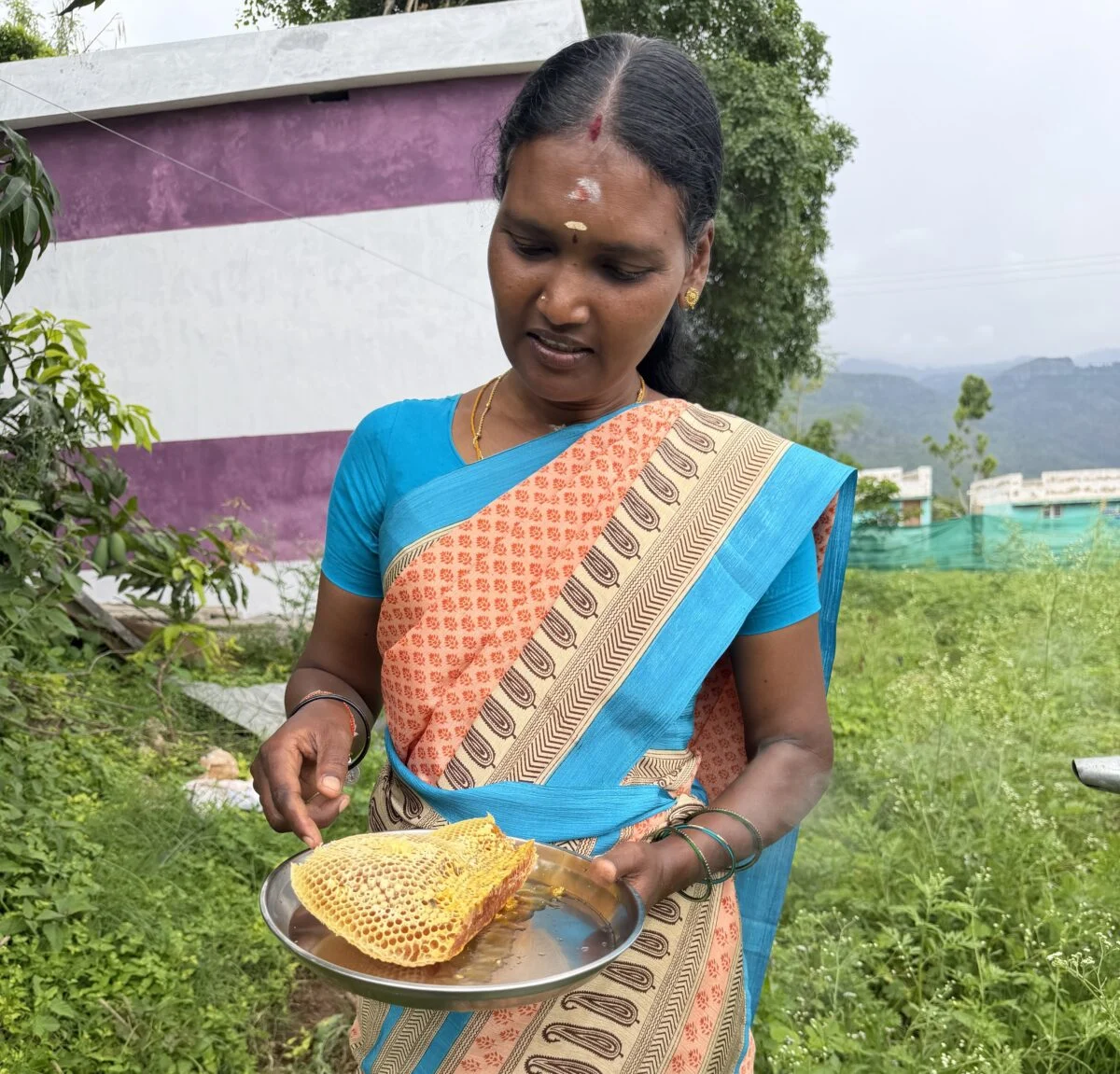
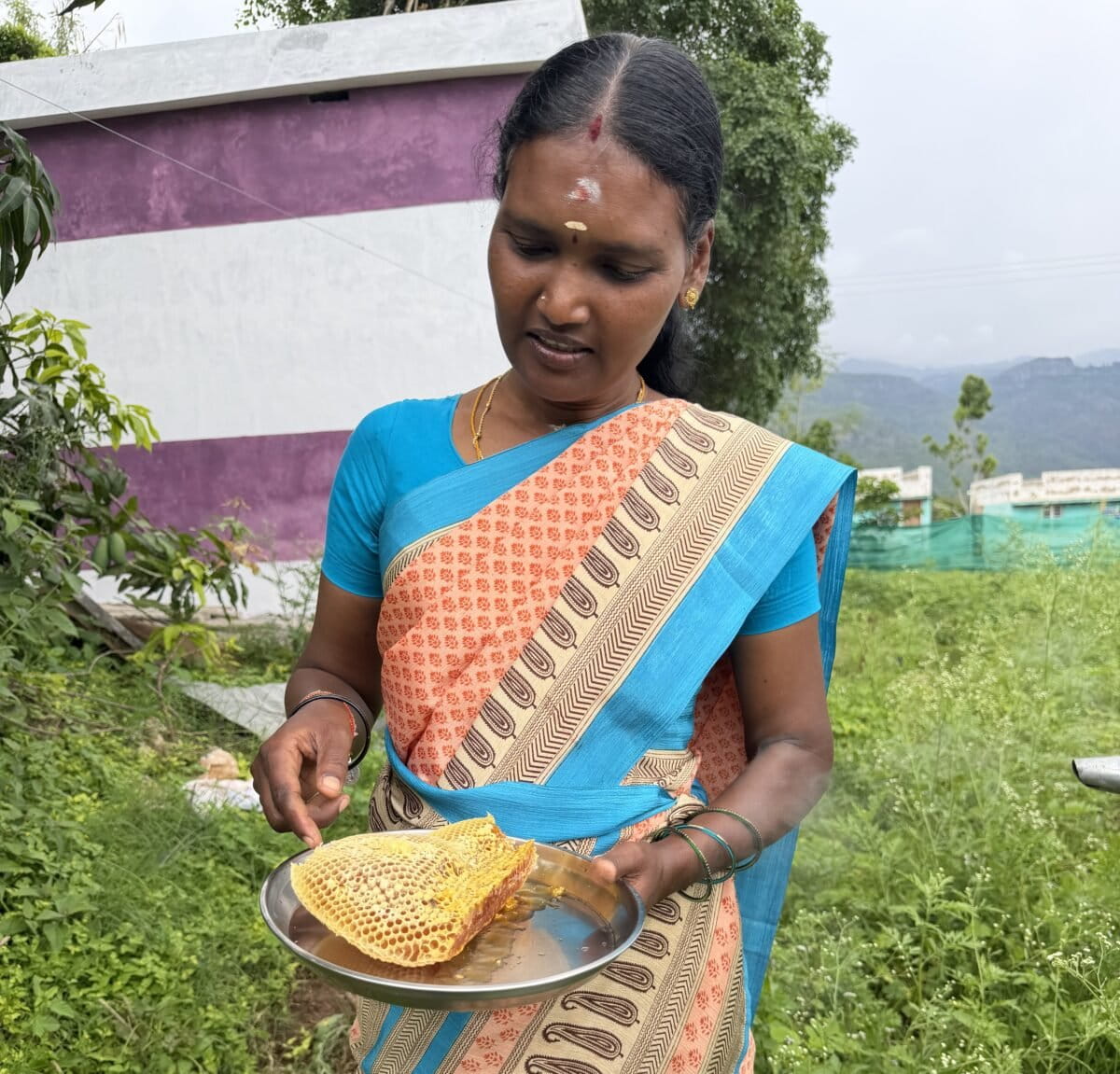
For Neelavathi, a 37-year-old Irula woman from the village of Vazhaithottam in Tamil Nadu’s Nilgiris district, the hum of a bee colony has become the sound of financial liberation. Over the past few months, her life has undergone a quiet but profound transformation. In a region where economic opportunities for Indigenous women are often tethered to seasonal labor or restricted forest access, Neelavathi has found a new calling as a beekeeper.
The results are tangible. She has already sold six liters of honey, using the proceeds to fund her children’s clothing, household essentials, and even the annual festival at the village’s Mariyamman Kovil temple. “Since I am the beekeeper at home, my family lets me keep the income for my own needs,” she says, her voice carrying a newfound sense of pride.
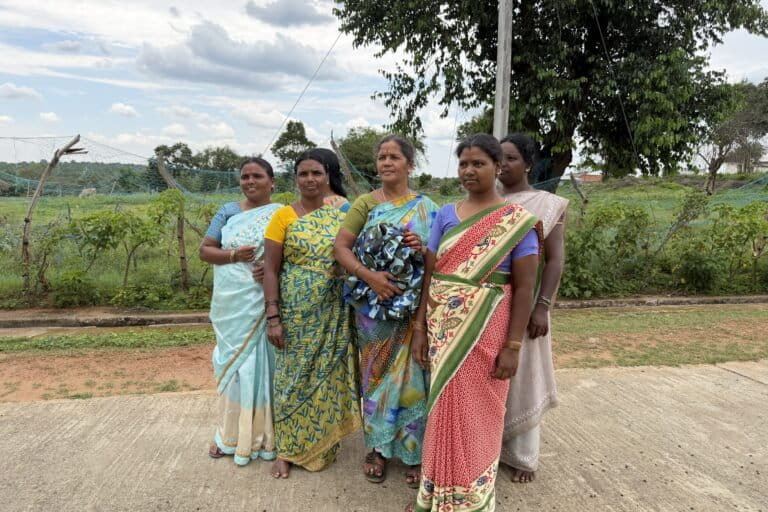
Neelavathi is not alone. She is one of 50 Indigenous women across the Nilgiris Biosphere Reserve who are part of a landmark initiative that is blending traditional ecological knowledge with modern apiculture. This program, a partnership between UNESCO and the Keystone Foundation, is redefining what sustainable development looks like in one of India’s most biodiverse landscapes.
I. Main Facts: A New Frontier for Apiculture in India
The "Women for Bees" project, a global initiative by UNESCO, made its Indian debut in April 2025. The program targets the Nilgiris Biosphere Reserve, a sprawling ecological haven that straddles the borders of Tamil Nadu and Kerala. The initiative is designed to address two critical issues simultaneously: the conservation of local bee populations and the socio-economic empowerment of Indigenous women.

Geographic and Demographic Scope
The project is currently active across five key locations:
- Tamil Nadu: Sigur, Pillur, and Kuzhiyoor.
- Kerala: Wayanad and Nilambur.
A total of 50 women from various Indigenous communities—including the Irulas, Kurumbas, and Kattunayakas—have been enrolled. These communities have a deep, ancestral connection to the forest and have traditionally been known for their skill in wild honey hunting. However, the UNESCO-Keystone partnership seeks to transition these women from the high-risk practice of wild honey collection to the more stable, manageable, and safe practice of box beekeeping.
The Choice of Species: Apis cerana indica
A pivotal technical aspect of the project is the focus on the Asian honey bee (Apis cerana indica), rather than the European honey bee (Apis mellifera), which is more common in commercial honey production. While A. mellifera is known for higher yields, A. cerana is the native hero of the Western Ghats. It is hardier, more resistant to local diseases, and better adapted to the region’s fluctuating temperatures. Furthermore, it is less aggressive, making it an ideal partner for women managing hives near their homes.
II. Chronology: From Forest Floor to Managed Hives
The transition from traditional forest dwellers to modern beekeepers did not happen overnight. The project followed a meticulous timeline designed to build trust and technical competence.

Phase 1: Community Engagement (Early 2025)
The program began with a series of community meetings. Organizers worked closely with village elders to identify women who were not only interested in beekeeping but also had the time and space to manage hives. According to Shiny Rehel, a program coordinator at the Keystone Foundation, the selection process was entirely voluntary, ensuring that the participants were personally invested in the outcome.
Phase 2: Classroom and Technical Training (April – June 2025)
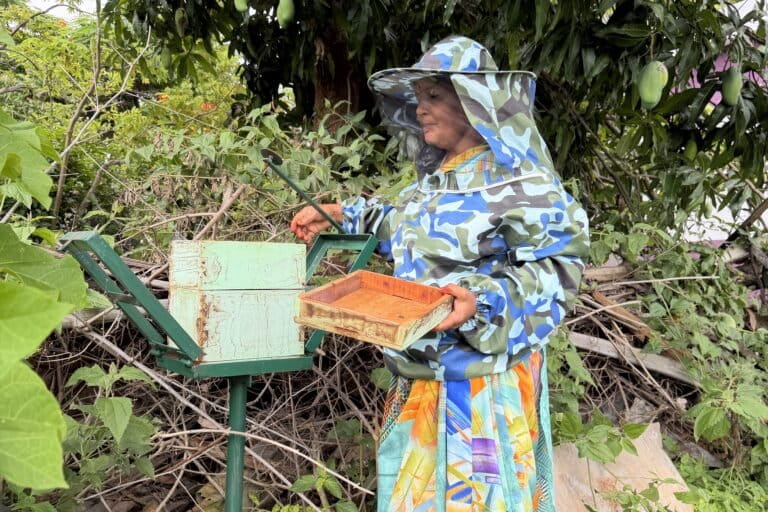
In April 2025, the formal training began. This phase combined classroom sessions with hands-on workshops. Most participants had little to no experience with managed hives. The training covered the basics of bee biology, colony management, and the importance of nectar-producing flora. UNESCO provided the necessary infrastructure, including bee boxes, protective veils, gloves, and honey extraction equipment.
Phase 3: Field Implementation and Mentorship (July 2025 – Present)
Following the training, the women installed hives in their backyards or nearby community lands. This phase was marked by a steep learning curve. Saritha, a 43-year-old participant, recalls her initial fear: “Handling bees was intimidating at first. I was stung a few times because I didn’t know how to handle them properly.” However, through regular follow-up mentoring and peer support, fear turned into familiarity. Today, Saritha manages seven boxes, each teeming with a healthy colony.
Phase 4: The First Harvest (Late 2025 – Early 2026)
The first significant harvests have recently concluded. Women in Kerala’s Nilambur Elephant Reserve and Tamil Nadu’s Sigur Plateau reported yields that exceeded expectations. The success of this first cycle has served as a "proof of concept," encouraging more women to seek entry into the program.
III. Supporting Data: The Economic and Ecological Impact
The "Women for Bees" project is backed by emerging data that underscores its viability as both a business model and a conservation tool.
Economic Resilience
For Indigenous families, the income from honey is often "surplus" money that doesn’t have to be funneled back into basic survival, but can instead be used for quality-of-life improvements.
- Lakshmi Babu (Nilambur): Harvested over 18 kg of honey in six months. She used the income to purchase a washing machine and cover her husband’s medical expenses.
- Neelavathi (Sigur): Sold six liters and purchased stone dosa griddles and clothes for her children.
- Premium Pricing: Honey from the Mudumalai landscape (Sigur) is fetching premium prices in local markets due to its "wild-crafted" reputation and the prestige of the UNESCO association.
Scientific and Agricultural Benefits
The choice of Apis cerana indica has yielded significant ecological dividends.
- Crop Yields: A 2025 study in Tamil Nadu evaluating A. cerana in bitter gourd cultivation showed a 27% increase in crop yield in fields pollinated by these bees.
- Foraging Efficiency: Research indicates that A. cerana forages for up to eight hours a day, significantly improving the quality and quantity of seeds in local crops like rapeseed.
- Social Immunity: Unlike the European honey bee, A. cerana exhibits stronger "hygienic behavior," meaning they are better at cleaning their hives and defending against parasites like the Varroa mite, reducing the need for chemical interventions.
IV. Official Responses: A Vision for Scalability
Officials from both UNESCO and the Keystone Foundation view the Nilgiris project as a blueprint for future conservation efforts across India.
Malavika Jayakrishnan, Program Assistant at UNESCO, emphasizes the empowerment aspect: “The first honey harvest has been particularly encouraging. We’ve seen women who were initially hesitant to handle bees begin managing hives independently. It has become a regular part of their daily routine, alongside farming and other activities.”
Srishti Kumar, also with UNESCO, highlights the resilience the program provides against environmental shocks. “In Wayanad, where landslides had previously destroyed the bee boxes and livelihoods of several traditional beekeepers, participants said the project had given women an opportunity to restart and rebuild their incomes,” Kumar noted.
Shiny Rehel of the Keystone Foundation points out that while the anecdotal evidence of improved biodiversity is strong, formal studies are on the horizon. “We are planning to study the project’s impact on biodiversity because one of the key benefits of beekeeping is the gains it can generate for the surrounding flora,” she stated.
The long-term goal, according to UNESCO officials, is to consolidate the success in the Nilgiris and then expand the "Women for Bees" model to other biosphere reserves across India, potentially creating a national network of Indigenous women beekeepers.

V. Implications: Navigating Tradition, Law, and Community
The success of this project carries deep implications for the future of Indigenous rights and environmental management in India.
Transitioning from Wild Hunting to Box Beekeeping
Historically, communities like the Kattunayakas were "honey hunters," a practice that involved climbing steep cliffs and using smoke to drive away wild Apis dorsata (giant honey bees). This was not only dangerous but increasingly restricted by the Wildlife (Protection) Act of 1972. While the Forest Rights Act of 2006 sought to restore some access, many Indigenous people still face legal hurdles when entering core forest zones. Box beekeeping provides a legal and safe alternative that allows these communities to maintain their cultural identity as "honey people" without violating modern conservation laws.
Social Cohesion and Resilience
Perhaps the most unexpected outcome of the project has been its impact on community structure. Lakshmi Babu noted that before the project, the 12 houses in her settlement had minimal interaction. “Now we meet regularly to exchange knowledge and discuss the challenges we face,” she says. This "social hive" provides a safety net for the women, allowing them to share resources and troubleshoot problems together.
The Retention Success
One of the most telling metrics of the program’s success is its retention rate. To date, not a single participant has dropped out. In the world of development projects, where attrition is often high, this 100% retention rate signals that the project is meeting a genuine need and is being managed with cultural sensitivity.
Conclusion: A Sweet Future
The "Women for Bees" project in the Nilgiris is more than just a livelihood program; it is a testament to the power of combining Indigenous wisdom with global conservation goals. As Neelavathi looks over her hives in Vazhaithottam, she sees more than just insects and honey; she sees a future where her income is her own, her community is stronger, and the forest she calls home is more vibrant than ever. The bees, as Lakshmi Babu puts it, "work hard and take very good care of those who care for them." In the Nilgiris, that care is now being returned in full.
