

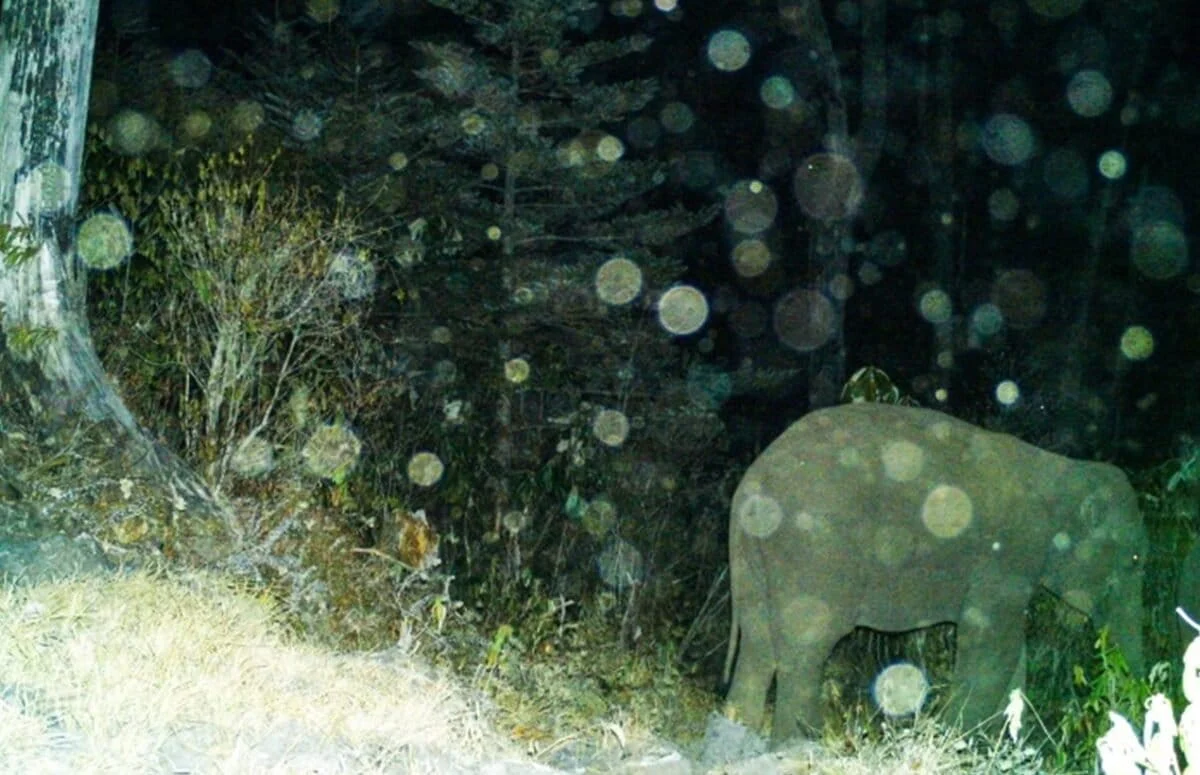
ITANAGAR, Arunachal Pradesh — In a discovery that challenges long-held biological assumptions about the habitat range of the world’s largest land mammals, researchers have documented the presence of Asian elephants at an altitude of 3,266 metres in the Eaglenest Wildlife Sanctuary. This finding, highlighted in a comprehensive new action plan released by the Arunachal Pradesh government and WWF-India, represents what is believed to be the highest recorded elevation for Asian elephants (Elephas maximus) globally.
The revelation is part of a broader strategy to manage the escalating human-elephant conflict (HEC) in India’s northeastern frontier, where a combination of improved surveying techniques and shifting migratory patterns has revealed an elephant range nearly 80% larger than previously estimated.
Main Facts: A New Ceiling for the Asian Elephant
For decades, the scientific consensus placed the Asian elephant primarily in the tropical and subtropical moist broadleaf forests of the Himalayan foothills. While occasional movements were noted up to 2,000 metres, they were generally considered outliers. The new data, however, provides photographic evidence and physical tracks of a juvenile elephant navigating the rugged, high-altitude terrain of Eaglenest at 3,266 metres.
To put this into a global perspective, the highest known record for any elephant species is approximately 4,000 metres, attributed to African elephants on Mount Kenya. The discovery in Arunachal Pradesh suggests that the Asian subspecies possesses a greater physiological and behavioral plasticity than previously credited.
The findings were formalized in the "Action Plan on Managing Human-Elephant Conflict in Arunachal Pradesh," a document released in May 2026. This plan is the culmination of an intensive study period between December 2024 and March 2026, conducted jointly by the Arunachal Pradesh Department of Environment, Forest and Climate Change and WWF-India.

Key Findings at a Glance:
- Record Altitude: 3,266 metres in Eaglenest Wildlife Sanctuary.
- Range Expansion: The estimated distribution range has grown from 7,001 sq km in 2017 to 12,446 sq km in 2025—a 78% increase.
- Dietary Shifts: Camera trap footage indicates high-altitude elephants are primarily consuming bamboo and seeking out mountain salt licks for essential minerals.
- Conflict Surge: 1,503 HEC incidents were recorded between 2007 and 2024, with 85% of these occurring in the last decade alone.
Chronology: From Folklore to Scientific Record
The presence of elephants in the high mountains is not entirely a "new" phenomenon to the indigenous peoples of the region. The chronology of this discovery reveals a gap between traditional ecological knowledge and formal scientific documentation.
The Early 2000s: Ornithologist Anwaruddin Choudhury first documented elephant presence in the higher reaches of Eaglenest. At the time, these reports were noted but lacked the high-precision altitudinal data and photographic confirmation required for a global record.
The 2017 Assessment: A state-wide survey estimated the elephant range at roughly 7,001 square kilometres. However, this assessment relied on a more limited sampling design, focusing largely on the lower-lying river valleys and foothills.
December 2024 – March 2026: WWF-India and the State Forest Department launched a massive data-collection drive. Utilizing advanced camera traps and extensive field surveys, researchers tracked dung and footprints across 17 districts.
May 2026: The official release of the Action Plan. The document confirms that elephants are not just visiting these high altitudes as a fluke but are utilizing them as part of a seasonal migratory pattern, likely during the warmer summer months to avoid the biting cold of the Himalayan winter.

Supporting Data: Mapping the 78% Range Increase
One of the most striking revelations of the 2026 Action Plan is the massive expansion of the documented elephant range. While experts like Aritra Kshettry of WWF-India’s Elephant Conservation Programme (ECP) attribute much of this to "improved surveys" and "extensive sampling," there is a clear indication that elephants are also physically expanding into new territories.
Geographic Distribution
Elephants are now confirmed to be present in 17 districts across Arunachal Pradesh. While the majority remain in the low-lying river valleys, the data shows a significant northward push.
Conflict Statistics
The rise in recorded range has unfortunately mirrored a rise in conflict. Between 2007 and 2024, the state saw 1,503 HEC incidents. The breakdown of these incidents reveals a troubling trend:
- Crop Damage: The most frequent cause of conflict, as herds move into agricultural fields in search of high-energy forage.
- Property Damage: Destruction of granaries and homes, particularly in the winter months.
- Human Casualties: While lower than in states like Odisha or Assam, the number of deaths and injuries is rising.
The districts of Pakke-Kessang, Papum Pare, East Siang, Lohit, Changlang, and Tirap have been identified as primary "hotspots." In districts like Lohit and Changlang, residents reported that elephant damage is a relatively new phenomenon, having only become a significant issue since 2021.
Official Responses: Expert Insights on Behavior and Conservation
The discovery has prompted a re-evaluation of how the state manages its wildlife corridors. Experts emphasize that the high-altitude sightings are more than just a biological curiosity; they are a window into the survival strategies of the species.

Aniruddha Dhamorekar, associated with the ECP, noted the importance of seasonal timing. "This area gets very cold in the winter. Elephants are usually not found in such temperatures. It was important to understand whether this was just a seasonal movement during the summer," he stated. He further explained that camera traps provided a rare look at their diet, showing a heavy reliance on high-altitude bamboo and "salt licks"—natural mineral deposits essential for the animals’ health.
Aritra Kshettry highlighted the necessity of looking beyond the borders of protected areas. "The records of elephants at these altitudes give clues about their movement outside of protected areas, which helps predict potential interactions between elephants and humans," Kshettry said. He warned that the expansion of the range is not necessarily a sign of a booming population, but rather a sign of "small expansions in ranges where elephants had not been recorded for many years," potentially driven by habitat fragmentation elsewhere.
The Department of Environment, Forest and Climate Change has also expressed concern over the "anthropogenic pressures" on traditional corridors. Between 2018 and 2024, the state recorded 17 elephant deaths, five of which were caused by electrocution—a direct result of elephants coming into contact with poorly maintained power lines near human settlements.
Implications: The High Cost of Habitat Fragmentation
The Action Plan makes it clear: the future of the Asian elephant in Arunachal Pradesh depends on the state’s ability to balance infrastructure development with ecological safeguards.
Land Use and Infrastructure
The conversion of low-level forests into permanent human settlements is the primary driver of conflict. As forest patches are cleared for agriculture, roads, hydropower projects, and sand mining, elephant corridors are being squeezed.

"It is essential to incorporate ecological safeguards into all infrastructure and land-use plans in the state," Kshettry urged. "This is crucial not just for elephants, but for the ecological security of the entire region."
Mitigation and Management Strategies
To address the rising HEC, the May 2026 Action Plan proposes a multi-tiered approach:
- Early Warning Systems (EWS): Implementing technology to alert villagers when herds are approaching.
- Solar Fencing: Providing non-lethal barriers to protect crops, though the plan warns that "improperly placed fences" can block vital paths and escalate conflict in neighboring areas.
- Rapid Response Teams: Trained units to safely drive elephants back into the forest during conflict events.
- Improved Compensation: Between 2019 and 2024, the state paid approximately ₹70 lakh in compensation. The new plan calls for a more streamlined and robust mechanism to ensure farmers do not bear the financial brunt of conservation.
Conclusion
The discovery of elephants at 3,266 metres serves as a powerful reminder of the resilience of nature, but it also underscores the fragility of the Asian elephant’s future. As the species climbs higher to find resources or avoid human pressure, the boundaries between the wild and the developed world continue to blur. The 2026 Action Plan represents a critical step toward a "coexistence" model, but its success will depend on whether the state can protect the connectivity of the landscape before these majestic high-altitude wanderers find themselves with nowhere left to go.
