

For decades, the global environmental narrative has been dominated by a singular, seemingly unassailable directive: plant more trees. In India, this mandate has translated into massive afforestation drives aimed at transforming "degraded" landscapes into lush, canopied forests. However, a growing body of scientific evidence suggests that this "one-size-fits-all" approach to climate mitigation is causing an ecological crisis in one of the country’s most misunderstood biomes—the semi-arid grasslands and savannahs.
A landmark study from Maharashtra has now provided empirical weight to a long-standing warning from ecologists: by planting trees on open natural ecosystems (ONEs), we are not "restoring" nature; we are destroying a complex, ancient habitat and driving its specialist inhabitants toward extinction.
Main Facts: The Misunderstood Value of Open Ecosystems
India’s grasslands and savannahs are often viewed through a lens of "lack." To the untrained eye—and to traditional forestry departments—they appear as "wastelands" lacking the density, shade, and timber value of tropical forests. Yet, these open landscapes cover an estimated 15% to 20% of India’s landmass. Far from being barren, they are high-biodiversity zones that regulate microclimates, recharge groundwater, and support a unique array of flora and fauna found nowhere else.
The core of the issue lies in the conversion of these "old-growth" savannahs into plantations. The recent research conducted in Maharashtra’s Pune and Satara districts highlights a stark ecological trade-off. When trees are introduced to these arid and semi-arid zones, the fundamental structure of the habitat changes. The vast, sun-drenched corridors required by ground-nesting birds and low-foliage hunters are replaced by woody canopies.

The study’s findings are unequivocal: afforestation renders these areas uninhabitable for "savannah specialists"—birds evolutionarily wired to thrive in open spaces. While the total number of bird species might sometimes remain stable or even increase due to an influx of common woodland birds, the unique, endemic species that define the grassland ecosystem are being wiped out.
Chronology: From Colonial Logic to Modern Policy
The practice of afforesting grasslands is not a modern innovation but a lingering "ghost" of British colonial administration. Understanding the current crisis requires tracing the history of land classification in India.
The Colonial Era (1860s–1947)
In the 19th century, the British Raj viewed land primarily as a source of revenue. Forests provided timber for railways and ship-building, and agricultural fields provided taxes. Grasslands, however, produced neither. Consequently, they were labeled "wastelands." Policies in the 1860s focused on "improving" these lands through cultivation or the planting of timber-heavy species. This era established the enduring misconception that a landscape without trees was a landscape in need of "fixing."
Post-Independence and the Rise of Exotic Species (1950s–1990s)
Following independence, the Indian government inherited these colonial land-use classifications. In the 1950s, Maharashtra saw the widespread introduction of Gliricidia sepium, an exotic tree from Central America. Known for its pink flowers and rapid growth, it was promoted to provide fodder and biomass. However, Gliricidia is an invasive-leaning species that creates dense, homogeneous canopies, fundamentally altering the light and soil composition of the native savannah.

The Decades of Decline (1992–2022)
As afforestation and agricultural expansion accelerated, the impact on biodiversity became measurable. The 2023 State of India’s Birds report provided a grim retrospective. Over a 30-year period, populations of birds occupying open and natural ecosystems declined by a staggering 50%. This period marked the realization that while "forest cover" was increasing on paper, the health of India’s broader avian biodiversity was in freefall.
The Policy Shift (May 2024)
On May 7, 2024, the Maharashtra government issued a historic resolution. Recognizing the ecological damage caused by indiscriminate tree planting, it mandated that afforestation drives be avoided on grasslands and wetlands. This made Maharashtra the first state in India to legally acknowledge the intrinsic value of non-forested ecosystems.
Supporting Data: The Biological Cost of the Canopy
The research led by Prabhav Benara of the National Center for Biological Sciences (NCBS) and his team involved a rigorous comparison across 15 sites in Maharashtra. Each site paired an undisturbed old-growth savannah with a well-established tree plantation (primarily Gliricidia sepium and some Eucalyptus).
Species Composition and "Winners vs. Losers"
The study recorded 1,079 individual birds belonging to 69 species. The data revealed a clear "replacement" effect:

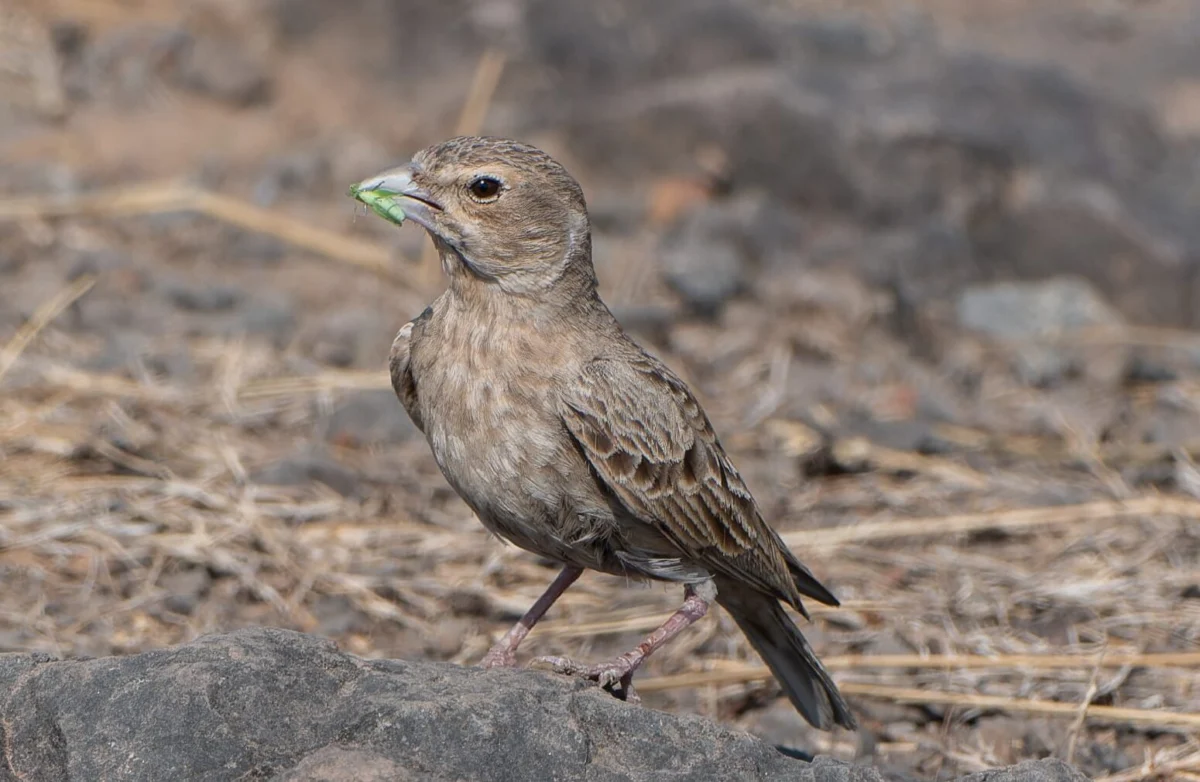
- The Losers: Savannah specialists like the Indian Courser (a long-legged bird that requires open ground to forage), the Tawny Pipit (which nests directly on the ground), the Rufous-tailed Lark, and the Rock Bush Quail. These species saw steep declines in both richness (diversity) and abundance (population) within plantations.
- The Winners: Woodland specialists and generalists. These are common birds that can survive in various environments. While they "padded" the species count in plantations, they did not compensate for the loss of the rare grassland specialists.
The Rainfall Factor
One of the study’s most nuanced findings was how rainfall interacts with afforestation. The researchers found that the impact of tree planting is most destructive in "intermediate" rainfall zones (approx. 560 mm to 920 mm).
- Intermediate Zones: In these areas, trees grow dense enough to completely shade out the native grasses, leading to the greatest loss of bird diversity.
- Arid Zones (<560 mm): In very dry areas, plantations tend to be sparser, allowing some grassland features to persist.
- Wet Zones (>920 mm): In wetter regions, the native savannahs are already less likely to host a high diversity of arid-specialist birds, making the impact of trees less pronounced.
Ecological Indicators
Birds are considered "excellent habitat indicators." The disappearance of the Harrier—a migratory bird of prey—from afforested areas is particularly telling. Harriers require vast open spaces to hunt rodents and insects. Their absence signals a breakdown in the natural pest-control mechanisms that benefit surrounding agricultural lands.
Official and Expert Responses
The shift in perspective from "tree planting as a cure-all" to "landscape-level conservation" has been driven by a coalition of scientists and grassroots activists.
Abi T. Vanak, Director of the Centre for Policy Design at ATREE, emphasizes the hydrological mismatch of afforestation. "The intent is to create rainforest density everywhere, but water is a key limiting factor," Vanak notes. He argues that even when trees are planted, they must suit local rainfall regimes. Dense plantations in arid zones consume excessive groundwater and often have low survival rates, whereas an "open area" approach would be more natural and sustainable.

Prabhav Benara, co-author of the study, highlights the predictive value of this research in the context of climate change. As rainfall patterns shift across Western Maharashtra, current "dry" plantations may become denser, further squeezing out the remaining grassland specialists.
Vishwatej Pawar, co-founder of the Grasslands Trust, points to the lack of public and governmental understanding. "There is no clear understanding of what a healthy grassland is versus a degraded one," Pawar says. His organization was instrumental in pushing for the Maharashtra resolution, arguing that grasslands provide essential services like stabilizing insect and rodent populations, which directly aids farmers.
Implications: A New Era for Indian Conservation
The findings from Maharashtra have profound implications for how India—and the world—approaches land restoration and climate goals.
1. Redefining "Restoration"
The study suggests that the global "Bonn Challenge" and other restoration goals must move away from simple tree-counting metrics. Restoring a grassland might mean removing invasive woody species, managing controlled fires, or maintaining traditional grazing patterns, rather than planting saplings.

2. Climate Change Adaptation
As temperatures rise, the ability of grasslands to act as carbon sinks (storing carbon primarily underground in their massive root systems) is becoming more recognized. Unlike forests, which can release stored carbon during wildfires, grassland carbon is more "secure" beneath the soil. Protecting these areas is a pragmatic climate strategy.
3. Economic and Agricultural Security
The decline of specialist birds like larks and pipits isn’t just a loss for birdwatchers; it’s an economic threat. These birds are the primary predators of agricultural pests. By destroying their habitat through afforestation, the state may inadvertently be increasing farmers’ reliance on chemical pesticides.
4. Legal Precedent
Maharashtra’s May 2024 resolution sets a vital precedent. If other states follow suit, it could lead to a nationwide reclassification of "wastelands" into "Open Natural Ecosystems," providing them with the same legal protections as Reserved Forests.
In conclusion, the "green" impulse to plant trees, while well-intentioned, must be tempered by ecological literacy. The silence of the tawny pipit in a Gliricidia plantation is a reminder that a forest is not always an improvement on a field. To truly protect India’s biodiversity, we must learn to value the beauty and the utility of the open horizon.
