

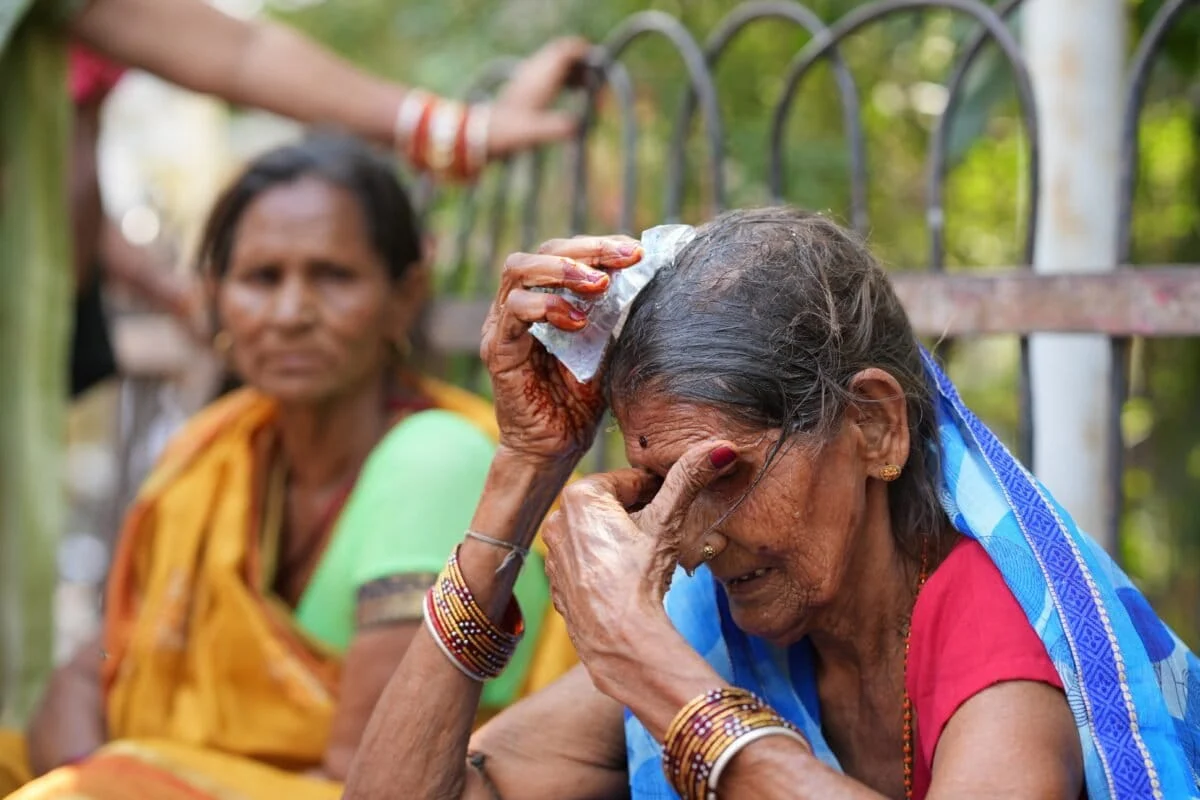
In a move that signals a profound shift in India’s approach to climate adaptation and public safety, the Union Government has officially recognized heatwaves and lightning as natural calamities. This designation makes them eligible for financial relief under the State Disaster Response Fund (SDRF) and the National Disaster Response Fund (NDRF). The announcement, made by Union Minister of State for Home Affairs, Nityanand Rai, in Parliament on August 4, 2024, marks the culmination of years of advocacy by climate scientists, policy experts, and state governments who have witnessed the escalating toll of these extreme weather events.
By integrating heatwaves and lightning into the formal disaster management framework, the Indian government has acknowledged that these are no longer "seasonal inconveniences" but lethal threats exacerbated by global warming. This policy change ensures that victims and state governments have access to systematic financial support for relief, recovery, and reconstruction, bringing these "silent killers" on par with traditional disasters like floods, earthquakes, and cyclones.
Main Facts: A New Era for Disaster Relief
The core of the government’s decision lies in the formal "notification" of these events. Under the Disaster Management Act of 2005, only specific disasters are eligible for funding from the NDRF and SDRF. Until now, heatwaves and lightning were conspicuously absent from this list at the national level, leaving many states to fend for themselves or utilize limited "local disaster" funds.
The Scope of the Notification
Minister Nityanand Rai confirmed that the decision follows the rigorous recommendations of the 16th Finance Commission. The Commission noted that the "increasing frequency and intensity of extreme weather events arising from climate change" necessitated a broadening of the disaster net.
The inclusion means that:
- Financial Assistance: State governments can now draw from the SDRF (which is 75% funded by the Center for general states and 90% for Himalayan/NE states) to provide ex-gratia payments to the families of those deceased, as well as medical assistance to those injured.
- Reconstruction and Recovery: Funds can be utilized for immediate response and the restoration of essential services affected by these events.
- Institutional Support: The National Disaster Management Authority (NDMA) will now have a more robust mandate to oversee the implementation of Heat Action Plans (HAPs) across the country.
Defining the Boundaries of Funding
While the SDRF and NDRF are now open for heat and lightning relief, the Minister clarified a critical distinction in fiscal allocation. These funds are strictly for response, relief, recovery, and reconstruction. Long-term structural measures—such as building cooling centers, urban greening, or installing lightning arresters on a massive scale—must be financed through the State and National Disaster Mitigation Funds. This ensures that emergency funds are not depleted by long-term infrastructure projects, maintaining a balance between immediate crisis management and future resilience.
Chronology: The Long Road to Recognition
The journey toward this notification has been a decade-long struggle involving scientific evidence, judicial intervention, and grassroots pressure.
The Early Advocates (2010–2015)
The push for heatwave recognition gained momentum after the 2010 Ahmedabad heatwave, which killed over 1,300 people in a single city. This led to the creation of India’s first Heat Action Plan. However, at the time, the central government viewed heat as a local meteorological phenomenon rather than a national disaster.
State-Level Initiatives (2015–2023)
Recognizing the gap in central funding, several states took the lead. Odisha, frequently hit by both heat and lightning, was among the first to declare them "state-specific disasters." This allowed the state to use up to 10% of its SDRF allocation for relief. Other states, including Haryana, Kerala, Telangana, and Tamil Nadu, followed suit. However, the 10% cap was often insufficient for the scale of the crisis.
The Turning Point: The 16th Finance Commission
The 16th Finance Commission played the most pivotal role in the recent change. Tasked with recommending how tax revenue and disaster funds are shared between the Center and States for the 2021–2026 period, the Commission took a hard look at climate data. They concluded that the distinction between "notified" and "non-notified" disasters was becoming arbitrary as climate change blurred the lines. Their recommendation to the Ministry of Home Affairs was clear: the list must evolve with the changing climate.
Supporting Data: The Human and Economic Toll
The data provided by the Ministry of Home Affairs paints a sobering picture of the current crisis. According to the National Heat-Related Illness and Death Surveillance (NHRIDS), which monitors over 51,000 reporting units across the country, the impact in 2024 has been significant.
Heatstroke Statistics (March 1 to August 2024)
The Minister revealed that there have been 4,853 confirmed heatstroke cases in this window alone. The geographical distribution of these cases highlights the regions most vulnerable to rising temperatures:
- Telangana: 915 cases (The highest in the country)
- West Bengal: 733 cases
- Chhattisgarh: 660 cases
- Andhra Pradesh: 540 cases
Interestingly, while cases were high, the official death toll recorded by this specific surveillance system stood at 20, with Maharashtra reporting the highest number (11 deaths). However, experts often argue that these figures are underreported due to the difficulty in certifying heat-related deaths, which often manifest as organ failure or cardiac arrest.
Lightning: India’s Deadliest Disaster
While heatwaves often dominate the news cycle, lightning is statistically more lethal. Data from the National Crime Records Bureau (NCRB) indicates that lightning accounts for the highest number of deaths among all natural disasters in India.

- Rising Trends: Deaths due to lightning have seen a consistent upward trajectory since 1975.
- Vulnerability: The majority of victims are rural laborers and farmers working in open fields.
- Frequency: Climate change has increased the instability of the atmosphere, leading to more frequent and violent thunderstorms, particularly in the pre-monsoon and monsoon months.
The Broader Context
With this new notification, heatwaves and lightning join an existing list of 12 other recognized calamities:
- Cyclone
- Drought
- Earthquake
- Fire
- Flood
- Tsunami
- Hailstorm
- Landslide
- Avalanches
- Cloudburst
- Pest Attack
- Frost and Cold Waves
Official Responses: Government and Expert Perspectives
The announcement has been met with a mixture of relief and calls for further action from various stakeholders.
The Government’s Stance
Union Minister Nityanand Rai emphasized that the government is committed to a "zero casualty" approach. By providing states with the financial muscle to respond, the Center expects a more proactive implementation of Heat Action Plans. "The inclusion is a proactive step to empower states to provide immediate relief to the most vulnerable sections of society," Rai stated during the parliamentary session.
Expert Analysis
Climate experts and policy researchers have largely welcomed the move. "For too long, heatwaves were treated as an act of God for which no one was financially responsible," said a senior researcher at a Delhi-based climate think tank. "By bringing this under the NDRF/SDRF, we are professionalizing the response. It allows for systematic compensation for the poor, who lose wages or their lives during these events."
However, experts also warn that "relief" is only a band-aid. The real challenge lies in "mitigation." They argue that while the government has opened the purse strings for emergency aid, the funding for long-term cooling infrastructure and lightning warning systems needs to be scaled up ten-fold to match the threat.
Implications: What This Means for India’s Future
The notification of heatwaves and lightning as disasters has far-reaching implications for the economy, public health, and urban planning.
1. Protection for the Informal Workforce
India’s economy is heavily dependent on outdoor labor—construction, agriculture, and street vending. These workers are the most exposed to extreme heat. Formal recognition as a disaster means that states can now potentially develop insurance schemes or direct benefit transfers for workers who are forced to stay home during "Red Alert" heatwave days.
2. Strengthening Heat Action Plans (HAPs)
While many cities have HAPs on paper, they often lack the budget for implementation. With access to SDRF funds, municipal corporations can now justify expenditures on "cooling centers," hydration stations, and emergency medical mobile units as part of disaster response.
3. Advancements in Lightning Safety
For lightning, the implications are life-saving. The recognition will likely lead to the mass installation of lightning arresters on public buildings and the expansion of the "Damini" app’s reach (an app that provides lightning alerts). It also ensures that a farmer struck by lightning in a remote field is no longer a forgotten statistic but a citizen entitled to state support.
4. Climate Justice and Fiscal Federalism
This move is a significant win for fiscal federalism. It acknowledges that states on the frontlines of climate change—like Odisha, Bihar, and Telangana—should not bear the financial burden alone. It aligns India’s domestic policy with its international stance on "Loss and Damage," arguing that the victims of climate-induced disasters deserve institutionalized compensation.
5. The Challenge of Verification
One of the primary hurdles moving forward will be the verification of heat-related deaths and illnesses. Unlike a flood or an earthquake, where the damage is visible and immediate, heat-related mortality is often indirect. The government will need to standardize medical protocols across states to ensure that relief reaches those who truly need it without being bogged down by bureaucracy.
Conclusion
The recognition of heatwaves and lightning as natural calamities is a landmark moment in India’s legislative history. It reflects a growing maturity in the country’s disaster management philosophy—moving from a reactive "rescue-and-relief" model to a more comprehensive understanding of climate risk.
As the planet continues to warm, the frequency of these events will only increase. While the 16th Finance Commission and the Ministry of Home Affairs have provided the legal and financial framework, the success of this policy will depend on how effectively state governments can translate these funds into ground-level protection. For the millions of Indians who face the scorching sun and the volatile skies every year, this decision is not just a policy change; it is a vital lifeline.
