


For centuries, the navigational prowess of the natural world has baffled and inspired humanity. From the Bar-headed geese that traverse the towering peaks of the Himalayas to the green sea turtles that navigate thousands of miles of featureless ocean to return to their natal beaches, the animal kingdom is governed by an invisible hand: the Earth’s magnetic field. This biological "sixth sense," known as magnetoreception, acts as an internal GPS, allowing diverse species to orient themselves with pinpoint accuracy.
However, a growing body of scientific evidence is beginning to dismantle long-held assumptions about how this ability came to be. For decades, the prevailing theory suggested that magnetoreception was a gift inherited from our most ancient microbial ancestors. But recent breakthroughs in genetics, paleontology, and molecular biology suggest a more complex—and perhaps more impressive—narrative. It appears that the ability to sense the Earth’s magnetic field may have evolved independently across the tree of life, a phenomenon known as convergent evolution, rather than being a single trait passed down through the eons.
Main Facts: The Mystery of the Internal Compass
Magnetoreception relies on the presence of magnetite, a naturally occurring iron oxide mineral that is highly magnetic. In many organisms, this mineral is synthesized through a process called biomineralization. While it has long been known that certain bacteria use chains of magnetite crystals to navigate, the bridge between these microorganisms and complex animals like birds, fish, and mollusks has remained elusive.
The core of the current scientific debate centers on two conflicting possibilities:
- The Common Ancestor Theory: Magnetoreception was "invented" once by ancient bacteria or archaea and then passed down through billions of years of evolution to modern animals.
- The Independent Evolution Theory: Different groups of animals developed the ability to create magnetite and sense magnetic fields separately, using different genetic "blueprints" to solve the same navigational problem.
Recent studies of "giant" magnetofossils and the unique iron-processing methods of marine mollusks are tipping the scales toward the latter. Scientists are finding that the genetic machinery used by bacteria to build magnetic sensors is nowhere to be found in the complex animals that use those same sensors, suggesting a radical break in the evolutionary chain.

Chronology: Three Billion Years of Magnetic History
To understand the origins of this sense, one must look back to the Earth’s infancy. Approximately three billion years ago, the planet was a vastly different place. The atmosphere was anoxic, containing less than 0.001% of the oxygen we breathe today. The oceans were thick with dissolved metal ions, particularly iron.
The Archaean Survival Strategy
In this iron-rich environment, the earliest life forms—Archaea—faced a paradox. While iron is essential for life, an excess of it inside a cell is lethal. High concentrations of iron ions can pass through cell membranes and trigger the production of free radicals, which tear apart delicate cellular structures. To survive, these microorganisms evolved a defense mechanism: they began "packaging" excess iron into crystals of iron oxide. This process, magnetite biomineralization, effectively neutralized the toxicity of the iron by turning it into a stable, solid form.
The Rise of the Bacterial Compass
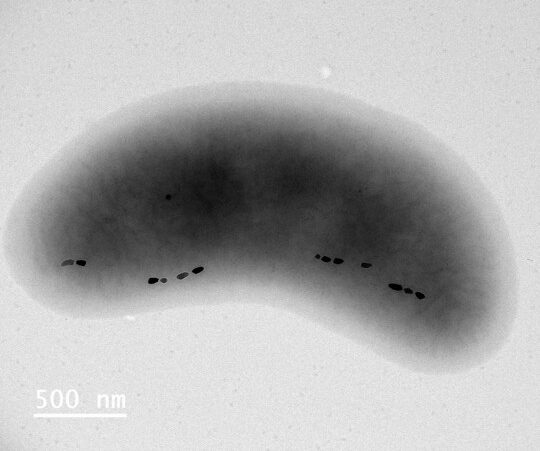
As millions of years passed, life began to find a secondary use for these iron crystals. Some bacteria repurposed their internal magnetite into tiny, nanoscale "magnetosomes." By arranging these crystals in a chain, the bacteria created a permanent magnetic dipole—essentially a needle—that allowed them to align themselves with the Earth’s magnetic field lines. This helped them navigate toward environments with optimal oxygen and nutrient levels.
The Fossil Record Gap
For nearly two billion years, these small-scale magnetosomes remained the standard. They are preserved in the geological record as "magnetofossils" dating back 1.9 billion years. However, the record takes a dramatic turn roughly 56 million years ago. During the Paleocene-Eocene Thermal Maximum, a period of rapid global warming, the fossil record suddenly reveals "giant" magnetofossils—crystals far larger and more complex than anything produced by simple bacteria. This suggests that more complex organisms had begun to master the art of magnetic biomineralization on a much larger scale.
Supporting Data: Genetic Disconnects and Giant Crystals
The evidence for independent evolution is found in the deep code of life. Bacteria that possess magnetoreception share a specific "magnetosome gene cluster." This cluster provides the instructions for everything from the transport of iron into the cell to the alignment of the crystals into a functional compass.
The Missing Genetic Signature
If animals like migratory birds or sea turtles inherited their magnetic sense from these bacteria, one would expect to find remnants of this magnetosome gene cluster in their DNA. However, researchers have found nothing. Arash Komeili, a Professor at UC Berkeley who specializes in the magnetic properties of aquatic bacteria, notes that while all magnetotactic bacteria share a common genetic mechanism, that signature disappears when we look at higher life forms.
The only "link" found so far is in certain protists—simple, single-celled eukaryotes. These organisms gain magnetic abilities not by having their own genes for it, but by entering into a symbiotic relationship with magnetotactic bacteria or by ingesting them. Beyond these simple organisms, the genetic trail goes cold, suggesting that animals developed their own unique ways of building magnetic sensors.
The Case of the Chiton
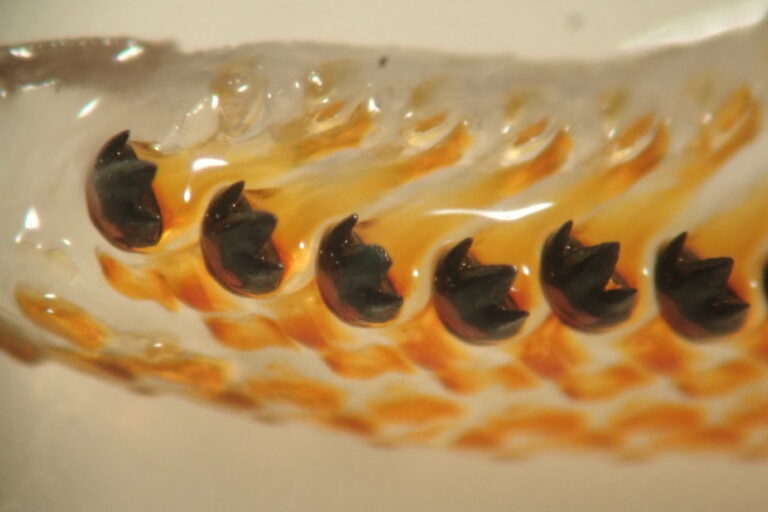
One of the most compelling pieces of data comes from the chiton, a marine mollusk. Chitons use magnetite to create incredibly hard, magnetic "teeth" on their radula (a tongue-like organ) to graze on algae growing on rocks.
Research led by Associate Professor Michiko Nemoto at Okayama University revealed that the chiton’s method of creating magnetite is fundamentally different from that of bacteria. Bacteria synthesize magnetite inside intracellular vesicles (tiny bubbles inside the cell). In contrast, chitons form magnetite in an extracellular matrix—the space outside the cells—similar to how vertebrates grow teeth or bones. Furthermore, the protein the chiton uses to process iron has no similarity to the proteins used by bacteria.
Official Responses: Insights from the Scientific Community
The shift in understanding has prompted leading experts to reconsider the "how" and "why" of animal navigation.
Richard J. Harrison, Professor of Earth Sciences at the University of Cambridge, who led the study on giant magnetofossils, suggests that the evolutionary leap toward larger crystals was a functional necessity. "Organisms originally developed the ability to grow small magnetite crystals, but then over time, they learned that actually, these larger ones are much better suited to navigational magnetoreception," Harrison explains. He notes that it is not a "giant crazy leap" to assume organisms eventually learned to grow single, large crystals rather than assembling them from tiny "bricks."
Arash Komeili of UC Berkeley highlights the frustration of the missing link. "I think it’s a good hypothesis that there would be a link between magnetotactic bacteria and higher eukaryotes… But when searching for a genetic relationship, we don’t find the same genetic signature," he stated in a Berkeley News release. This absence of a shared genetic "smoking gun" is a primary reason scientists are looking toward independent evolution.
Michiko Nemoto of Okayama University is firm in her assessment of the chiton’s unique path. "I do not think that chiton magnetite biomineralisation has a direct evolutionary link to magnetotactic bacteria," she says. She believes the chiton simply modified its existing tooth-formation system to include iron, rather than "borrowing" a system from bacteria.
Kenneth Lohmann, a Professor at the University of North Carolina and a leading expert on sea turtle migration, agrees that animals have the capacity to reinvent the wheel. "We do know that it’s possible for animals to independently evolve and produce magnetite," Lohmann says. He suggests that once an animal evolves magnetite for any reason—such as hardening its teeth—it is only a matter of time before that mineral becomes associated with the nervous system, granting the animal a magnetic sense.
Implications: The Needle in the Haystack
If magnetoreception evolved independently multiple times, it raises profound questions about the nature of biological evolution. It suggests that the Earth’s magnetic field is such a powerful and consistent environmental cue that life will "find a way" to exploit it, regardless of the biological starting point.

The Challenge of Identification
However, the independent evolution theory also explains why scientists have struggled for decades to find the actual "receptor" in animals. Unlike sight or hearing, which require external openings (eyes or ears) to receive signals, magnetic fields pass through the entire body. A magnetic receptor doesn’t need to be on the surface; it could be anywhere.
"So far, no one has been able to identify with certainty a magnetic receptor in any animal," says Lohmann. Because magnetite crystals are nanoscopic, finding them is, as the research suggests, like finding a needle in a mountain of haystacks. Every cell in an animal’s body deals with iron metabolism, as Swastik Mondal of CSIR-CGCRI points out. "Iron metabolism is universal… the chemistry of controlled iron oxidation that produces magnetite is not all that different from the chemistry that handles everyday iron storage."
Future Directions
The implication for future research is clear: scientists cannot look for a "one size fits all" mechanism for magnetoreception. The way a pigeon navigates may be fundamentally different from the way a salmon or a chiton does. By acknowledging that magnetoreception may have multiple origins, researchers can begin to look for diverse, species-specific receptors rather than searching for a universal bacterial ancestor that may never have existed.
As we continue to peel back the layers of this ancient mystery, we are forced to admire the ingenuity of evolution. Whether through a billion-year-old bacterial inheritance or a modern animal "reinvention," the ability to read the Earth’s invisible map remains one of the most remarkable achievements of life on Earth. While the origins remain elusive, the journey toward understanding them is finally pointing in the right direction.
