


The burgeoning fitness landscape of India is witnessing an unprecedented surge in participation for Hyrox, a unique global fitness racing series that masterfully blends running with functional workout stations. What began as a niche challenge is rapidly evolving into a mainstream phenomenon, captivating athletes of all levels and fitness backgrounds. With the Ultrahuman Hyrox Bengaluru race scheduled for April 11th and 12th at the Bangalore International Exhibition Centre, the event is poised to be the largest in India to date, drawing an astonishing 8,200 participants. This remarkable growth trajectory underscores Hyrox’s potent appeal, a testament to its inclusive design and the growing demand for structured, competitive fitness experiences beyond traditional gym workouts.
The Genesis and Global Ascent of Hyrox
Launched in Germany in 2017 by race organiser Christian Toetzke and Olympian Moritz Fürste, Hyrox was conceived with a clear vision: to create a standardized, accessible, and globally recognized fitness competition that tests the fundamental athletic attributes of strength, endurance, and functional fitness. The concept rapidly gained traction, expanding across continents and establishing itself as a premier indoor fitness race.
"Hyrox has evolved into a global fitness racing series built around the fundamentals of athletic performance," explains the article’s core narrative. Designed to be inherently inclusive, it caters to a wide spectrum of age groups and fitness levels. The race format comprises a series of eight 1-kilometer runs, interspersed with eight distinct functional workout stations. This combination of sustained cardiovascular effort and strength-based challenges ensures a comprehensive test of an athlete’s all-around fitness.

The series offers multiple participation formats, including individual singles, doubles, and team relays, further enhancing its accessibility. Today, Hyrox boasts over 80 events annually across 25 countries, attracting more than 250,000 participants worldwide. India officially joined this global circuit on October 17, 2024, becoming the seventh Asia-Pacific market to host the demanding competition.
India’s Hyrox Journey: A Rapid Ascent
India’s foray into the Hyrox circuit has been nothing short of explosive. The inaugural race in the country, held in Mumbai, attracted an impressive 1,650 athletes. This was swiftly followed by Delhi, which hosted 2,200 participants in its first edition. The subsequent Mumbai event in September 2025 is projected to draw an even larger crowd of 3,350 athletes, signaling a powerful upward trend.
The upcoming Bengaluru event, with its staggering 8,200 participants, represents a significant scaling up of the competition. This surge in numbers is a clear indicator of Hyrox’s growing popularity and its ability to resonate with the Indian fitness community. Following Bengaluru, the Hyrox circuit will move to Delhi in July, with registrations already open, and then return to Mumbai in September, further solidifying its presence in the Indian fitness calendar.

Deepak Raj, founder and CEO of Yoska, and the country head for Hyrox India and Ironman India, articulated the unique selling proposition of Hyrox in a previous interview with The Hindu: "Gym-goers don’t have a race – this fills the gap. Hyrox’s USP is that it’s accessible, and can be held any time of the year because it is an indoor event. Hyrox is for everybody; for all forms, and builds endurance and strength. You can do the doubles or a relay that has four participants." This emphasis on accessibility and its ability to serve as a competitive outlet for regular gym-goers has been a key driver of its success.
The Allure of Hyrox: More Than Just a Race
The appeal of Hyrox lies in its meticulously crafted structure, which challenges participants in a way that transcends traditional fitness disciplines. Raj Ganpath, a fitness and nutrition coach and co-founder of The Quad fitness centre in Chennai, admits to feeling a touch of nervous energy ahead of his first Hyrox event in Bengaluru. "That nervous energy comes from the fact that this will be my first Hyrox event," he shares.
Ganpath, who will be competing in the Pro Doubles category, highlights the race’s balanced demand: "If you look at the overall circuit, it’s heavily endurance-based, but there’s a significant strength component as well." He has dedicated three and a half months to preparing for the event, focusing on simulations that mirror race conditions, alternating between one-kilometer runs and functional stations. His training, like that of many in cities with limited Hyrox-specific facilities, has often taken place at general fitness studios, adapting to the unique demands of the sport.

The preparation process itself is proving to be a significant reward for participants. "To be very honest, for me, Hyrox is already done; I’ve gotten everything I needed out of the training," Ganpath states. "My endurance has improved, my strength has improved, and my nutrition has become more streamlined." This sentiment reflects a broader understanding of Hyrox not just as a competition, but as a catalyst for holistic fitness development.
The Growing Ecosystem and Community Around Hyrox
The rapid expansion of Hyrox in India is not just about individual participation; it’s fostering a burgeoning ecosystem. Kunal Rajput, a Mumbai-based Nike Training coach, observes that the growth mirrors trends seen in early-adopter markets like Singapore. "In places like Singapore and other parts of the world, the fitness community was really excited, and it became a thing because everybody wanted to participate," he notes.
This burgeoning interest has led to a structured approach to training, with gyms and fitness centers aligning with Hyrox. "Gyms and training centres looking to align with Hyrox – through affiliation or specialised programming – pay annual fees in the range of ₹50,000 to ₹60,000," Rajput explains. This investment in specialized programming indicates a maturing market and a growing demand for Hyrox-specific coaching and facilities.

Rajput also draws a crucial distinction between participation and competition within the Hyrox community. "There’s a massive pool of people who are participating, but only a certain pool who are actually competing," he says. For many, the appeal extends beyond individual performance to the shared experience. "People are signing up to try it out, to do it with their partners, with a group of friends, even for the social aspect of it," he adds, acknowledging the element of visibility and "social clout" that the sport can offer.
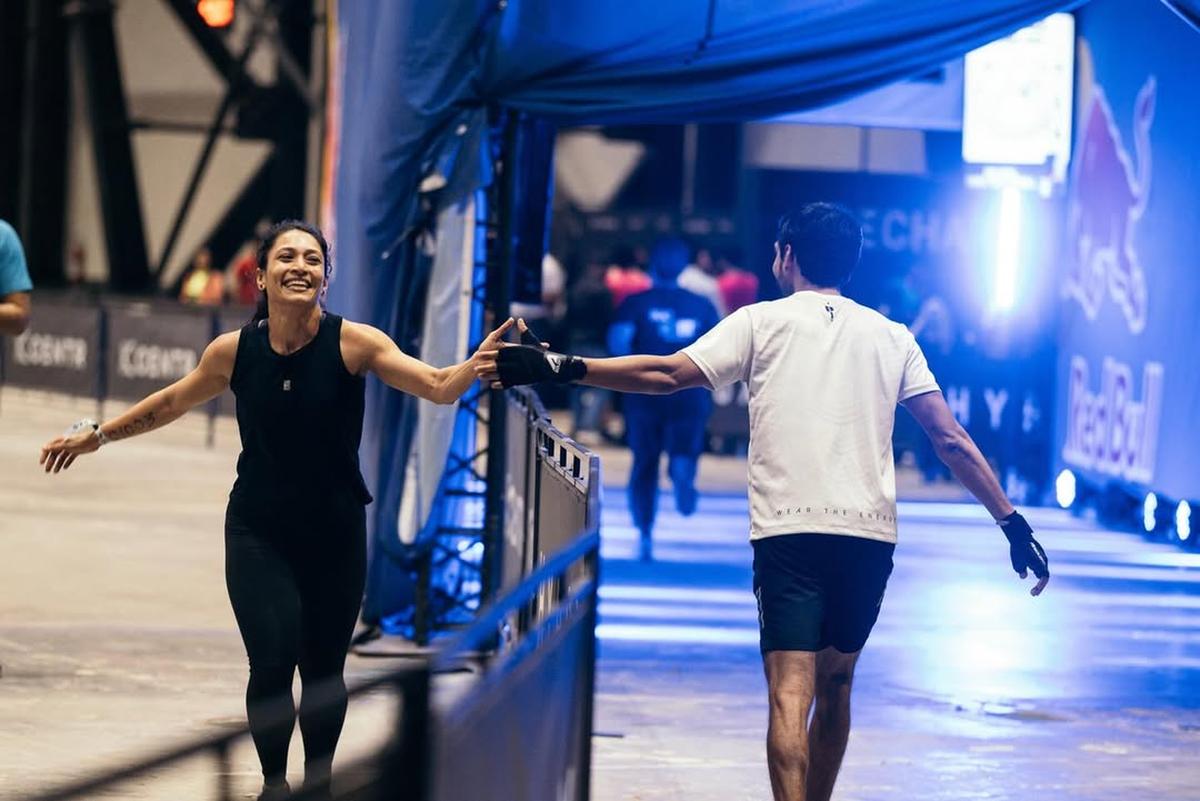
The inherent camaraderie of Hyrox is a significant draw. Rajput recounts his experience at the Bangkok Hyrox in March, which was his sixth race. "What stands out, he says, is how naturally the format brings people together. Whether it’s friends, family members, or even complete strangers on the same course, there is a shared rhythm to the experience. ‘It’s a lovely event in that sense – people come together, push through it side by side, and that makes the whole thing far more enjoyable.’" This sense of shared effort and mutual encouragement is a powerful testament to the community-building aspect of the sport.
Nutrition and Recovery: The Cornerstones of Hyrox Performance
As participants push their limits, the importance of precise nutrition and recovery strategies becomes paramount. Bengaluru-based fitness trainer Shwetambari Shetty, who secured a podium finish in the Women’s Pro Doubles at the inaugural Mumbai event and qualified for the World Championships in Sweden, emphasizes this crucial aspect.

"If training builds the base, she stresses that nutrition and recovery determine how well that training translates on race day," Shetty explains. "Unlike strength-focussed disciplines such as powerlifting, endurance events demand a very different fuelling strategy."
Her advice for participants centers on carbohydrate loading. "You should be consuming roughly five grams of carbohydrates per kilogram of body weight in the early part of the week, and then increase that to about seven to eight grams per kilogram in the last two days before the race," she recommends. The objective is to maximize glycogen stores, the primary fuel source for sustained athletic performance.
Race-day fuelling requires meticulous planning and practice. "If you’re using energy gels, you need to practise with them in training," Shetty advises. A typical strategy involves consuming one gel 15-20 minutes before the race, followed by smaller doses every 20-30 minutes. Beyond energy provision, managing fatigue-related issues like cramping is also critical. This can be addressed with salt tablets, electrolyte mixes, or even pickle juice-based solutions, commonly employed in endurance sports.

Preparation, Shetty stresses, extends beyond nutrition and training to practical considerations like appropriate attire. "If you’re carrying gels or snacks, you need functional clothing with pockets," she notes, recalling instances where ill-equipped participants suffered discomfort and injury due to improper storage of essentials.
Innovation in Footwear: The Puma x Hyrox Collaboration
The unique demands of Hyrox, bridging the gap between running and functional strength training, have also spurred innovation in athletic footwear. Shreya Sachdev, Puma India’s Head of Marketing and Strategic Initiatives, Footwear, highlights the inadequacy of traditional training or running shoes for the sport. "There is running, but there’s also multiple forms of functional fitness," she points out. "So regular training shoes don’t work, and typical running shoes aren’t fully optimized either."
To address this need, Puma has developed a Hyrox-specific iteration within its Nitro line, a collaboration born from extensive research and testing with Hyrox. "We’re treating it as a distinct category," Sachdev explains. "Just like you wouldn’t use a badminton shoe for cricket, you wouldn’t use a pure running shoe for Hyrox."

While traditional running shoes are engineered for forward motion with responsive cushioning and propulsion aids, Hyrox demands enhanced stability and grip. "The key difference is stability and grip," Sachdev emphasizes. "When you’re doing movements like wall balls, sled pushes or sled pulls, you need a grounded, stable base. You also need traction." The Puma x Hyrox models strike a balance between cushioning and lateral stability, featuring enhanced outsole grip and a more controlled ride, enabling athletes to transition seamlessly between running intervals and strength stations without compromising performance. The current collection, in a distinctive pink colorway, is the official Hyrox edition for the season and is expected to make its debut at the Bengaluru race.
Hyrox’s Commitment to Inclusivity: The Adaptive Category
A cornerstone of Hyrox’s global appeal is its unwavering commitment to inclusivity, a principle vividly demonstrated through its Adaptive category. Veenita Johnson, a Pune-based performance coach and one of the few Hyrox-certified female trainers in Maharashtra, embodies this ethos. Living with bilateral peroneal neuropathy (foot drop) since 2020, she is set to compete in the Adaptive category at the Bengaluru race, having previously participated in the doubles category in Mumbai.
The Adaptive category is designed to accommodate athletes with a range of physical conditions, allowing for modifications to the standard Hyrox format. While Veenita will complete the full one-kilometer runs between stations, she may modify certain strength components. "For something like sled push or sled pull, which puts a lot of stress on the lower limbs, I may do a reduced distance – say 25 metres instead of 50," she explains. For movements like wall balls, she has the option of using a plyometric box for added stability. "You can choose whether to take that support or not – it’s flexible depending on your condition."

Crucially, Hyrox also allows for varying levels of participation within the adaptive category, offering flexibility for individuals with more significant modifications. "If there are too many modifications required, you can choose to participate out of the race, just for the experience," Veenita notes.
Her training regimen is rigorous, incorporating additional mobility work, physiotherapy-led exercises, and focused strengthening to compensate for less functional muscle groups. "I have to spend extra hours building endurance and managing compensation patterns," she states, highlighting her recent completion of a 10-kilometer run as part of her preparation. This dedication underscores that the adaptive category is not about reduced effort, but about intelligently adapting the challenge to individual capabilities.
Navigating the Pricing Debate and Future Outlook
The pricing of Hyrox events, with registration fees ranging from ₹7,500 to upwards of ₹10,000 depending on the category, has sparked discussions. Raj Ganpath acknowledges the perceived expense, especially when compared to traditional road races. "If you compare it to something like a 10K or a half marathon, then yes, it does feel expensive," he admits.

However, he swiftly contextualizes the cost, differentiating it from outdoor events. "Here, you’re dealing with an indoor, controlled environment – air-conditioning, specialised equipment like sleds and ski ergs, plus judges and timing systems. Naturally, the cost of putting something like this together is much higher." Spectator passes, priced between ₹500 and ₹1,500, also contribute to the event’s operational costs.
Ganpath views India as being in an "early phase of adoption" for Hyrox. "We’re still at that stage where people are trying it out," he says. "And like anything new, the first set of participants are usually the ones willing to pay that premium." As the sport matures and its infrastructure solidifies, potential adjustments in pricing or the introduction of more accessible tiers might be considered.
The growing interest has also attracted brands looking to tap into the Hyrox community. At the Bengaluru edition, The League, a members-only dating app, will host an on-ground activation, using a "Hyrox Cam" to capture athletes and reframe traits like consistency and resilience as desirable qualities, with invite-only access codes encouraging continued connections on the app. This demonstrates Hyrox’s evolution into a platform that extends beyond athletic competition, fostering social connections and brand engagement.
Implications and the Future of Fitness Racing in India
The meteoric rise of Hyrox in India signifies a paradigm shift in the nation’s fitness culture. It caters to a growing demand for structured, measurable, and community-driven fitness challenges. The sport’s emphasis on functional fitness, combined with its inclusive nature and diverse participation formats, has resonated deeply with a population increasingly focused on holistic well-being.
The development of specialized training programs and dedicated footwear highlights the sport’s growing maturity and its potential to create new markets and economic opportunities within the fitness industry. The success of the Adaptive category further underscores Hyrox’s commitment to making fitness accessible to everyone, irrespective of physical challenges.
As Hyrox continues its rapid expansion across India, its influence is likely to extend beyond the immediate participants. The growing awareness and adoption of its principles of functional fitness and endurance training could inspire broader trends in athletic development and personal fitness goals. The Bengaluru race, with its record-breaking participation, is not just an event; it’s a powerful statement about the future of fitness racing in India, a future that is inclusive, challenging, and undeniably exciting.
