

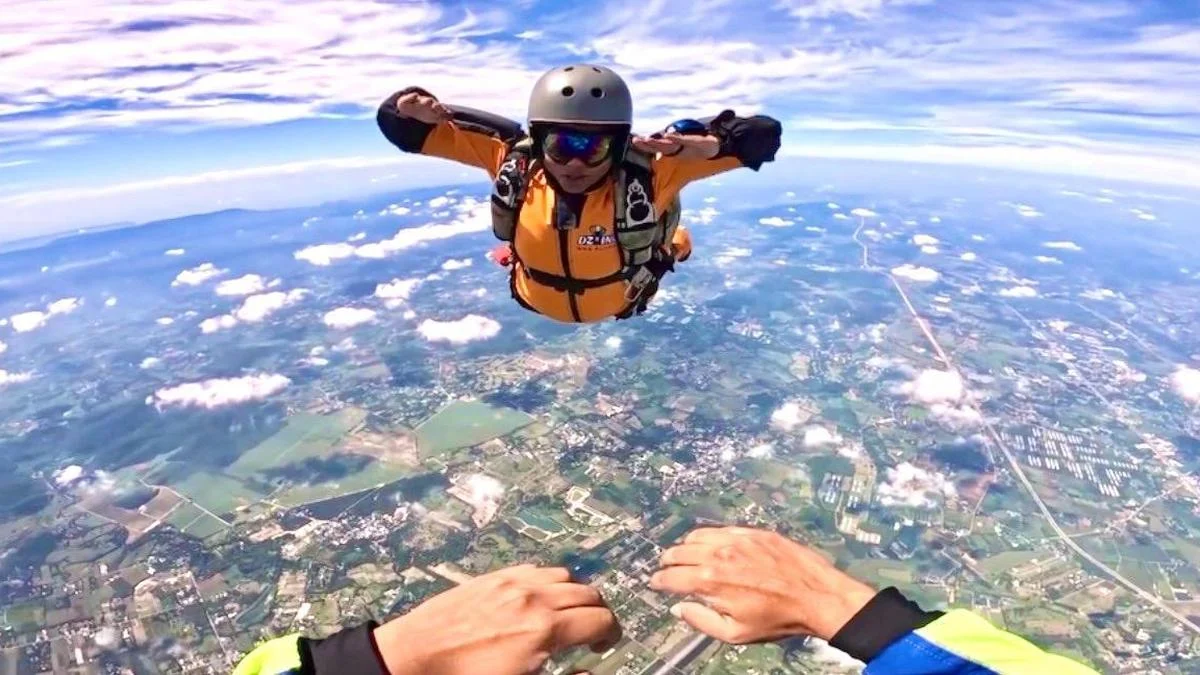
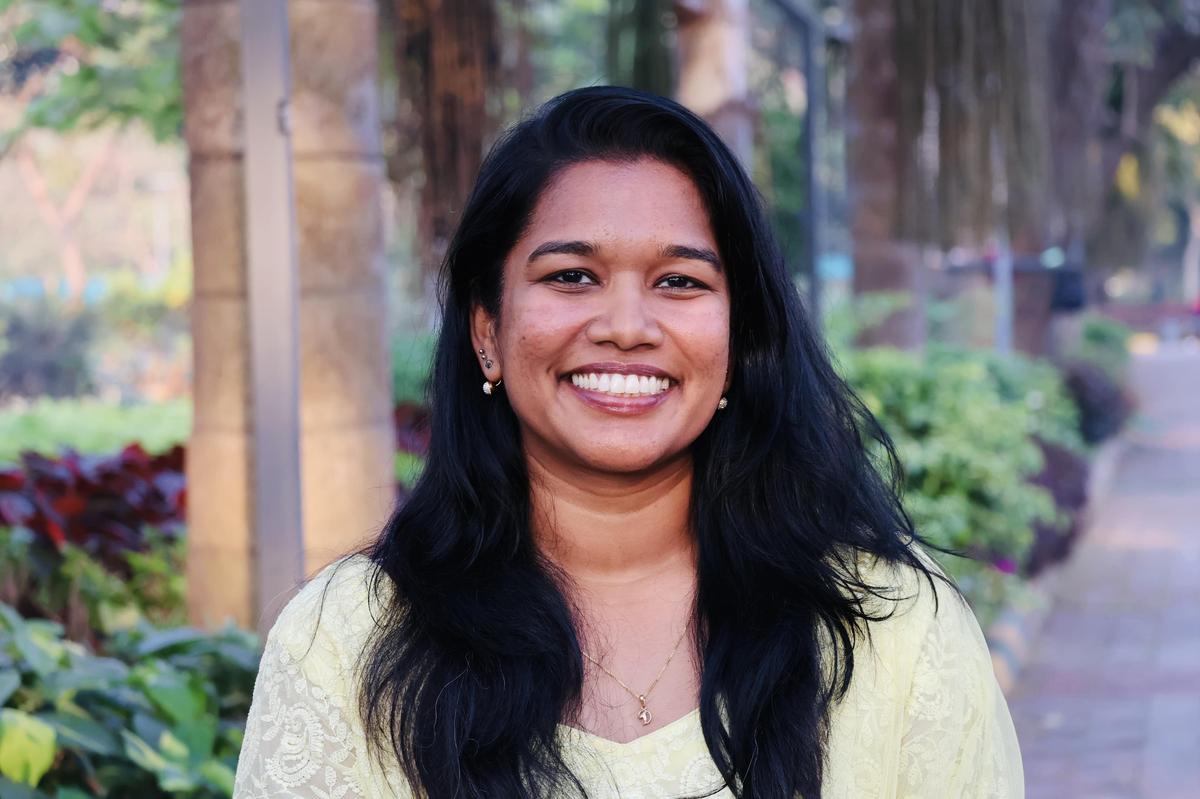
Visakhapatnam, Andhra Pradesh – In a nation where civilian skydiving remains a nascent and largely unexplored frontier, 37-year-old Divya Surepalli has etched her name in history. In 2024, she achieved a landmark feat, becoming the first licensed civilian woman skydiver from Andhra Pradesh. This accomplishment places her within an exclusive cadre of fewer than 20 women across India who have ventured beyond the fleeting thrill of a one-time tandem jump to pursue the sport with formal certification. The sheer scarcity of this number underscores the arduous and often solitary path required to navigate this exhilarating domain.
Surepalli, a native of Visakhapatnam with a postgraduate degree in Environmental Engineering from Germany, harbored a long-standing fascination with skydiving. What began as a distant dream, a mere whisper of possibility, gradually coalesced into a concrete plan. Her initial encounter with the sport was almost accidental during a visit to the United States. While the opportunity for a tandem jump presented itself, adverse weather conditions intervened, leaving her with a profound sense of disappointment. However, this thwarted attempt inadvertently ignited a more ambitious aspiration: the pursuit of formal training and certification.
The Journey to the Skies: A Testament to Resilience
The pivotal moment in Surepalli’s skydiving odyssey arrived when she joined Shweta Parmar, one of India’s pioneering civilian women skydivers, on a trip to Moscow. Their destination was Drop Zone Krutitcy, situated on the outskirts of the Russian capital, for an Accelerated Freefall (AFF) course. Surepalli’s intention was to complete the entire sequence of jumps required for her license at this single location. Fate, however, had a different plan. Worsening weather patterns after the initial stages of her training disrupted her meticulously laid plans.
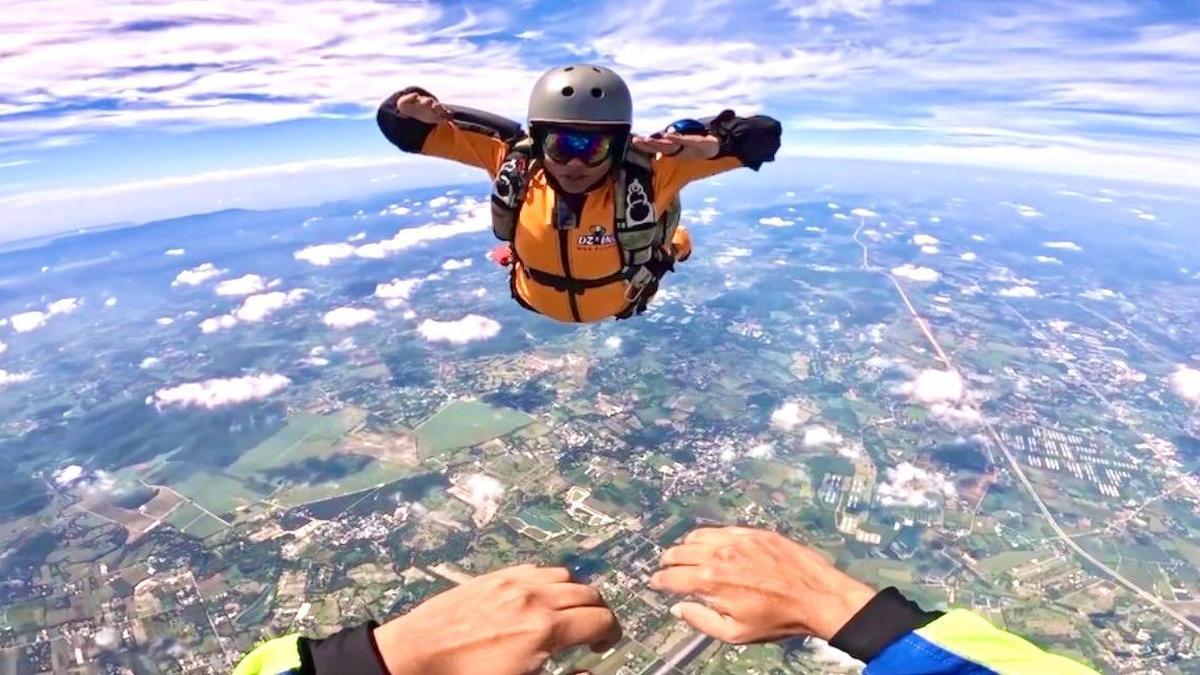
"I finished my AFF there, but the conditions deteriorated soon after," Surepalli recounted. "To complete the remaining jumps required for my license, I had to relocate." This unforeseen challenge led her to Thailand, which became her second academic arena for mastering the intricacies of freefall.
The Rigors of Certification: Earning the A Licence
To attain an A licence, the foundational certification for solo skydivers, a jumper must successfully complete a minimum of 25 jumps. This is not merely a numerical requirement; it is accompanied by rigorous assessments, both written and oral. Demonstrating proficiency in specific freefall maneuvers and canopy control skills is paramount. Furthermore, skydivers must execute group jumps and, critically, be capable of packing their own parachutes – a testament to self-reliance and a deep understanding of their equipment. With 29 jumps logged, Divya Surepalli met all the stipulated criteria. This A licence bestows upon her the privilege of jumping at affiliated drop zones globally, without the necessity of direct supervision.
Navigating Turbulence: Overcoming Setbacks
The path to achieving this milestone was far from a smooth descent. Midway through her AFF course, a harrowing incident occurred: a severe spin during freefall left her deeply unsettled. "That incident shook my confidence more than I expected," she admitted. The doubts that crept in were not born of a fear of heights or the vast expanse of the sky, but rather a profound questioning of her own judgment and decision-making abilities.

It was during this period of introspection and self-doubt that the unwavering support of her instructor and mentor, Alex Troshyn, proved invaluable. "I had withdrawn and was staying in my hostel," she recalled. "He came to speak with me and reminded me that setbacks are part of training, not signs of failure. That conversation helped me return to the process." Troshyn’s timely intervention served as a crucial anchor, helping her regain her footing and recommit to the demanding training regimen.
Thailand presented its own unique set of challenges, each serving as a crucial learning experience. During one jump, a sudden shift in wind direction altered her landing trajectory when she was approximately 1,000 feet above ground level. The available options narrowed with alarming speed. "It came down to landing on an asbestos roof or entering a swamp," she recalled, the gravity of the situation evident in her voice. Her training had been unequivocal about the dangers of water landings. The asbestos roof, conversely, presented a near-certainty of severe injuries. A cluster of trees offered a third, albeit precarious, possibility. Opting for the trees, she braced herself for impact, prioritizing the avoidance of broken bones over a potentially rough landing. To her surprise, the landing, while undoubtedly fraught with tension, was ultimately controlled.
Another jump necessitated a late correction to avoid a series of electric poles situated near the designated landing zone. Surepalli explained that crosswinds are a common occurrence in Thailand, where drop zones are often situated at lower altitudes compared to some international locations. "At 12,000 feet, you have less freefall time than you would at 14,000 feet, as in Moscow," she observed. "That reduces the margin available for adjustments." Each such incident served to reinforce the critical discipline of maintaining clarity of thought under immense pressure.
The Pillars of Support: Mentorship and Family
Beyond the technical demands of the sport, Surepalli consistently emphasizes the indispensable role of mentorship and robust support systems. Family acceptance, she candidly admits, was neither instantaneous nor easily achieved. Convincing her mother, in particular, required a considerable amount of time and reassurance. Her mother’s eventual agreement came with a specific condition: "She asked me to video call her before and after every jump," Divya revealed. "She wanted to see that I was safe. That reassurance mattered to both of us." This heartfelt request underscores the profound emotional toll such adventurous pursuits can take on loved ones, and the vital need for open communication and consistent reassurance.
Breaking Barriers: Cost and Access in India
The prohibitive cost and limited accessibility of skydiving in India represent significant hurdles for aspiring enthusiasts. Currently, only a single drop zone in the country offers tandem jumps, and crucially, none are equipped to issue civilian licenses. This necessitates that individuals seeking formal certification must travel abroad, a requirement that exponentially inflates the overall expenses. Surepalli estimates that the cost of obtaining her initial A licence amounted to approximately ₹5 lakh. While subsequent levels of certification may be less expensive, the substantial initial investment places the sport well beyond the financial reach of a vast majority of the Indian population.
Gender Dynamics in the Sky
The realm of skydiving, like many adventure sports, is predominantly male-dominated, and Surepalli acknowledges the very real presence of gender-based stereotypes. "It is a male dominated space and stereotypes are very real," she stated. "There were moments when I felt dismissed. At the same time, I also encountered men who were supportive and professional. Both experiences exist." These contrasting encounters highlight the nuanced reality for women entering traditionally male-dominated fields. The supportive individuals she encountered played a tangible role in bolstering her confidence during periods of self-doubt.
Transformation Beyond the Altitude
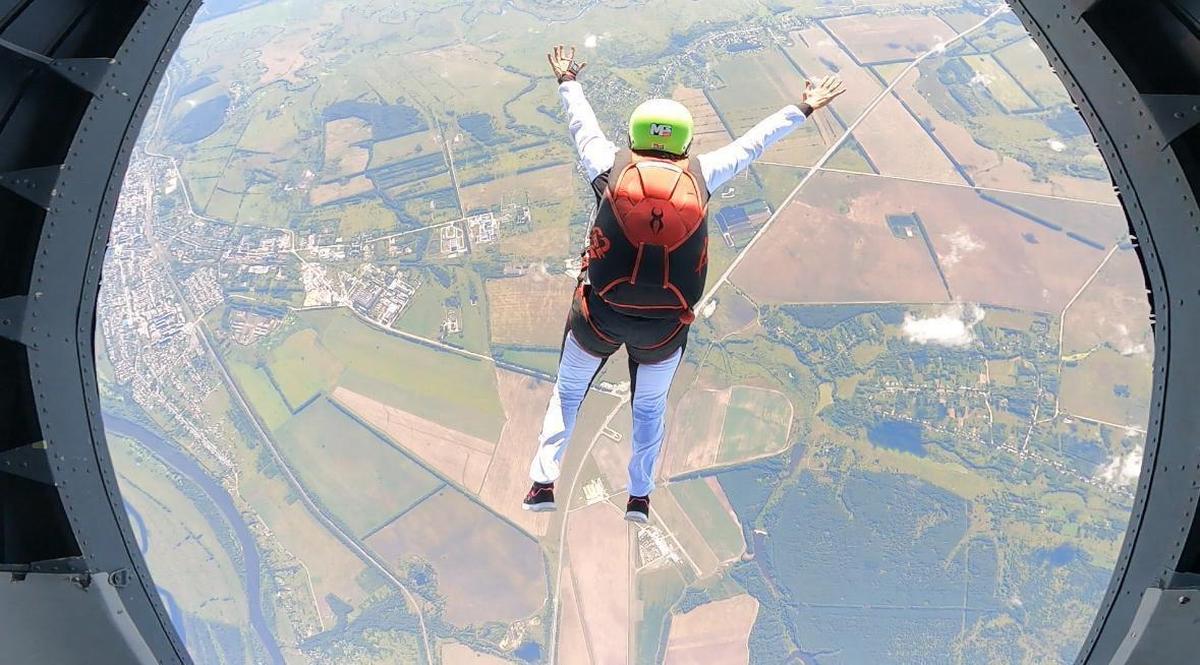
Surepalli describes herself as inherently shy, quiet, and ambiverted – personality traits that might seem incongruous with the common perception of thrill-seeking skydivers. However, the sport has profoundly altered this perception, both externally and within herself. "It changed how I respond to situations," she explained. "There is a heightened awareness that carries into everyday life. It has helped me become clear about what deserves attention and what does not." This newfound clarity and enhanced self-awareness are perhaps among the most significant intangible benefits she has reaped from her skydiving journey.
Currently, she is an active participant in an informal network of civilian women skydivers across India. This network serves as a vital platform for sharing advice, discussing training experiences, and offering mutual encouragement. Maintaining physical fitness remains a cornerstone of her routine, with daily runs providing a steady and grounding counterbalance to the inherent intensity and adrenaline rush associated with skydiving.
For Divya Surepalli, her remarkable achievement transcends mere conquest or the pursuit of fleeting thrills. It is a profound testament to unwavering persistence, dedicated training, and the quiet, unyielding resolve to accomplish what was once deferred by the unpredictable whims of weather. Her journey serves as an inspiring beacon, illuminating the possibility for more women in India to explore and excel in this exhilarating, yet often overlooked, sporting arena.
