

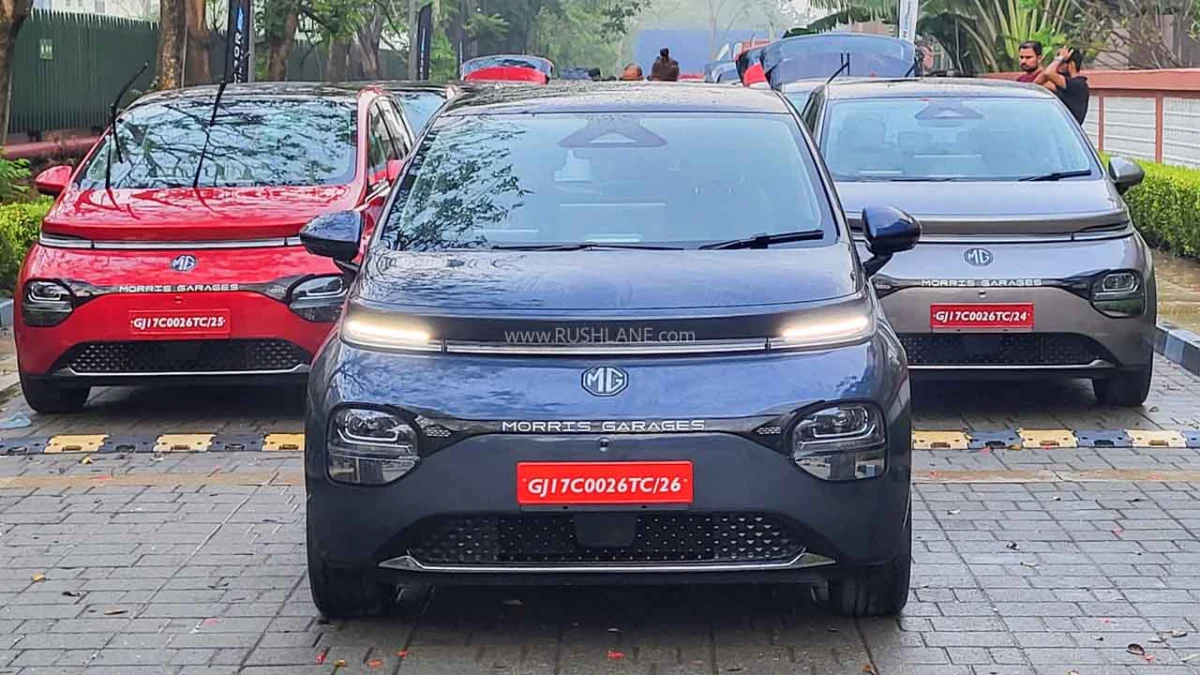
The Indian electric vehicle (EV) landscape has witnessed a significant shift in recent years, with JSW MG Motor India emerging as a dominant force. Central to this success story is the MG Windsor EV, a vehicle that has redefined the mid-range electric crossover segment. However, as the industry navigates the complexities of 2026, economic pressures have necessitated a strategic price adjustment. In July 2026, MG Motor India officially announced a price hike across the Windsor EV lineup, ranging from Rs 40,000 to Rs 60,000.
This move comes at a time when the Windsor EV has solidified its position as a volume driver for the brand, having recently crossed the monumental 50,000-unit sales milestone. This report explores the nuances of the price revision, the technical specifications that continue to attract buyers, and the broader implications for the Indian EV market.
1. Main Facts: The July 2026 Price Revision
In a move mirrored by industry peers such as Kia and Toyota, JSW MG Motor India has adjusted the ex-showroom prices of the Windsor EV. The price hike is primarily attributed to the rising costs of raw materials and production overheads that have impacted the automotive sector globally.
Detailed Variant-Wise Price Breakdown
The price adjustment affects all five variants of the Windsor EV, with the entry-level models seeing the most significant percentage increase.
- Windsor EV Excite (Base): The base variant witnessed the sharpest hike of Rs 60,000. Previously priced at Rs 14.10 lakh, the new sticker price stands at Rs 14.70 lakh, representing a 4.26% increase.
- Windsor EV Exclusive: This mid-tier variant saw an upward revision of Rs 46,900, bringing its price to Rs 16 lakh (a 3.02% increase).
- Windsor EV Essence: Similar to the Exclusive, the Essence variant’s price rose by Rs 46,900, now retailing at Rs 17 lakh (a 2.84% increase).
- Windsor EV Exclusive Pro: The long-range "Pro" variant saw a hike of Rs 52,000, with the new price established at Rs 17.90 lakh (a 2.99% increase).
- Windsor EV Essence Pro (Top-End): Interestingly, the flagship variant received the smallest percentage hike of 2.15%. An increase of Rs 40,000 brings the final price to Rs 19 lakh.
Despite these increases, the Windsor EV remains competitively positioned against rivals like the Tata Nexon EV and the Mahindra XUV400, particularly when considering its unique "Crossover Utility Vehicle" (CUV) body style and premium interior appointments.
2. Chronology: The Windsor EV’s Rapid Ascent
The journey of the MG Windsor EV in India is a testament to the market’s readiness for high-tech, spacious electric mobility.
- Launch and Market Entry: Upon its debut, the Windsor EV was positioned as a "business-class" electric vehicle, focusing on rear-seat comfort and a tech-forward cabin. It filled the gap between the compact Comet EV and the premium ZS EV.
- The 50k Milestone: In late 2025, just 14 months after its initial rollout, the Windsor EV completed the 50,000-unit sales milestone. This rapid adoption was unprecedented for a non-SUV electric vehicle in the Rs 14–20 lakh price bracket.
- Dominating the MG Portfolio: By mid-2026, electric vehicles accounted for over 75% of JSW MG Motor’s total sales. In June 2026 alone, the brand recorded its highest-ever monthly sales of 7,568 units.
- Market Ranking: As of May 2026, the Windsor EV was ranked as the fourth best-selling electric car in India, trailing only behind budget-centric models and established market leaders.
This chronology highlights how the Windsor became the "primary volume generator" for MG, allowing the brand to pivot its strategy almost entirely toward electrification.
3. Supporting Data: Performance, Range, and Technical Specifications
The MG Windsor EV is built on a dedicated EV platform that prioritizes cabin volume and battery packaging. The July 2026 update maintains the mechanical integrity of the vehicle while offering two distinct battery configurations to cater to different consumer needs.

Battery and Range Dynamics
The Windsor lineup is divided into standard and "Pro" categories based on energy density:
| Feature | Standard (Excite, Exclusive, Essence) | Pro (Exclusive Pro, Essence Pro) |
|---|---|---|
| Battery Capacity | 38 kWh | 52.9 kWh |
| ARAI Certified Range | 332 km | 449 km |
| Max Power | 136 PS | 136 PS |
| Peak Torque | 200 Nm | 200 Nm |
| Fast Charging Support | Up to 45 kW | Up to 60 kW |
| 20-80% Charge Time | ~45 Minutes | ~50 Minutes |
Performance Consistency
Regardless of the battery size, the electric motor produces a consistent 136 PS of power and 200 Nm of torque. This ensures that even the entry-level variants do not compromise on the instantaneous acceleration characteristic of EVs. The front-wheel-drive setup is tuned for city maneuverability and smooth highway cruising.
Advanced Charging Capabilities
A standout feature of the Windsor EV is its support for Vehicle-to-Load (V2L) and Vehicle-to-Vehicle (V2V) charging. This technology allows the car to act as a giant power bank, capable of powering electrical appliances during camping trips or even providing emergency "top-up" charges to other stranded EVs.
4. Official Responses and Industry Context
While JSW MG Motor India has not issued a lengthy manifesto regarding the price hike, the rationale is clear within the broader context of the Indian automotive industry.
The "July Hike" Trend
The price increase is not an isolated event. In July 2026, several major manufacturers announced similar adjustments:
- Kia India: Increased prices by up to Rs 39,000 across the Sonet, Seltos, and Carens range.
- Toyota Kirloskar Motor: Announced hikes of up to Rs 33,000 for popular models like the Hyryder and Glanza.
Industry analysts point toward the stabilizing but still high cost of lithium-ion cells and the increasing cost of electronic components used in Advanced Driver Assistance Systems (ADAS).
MG’s Strategic Positioning
By keeping the price hike for the top-end Essence Pro at a modest 2.15%, MG is clearly incentivizing buyers to opt for the flagship model. This strategy helps the brand maintain higher average selling prices (ASP) while offering a more "complete" luxury experience to the consumer, thereby protecting profit margins without alienating the premium buyer.
5. Features and Safety: The Windsor’s Competitive Edge
The success of the Windsor EV is largely attributed to its "feature-first" approach. Even with the price increase, the value proposition remains strong due to an equipment list that often exceeds vehicles in higher price segments.

The "Smart" Cabin
The centerpiece of the Windsor’s interior is the 15.6-inch "GrandView" Touchscreen Infotainment System. It serves as the hub for the vehicle’s 80+ i-Smart connected features, including remote climate control, digital key sharing, and real-time navigation.
- Audio Excellence: The higher variants feature a 9-speaker premium audio system by Infinity, specifically tuned for the Windsor’s cabin acoustics.
- Comfort: The "Aero-Lounge" seats with 135-degree recline and ventilated front seats cater to the chauffeur-driven demographic that MG has successfully targeted.
- Aesthetics: The expansive glass roof provides an airy feel to the cabin, differentiating it from the claustrophobic interiors of some sub-compact electric SUVs.
Robust Safety Architecture
Safety remains a cornerstone of the MG brand. The Windsor EV comes equipped with:
- Six Airbags: Standard across all variants.
- 360-Degree Camera: Providing a bird’s-eye view for effortless parking in congested Indian cities.
- Autonomous Level 2 ADAS: This includes Adaptive Cruise Control, Lane Keep Assist, Forward Collision Warning, and Autonomous Emergency Braking, making it one of the safest vehicles in its class.
6. Market Implications: What This Means for the Future
The price revision of the MG Windsor EV carries several implications for the Indian automotive market and the transition to green mobility.
Resilience of EV Demand
Despite the price hike, the demand for the Windsor EV is expected to remain robust. The fact that MG’s EV sales contribute 75% to their total volume suggests that the brand has successfully transitioned from a traditional ICE (Internal Combustion Engine) manufacturer to an "EV-first" company. For the Indian consumer, the long-term savings on fuel and maintenance continue to outweigh the initial increase in acquisition cost.
Competitive Pressure on Rivals
MG’s ability to sell 50,000 units of a niche body style (the CUV) in just 14 months has forced competitors to rethink their portfolios. We are likely to see more "purpose-built" EVs entering the market rather than simple ICE-to-EV conversions. The Windsor’s success proves that Indian buyers value interior space and technology as much as—if not more than—ground clearance and rugged styling.
Infrastructure Synergy
As MG continues to put more Windsor EVs on the road, the pressure on charging infrastructure will grow. JSW MG Motor India has been proactive in this regard, investing in community charging hubs and dealership fast-chargers. The price hike might also provide the necessary capital for the brand to further expand its "eHUB" app ecosystem, which simplifies the charging process for owners across various third-party networks.
Final Thoughts
The MG Windsor EV stands as a benchmark for the modern Indian electric car. While the July 2026 price hike reflects the harsh realities of global manufacturing costs, the vehicle’s blend of futuristic tech, expansive range (in Pro variants), and "business-class" comfort ensures it remains a top contender in the EV race. As JSW MG Motor India looks toward the next 50,000 units, the Windsor EV is poised to remain the heartbeat of the brand’s sustainable future.
