

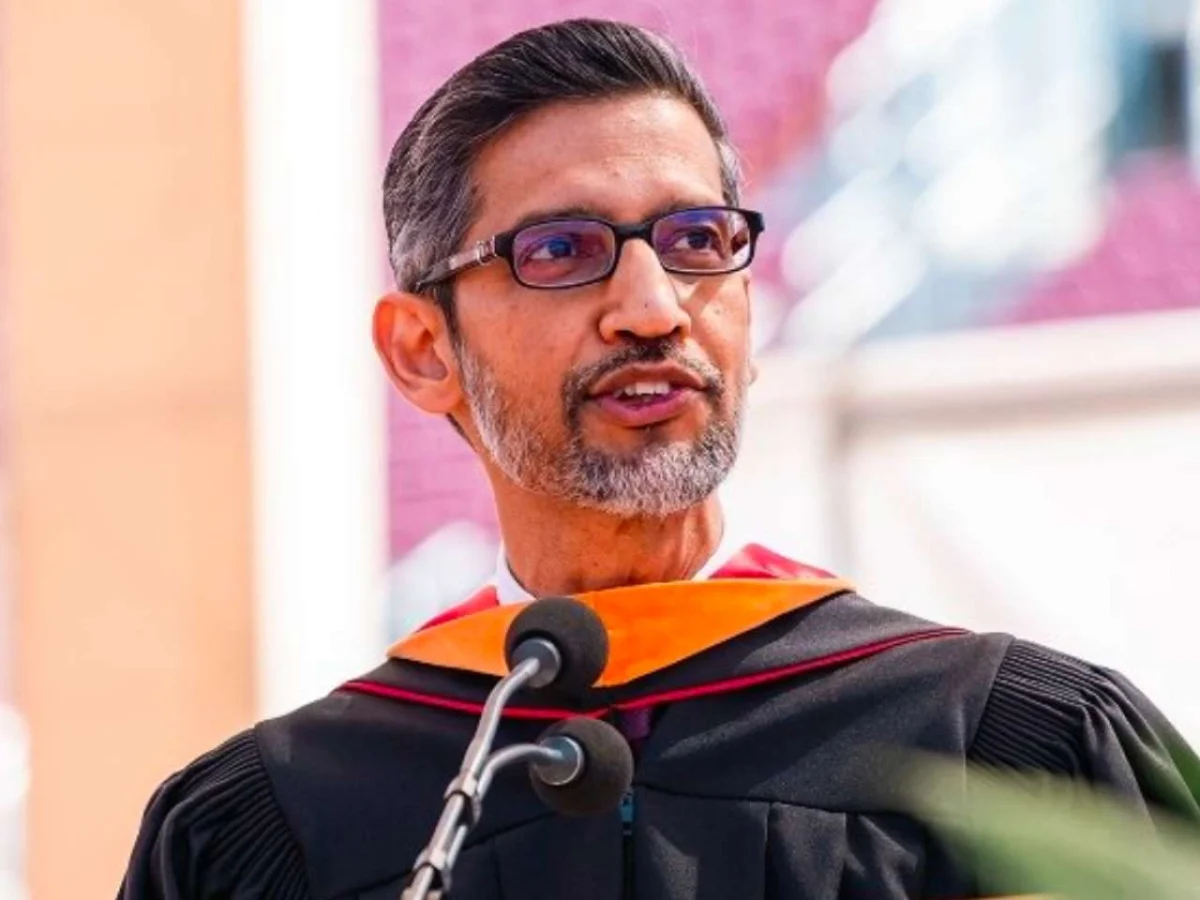
STANFORD, CALIFORNIA – June 15, 2026 – A highly anticipated graduation ceremony at Stanford University took an unexpected and politically charged turn today as a group of students staged a coordinated walkout during Google CEO Sundar Pichai’s keynote address. The dramatic protest, organized by prominent activist groups including Students for Justice in Palestine and No Tech for Apartheid, aimed to draw attention to Google’s alleged involvement in controversial government and defense contracts, particularly with the Israeli military, the U.S. Department of Homeland Security (DHS), and Immigration and Customs Enforcement (ICE).
The disruption unfolded as Pichai, a distinguished Stanford alumnus himself, stood at the podium, poised to impart wisdom to the graduating class of 2026. Instead of a uniformly celebratory atmosphere, the scene was momentarily overshadowed by the deliberate departure of dozens of graduates, their actions a stark visual statement against what they deem an ethical compromise by one of the world’s most influential technology companies. This incident not only injected a potent dose of activism into a traditionally solemn occasion but also underscored the intensifying debate on American university campuses regarding the moral responsibilities of major tech firms in an increasingly complex geopolitical landscape.
A Ceremony Interrupted: The Main Facts
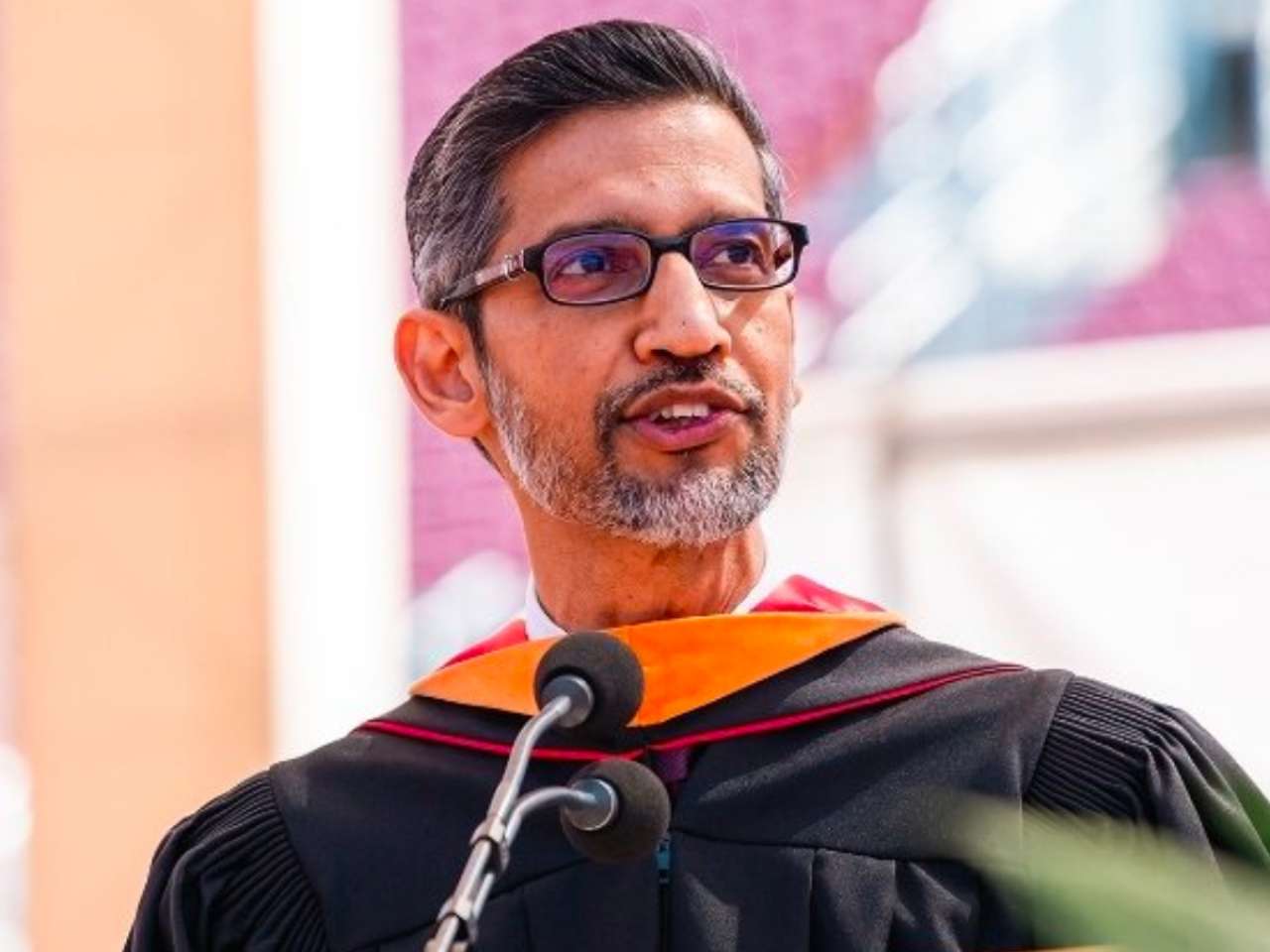
The core of today’s events revolves around the deliberate interruption of a significant academic milestone. Sundar Pichai, the widely recognized leader of Google and its parent company Alphabet, was invited as the commencement speaker for Stanford University’s graduating class. His presence was intended to inspire and guide, drawing on his own journey from modest beginnings to the helm of a technological empire.
However, the ceremony became a platform for dissent when a pre-planned protest materialized. A coalition of student organizations, notably Students for Justice in Palestine (SJP) and No Tech for Apartheid, executed a synchronized walkout. These groups have been vocal critics of Google, alleging that the company’s contracts with various governmental bodies, particularly the Israeli Ministry of Defense, the U.S. Department of Homeland Security, and Immigration and Customs Enforcement, contribute to human rights abuses and the perpetuation of systems of oppression. Their protest today was a direct challenge to Google’s corporate ethics and an assertion of their moral stance on campus.
)
The walkout itself was a moment of quiet defiance. As Pichai began his speech, a segment of the graduating students, identifiable by specific markers or simply by their collective movement, rose from their seats and exited the venue. This calculated act was designed to maximize visibility and impact, sending a clear message that not all attendees were willing to passively accept the presence of a figure whose company, in their view, is entangled in practices they vehemently oppose. The incident immediately ignited conversation both within the university community and across social media platforms, highlighting the growing intersection of technological development, corporate accountability, and global human rights concerns.
Chronology of Dissent: From Allegations to Action
The roots of today’s protest at Stanford stretch back years, reflecting a burgeoning movement within academia and the tech industry itself against what activists describe as the militarization and securitization of technology.
)
The Genesis of "No Tech for Apartheid" and SJP:
The "No Tech for Apartheid" campaign, a prominent force behind today’s walkout, emerged from a broader movement demanding ethical accountability from tech giants. Its primary focus has been Project Nimbus, a significant cloud computing and artificial intelligence contract awarded jointly to Google and Amazon by the Israeli government in 2021. Activists allege that this project facilitates surveillance and expands Israel’s military capabilities in ways that contribute to human rights violations against Palestinians. For years, internal dissent within Google, often led by Jewish and Arab employees, has paralleled external protests, calling for the company to withdraw from the contract. This internal and external pressure has slowly built momentum, finding a fertile ground in university campuses known for their progressive activism.
Students for Justice in Palestine (SJP), another key organizer, has a long history of advocating for Palestinian rights on university campuses across the United States. Their activism frequently targets institutions and corporations perceived to be complicit in actions that harm Palestinians. Their involvement in today’s walkout underscores the deep connection activists draw between corporate contracts and geopolitical conflicts.

Beyond Project Nimbus, activists also point to Google’s reported contracts with the U.S. Department of Homeland Security (DHS) and Immigration and Customs Enforcement (ICE). These agreements, often involving cloud services, data analytics, and AI tools, are seen by critics as enabling surveillance, detention, and deportation practices that raise significant human rights concerns, particularly regarding migrant communities. The argument is that providing infrastructure and advanced technology to these agencies makes Google complicit in policies that activists deem unethical or inhumane.
The Road to Commencement Day:
Leading up to the Stanford graduation, the student groups had likely engaged in various forms of advocacy. This would typically include online campaigns, petitions, teach-ins, and smaller-scale protests designed to raise awareness and pressure university administration and Google. The selection of the commencement ceremony, with Sundar Pichai as a speaker, presented an unparalleled opportunity for a high-profile demonstration. The optics of a walkout during a live, globally broadcast event involving a major tech CEO are powerful, ensuring maximum media attention and amplifying their message far beyond the Stanford campus.
)
The Moment of Disruption:
The atmosphere at the Stanford stadium was initially one of eager anticipation. Families and friends filled the stands, cameras at the ready to capture their loved ones’ milestone. As Sundar Pichai approached the podium, a hush fell over the crowd, a customary reverence for the keynote speaker. He began with a lighthearted opening, perhaps sensing the underlying tension or simply adhering to a pre-planned approach.
Then, the coordinated action began. Quietly, but with unmistakable intent, a section of the graduating students rose from their seats. They did not shout or cause a commotion, but their unified movement was a powerful visual statement. Caps and gowns rustled as they filed out, their backs turned to the stage, their faces a mixture of solemn determination and quiet resolve. The act was swift and deliberate, designed to be seen without completely derailing the entire ceremony. While some audience members might have gasped or exchanged bewildered glances, the primary impact was in the visual metaphor: a rejection of Google’s alleged practices by the very generation Pichai was there to inspire.
)
Pichai’s Poised Response:
Remarkably, Sundar Pichai maintained his composure throughout the incident. Instead of addressing the walkout directly, he pivoted, consciously steering his speech away from controversial topics like artificial intelligence or the future of technology, which are often his default subjects. "I know today is about giving you all advice," he reportedly stated, "But people have also been giving me a lot of advice on what to say. Actually, it’s been the same advice, and it’s about what not to say." This quip, delivered with a wry smile, appeared to be a subtle acknowledgement of the charged atmosphere, or perhaps a pre-emptive deflection from potential pitfalls.
He opted for a more personal, reflective tone, sharing anecdotes from his early days in California and encouraging graduates to embrace optimism and maintain an open mind. He joked about the difficulty people have with the last two letters of his surname, a self-deprecating moment designed to humanize him and lighten the mood. His speech focused on universal themes of resilience, adaptability, and the importance of understanding context – perhaps a veiled message to his critics about the complexities of global business. This strategic choice allowed him to deliver his address without directly engaging the protest, maintaining a semblance of normalcy and projecting an image of calm leadership.
)
Immediate Aftermath and Social Media Echoes:
The walkout immediately reverberated across social media. Videos and images of the students leaving the ceremony quickly went viral, amplified by activist accounts and news outlets. The tweet from "@avantibionda" (translated as "Stanford University graduates during Google CEO Sundar Pichai’s speech, leave the ceremony to protest Google’s contracts with IDF and ICE. They are very well equipped to distort reality, but by now everyone knows who they are.") served as an early example of how the narrative quickly crystallized online, showcasing both support for the students and criticism from those who viewed the protest as disrespectful to the occasion or misinformed. The incident quickly became a trending topic, drawing in a wide range of opinions and further fueling the debate about corporate responsibility and student activism.
Supporting Data: The Broader Landscape of Tech Ethics and Activism
The Stanford walkout is not an isolated incident but rather a potent manifestation of several converging trends: the increasing scrutiny of big tech’s ethical footprint, the resurgence of student activism, and the evolving discourse around artificial intelligence and its societal impact.
)
The Controversial Nature of Tech-Government Contracts:
The allegations against Google concerning contracts with the Israeli military, DHS, and ICE tap into a wellspring of existing controversies within the tech industry. Project Nimbus, as mentioned, has been a particular flashpoint. Similar to Google’s past involvement in Project Maven (a Pentagon contract for AI drone targeting, which Google eventually pulled out of due to internal and external pressure in 2018), these contracts raise profound ethical questions. Critics argue that by providing advanced cloud computing, data analytics, and AI capabilities, tech companies become integral to military operations, surveillance programs, and immigration enforcement policies that many deem unjust or harmful.
The argument from activists is that these technologies are not neutral. They can be used to facilitate surveillance, automate decision-making in sensitive contexts (like border control or military targeting), and enhance the operational capabilities of agencies accused of human rights abuses. For instance, critics of ICE contracts highlight the use of technology in tracking and deporting undocumented immigrants, often separating families. For the Israeli military, the concern is that AI and cloud infrastructure could be used to enhance targeting capabilities or surveillance in occupied territories. The moral dilemma for tech employees and companies lies in balancing lucrative government contracts with their stated values and public image.
)
A History of Student Activism and the Rise of Tech Ethics:
University campuses, particularly those as prestigious as Stanford, have long been crucibles of social and political activism. From anti-war protests in the 1960s to anti-apartheid movements in the 1980s, students have historically used their collective voice to challenge established norms and corporate practices. The current wave of activism often focuses on climate change, social justice, and increasingly, the ethical implications of technology.
The "tech ethics" movement has gained significant traction in recent years. Universities are now offering courses and even degrees in areas like "responsible AI" and "digital ethics." This academic development reflects a broader societal recognition that technology, while offering immense benefits, also carries substantial risks and ethical quandaries. Students graduating with an acute awareness of these issues are more likely to demand accountability from the companies they work for or whose leaders speak at their ceremonies. Their activism is informed by a growing body of academic work and journalistic investigations into issues like data privacy, algorithmic bias, and the use of AI in warfare.
)
The AI Job Market and Broader Societal Anxieties:
The context of AI’s impact on the job market adds another layer of complexity to the tech industry’s public perception. Sundar Pichai’s decision to avoid discussing AI in his speech, while potentially a tactic to sidestep controversy, is notable given the pervasive anxieties surrounding the technology. Leaders like Sam Altman of OpenAI and Dario Amodei of Anthropic have indeed warned about AI’s potential to displace entry-level jobs, creating uncertainty for graduates entering the workforce. Their pronouncements, while often tempered with optimism about new job creation, fuel concerns about economic disruption and the future of labor.
Conversely, figures like NVIDIA CEO Jensen Huang have pushed back, suggesting that AI is often a convenient scapegoat for layoffs that might have other underlying causes, such as economic downturns or corporate restructuring. This debate highlights the profound societal shift AI represents, and Google, as a pioneer and leader in AI development, is squarely in the public eye. Pichai himself has previously characterized AI as "one of the biggest technological shifts of this generation," underscoring Google’s central role and thus its heightened responsibility in shaping this future. For students, the combination of ethical concerns over contracts and anxieties about their future careers makes figures like Pichai targets for both critique and hope.
)
Official Responses: Navigating Dissent
In the wake of such a high-profile protest, the responses from the involved parties – Google, Stanford University, and the student organizers – are crucial in shaping the narrative and determining the long-term impact of the event.
Google’s Stance (Implicit and Expected):
Google, as a multinational corporation, typically navigates such controversies with carefully crafted public relations strategies. While an immediate, direct response to a specific graduation walkout is unlikely, Google’s general posture on its government and defense contracts is well-established. The company usually asserts that it adheres to strict ethical guidelines, respects human rights, and ensures its technologies are used responsibly. Regarding contracts like Project Nimbus, Google has previously stated that the services provided are for civilian purposes and are available to all customers in the region, emphasizing that the contracts do not involve highly sensitive or classified workloads requiring custom solutions. They would likely argue that they provide general-purpose cloud computing infrastructure, which is a standard offering, and that they cannot control how every client utilizes their broad services.
)
Furthermore, Google often highlights its internal ethical AI principles, which guide its development and deployment of artificial intelligence. These principles typically include commitments to fairness, safety, accountability, and avoiding uses that could cause or contribute to harm. In the face of protests, Google would likely reiterate these commitments, aiming to reassure stakeholders that it operates within an ethical framework, even as activists contend that these principles are not always upheld in practice.
Stanford University’s Position:
Stanford University, as the host institution, finds itself in a delicate position. On one hand, it champions academic freedom and the right to free speech and peaceful protest, values deeply ingrained in university culture. On the other, it has a responsibility to ensure that official ceremonies proceed respectfully and that invited speakers are treated with due deference.
)
In response to the walkout, Stanford would likely issue a statement reaffirming its commitment to both free expression and maintaining an environment conducive to dignified events. Such a statement might acknowledge the students’ right to voice their opinions while also emphasizing the importance of respecting the commencement ceremony as a significant milestone for all graduates and their families. They might also highlight the university’s role as a forum for diverse viewpoints and robust debate, suggesting that while protests are part of this, they should not overshadow the achievements of the graduating class. Universities typically try to strike a balance, avoiding strong condemnation of student activists while subtly reinforcing institutional norms.
Student Organizers’ Articulation:
The activist groups, Students for Justice in Palestine and No Tech for Apartheid, would undoubtedly use the heightened visibility of the walkout to further articulate their demands and rationale. Their statements would likely reiterate their core grievances: Google’s alleged complicity in human rights abuses through its contracts with the Israeli military, DHS, and ICE. They would emphasize the moral imperative for tech companies to prioritize human rights over profit and call for Google to divest from these controversial projects.
)
The groups would likely frame the walkout as a necessary act of conscience, arguing that silence implies complicity. They would aim to galvanize broader public support for their cause, highlighting what they see as a systemic problem within the tech industry where profit motives often override ethical considerations. Their messaging would also aim to inspire other student groups and tech workers to take similar stands, fostering a larger movement for ethical technology. The tweet provided in the original article ("Loro sono attrezzati benissimo per distorcere la realtà , ma oramai tutti sanno chi sono.") likely reflects a sentiment among activists that powerful entities like Google attempt to control narratives, but their actions are becoming increasingly transparent to the public.
Implications: Reshaping the Tech-Academia-Activism Nexus
The student walkout during Sundar Pichai’s Stanford speech carries multifaceted implications, potentially reshaping the dynamics between big technology, academic institutions, and burgeoning activist movements.
)
Impact on Google’s Reputation and Internal Dynamics:
For Google, the incident is undeniably a public relations challenge. While one protest may not immediately deter investors or drastically alter its market position, it contributes to a growing narrative of ethical scrutiny surrounding the company. Such high-profile protests, especially at prestigious universities, can impact Google’s ability to attract top talent, particularly those graduates who are increasingly conscious of corporate social responsibility. Young professionals often seek employers whose values align with their own, and persistent negative press regarding ethics could make Google a less attractive destination for some.
Internally, such protests can reignite or amplify existing employee dissent. Google has a history of internal activism, with employees often pushing for changes in company policy or protesting specific projects. The Stanford walkout could embolden internal critics, leading to renewed calls for Google to re-evaluate its contracts and ethical guidelines. This could force Google’s leadership, including Pichai, to engage more directly and transparently with employee concerns and public criticism, potentially leading to adjustments in their approach to government and defense contracts in the long term.
)
Shifting Landscape for Academia and the Tech Industry:
The incident signals a growing demand for ethical accountability from tech companies within academic environments. Universities, which often rely on funding and partnerships with tech giants, may face increased pressure to scrutinize these relationships and ensure they align with their own ethical principles. This could manifest in more rigorous vetting of commencement speakers, a greater emphasis on tech ethics in curricula, and a more proactive stance on facilitating open dialogue about the societal impact of technology.
For the broader tech industry, the Stanford walkout serves as a stark reminder that the "move fast and break things" ethos is increasingly being challenged by a generation of digitally native, ethically aware individuals. Companies may feel compelled to be more transparent about their government contracts, to develop more robust ethical review processes, and to engage more meaningfully with stakeholder concerns. The intersection of technology, human rights, and social justice is no longer a niche concern but a mainstream issue that tech leaders must address head-on. This could lead to a re-evaluation of business strategies, particularly concerning contracts with controversial government entities.
)
The Future of Student Activism:
This walkout is likely to be seen as a significant victory for student activist groups, demonstrating the power of coordinated action to draw attention to their causes. It could inspire similar protests at other universities and against other tech companies perceived to be involved in unethical practices. The use of high-visibility events, such as commencement ceremonies, as platforms for protest is an effective tactic that will likely be replicated. This signifies a potential resurgence of student activism as a potent force for corporate and social change, particularly in an era where digital tools facilitate rapid organization and dissemination of messages.
Sundar Pichai’s Leadership and Legacy:
For Sundar Pichai, the walkout, while handled with apparent calm during his speech, represents a moment of public scrutiny for his leadership. His choice to deliver a lighthearted, personal address, rather than engaging with the controversy directly, can be interpreted in various ways – as strategic de-escalation, as a respectful deferral to the occasion, or as an avoidance of difficult questions. As Google continues to navigate the complexities of AI development, global politics, and ethical responsibilities, Pichai’s ability to steer the company through these challenges will define a significant part of his legacy. The incident at Stanford underscores that leading a tech giant in the 21st century involves not just technological innovation, but also adept navigation of profound ethical and social debates.
)
In conclusion, the student walkout at Stanford University during Sundar Pichai’s address was far more than a fleeting disruption. It was a potent symbol of a deepening ideological rift, a clear signal that the next generation of leaders and innovators is demanding a higher standard of ethical conduct from the powerful tech corporations shaping their world. As the debate over technology’s role in society intensifies, such confrontations are likely to become more frequent, pushing companies like Google to reconcile their ambitious technological pursuits with an increasingly vocal demand for moral accountability.
