

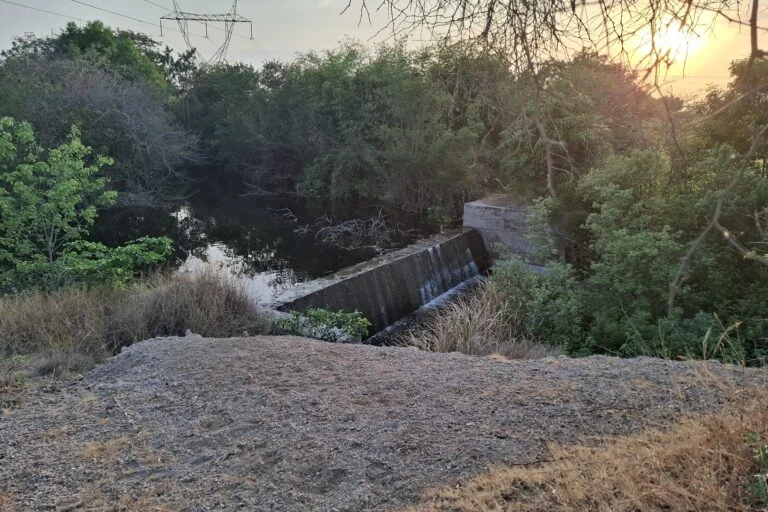
In the arid heart of Maharashtra’s Satara district, the village of Kiraksal once served as a grim case study for the devastating effects of recurring drought. Today, it stands as a beacon of hope and a blueprint for community-led watershed management. Through a combination of scientific training, collective labor, and strategic government intervention, the village has overturned a centuries-old struggle against water scarcity, fostering an agricultural and economic renaissance that has caught the attention of geologists and policy-makers alike.
Main Facts: A Landscape Defined by Scarcity
Kiraksal is situated approximately 75 kilometers east of Satara’s district headquarters within the Maan taluka. Spanning 18 square kilometers of the rugged Deccan Plateau, the village is characterized by a semi-arid climate and a challenging geological profile. The terrain is dominated by weathered basalt, known locally as khadak, which possesses a remarkably low specific yield. According to geological assessments, only about 3% of rainwater actually percolates into this type of rock, meaning that out of every 100 liters of rainfall, 97 liters typically run off or evaporate, leaving the groundwater tables perpetually depleted.
With an average annual rainfall of only 300 to 500 mm, the village was historically trapped in a cycle of poverty and migration. For decades, the lack of water meant that agriculture was a gamble, fodder was non-existent, and the survival of livestock—the backbone of the rural economy—was constantly under threat.

Chronology: The Decades of Thirst and the Catalyst for Change
The Crisis of 2002 and 2012
The journey toward water sufficiency began in the crucible of extreme hardship. Amol Katkar, who would later serve as the village sarpanch from 2015 to 2018, recalls the dire conditions of 2002. At the time, Katkar was a college student witnessing his community collapse. Children were forced to trek for miles on foot or cycles just to secure drinking water. The government was compelled to set up cattle camps, and farmers had to abandon their ancestral homes to live in temporary shelters near these camps just to keep their livestock alive.
History repeated itself with even greater intensity in 2012. The Maharashtra government declared Maan taluka drought-hit. Reliance on water tankers became the norm, and the social fabric of the village began to fray as more families considered permanent migration to urban centers.
2012–2015: The Seeds of Literacy
The turning point arrived when Avinash Pol, Chief Advisor at the Paani Foundation, visited Kiraksal during the height of the 2012 crisis. Pol conducted a gram sabha (village meeting), advising Katkar and other young leaders that the solution lay not in waiting for tankers, but in managing the watershed.

Initially, the response was tepid. Many villagers viewed water management as a "government job" and were skeptical of their own ability to alter the landscape. However, the seeds of "water literacy" had been sown.
2017: The Year of Shramdaan
In 2017, the movement gained unstoppable momentum. Amol Katkar and four other villagers attended an intensive training session hosted by the Paani Foundation. They returned to Kiraksal and organized training for 87 fellow residents. This knowledge transfer transformed the village’s mindset.
That year, the village took a radical step: they cancelled the annual village fair, choosing instead to redirect those funds—approximately ₹600,000—into watershed infrastructure. Over 500 residents participated in shramdaan (voluntary labor), working together regardless of socioeconomic background. They organized themselves into 25–30 groups, naming each after a major Indian river like the Narmada, Godavari, and Ganga, symbolizing a collective identity focused on water.

Supporting Data: The Science of the "Natural Utensil"
The success of Kiraksal is rooted in the "ridge-to-valley" approach of watershed management. The villagers treated the landscape as a series of "natural utensils" designed to catch and hold every drop of rain.
Technical Interventions
Since 2012, the village has constructed a sophisticated network of structures, including:
- Continuous Contour Trenches (CCT) and Deep CCTs: Designed to slow down runoff on hill slopes.
- Loose Boulder Structures and Gabions: To prevent soil erosion in small streams.
- Recharge Shafts and Well Recharges: To bypass the impermeable basalt and direct water into deeper aquifers.
- Check Dams and Cement Bunds: To create surface storage.
- Compartment Bunding: To ensure water stays within individual farm plots.
The Urmodi Canal Factor
While watershed management focused on conservation, the construction of the Urmodi Canal in 2014 provided a vital external water source. Today, the canal meets approximately 40% of the village’s water needs, acting as a critical supplement to the groundwater recharged through community efforts.

Economic and Agricultural Metrics
A 2025 study by Megha S. Shinde, a senior geologist with the Groundwater Surveys and Development Agency (GSDA), highlighted the empirical success of the model:
- Agricultural Productivity: Increased by 35%, according to Taluka Agriculture Officer data.
- Income Levels: Annual per-hectare income rose by an average of ₹200,000.
- Milk Production: Surged from 2,000 liters daily to 4,850 liters, a testament to fodder security.
- Land Value: Farmers who previously had only 0.25 acres of productive land now find that nearly 2 acres of their holdings are fertile and irrigable.
Official Responses and Expert Perspectives
The transformation of Kiraksal has been lauded by technical experts and non-governmental organizations as a masterclass in grassroots leadership.
The Geologist’s View:
Megha S. Shinde of the GSDA notes that the village’s achievement is particularly impressive given the geology. "In weathered basalt, the specific yield is only 3%. To provide drinking water and maintain biodiversity under these conditions is truly impressive," she stated. She further observed that Kiraksal has successfully managed to increase its groundwater levels marginally year-on-year, even as neighboring regions continue to see depletion.

The NGO Perspective:
Supriya Maruti Shinde, Project Manager at the Watershed Organisation Trust (WOTR), emphasizes the social cohesion of the village. "The people of Kiraksal are not averse to trying new things. They trust their leadership and speak fluently about the science of CCTs and deep CCTs. This level of technical awareness among laypeople is rare," she said.
Leadership Insight:
Avinash Pol of the Paani Foundation attributes the success to "visionary leadership." He points out that while government schemes like Jalyukt Shivar, Atal Bhujal Yojana, and Adarsh Gram Yojana provided the necessary funding, it was the village’s ability to implement these schemes with "technical accuracy and a sense of ownership" that made the difference.
Implications: A Model for Reverse Migration and Sustainability
The most profound impact of Kiraksal’s water revolution is the stabilization—and in some cases, the reversal—of migration. As the village became water-sufficient, the local economy diversified.

The Agricultural Shift
Previously, Kiraksal was limited to a single, rain-dependent crop per year. Today, the village grows a variety of high-value crops. Satish More, a retired civil engineer who returned to the village to farm, now grows custard apples, lemons, sunflowers, turmeric, and even grapes—a fruit previously unseen in this drought-prone belt. Remarkably, even water-intensive sugarcane is grown, though farmers like More emphasize that they do so judiciously, keeping their water management capacity in mind.
Dairy and Livelihoods
The dairy sector has seen a similar boom. Haridas Katkar, a local dairy farmer, reported that his daily production grew from 70 liters in 2020 to 300 liters by 2026. This was made possible by the year-round availability of fodder, a direct result of the improved soil moisture and the Urmodi Canal.
Long-term Sustainability
The villagers have also implemented strict self-regulation. They have agreed not to sink borewells deeper than 200 feet (61 meters) to protect the deep aquifers. Furthermore, they have recognized the need for maintenance. Amol Katkar notes that to prevent siltation—the primary cause of failure for watershed structures—the village actively works to reduce forest fires and maintain grass cover on hillsides.

Conclusion: The Kiraksal Legacy
The story of Kiraksal proves that drought is not merely a climatic inevitability but a challenge that can be managed through scientific intervention and community unity. By treating water as a shared, finite resource and investing in "natural utensils," the village has secured its future. For the thousands of other villages across the Deccan Plateau facing similar arid futures, Kiraksal serves as a living laboratory, demonstrating that with the right leadership and a commitment to "water literacy," the desert can indeed bloom.
