

The global climate conversation is undergoing a fundamental shift. For years, carbon markets were largely the domain of heavy industry and energy production—factories and power plants trading emissions permits. Today, that focus is widening to include the biological world. Forests, farms, grasslands, wetlands, mangroves, and even rice fields are increasingly viewed not just as natural landscapes, but as vital "carbon sinks" where climate action, ecological restoration, and rural livelihoods can converge.
In India, this transition is gaining rapid momentum. As the nation develops its own Carbon Credit Trading Scheme (CCTS), there is a growing expectation that carbon credits will unlock the private finance necessary to scale up nature-based solutions. However, as the global voluntary carbon market (VCM) has recently demonstrated, the distance between a "registered project" and "real climate impact" can be vast.
Main Facts: The Credibility Gap in Nature-Based Solutions
The central challenge facing the expansion of carbon markets into Agriculture, Forestry, and Other Land Use (AFOLU) is one of integrity. A landmark 2024 study published in Nature Communications sent shockwaves through the industry after evaluating 2,346 carbon-crediting projects and nearly one billion tonnes of issued credits. The researchers estimated that less than 16% of the credits examined represented genuine, additional emission reductions.
This data suggests that the majority of credits circulating in the global market may be "phantom credits"—units that exist on paper but do not reflect a corresponding reduction in atmospheric CO2. For India, which is currently designing its domestic market architecture, these findings serve as a stark warning. The failure of these projects usually stems from three technical failures:
- Weak Baselines: Overestimating how much deforestation or pollution would have happened without the project.
- Lack of Additionality: Crediting activities that would have happened anyway due to existing laws or economic trends.
- Poor Monitoring: Failing to track the actual survival of trees or changes in soil carbon over decades.
To avoid these pitfalls, experts argue that "feasibility" must move from being a routine pre-project formality to a rigorous, multi-stage vetting process that precedes any credit forecasting.
![Why feasibility matters for land use projects in India [Commentary]](https://imgs.mongabay.com/wp-content/uploads/sites/30/2026/07/07142040/AP274368273581-1200x800.jpg)
Chronology: A Series of Global Market Corrections (2024–2026)
The move toward stricter oversight is not theoretical; it is already resulting in the cancellation of millions of credits and the blacklisting of major projects.
- January 2024: The China Rice Rejection. The carbon certifier Verra rejected 37 rice-cultivation projects in China. The decision came after investigations revealed significant concerns regarding the project areas and the methods used to calculate emission reductions. Verra sanctioned the project proponents and required compensation for overissued credits, signaling that agricultural methane claims would face unprecedented scrutiny.
- October 2024: The Nature Communications Revelation. The aforementioned study provided the first comprehensive, peer-reviewed evidence of systemic over-crediting across the voluntary market, providing a data-driven foundation for market reform.
- Early 2025: The Kariba REDD+ Collapse. Verra concluded a review of Zimbabwe’s Kariba REDD+ project, one of the world’s largest forest conservation efforts. The review found that actual deforestation in the reference area was far lower than originally projected. Consequently, 15.22 million credits were identified as "excess." Because the project had already withdrawn from the registry, these errors could not be corrected in future cycles, leaving buyers holding worthless assets.
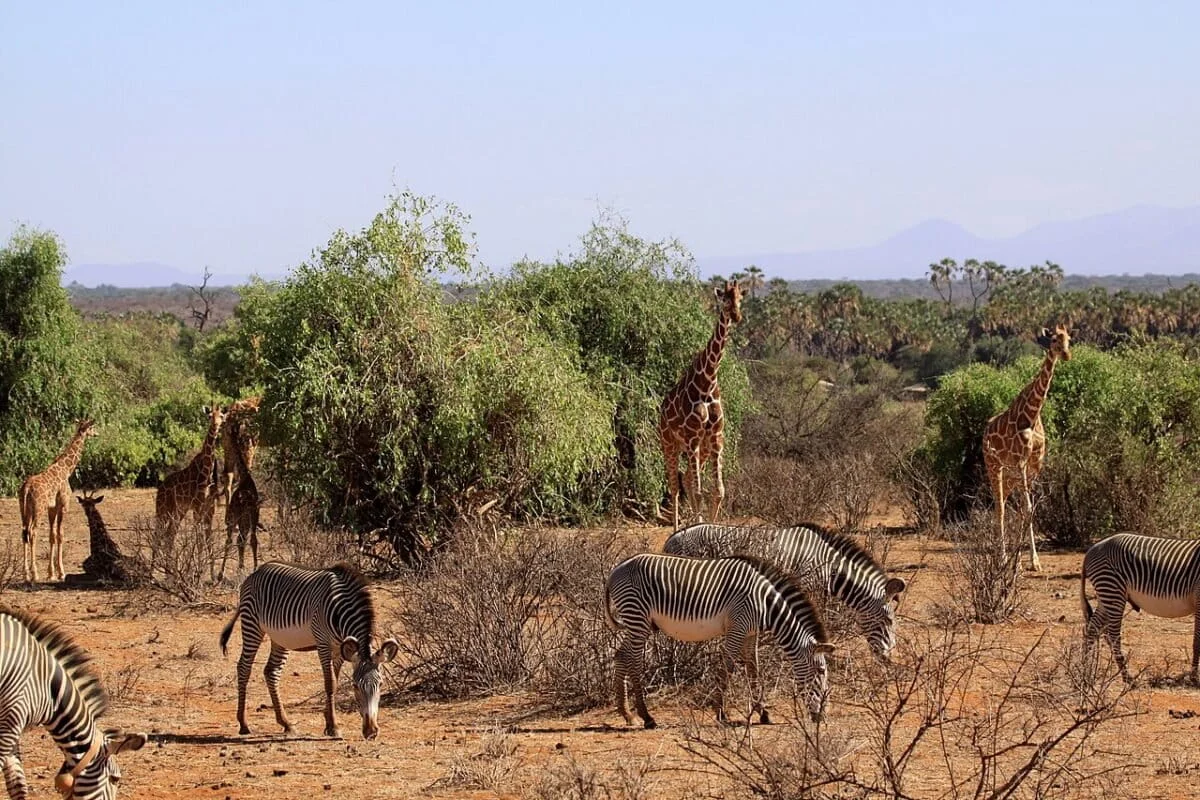
- June 2026: The Northern Kenya Reinstatement. The Northern Kenya Grassland Carbon Project, which had been suspended due to legal concerns over community land rights and governance, was finally reinstated. Its return to the market was only permitted after an independent process confirmed that the project had secured "Free, Prior, and Informed Consent" (FPIC) from approximately 1,500 community members through a formal ratification vote.
Supporting Data: India’s Regulatory Framework
India is not watching these developments from the sidelines. The Bureau of Energy Efficiency (BEE), under the Ministry of Power, is actively constructing the Carbon Credit Trading Scheme (CCTS). This scheme includes a voluntary, project-based offset mechanism that will eventually integrate the agriculture and forestry sectors.
The BEE has already signaled its technical priorities by approving specific methodologies for:
- Mangrove Restoration: Afforestation and reforestation of degraded tidal habitats.
- Terrestrial Afforestation: Planting on non-wetland degraded lands.
- Methane Management: Recovery of methane from livestock and manure management systems.
Unlike the wild-west era of the early voluntary markets, India’s domestic system aims to incorporate "ground-truthing" and digital verification from the outset. However, the complexity of India’s landscape—where land is often a patchwork of private holdings, community commons, and state-owned forests—means that technical methodologies alone are insufficient.
The Four Pillars of Feasibility
To ensure that Indian carbon credits are "high-integrity," project developers must navigate four distinct stages of feasibility.
![Why feasibility matters for land use projects in India [Commentary]](https://imgs.mongabay.com/wp-content/uploads/sites/30/2026/07/07142503/Reserve_samburu_faune-1200x800.jpg)
1. Pathway and Land Matching
The AFOLU sector is not a monolith. A methodology that works for a mangrove swamp in West Bengal will fail in the grasslands of Kutch. The first question for any project must be ecological: Is this activity suited to this specific landscape?
A common mistake is viewing "scrubland" or "natural grasslands" as "wastelands" ripe for tree plantations. If a project plants trees on a native grassland ecosystem, it may technically sequester carbon in the wood, but it destroys a biodiverse habitat and may actually lead to a net loss of soil carbon. Feasibility must establish the historical land use and whether the proposed vegetation can be supported by local rainfall and soil conditions without ecological harm.
2. Evidence Over Assumption
In the past, developers relied on static land records or single satellite images. Modern feasibility requires "multi-temporal remote sensing"—the analysis of satellite imagery over 10 to 20 years to reveal true land-use trends.
However, technology has limits. Satellite data cannot always distinguish between a thriving young forest and a field of invasive weeds. Therefore, "ground-truthing" is non-negotiable. Field teams must validate satellite maps against actual conditions, checking for sapling survival rates and interviewing local residents about historical fire recurrence or grazing pressures.
3. Institutional and Social Feasibility
In India, a carbon project is never just a geometric shape on a map. It is a social contract. Land may be managed as a "common," used for seasonal grazing, or held under customary arrangements that don’t appear in formal revenue records.
![Why feasibility matters for land use projects in India [Commentary]](https://imgs.mongabay.com/wp-content/uploads/sites/30/2026/07/07143901/Logging_Forest_Loss_IMG_3939_28-768x512.jpg)
If a project fails to clarify who holds the carbon rights or how the revenue will be shared, it risks collapse. The Northern Kenya case proved that community governance is not just a "social safeguard"—it is a business necessity. Without a clear mechanism for handling grievances and distributing benefits, local communities may withdraw their support, rendering the project’s carbon claims impossible to monitor or maintain.
4. Financial Reality and Risk Modeling
Carbon projects are financially "back-ended." They require massive upfront investment in mapping, baseline studies, and planting, but they may not generate sellable credits for five to ten years.
A credible feasibility study must include a "financial stress test." What happens if a drought kills 30% of the trees? What if the market price of carbon drops by half? Projects that only "work" under optimistic scenarios are not bankable. Furthermore, developers must account for "leakage"—the risk that protecting a forest in one area simply pushes loggers to move to the next valley over.
Implications: From Promise to Preparedness
The shift toward a high-integrity carbon market in India represents a massive opportunity to fund rural development and environmental restoration. But the stakes are high. If India produces low-quality credits that are later exposed as "phantom," it will damage the country’s reputation in international climate finance and potentially lead to trade barriers in a world increasingly concerned with "greenwashing."
The lesson from Zimbabwe, China, and Kenya is clear: technical sophistication cannot substitute for lawful tenure, community participation, and honest accounting.
![Why feasibility matters for land use projects in India [Commentary]](https://imgs.mongabay.com/wp-content/uploads/sites/30/2026/07/07144401/Kazi_fire-768x512.jpg)
As Sayanta Ghosh and J.V. Sharma of The Energy and Resources Institute (TERI) suggest, a credible feasibility assessment should end with a clear, unsentimental decision: proceed, redesign, or stop. India does not need carbon claims that are detached from social reality. It needs projects that can withstand the scrutiny of independent auditors, the volatility of the climate, and the needs of the people who live on the land.
Before the credits are sold, and before the trees are planted, the most valuable asset in the carbon market is not the carbon itself—it is the integrity of the feasibility study that proves the carbon is actually there.
