

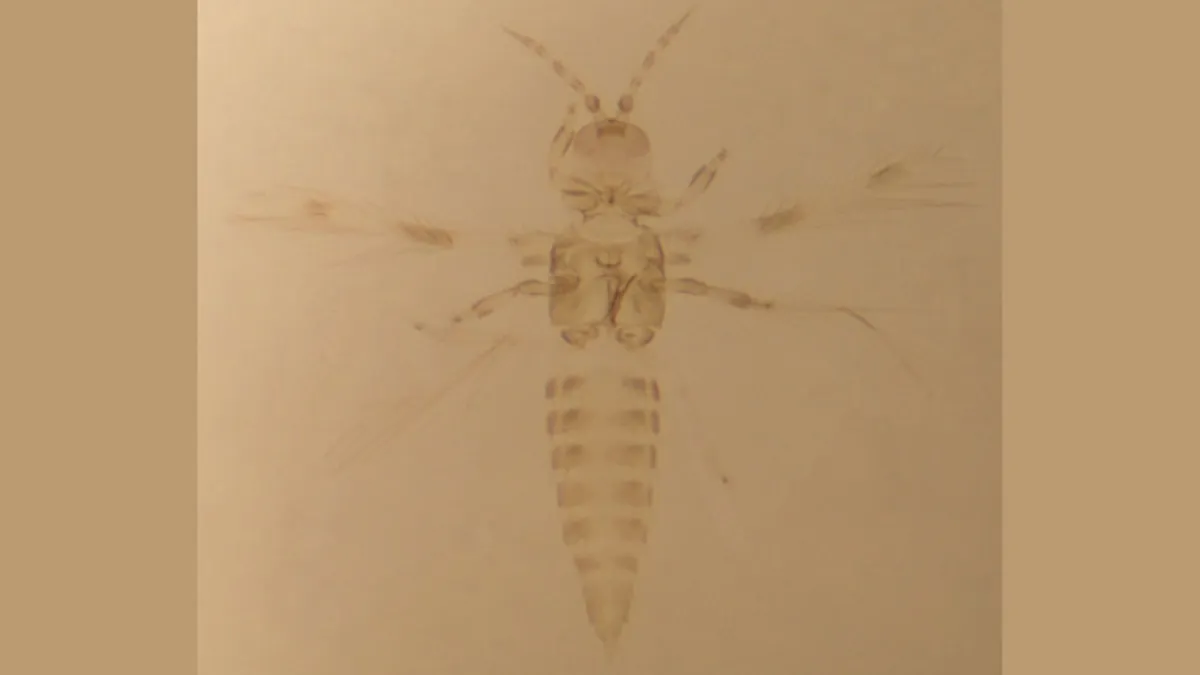
DAKSHINA KANNADA, KARNATAKA – In the dense, humid foliage of the Western Ghats, where the shadows of ancient trees hide secrets of evolution spanning millennia, a team of Indian scientists has uncovered a microscopic marvel. A new species of thrips, measuring barely two millimeters in length, has been discovered within the vibrant blossoms of a tropical Lagerstroemia tree.
The discovery, officially named Trachynotothrips vyaghravahini, represents more than just a new entry in the annals of entomology; it is a testament to the staggering, often invisible biodiversity of one of the world’s most critical ecological hotspots. The find was the result of a collaborative effort between the Keladi Shivappa Nayaka University of Agricultural and Horticultural Sciences (KSNUAHS) and the ICAR-National Bureau of Agricultural Insect Resources (NBAIR).
Main Facts: A Microscopic Predator in the "Tiger’s Pond"
The newly identified species belongs to the order Thysanoptera, commonly known as thrips—minute, slender insects with fringed wings. While many thrips are known to be agricultural pests, others play vital roles in pollination and maintaining the delicate balance of forest ecosystems.
The species was discovered during an exploratory survey at Pilikula Nisargadhama, a renowned nature reserve and biological park located in the Dakshina Kannada district of Karnataka. The reserve, which serves as a gateway to the Western Ghats, provided the perfect backdrop for researchers to investigate the relationship between local flora and the insect populations they support.
Key highlights of the discovery include:

- Scientific Name: Trachynotothrips vyaghravahini.
- Location: Pilikula Nisargadhama, Dakshina Kannada.
- Host Plant: Found specifically within the flowers of the Lagerstroemia tree (commonly known as Crape Myrtle).
- Distinctive Features: A pale midsection, lack of abdominal spine-like hairs, and a unique arrangement of microscopic bristles (setae).
- Bonus Discovery: Along with the new species, researchers recorded the first-ever Indian sighting of a different thrips species previously documented only in Japan and China.
Chronology of Discovery: From the Field to the Microscope
The journey to identifying Trachynotothrips vyaghravahini began as a routine biodiversity assessment aimed at cataloging the insect fauna of the Dakshina Kannada region.
The Field Survey
In the early months of the study, researchers from KSNUAHS and NBAIR conducted a series of field visits to Pilikula Nisargadhama. Their focus was on the "micro-habitats" provided by flowering trees. During a collection drive, the team targeted the Lagerstroemia trees, which were in full bloom. Using specialized beating trays and fine brushes, the scientists collected dozens of minute insects from the crevices of the blossoms.
Preservation and Preparation
Because thrips are virtually indistinguishable to the naked eye, the collected specimens were immediately preserved in a specialized solution (typically a mixture of alcohol and acetic acid) to maintain their structural integrity. Back at the laboratory, the specimens underwent a rigorous preparation process. This involved dehydrating the insects and mounting them onto glass slides using Canada balsam, a resin that allows for high-clarity viewing under powerful magnification.
Taxonomic Analysis
Once mounted, the specimens were subjected to morphological analysis using high-powered phase-contrast microscopes. It was during this phase that the researchers realized they were looking at something unusual. By comparing the specimens against existing taxonomic keys and descriptions of the genus Trachynotothrips, the team confirmed that the physical characteristics of these insects did not match any known species. After months of peer review and comparative study with global databases, the species was officially declared new to science.
Supporting Data: Morphological Distinctions and Etymology
The identification of a new species in the world of entomology requires meticulous attention to detail. Trachynotothrips vyaghravahini was differentiated from its closest relatives based on several key physiological markers.

Morphological Characteristics
Unlike other members of the Trachynotothrips family, which often feature dark bands or distinct brown stripes across their midsections, the new species possesses a uniformly pale thorax and abdomen.
Furthermore, the researchers noted the following specific differences:
- Hind Legs: The hind legs of T. vyaghravahini are entirely pale, whereas related species often show varying degrees of pigmentation.
- Abdominal Setae: The new species lacks the prominent, spine-like hairs on the lateral margins of its abdominal segments that are characteristic of its closest cousins.
- Bristle Arrangement: The arrangement of microscopic bristles on the lower body (the sternites) follows a pattern unique to this species, providing a "fingerprint" for future identification.
The "Tiger River" Etymology
One of the most compelling aspects of the discovery is the name chosen by the scientists. Vyaghravahini is a Sanskrit compound word: ‘Vyaghra’ meaning tiger and ‘Vahini’ meaning flowing river.
This is a direct linguistic homage to the location of the find. The name "Pilikula" in the local Tulu language translates to "Tiger’s Lake" or "Tiger’s Pond" (Pili = Tiger, Kula = Lake). Historically, the area was a dense forest where wild tigers frequently descended from the hills to drink from the river and ponds. By naming the insect Trachynotothrips vyaghravahini, the researchers have permanently linked this microscopic creature to the majestic history of the Karnataka landscape.
Official Responses and Scientific Perspective
While the lead researchers emphasize that this is a victory for Indian taxonomy, they also warn that such discoveries highlight how little we know about our own backyard.

A representative from the ICAR-National Bureau of Agricultural Insect Resources (NBAIR) noted that the Western Ghats remain a "frontier of the unknown." According to the bureau, while large mammals like tigers and elephants receive the lion’s share of conservation funding and public attention, the "micro-fauna" of the region is equally essential for the health of the ecosystem.
"Discovering a new species of thrips is not just about adding a name to a list," a researcher involved in the study explained. "These insects are often specialized. They may pollinate specific plants or serve as a primary food source for larger predatory insects and birds. When we lose a habitat, we aren’t just losing trees; we are losing a complex web of life that we haven’t even finished naming yet."
The team from KSNUAHS also highlighted the significance of the secondary find—the Japanese and Chinese thrips species. Its presence in the Western Ghats suggests a much wider geographical distribution than previously thought, raising questions about whether the insect is a long-term resident of India that simply went unnoticed, or if it has migrated due to changing climatic conditions.
Implications: Biodiversity, Conservation, and the Future
The discovery of Trachynotothrips vyaghravahini carries significant implications for several fields of study.
1. Strengthening the Case for the Western Ghats
The Western Ghats is recognized by UNESCO as a World Heritage site and is one of the eight "hottest hotspots" of biological diversity in the world. However, it faces constant pressure from urbanization, deforestation, and climate change. Each new species discovered acts as further evidence for the need to protect these corridors. If a single nature reserve like Pilikula can yield a new species, the untapped potential of the deeper forest reserves is likely enormous.

2. Taxonomic Baseline for Agriculture
As climate change shifts the ranges of various insects, having a comprehensive "library" of native species is vital. For agricultural scientists, being able to distinguish between a harmless native thrips and a potentially invasive pest species is crucial for food security. The work done by KSNUAHS and NBAIR provides a baseline that helps farmers and scientists monitor shifts in insect populations.
3. The Role of "Citizen Science" and Local Awareness
The researchers hope that the "Tiger River" name will capture the public imagination. By bridging the gap between high-level Sanskrit/Sscientific terminology and local Tulu history, the discovery fosters a sense of pride in local biodiversity. It encourages residents of Dakshina Kannada to view their environment not just as land for development, but as a sanctuary for unique life forms.
4. Future Research Directions
The discovery has opened several new doors for the team. The next steps involve:
- Genetic Sequencing: To further understand the evolutionary lineage of T. vyaghravahini.
- Ecological Studies: To determine if the insect is found on other plant species or if it is host-specific to the Lagerstroemia tree.
- Expanded Surveys: Using the success at Pilikula as a template, the researchers plan to expand their search to other "sacred groves" and minor reserves along the Karnataka coast.
Conclusion
In the grand scheme of the universe, a two-millimeter insect may seem insignificant. Yet, in the delicate tapestry of the Western Ghats, the Trachynotothrips vyaghravahini is a vital thread. Its discovery reminds us that the "Tiger River" still flows with life, both great and small. As scientists continue to peer through their microscopes, the message remains clear: the natural world still holds many mysteries, provided we are patient enough to look for them in the heart of a flower.
