

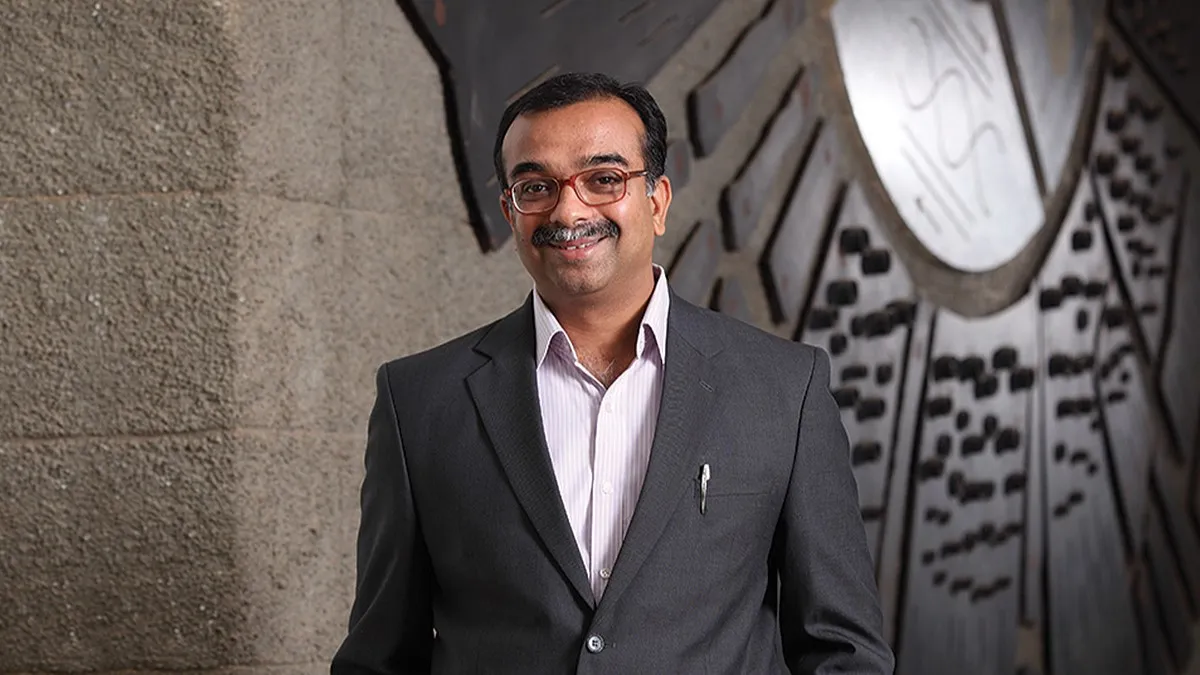
Prof. Waghmare succeeds Professor Abhay Karandikar, who vacated the post in April 2026 following his appointment as a member of Niti Aayog. During the interim period, the additional charge of the DST was held by Dr. Rajesh Gokhale, Secretary of the Department of Biotechnology (DBT). With Prof. Waghmare formally assuming charge, the DST—the primary agency for funding and policy-making in India’s scientific ecosystem—gains a leader whose career has been defined by the use of high-level physics to solve real-world engineering challenges.
Chronology of a Distinguished Career: From IIT Bombay to the DST
Professor Waghmare’s trajectory is a testament to the rigor of Indian foundational education combined with global research excellence. His academic journey began at the Indian Institute of Technology (IIT) Bombay, where he pursued a Bachelor of Technology in Engineering Physics. Graduating in 1990, he was awarded the prestigious Institute Silver Medal, a precursor to a career that would consistently push the boundaries of applied physics.
Following his undergraduate success, Waghmare moved to the United States to pursue advanced studies. He earned his PhD in Applied Physics from Yale University in 1996, a period during which he honed his expertise in the theoretical description of materials. His postdoctoral years (1996–2000) were spent at Harvard University, where he delved deeper into the microscopic structures of matter, working alongside some of the world’s leading computational physicists.
Returning to India, Prof. Waghmare joined the Jawaharlal Nehru Centre for Advanced Scientific Research (JNCASR) in Bengaluru. At JNCASR, an autonomous institution under the DST known for its high-impact research, he eventually rose to the position of President and Professor in the Theoretical Sciences Unit. His tenure at JNCASR was marked by prolific research output and the mentorship of a new generation of Indian physicists, establishing the Bengaluru-based center as a powerhouse for computational materials science.

Supporting Data: The Science of Computational Design
To understand the significance of Prof. Waghmare’s appointment, one must look at the specific nature of his scientific contributions. He is not a traditional laboratory physicist but a master of "computational design." This field uses the laws of physics and the power of supercomputing to predict how materials will behave before they are even synthesized in a lab.
His work primarily utilizes:
- Quantum Mechanical Density Functional Theory (DFT): A modeling method used to investigate the electronic structure of many-body systems.
- Statistical Mechanics: Applying mathematical tools to bridge the gap between individual atomic movements and the observable properties of a bulk material.
- Multiscale Modeling: His innovative techniques allow scientists to observe material behavior across a vast spectrum—from a millionth of a billionth of a second (femtoseconds) to tens of nanoseconds, and from the atomic scale to hundreds of nanometers.
By developing theoretical models from first principles, Prof. Waghmare has provided industry and academia with a "non-empirical" roadmap. This means researchers no longer have to rely solely on trial-and-error in the lab, which is costly and time-consuming. Instead, they can use his models to "design" materials with specific properties—such as heat resistance, electrical conductivity, or structural flexibility—at the computer desk.
Breakthroughs in Ferroelectrics and Industrial Sustainability
Perhaps the most cited achievement in Prof. Waghmare’s career is his work on ferroelectric materials. Ferroelectrics are essential components in modern life, found in everything from medical ultrasound sensors and high-precision actuators to the memory chips in electronic devices.
For decades, the ferroelectrics industry—a sector worth billions of dollars—has faced a massive environmental hurdle: its reliance on lead. Most high-performance ferroelectric materials contain lead-based compounds, which are toxic to both humans and the environment during manufacturing and disposal.

Prof. Waghmare’s research successfully predicted the existence and behavior of a "lead-free" ferroelectric material. Using his computational models, he identified a combination of elements that could replicate the high performance of lead-based ceramics without the associated toxicity. This discovery was later experimentally verified, offering a "green" alternative to the global electronics industry. It was this specific ability to bridge the gap between "the microscopic details of atoms and the macroscopic properties of a solid" that earned him the Infosys Science Prize in 2015 in the Engineering and Computer Science category.
Official Context and the Transition of Leadership
The transition of leadership within the DST reflects the Indian government’s strategic movement of top-tier scientists into policy-shaping roles. The departure of Professor Abhay Karandikar to Niti Aayog in April suggested a desire to integrate scientific thinking directly into the nation’s premier policy think-tank.
During the interim period, Dr. Rajesh Gokhale’s dual stewardship of the DBT and DST ensured that critical missions—such as the National Quantum Mission and the India Semiconductor Mission—maintained their momentum. However, the appointment of a full-time Secretary in the form of Prof. Waghmare is expected to provide the DST with a dedicated focus on long-term structural reforms in research funding and the operationalization of the Anusandhan National Research Foundation (ANRF).
The Appointments Committee of the Cabinet has specified that Prof. Waghmare will hold the post until he reaches the age of 60. This provides a stable window for him to implement a vision that aligns with the government’s "Viksit Bharat" (Developed India) 2047 goals.
Implications for the Future of Indian Science and Technology
The appointment of a physicist who specializes in "industrial relevance" carries several implications for the future of the DST:

1. Strengthening the Semiconductor and Materials Ecosystem
As India pushes to become a global player in semiconductor manufacturing, the need for advanced materials science is paramount. Prof. Waghmare’s expertise in modeling materials at the nanoscale is directly applicable to the development of next-generation chips and electronic components. His leadership may lead to more targeted funding for materials research that supports the "Make in India" initiative in electronics.
2. Promoting "Green" Science
Given his track record with lead-free materials, Waghmare is expected to champion "Sustainability by Design." This involves encouraging the scientific community to consider the environmental footprint of new technologies at the theoretical stage, rather than as an afterthought.
3. Enhancing Computational Infrastructure
As a proponent of computer modeling and statistical mechanics, the new Secretary is likely to prioritize the expansion of India’s National Supercomputing Mission (NSM). For Indian scientists to compete globally, they require the high-performance computing (HPC) resources that Waghmare has utilized throughout his career.
4. Bridging the Academy-Industry Divide
The Infosys Prize citation for Prof. Waghmare specifically noted his ability to provide a "much-needed bridge" between theory and application. The DST, under his guidance, is expected to foster closer ties between national laboratories like JNCASR and private sector R&D departments, ensuring that Indian patents translate into Indian products.
5. Focus on Basic Science as a Foundation
Despite his focus on application, Prof. Waghmare’s roots are in "first principles" physics. His appointment reinforces the government’s stance that technological advancement cannot exist without a robust foundation in basic science. By understanding the "why" at the atomic level, India can better master the "how" at the industrial level.

Conclusion
Professor Umesh V. Waghmare takes the helm of the Department of Science and Technology at a juncture where science is no longer confined to the ivory towers of academia but is the primary engine of economic and geopolitical strength. His journey—from a medalist at IIT Bombay to a PhD at Yale, and from a researcher at JNCASR to the top administrative office of Indian science—embodies the "scholar-administrator" model that the country seeks to cultivate.
As the DST moves forward with ambitious projects in Artificial Intelligence, Quantum Computing, and Green Energy, Waghmare’s ability to see the "big picture" through the lens of microscopic precision will be his greatest asset. His tenure promises a period where theoretical excellence is not just celebrated in journals, but felt in the factories and households of a modernizing India.
