

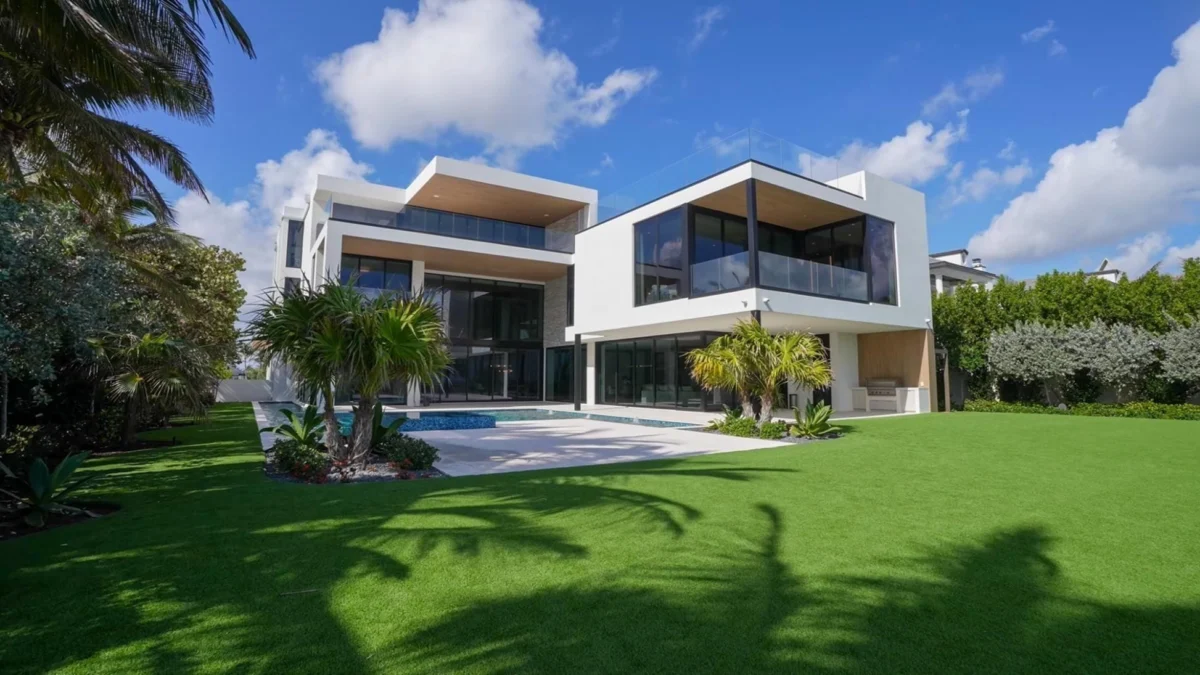
In the high-stakes world of Indian ultra-luxury real estate, the blueprint is no longer the starting point of a project; the image is. For over a decade, the architectural visualization process followed a linear, predictable path: architects finished the drawings, engineers vetted the structures, and finally, a 3D artist was brought in to "make it look good" for a brochure.
Today, that paradigm has been inverted. In the elite tier of the market—where apartments start at ₹10 crore and skyrocket to over ₹100 crore—the render is the genesis of the project. This shift marks a profound transformation in how developers conceive, design, and sell luxury, signaling the arrival of a "visual-first" era in Indian construction.
Main Facts: The Shift from Marketing Tool to Design Blueprint
The fundamental change in the industry lies in the utility of Computer-Generated Imagery (CGI). Previously, CGI was a marketing collateral, a digital painting used to entice buyers after the design was finalized. Today, it has evolved into a critical design tool.
1. Mood Boards over Blueprints
Developers of ultra-luxury projects in Mumbai, Delhi-NCR, and Bangalore are increasingly approaching visualization experts before a single architectural line is finalized. Instead of technical drawings, the initial brief often consists of mood boards: a curated collection of high-resolution images of a boutique hotel in Milan, a penthouse in Manhattan, or a waterfront villa in Dubai. The visualizer’s role is to synthesize these global influences into a coherent aesthetic that dictates the eventual architectural specifications.
2. Iterative Design Testing
CGI is now used to "stress-test" design choices. Developers use high-fidelity renders to decide whether a specific slab of Italian marble is too cold for a lobby’s northern exposure or if the ceiling height in a living room feels proportional. By visualizing the space spatially before construction begins, developers save millions in potential mid-construction alterations.
3. The "Global Standard" Benchmark
The target demographic for these projects—High-Net-Worth Individuals (HNIs) and Ultra-High-Net-Worth Individuals (UHNIs)—no longer compares an Indian luxury project to its local neighbor. They compare it to the standards of London, Singapore, and the UAE. This global benchmarking has forced a massive upgrade in the quality of visual presentation.
Chronology: The Evolution of Visual Literacy in Indian Real Estate
The trajectory of architectural visualization in India can be divided into three distinct eras, reflecting the broader economic and design evolution of the country.
The Era of Technical Competence (2010–2018)
During this period, CGI was a novelty that became a necessity. The renders were "bright and generic." They featured perfectly lit rooms with "catalog furniture" that felt sterile. While technically competent, these images lacked a "sense of place." They were functional tools meant to show where the kitchen was in relation to the dining room, but they failed to evoke an emotional response.
The Transition Phase (2019–2022)
As global travel became a staple for the Indian upper-middle class and the elite, the "copy-paste" aesthetic began to fail. Buyers started noticing the gap between the renders in a London property prospectus and those of an Indian developer. Developers began to hire international consultants, and CGI started to focus more on textures and lighting.
The Hyper-Realistic Revolution (2023–Present)
In the last 24 months, the shift has become sudden and total. The rise of real-time rendering engines and AI-enhanced visualization has allowed for a level of detail previously impossible. Renders now account for the exact "Kelvin" temperature of indoor lighting and the specific way the sun hits a balcony at 7:00 PM in December. This era is defined by "design literacy," where the developer and the buyer both understand the nuance of "resolved" design.
Supporting Data: The Economics of Aesthetics
The demand for high-end visualization is backed by a surging ultra-luxury market in India. According to recent industry reports, the luxury housing segment (properties priced above ₹7 crore) saw a 75% year-on-year growth in sales across the top seven Indian cities in 2023.
- The ₹10 Crore Threshold: Data suggests that for properties priced above ₹10 crore, the conversion rate is 40% higher when the marketing materials use "bespoke" CGI versus "generic" CGI.
- Pre-Launch Success: Developers who utilize CGI as a design tool—resolving lighting and material issues before the ground-breaking ceremony—report a 20-30% faster sell-out rate during the pre-launch phase.
- The Global Competition: An estimated 15-20% of Indian UHNIs considering a ₹15 crore+ investment in Mumbai are also looking at properties in Dubai or London. This "cross-border shopping" necessitates a visual standard that matches the highest international levels to prevent capital flight.
Official Responses and Expert Perspectives: The Visualizer’s Insight
Industry veterans and visualization experts note that the change is driven by a more sophisticated developer profile.
"The brief used to be: ‘Here are the drawings, make it look good by Thursday,’" says one senior visualization consultant. "Now, we are part of the design conversation. We are being asked, ‘Does this feel like a ₹20 crore apartment?’ That is a psychological and design question, not just a technical one."
The Developer’s Literacy
Leading developers in India’s metro cities have become genuinely design-literate. They are no longer passive recipients of architectural plans. By visiting international property expos and staying in the world’s most acclaimed hotels, they have developed an eye for detail. They can sense when a render feels "off"—even if they can’t pinpoint the technical flaw, they recognize the absence of luxury.
The Buyer’s Intuition
From the buyer’s perspective, the quality of imagery serves as a proxy for the quality of the project’s execution. A developer who pays attention to the grain of the wood in a digital render is perceived as a developer who will pay attention to the plumbing, the structural integrity, and the post-handover maintenance. Conversely, flat, uniformly lit, and generic renders are now seen as a "red flag," signaling a lack of care or a "budget" approach to a premium project.
Implications: What This Means for the Future of Real Estate
The shift toward high-end, design-led visualization has several long-term implications for the Indian real estate landscape.
1. The Narrowing Global Gap
The most immediate implication is the closing of the quality gap between Indian and international real estate. As Indian developers adopt global visual standards, the physical buildings are following suit. The "visual-first" approach ensures that the final product is more refined, as most aesthetic problems are solved in the digital phase.
2. CGI as a Risk Mitigation Tool
For the developer, high-end CGI is becoming a form of insurance. By visualizing every corner of a project in hyper-realistic detail, they can identify spatial conflicts or aesthetic mismatches that would be prohibitively expensive to fix once construction reaches the advanced stages. It allows for a "measure twice, cut once" philosophy.
3. The Rise of "Atmospheric" Marketing
The future of luxury sales is moving away from showing "the room" and toward showing "the life." Future renders will focus less on the furniture and more on the atmosphere—the way the morning mist looks from the 40th floor, the specific reflection of the pool on the ceiling, or the "mood" of a rainy evening in the study.
4. AI and Real-Time Interaction
As we move forward, the static render will likely give way to real-time, AI-driven environments where a buyer can change the floor material or the time of day instantly. This level of immersion will become the standard expectation for anyone spending eight or nine figures on a home.
Conclusion
In the ultra-luxury segment, the render is no longer a mere picture; it is a promise. It represents a level of commitment to design, detail, and global excellence. For the Indian buyer, a high-quality visual is a sign of a "resolved" project—a space where someone has already thought through the experience of living there. For the developer, it is the bridge between a vision and a multi-crore sale. As the Indian market continues to mature, those who fail to see the "image" as the foundation of the "structure" risk being left behind in a world that now buys with its eyes first.
Looking for expert help in realizing your own luxury space? Explore AI Interior Design Free Online for instant inspiration or connect with top-rated Interior Designers in Pune to bring your vision to life.
Disclaimer: Magicbricks aims to provide accurate and updated information to its readers. However, the information provided is a mix of industry reports, online articles, and in-house data. Since information may change with time, we suggest verifying any critical details independently. Under no circumstances will Magicbricks Realty Services be held liable for any damage or loss incurred as a result of the use of this information.
