HYDERABAD – Not long ago, the mention of "Cyberabad" during peak hours was synonymous with a specific kind of urban frustration. For the thousands of professionals employed at Cyber Towers, Mindspace, or the sprawling campuses of Google and Microsoft, the "ten-minute drive" was a mythical concept, often stretching into a grueling hour-long battle with gridlock. Today, that narrative has shifted. The Hyderabad Metro’s Blue Line has not only altered the city’s transit mathematics but has fundamentally restructured the socio-economic fabric of HITEC City.
This comprehensive report explores the current state of metro connectivity in Hyderabad’s premier IT hub, the logistical nuances of the Blue Line, and the profound impact this infrastructure has had on the local real estate market.
1. Main Facts: The Infrastructure Backbone of Cyberabad
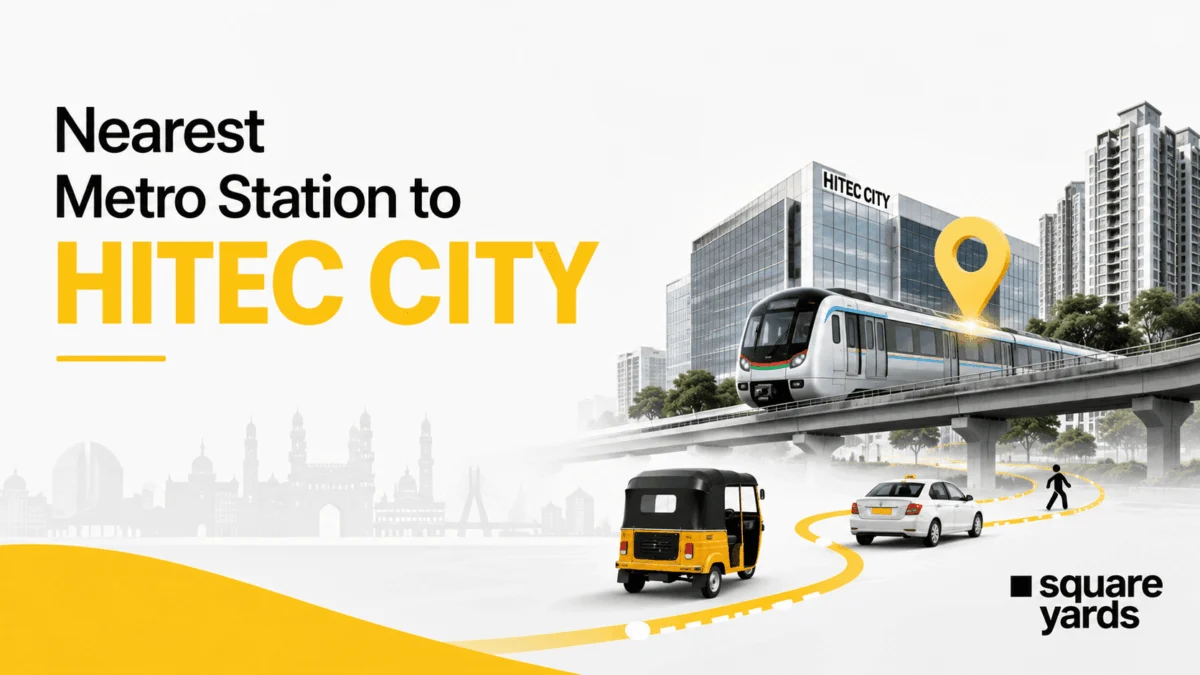
HITEC City (Hyderabad Information Technology and Engineering Consultancy City) serves as the nerve center of Telangana’s tech economy. Spread across approximately 700 acres, it hosts a concentrated density of Fortune 500 companies. The introduction of the Blue Line (Corridor 3) of the Hyderabad Metro Rail (HMR) has provided a high-capacity transit alternative to the over-saturated road network.
The Primary Transit Hub: HITEC City Metro Station
Located directly on the HITEC City Road, this station is the most critical node in the network for the IT sector. It sits a mere 500 meters from the iconic Cyber Towers, the landmark that inaugurated Hyderabad’s IT era.
Key Statistics:
- Daily Footfall: Approximately 42,000 commuters, making it one of the busiest stations in the HMR network.
- Connectivity: Features a dedicated skywalk to the Hyderabad Next Galleria Mall.
- Proximity: Within walking distance of NIFT Hyderabad and several major business process outsourcing (BPO) hubs.
The Strategic Network: Key Stations Serving the IT Corridor
While the namesake station takes the spotlight, the HITEC City ecosystem is supported by a cluster of stations on the Blue Line, each serving a specific sub-micro-market.
| Metro Station | Metro Line | Distance from HITEC City Core | Typical Transit Time | Best Suited For |
|---|---|---|---|---|
| HITEC City | Blue Line | 0.4 – 0.5 km | 5-8 min walk | Cyber Towers, L&T Next Galleria |
| Durgam Cheruvu | Blue Line | 1.2 km | 12-15 min walk / 6 min auto | Raheja Mindspace, IT Park clusters |
| Madhapur | Blue Line | 1.5 km | 8 min auto | Ayyappa Society, Residential belts |
| Raidurg | Blue Line | 2.0 km | 10 min auto | Gachibowli, Wipro Circle, IKEA |
| Peddamma Gudi | Blue Line | 1.8 km | 10 min auto | Jubilee Hills border, Botanical Garden |
2. Chronology: From Gridlock to High-Speed Transit
The evolution of HITEC City can be divided into three distinct eras:
The Pre-Metro Era (1998–2018)
In the late 90s and early 2000s, HITEC City was an isolated tech island. As the workforce grew from a few thousand to several lakhs, the infrastructure lagged. The road from Ameerpet to HITEC City became one of the most congested stretches in India. Commuters relied solely on private vehicles, cabs, and the limited TSRTC bus service. The "commute nightmare" peaked between 2015 and 2018, as road widening projects struggled to keep pace with corporate expansion.
The Integration Phase (2019–2023)
The opening of the Blue Line extension to HITEC City in 2019 was a watershed moment. For the first time, an IT professional living in Nagole or Secunderabad could reach their office in under 45 minutes, bypassing the infamous traffic at Jubilee Hills Checkpost and Madhapur. The initial years focused on stabilizing frequency and improving station access. During this time, the "Metro-Walk-Work" culture began to take root.
The Post-Pandemic Consolidation (2024–Present)
As offices returned to full capacity post-COVID, the metro became the preferred choice to hedge against rising fuel prices and worsening road congestion. Today, the system is fully integrated with last-mile shuttle services, skywalks, and a thriving retail ecosystem within the stations.
3. Supporting Data: Navigating the Commute
The efficiency of the Blue Line is best demonstrated by its connectivity to other major residential and commercial hubs within Hyderabad.
Route Analysis: Reaching the Tech Hub
- From Ameerpet (The Interchange): As the junction for the Red and Blue lines, Ameerpet is the gateway for commuters from Miyapur or LB Nagar. From Ameerpet, HITEC City is a direct, 15-minute ride.
- From Secunderabad/Begumpet: These central business districts are directly linked via the Blue Line, offering a seamless commute for those living in the older, established parts of the city.
- From the Residential West (Kukatpally/Miyapur): While geographically close, road traffic between Kukatpally and HITEC City is often heavy. Commuters take the Red Line to Ameerpet and switch to the Blue Line, a journey that typically stays under 40 minutes.
Last-Mile Connectivity: The Final 500 Meters
The success of a metro system depends on how easily a passenger can reach their final destination. In HITEC City, a multi-modal system has emerged:
- Corporate Shuttles: Major firms like Microsoft, Amazon, and ValueLabs operate private shuttle loops from the HITEC City and Raidurg stations.
- Auto-Rickshaws: A mainstay for short hops. Fares typically range from ₹30 to ₹60 for shared or short private rides.
- Pedestrian Infrastructure: During peak hours (9:00 AM – 10:30 AM), walking is often faster than taking a vehicle due to localized congestion at the station exits.
4. Implications for Real Estate: The "Metro Premium"
The arrival of the metro has fundamentally changed the value proposition of property for sale near HITEC City. What was once primarily a commercial district has transformed into a highly desirable residential corridor.
The Shift in Buyer Psychology
Historically, IT employees preferred living in peripheral areas like Kondapur or Gachibowli to avoid the immediate noise and density of HITEC City. However, the reliability of the metro has shifted the "convenience vs. cost" equation. Buyers are now willing to pay a premium for properties within a 1-kilometer radius of a Blue Line station.
Rental Market Dynamics
The rental impact is perhaps the most visible indicator of the metro’s influence.
- Occupancy Rates: Apartments within walking distance of the metro maintain near 100% occupancy year-round.
- The Premium Factor: Landlords near the HITEC City and Durgam Cheruvu stations often command 15-20% higher rents compared to similar properties located 3-4 kilometers away.
- Tenant Profile: There is a growing trend of "bachelor sharing" and "studio living" among young professionals who prioritize a 10-minute metro commute over a larger living space further away.
Comparative Market Analysis
The following table illustrates the current price landscape across the HITEC City metro influence zone:
| Locality | Approx. Price (per Sq. Ft.) | Primary Metro Access |
|---|---|---|
| HITEC City | ₹7,500 – ₹13,000 | HITEC City / Durgam Cheruvu |
| Madhapur | ₹6,500 – ₹11,500 | Madhapur Station |
| Gachibowli | ₹6,000 – ₹10,500 | Raidurg Station |
| Kondapur | ₹5,500 – ₹9,000 | HITEC City (via short drive) |
| Jubilee Hills | ₹12,000 – ₹22,000 | Peddamma Gudi / Checkpost |
Note: Prices are subject to project luxury levels, floor height, and specific proximity to the metro corridor.
5. Official Responses and Future Outlook
Urban planners and Hyderabad Metro Rail Limited (HMRL) officials have noted that the Blue Line has reached its design capacity faster than anticipated.
Phase 2: Closing the Airport Gap
One of the most frequent queries from the tech community concerns direct connectivity to Rajiv Gandhi International Airport (RGIA). Currently, travelers must rely on the ‘Pushpak’ airport bus or expensive cab rides.
The Official Plan: Phase 2 of the Hyderabad Metro expansion aims to extend the line from Raidurg toward the airport. While still in the final approval and early execution stages (slated for progress through 2026), this extension is expected to make HITEC City the most connected business district in South India.
Expert Perspective
Real estate analysts suggest that for those looking at property for sale near HITEC City, the metro corridor serves as a "safety net" for investment. "In a market where new supply is constantly being added, the properties closest to the metro pillars are the ones that hold their value during market corrections," says a senior consultant at a leading property firm. "The metro isn’t just a transport utility; it’s a permanent appreciation driver."
6. Conclusion: A Predictable Future
HITEC City has successfully transitioned from a traffic-choked IT park into a modern, transit-oriented development (TOD) hub. The Blue Line has provided the "predictability" that the corporate world craves—predictable commute times, predictable rental yields, and predictable capital appreciation.
For the daily commuter, the metro has reclaimed hours of lost time. For the investor, it has solidified the IT corridor as the city’s most resilient real estate asset. As Hyderabad continues to expand westward, the HITEC City metro station remains the anchor, ensuring that the heart of the city’s tech engine keeps beating without the friction of traffic.
Frequently Asked Questions (FAQ)
1. Which is the absolute nearest metro station to the HITEC City business core?
The HITEC City Metro Station on the Blue Line is the closest. It is situated approximately 400 to 500 meters from Cyber Towers and the main entrance of the IT district, roughly an 8-minute walk.
2. How much does a typical metro commute cost?
Fares are distance-based, ranging from ₹12 to ₹76. Commuters using the "Nebula" smart cards or digital payment apps often receive a 10% discount on the base fare.
3. Is there a direct metro link from HITEC City to the Airport?
Not currently. Commuters must take a cab or the airport shuttle bus. However, the proposed Metro Phase 2 extension from Raidurg is designed specifically to bridge this gap.
4. Why is property near the metro more expensive?
The "Metro Premium" is driven by high rental demand from IT professionals who want to avoid road congestion. This creates a high-yield environment for landlords and ensures steady resale value for homeowners.
5. What are the operating hours for the HITEC City metro?
Typically, trains run from 6:00 AM to 11:00 PM, though the last train timings from Raidurg or HITEC City may vary slightly. During peak hours, the frequency is as high as one train every 4-5 minutes.